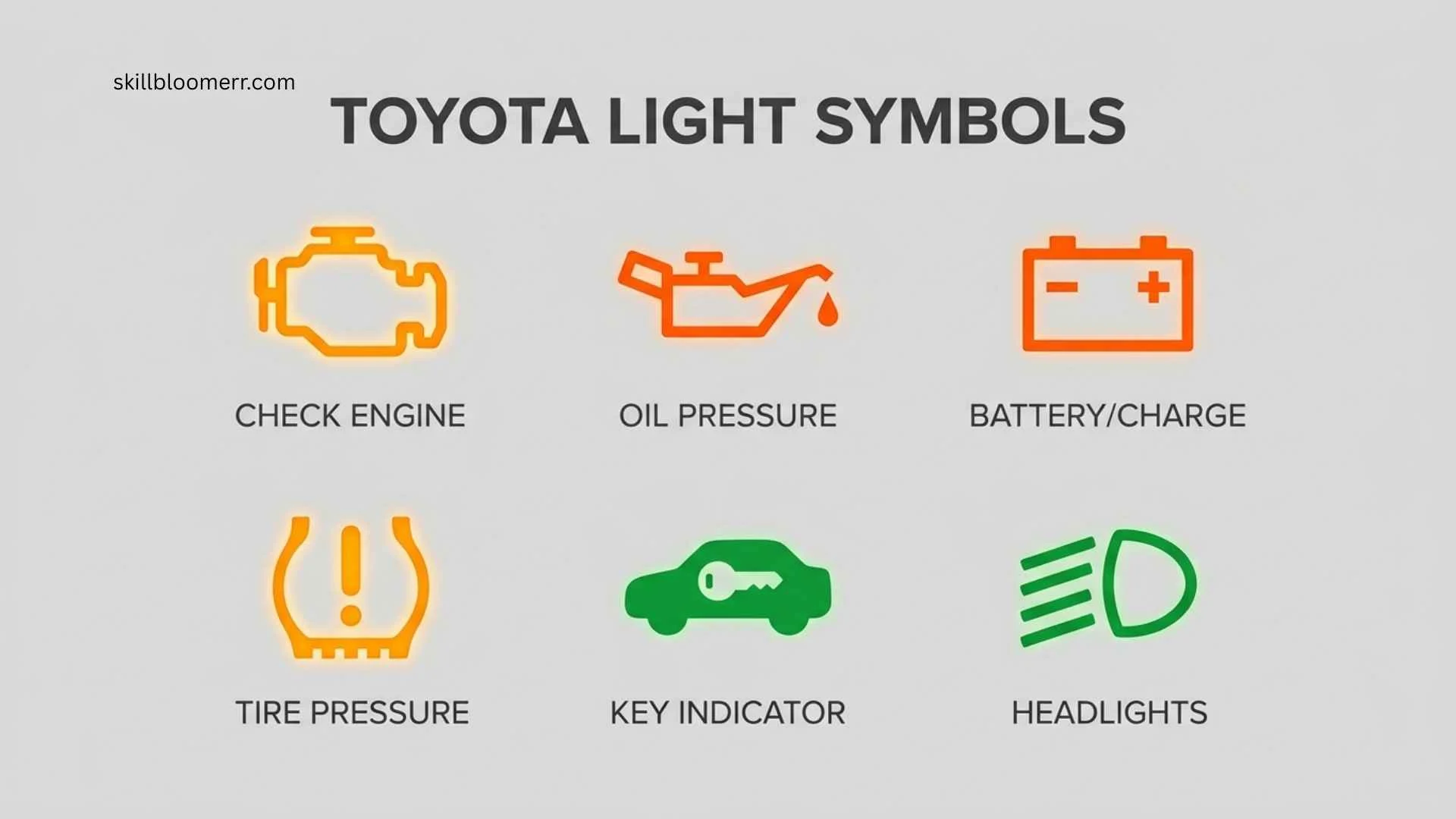
Toyota light symbols on your dashboard act as a communication system between your vehicle and you. These warning lights help drivers understand whether a car system is working normally, needs attention, or requires immediate action. Ignoring the wrong symbol can lead to expensive repairs or safety risks.
Whether you drive a Toyota Corolla, Camry, RAV4, Highlander, Tacoma, Prius, or another Toyota model, learning the meaning of dashboard lights helps you respond correctly. These symbols may appear during startup, while driving, or when a vehicle system detects a problem.
This complete guide explains Toyota light symbols, their colors, meanings, causes, and what drivers should do when they appear. Understanding these indicators can improve vehicle safety, maintenance decisions, and overall driving confidence.
Quick Meaning of Toyota Light Symbols
Toyota light symbols are dashboard indicators designed to show the status of important vehicle systems. Green and blue lights usually provide information, yellow or amber lights indicate caution, and red lights often signal serious problems requiring immediate attention. These symbols help drivers identify issues with systems such as brakes, engines, airbags, tires, and safety features.
Toyota Dashboard Light Symbols Overview Table
| Symbol Name | Primary Meaning | Category | Common Cause | Driver Action |
| Check Engine Light | Engine or emission system issue | Mechanical Warning | Sensor failure, engine problem | Inspect vehicle soon |
| Oil Pressure Light | Low engine oil pressure | Engine Warning | Low oil level, oil pump issue | Stop safely and check |
| Battery Warning Light | Charging system problem | Electrical Warning | Alternator or battery issue | Service immediately |
| Brake Warning Light | Brake system issue | Safety Warning | Low brake fluid, brake fault | Check brakes urgently |
| ABS Light | Anti-lock braking system problem | Safety System | ABS sensor failure | Drive carefully and inspect |
| Tire Pressure Light (TPMS) | Incorrect tire pressure | Tire Safety | Low tire pressure | Check tire pressure |
| Airbag Warning Light | Airbag system malfunction | Safety System | Sensor or wiring issue | Get inspected |
| Temperature Warning Light | Engine overheating | Engine Warning | Coolant problem | Stop and cool engine |
| Traction Control Light | Traction system activity | Driving Assistance | Slippery roads or system issue | Drive carefully |
| Lane Departure Alert Light | Lane safety feature status | Driver Assistance | System activation | Follow road conditions |
What Do Toyota Light Symbols Mean?
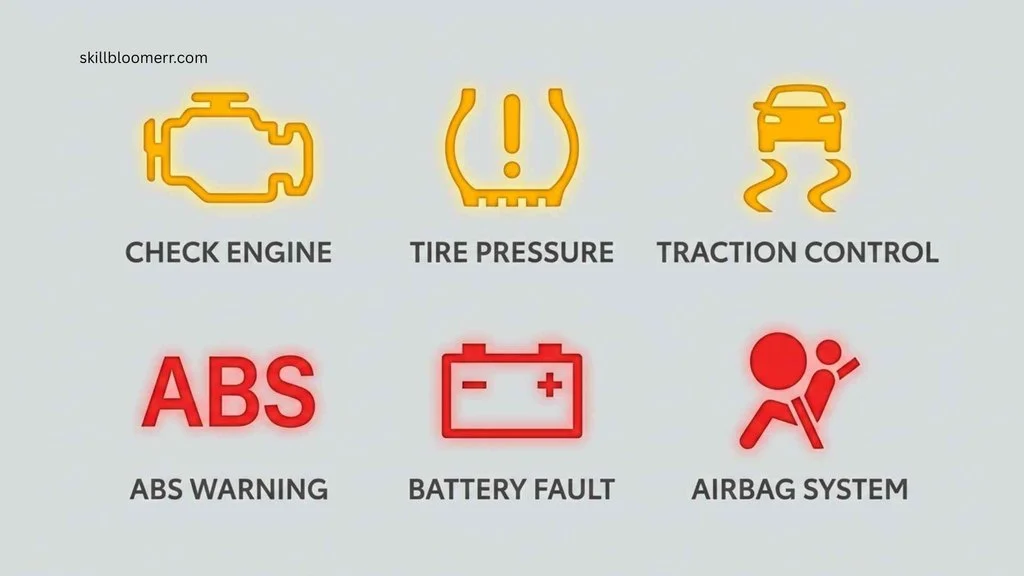
Toyota light symbols represent different messages from the vehicle’s onboard computer system. Modern Toyota vehicles use electronic sensors and control modules to monitor performance, safety systems, and emissions.
A dashboard symbol does not always mean there is a major failure. Some lights simply inform the driver that a system is active. Others warn that inspection or repair may be necessary.
The meaning of a Toyota dashboard light depends on:
- The symbol design
- The color of the indicator
- Whether the light stays on or flashes
- The vehicle model and year
- Other symptoms appearing with the warning
Understanding these differences helps prevent unnecessary panic and allows drivers to make better decisions.
Toyota Dashboard Light Colors and Their Importance
Green and Blue Toyota Lights
Green and blue indicators usually provide information rather than warnings. They show that a vehicle feature is operating.
Common examples include:
- Headlight indicators
- Turn signals
- Cruise control activation
- High beam indicators
- Eco driving indicators
These lights generally do not require immediate action.
Yellow or Amber Warning Lights
Yellow Toyota symbols indicate caution. They usually mean a system has detected a problem but the vehicle may still operate.
Examples include:
- Check engine light
- Tire pressure warning
- Maintenance required light
- ABS warning light
- Traction control warning
Drivers should schedule an inspection if these lights remain active.
Red Warning Lights
Red dashboard symbols usually represent serious safety or mechanical concerns.
Examples include:
- Brake warning light
- Oil pressure warning
- Engine temperature warning
- Battery charging warning
A red warning light may require stopping the vehicle as soon as it is safe.
Common Toyota Light Symbols and Their Meanings
Check Engine Light Symbol
The check engine light is one of the most recognized Toyota dashboard symbols. It appears as an engine-shaped icon and indicates that the vehicle’s engine control system has detected an issue.
Possible causes include:
- Loose fuel cap
- Faulty oxygen sensor
- Emission system problem
- Ignition problem
- Engine performance issue
A steady check engine light usually means the vehicle should be inspected soon. A flashing check engine light can indicate a serious problem, such as a misfire that may damage the catalytic converter.
What Should You Do When the Check Engine Light Appears?
Follow these steps:
- Check whether the fuel cap is properly tightened.
- Notice if the vehicle has unusual sounds or performance problems.
- Avoid heavy acceleration.
- Have the vehicle scanned for diagnostic trouble codes.
Oil Pressure Warning Light
The oil pressure symbol usually looks like an oil can with a dripping line. It warns that engine oil pressure may be too low.
Engine oil protects moving parts by reducing friction. Low oil pressure can cause severe engine damage if ignored.
Possible causes include:
- Low engine oil level
- Oil leak
- Damaged oil pump
- Internal engine wear
What To Do
If the oil pressure light appears while driving:
- Safely pull over.
- Turn off the engine.
- Check the oil level if possible.
- Avoid driving until the problem is inspected.
Battery Warning Light
The Toyota battery symbol does not always mean the battery itself has failed. It usually indicates a problem with the vehicle’s charging system.
Possible causes include:
- Failing alternator
- Loose battery connection
- Damaged wiring
- Weak battery
A charging problem can eventually cause the vehicle to stop running because electrical systems depend on proper power supply.
Recommended Action
If this light appears:
- Reduce unnecessary electrical use.
- Avoid turning off the engine until you reach a safe location.
- Schedule immediate inspection.
Brake Warning Light Symbol
The brake warning symbol is one of the most important Toyota safety indicators. It may appear as a circle with an exclamation mark or the word “BRAKE.”
Possible reasons include:
- Low brake fluid
- Parking brake still engaged
- Brake system malfunction
- Worn brake components
Because brakes are essential for safety, this warning should never be ignored.
When Is It Dangerous?
Seek immediate assistance if:
- The brake pedal feels soft.
- The vehicle pulls to one side.
- The warning light stays on while driving.
- Braking performance decreases.
Tire Pressure Monitoring System (TPMS) Light
The tire pressure symbol looks like a horseshoe-shaped tire with an exclamation mark inside.
Toyota vehicles use TPMS technology to monitor tire inflation levels.
Common causes:
- Low tire pressure
- Temperature changes affecting pressure
- Tire puncture
- Sensor issue
Correct tire pressure improves:
- Fuel efficiency
- Tire lifespan
- Vehicle handling
- Driving safety
What Drivers Should Check
When the TPMS light appears:
- Check all tire pressures.
- Inspect tires for visible damage.
- Inflate tires according to Toyota recommendations.
- Reset the system if required.
ABS Warning Light
The ABS symbol indicates a problem with the Anti-lock Braking System.
ABS helps prevent wheels from locking during emergency braking. A faulty ABS system does not always remove normal braking ability, but it can reduce safety during sudden stops.
Possible causes:
- Wheel speed sensor failure
- ABS module problem
- Electrical issue
Drivers should have the system inspected, especially before driving in rain, snow, or slippery conditions.
Toyota Light Symbols: Complete Guide to Dashboard Warning Lights and Their Meanings
Toyota Light Symbols Related to Safety and Vehicle Systems
Airbag Warning Light Symbol
The airbag warning symbol usually appears as a person sitting with a circle in front of them. This Toyota dashboard light indicates a possible issue with the Supplemental Restraint System (SRS), which includes airbags and seat belt pretensioners.
Airbags are designed to reduce injuries during collisions by deploying at the correct time. If the warning light remains on, the vehicle’s safety system may not work properly during an accident.
Possible causes include:
- Faulty airbag sensor
- Damaged wiring connections
- Seat belt system malfunction
- SRS control module issue
- Previous collision damage
What Should You Do When the Airbag Light Appears?
Drivers should:
- Avoid ignoring the warning.
- Schedule a professional inspection.
- Avoid attempting DIY repairs on airbag components.
- Check if objects under seats are affecting wiring connections.
An illuminated airbag light does not mean airbags will definitely fail, but it indicates the system needs evaluation.
Engine Temperature Warning Light
The engine temperature symbol usually appears as a thermometer above waves. It warns that the engine coolant temperature may be too high.
Engine overheating can cause severe damage because modern engines rely on controlled temperatures for proper operation.
Common causes include:
- Low coolant level
- Cooling system leak
- Faulty radiator
- Damaged thermostat
- Cooling fan failure
Signs of Engine Overheating
Drivers may notice:
- Steam from under the hood
- Temperature gauge moving into the red zone
- Reduced engine performance
- Burning smells
Proper Response
If this warning appears:
- Safely stop the vehicle.
- Turn off the engine.
- Allow the engine to cool.
- Check coolant levels only after the engine has cooled.
- Seek professional help if the problem continues.
Opening a hot radiator cap can cause serious burns, so caution is essential.
Traction Control Warning Symbol
The traction control symbol usually shows a vehicle with curved lines underneath. It represents Toyota’s traction control system, which helps maintain grip when roads are slippery.
The system uses sensors to detect wheel spin and adjusts engine power or braking force when needed.
Possible meanings:
- The system is actively controlling wheel movement.
- The driver has turned traction control off.
- A fault has been detected.
When Is It Normal?
The light may flash briefly when:
- Driving on wet roads
- Accelerating on loose surfaces
- Driving on snow or gravel
A continuously illuminated traction control light may indicate a system problem.
Vehicle Stability Control (VSC) Light
Toyota’s Vehicle Stability Control system helps prevent loss of control during sudden steering movements or slippery conditions.
The VSC symbol often appears as a car with sliding marks.
The system works by:
- Monitoring steering direction
- Measuring wheel speed
- Applying individual brakes when necessary
- Adjusting engine power
Possible reasons for the light include:
- Sensor malfunction
- ABS issue
- Steering angle sensor problem
- Tire-related problems
Drivers should inspect the vehicle if the light remains active.
Toyota Light Symbols for Maintenance and Service
Maintenance Required Light
The maintenance required symbol is usually displayed as a small wrench or text reminder.
Unlike the check engine light, this indicator does not usually mean there is a mechanical failure. It reminds drivers that scheduled maintenance is due.
Typical maintenance tasks include:
- Engine oil replacement
- Filter inspection
- Tire rotation
- Fluid checks
Toyota uses maintenance reminders to help owners follow recommended service schedules.
Why Maintenance Lights Matter
Regular maintenance helps:
- Extend vehicle life
- Improve reliability
- Prevent expensive repairs
- Maintain performance
Ignoring routine service reminders can allow small problems to become larger issues.
Low Fuel Warning Light
The fuel warning symbol appears when the fuel level becomes low.
Although this light is simple, continuing to drive with very little fuel can create problems.
Possible risks include:
- Running out of fuel
- Fuel pump stress
- Getting stranded in unsafe locations
Drivers should refill the fuel tank soon after this symbol appears.
Washer Fluid Warning Light
The washer fluid symbol usually looks like a windshield with spray marks.
It indicates that windshield washer fluid is running low.
While not a major mechanical issue, clean visibility is important for safe driving, especially during:
- Rain
- Dusty conditions
- Snow
- Night driving
Refilling washer fluid is usually a simple maintenance task.
Toyota Hybrid and Electric Vehicle Light Symbols
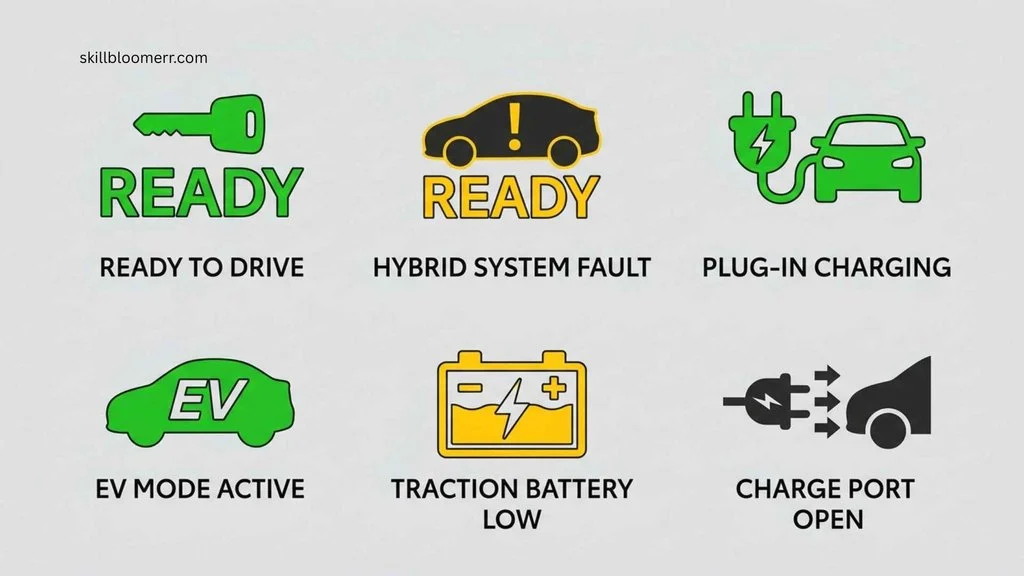
Toyota hybrid vehicles, including Prius and other electrified models, include additional dashboard indicators related to battery systems and energy management.
Hybrid System Warning Light
The hybrid system warning symbol indicates that the vehicle’s hybrid components may require inspection.
Possible causes include:
- Hybrid battery issue
- Power control system fault
- Electrical problem
- Cooling system issue
Because hybrid systems contain specialized components, professional diagnosis is recommended.
EV Mode Indicator
The EV indicator shows that the vehicle is operating using electric power only.
This symbol is informational and usually means the hybrid system is functioning normally.
EV mode depends on factors such as:
- Battery charge level
- Driving speed
- Temperature
- Accelerator input
Battery Charge Indicator
Hybrid Toyotas display battery-related symbols showing energy storage levels.
These indicators help drivers understand:
- Battery charging status
- Regenerative braking activity
- Electric motor usage
Unlike a traditional battery warning light, hybrid battery displays provide information about normal operation.
History and Origin of Toyota Dashboard Symbols
The Development of Vehicle Warning Symbols
Dashboard warning symbols developed as vehicles became more complex. Early automobiles had limited indicators because mechanical systems were simpler.
As automotive technology advanced, manufacturers needed a universal way to communicate problems quickly.
Symbols became important because:
- Drivers could understand them without reading manuals.
- They worked across different languages.
- They allowed quick recognition while driving.
Toyota adopted standardized automotive warning systems while also developing model-specific indicators for advanced features.
The Role of International Vehicle Standards
Many vehicle symbols follow international guidelines developed by organizations such as the International Organization for Standardization (ISO).
Standardized symbols help drivers recognize important warnings regardless of language or location.
Examples include:
- Brake warning symbols
- Engine warnings
- Tire pressure indicators
- Lighting symbols
This approach creates consistency between vehicles made in different countries.
Symbolism and Interpretation of Toyota Dashboard Lights
Why Car Symbols Use Simple Images
Toyota light symbols rely on visual communication because drivers often have only seconds to understand a warning.
A good dashboard symbol should be:
- Easy to recognize
- Simple in design
- Quickly understood
- Consistent across vehicles
For example:
- An oil can represents lubrication.
- A battery shape represents electrical power.
- A thermometer represents temperature.
These images connect everyday objects with vehicle functions.
Positive Meaning of Dashboard Symbols
Not every Toyota dashboard light represents a problem.
Some symbols show that:
- Safety systems are active.
- Driving assistance features are working.
- Vehicle settings have changed.
- A feature is currently operating.
Examples include:
- Cruise control indicator
- High beam indicator
- Eco driving indicator
Negative Meaning of Warning Symbols
Warning symbols usually represent a condition requiring attention.
The seriousness depends on:
- Color
- Flashing behavior
- Vehicle performance
- Symbol type
A flashing red warning is generally more urgent than a steady yellow indicator.
Cultural Significance of Vehicle Warning Symbols
Universal Language of Automotive Symbols
Unlike written language, Toyota light symbols communicate through images. This makes them useful worldwide.
A driver in Japan, the United States, Europe, or another region can usually recognize the meaning of common symbols.
Vehicle symbols represent a modern form of visual language similar to:
- Road signs
- Airport symbols
- Safety icons
- Industrial markings
Regional Differences in Toyota Symbols
Toyota vehicles sold in different countries may have slightly different symbols because of:
- Local regulations
- Driving conditions
- Safety requirements
- Vehicle technology options
For example, diesel models, hybrid models, and vehicles with advanced driver assistance systems may display different indicators.
Scientific and Technical Meaning of Toyota Light Symbols
Electronic Communication Between Vehicle Systems
Toyota dashboard lights are connected to electronic control units (ECUs). These computers receive information from sensors throughout the vehicle.
Examples include:
- Engine sensors
- Brake sensors
- Tire pressure sensors
- Temperature sensors
- Battery monitoring systems
When a sensor detects unusual information, the ECU activates the related warning symbol.
Diagnostic Technology Behind Warning Lights
Modern Toyota vehicles use onboard diagnostics systems.
These systems:
- Monitor vehicle performance
- Store error codes
- Help technicians identify problems
A diagnostic scanner can read stored codes and provide additional information about the warning.
However, a diagnostic code does not always identify the exact repair needed. Professional evaluation may still be required.
Toyota Light Symbols: Complete Guide to Dashboard Warning Lights and Their Meanings
Where Toyota Light Symbols Are Used
Toyota light symbols appear in many locations and situations beyond the main dashboard. They are part of a vehicle communication system designed to provide information about operation, safety, and maintenance.
Understanding where these symbols appear helps drivers recognize whether they are seeing a normal indicator or a warning that needs attention.
Dashboard Instrument Cluster
The most common location for Toyota light symbols is the instrument cluster directly in front of the driver.
This area displays important information such as:
- Engine warnings
- Brake system alerts
- Tire pressure notifications
- Fuel level warnings
- Safety system indicators
- Driving assistance messages
Because the driver sees this area while operating the vehicle, dashboard symbols are designed to be recognized quickly.
Multi-Information Display Screen
Many modern Toyota vehicles include a digital multi-information display between the speedometer and other gauges.
This screen may show:
- Detailed warning messages
- Maintenance reminders
- Safety system notifications
- Hybrid energy information
- Driver assistance alerts
For example, instead of only showing a symbol, the display may explain:
“Low Tire Pressure”
or
“Check Hybrid System.”
This additional information helps drivers understand what action is needed.
Toyota Safety Sense System Indicators
Toyota vehicles equipped with Toyota Safety Sense technology may display symbols related to advanced driver assistance features.
These systems include:
- Pre-Collision System
- Lane Departure Alert
- Adaptive Cruise Control
- Automatic High Beams
- Road Sign Assist
These symbols inform drivers when safety features are active, unavailable, or require attention.
Common Variations of Toyota Light Symbols
Toyota dashboard symbols may vary depending on the vehicle model, production year, country, and available technology.
A Toyota Corolla from one year may not display exactly the same symbols as a Toyota Highlander, Tacoma, or Prius.
Model-Based Symbol Differences
Different Toyota vehicles have different systems, which means they may use different indicators.
Examples:
Toyota Prius and Hybrid Models
Hybrid vehicles may include symbols for:
- Hybrid battery status
- EV operation
- Hybrid system warnings
- Regenerative braking information
Toyota Trucks
Models such as Tacoma and Tundra may include additional indicators related to:
- Four-wheel drive systems
- Differential locks
- Off-road features
- Trailer systems
Toyota SUVs
Models such as RAV4 and Highlander may display symbols related to:
- All-wheel drive
- Drive modes
- Parking assistance
- Stability systems
Older and Newer Toyota Symbol Designs
Automotive symbols have changed as vehicle technology has developed.
Older Toyota vehicles may have:
- Fewer warning lights
- More physical gauges
- Less detailed messages
Newer Toyota models often include:
- Digital displays
- Color warnings
- Driver assistance alerts
- Personalized notifications
The meaning of many traditional symbols remains consistent even as dashboard designs change.
Common Misconceptions About Toyota Light Symbols
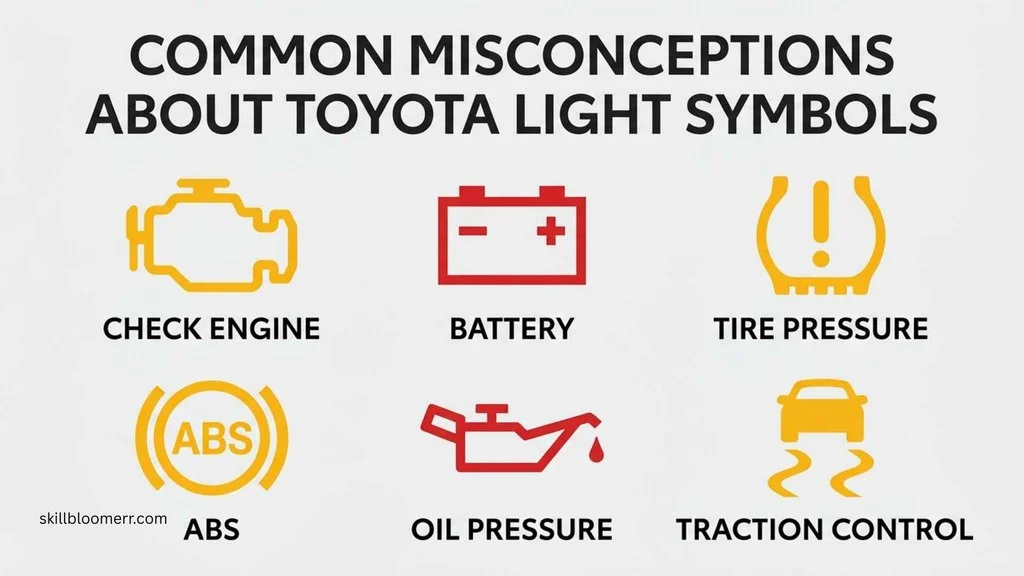
A Yellow Warning Light Always Means Immediate Danger
This is a common misunderstanding.
Yellow or amber symbols usually mean caution, not immediate failure.
Examples:
- Tire pressure warning
- Maintenance reminder
- Check engine light
However, ignoring yellow warnings for a long time can allow minor problems to become serious.
The Check Engine Light Always Means Engine Failure
The check engine symbol does not always mean the engine itself is damaged.
It can be triggered by:
- Loose gas cap
- Emission sensor problem
- Electrical issue
- Fuel system problem
A diagnostic check is needed to determine the actual cause.
All Dashboard Lights Indicate Mechanical Problems
Many Toyota symbols simply provide information.
Examples include:
- Headlight indicators
- Turn signal indicators
- Cruise control indicators
- EV mode indicators
These lights are part of normal vehicle communication.
Turning Off the Warning Light Fixes the Problem
Some drivers believe disconnecting the battery or resetting the system solves the issue.
A warning light may disappear temporarily, but the underlying problem can remain.
The correct approach is:
- Identify the cause.
- Repair the issue.
- Clear the warning if necessary.
Interesting Facts About Toyota Light Symbols
1. Dashboard Symbols Create a Universal Vehicle Language
Toyota light symbols use images instead of words because vehicles are sold globally. A driver can understand many symbols regardless of their spoken language.
2. Colors Communicate Different Levels of Importance
The color system works like traffic signals:
- Green and blue usually mean information.
- Yellow means caution.
- Red means serious attention.
This simple color system helps drivers react faster.
3. Toyota Uses Sensors Throughout the Vehicle
Many warning symbols are activated by sensors that constantly monitor vehicle conditions.
Examples include:
- Oxygen sensors
- Wheel speed sensors
- Temperature sensors
- Tire pressure sensors
These sensors allow vehicles to detect problems before drivers notice symptoms.
4. Hybrid Toyota Vehicles Have More Specialized Symbols
Because hybrid vehicles combine gasoline engines and electric motors, they require additional indicators.
Toyota hybrid dashboards provide information about:
- Energy flow
- Battery status
- Electric driving conditions
5. Some Symbols Appear Only Temporarily
Many Toyota lights appear when the vehicle starts.
This is called a system check.
During startup, the vehicle checks different systems and turns lights off if everything is operating correctly.
6. Flashing Lights Often Indicate Higher Urgency
A flashing warning symbol usually deserves more attention than a steady light.
Examples include:
- Flashing check engine light
- Flashing security indicators
- Certain safety system warnings
7. Dashboard Symbols Reduce Driver Distraction
Simple symbols allow drivers to understand information quickly without reading long messages while driving.
This improves safety by reducing the time drivers spend looking away from the road.
8. Toyota Symbols Continue Evolving With Technology
As vehicles gain more advanced features, new symbols appear for:
- Autonomous driving assistance
- Electric systems
- Connectivity features
- Smart safety technology
9. Warning Symbols Help Protect Vehicle Value
Responding to warning lights early can prevent expensive repairs and help maintain a vehicle’s condition.
Regular maintenance also supports better resale value.
10. Toyota Manuals Remain the Best Source for Model-Specific Meanings
Although many symbols are universal, Toyota owner manuals provide the most accurate information for each specific vehicle.
Related Automotive Symbols
Toyota light symbols are connected to many other types of vehicle and transportation symbols.
Honda Dashboard Symbols
Honda uses similar warning categories, including:
- Engine warnings
- Brake indicators
- Safety system alerts
- Maintenance reminders
The designs may differ, but the meanings are often similar.
Ford Dashboard Symbols
Ford vehicles also use standardized automotive symbols for:
- Engine systems
- Tire pressure
- Safety features
- Electrical problems
European Vehicle Warning Symbols
Vehicles from manufacturers such as BMW, Mercedes-Benz, Audi, and Volkswagen often follow similar international symbol standards.
However, luxury vehicles may include more advanced system indicators.
Road and Traffic Symbols
Dashboard symbols are different from road signs, but both rely on visual communication.
Road signs communicate information outside the vehicle, while dashboard symbols communicate information from the vehicle itself.
Frequently Asked Questions About Toyota Light Symbols
What do Toyota dashboard light symbols mean?
Toyota dashboard light symbols communicate information about vehicle systems, maintenance needs, and possible problems. Their meaning depends on the symbol design, color, and whether the light remains on or flashes. Drivers should check the owner’s manual for model-specific explanations.
Why is my Toyota warning light on but the car seems fine?
A Toyota warning light may appear before noticeable symptoms develop. Many vehicle systems detect small changes through sensors before drivers feel a problem. Even if the car seems normal, a persistent warning should be checked to prevent possible future issues.
What is the most serious Toyota warning light?
Red warning lights are generally the most serious because they often relate to safety or major mechanical systems. Examples include the oil pressure warning, brake warning, and engine temperature warning. Drivers should safely stop and inspect the issue when possible.
Can I drive with a Toyota check engine light?
A steady check engine light may allow limited driving, but the vehicle should be inspected soon. A flashing check engine light is more urgent and may indicate a problem that can damage important engine components.
Why do Toyota lights turn on when starting the car?
Toyota lights appear during startup because the vehicle performs a system check. The car briefly activates warning indicators to confirm that bulbs, sensors, and electronic systems are working properly.
How do I reset Toyota warning lights?
Resetting a Toyota warning light depends on the cause. Some maintenance reminders can be manually reset, but safety and mechanical warnings usually require fixing the problem first. Clearing a warning without repair may hide an ongoing issue.
What does the Toyota tire pressure symbol mean?
The tire pressure symbol indicates that one or more tires may have low pressure or that the tire monitoring system detected an issue. Drivers should check tire pressure and inspect for possible leaks or damage.
Are Toyota dashboard symbols the same in every country?
Many Toyota symbols are similar worldwide because manufacturers follow international standards. However, some symbols vary because of differences in vehicle models, regulations, technology packages, and regional requirements.
Where can I find the exact meaning of my Toyota symbol?
The best source is the official Toyota owner’s manual for your specific vehicle year and model. Dealership service departments and professional diagnostic tools can also provide accurate information.
Key Takeaways
- Toyota light symbols are a communication system between the vehicle and the driver.
- Symbol colors help show the level of urgency.
- Red lights usually require immediate attention.
- Yellow lights indicate caution and inspection needs.
- Green and blue indicators usually provide information.
- The same symbol may vary slightly between Toyota models.
- Modern Toyota vehicles use sensors and computers to monitor performance.
- Hybrid Toyota models include additional electrical and battery-related symbols.
- Ignoring warning lights can lead to safety risks and expensive repairs.
- The owner’s manual provides the most accurate model-specific information.
Conclusion
Toyota light symbols help drivers understand what their vehicles need, from simple information updates to serious safety warnings. These symbols combine visual communication, automotive technology, and standardized design to make driving safer and easier.
Learning the meaning of Toyota dashboard warning lights allows drivers to respond quickly, maintain their vehicles properly, and avoid unnecessary damage. Whether you see an engine symbol, brake warning, tire pressure alert, or hybrid system message, understanding the indicator is the first step toward making the right decision.
A Toyota dashboard is more than a collection of lights. It is a communication system designed to protect the vehicle, the driver, and everyone on the road.

I’m Ethan Calloway, an English writer and lifelong learner who enjoys turning complex ideas into clear, practical content. At SkillBloomerr, I focus on useful topics that help readers build knowledge, improve their skills, and feel more confident in everyday learning. I believe good writing should be simple, engaging, and genuinely helpful.
Books: The Everyday Learning Guide and Build Better Skills
 Olivia Hartwell
 Nathaniel Brooks