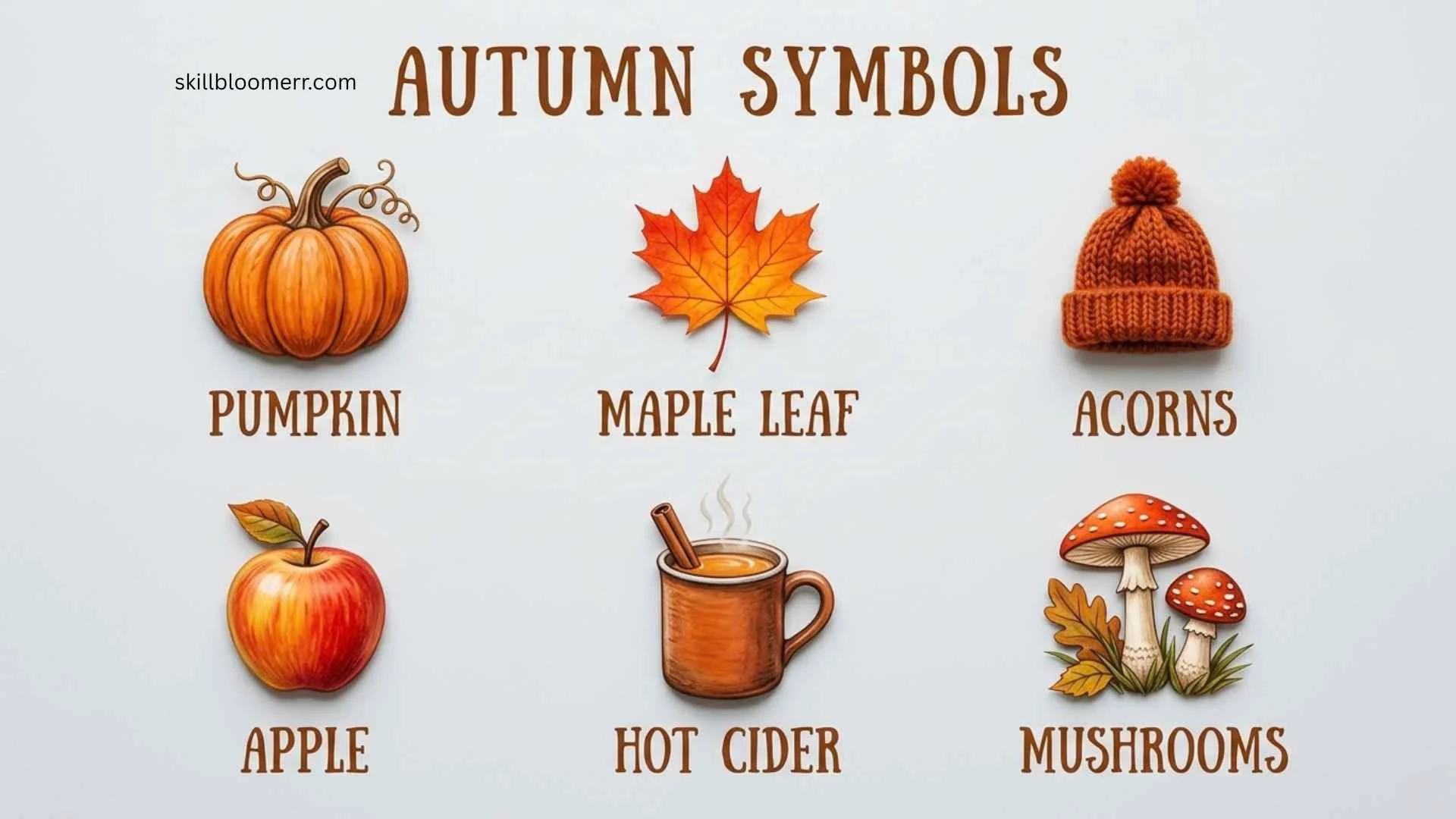
Autumn symbols represent the deep meanings associated with the fall season, including change, transformation, harvest, gratitude, reflection, and the natural cycle of life. From colorful leaves and pumpkins to acorns and warm seasonal colors, these symbols appear in literature, art, traditions, decorations, festivals, and everyday life.
People encounter autumn symbols during seasonal celebrations, Thanksgiving traditions, Halloween decorations, nature photography, clothing designs, and storytelling. These symbols help explain how humans connect with nature and understand ideas such as endings, new beginnings, abundance, and personal growth.
Understanding autumn symbols reveals more than just seasonal decoration. Each symbol carries historical, cultural, and emotional meanings that have developed over centuries across different civilizations and traditions.
Quick Meaning of Autumn Symbols
Autumn symbols represent change, maturity, harvest, gratitude, preparation, and the transition between seasons. Common fall symbols such as leaves, pumpkins, apples, acorns, and candles reflect themes of transformation, abundance, warmth, and the natural cycle of life.
Symbol Overview Table
| Symbol Name | Primary Meaning | Category | Origin | Culture or Civilization | Common Usage | Modern Meaning | Related Symbols |
| Falling Leaves | Change, transition, renewal | Nature Symbol | Ancient seasonal traditions | Global cultures | Art, decoration, literature | Personal transformation | Trees, seasons |
| Pumpkin | Harvest, prosperity, protection | Food/Nature Symbol | Ancient farming traditions | Celtic and North American traditions | Halloween, autumn festivals | Celebration and creativity | Apples, gourds |
| Acorn | Growth, potential, strength | Plant Symbol | Ancient European symbolism | Celtic, Norse, Native traditions | Jewelry, artwork | Future success and resilience | Oak tree |
| Apple | Knowledge, harvest, temptation | Food Symbol | Ancient agricultural societies | European and religious traditions | Festivals, stories | Health and abundance | Orchard symbols |
| Cornucopia | Wealth and plenty | Agricultural Symbol | Ancient Greek mythology | Greek and Roman cultures | Thanksgiving decorations | Gratitude and abundance | Harvest baskets |
| Maple Leaf | Autumn beauty, identity | Nature Symbol | Northern seasonal traditions | Canadian culture | Flags, art, seasonal designs | Change and natural beauty | Forest symbols |
| Candle | Warmth, hope, reflection | Spiritual Symbol | Ancient rituals | Many cultures | Seasonal ceremonies | Comfort and remembrance | Light symbols |
| Scarecrow | Protection, farming | Agricultural Symbol | Farming communities | European and American traditions | Decorations, festivals | Rural life and harvest | Fields, crops |
What Do Autumn Symbols Mean?
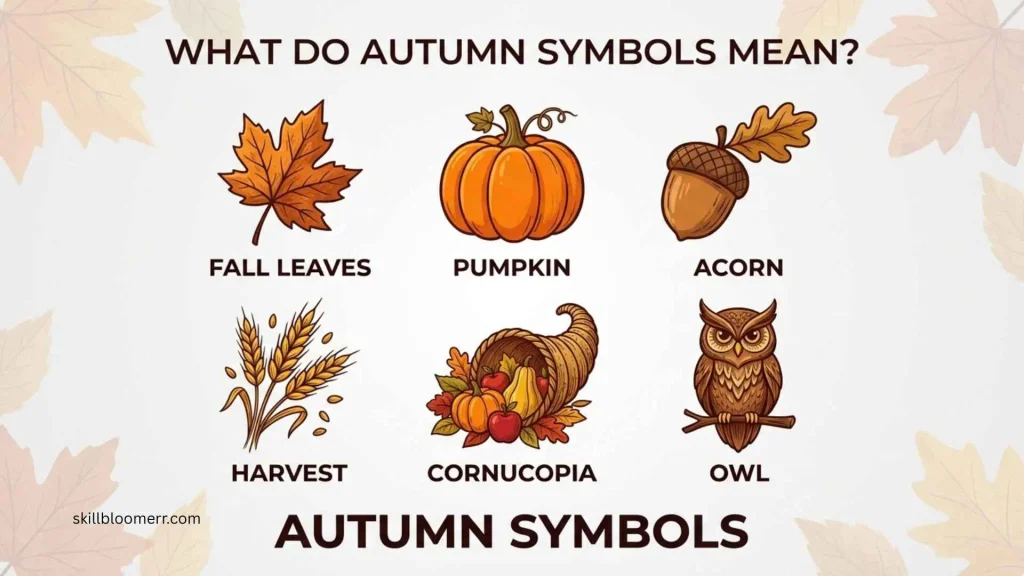
Autumn symbols represent the relationship between nature’s changes and human experiences. As trees lose their leaves, crops are harvested, and temperatures become cooler, people have traditionally connected fall with ideas of transition, preparation, and reflection.
The season itself becomes a symbol of life’s natural rhythm. Autumn is not only seen as an ending because plants prepare for winter, but also as a period of transformation where energy moves inward and future growth begins.
Common meanings connected with autumn symbols include:
- Change: Falling leaves represent accepting transitions and new stages of life.
- Harvest: Fruits, grains, and vegetables symbolize rewards from hard work.
- Gratitude: Autumn traditions often focus on appreciation and sharing.
- Reflection: Shorter days encourage rest, thought, and emotional renewal.
- Preparation: Nature prepares for winter, symbolizing planning and patience.
History and Origin of Autumn Symbols
Ancient Agricultural Connections
The earliest autumn symbols developed from farming societies that depended on seasonal cycles. Ancient communities watched changes in weather, plant growth, and harvest times because survival depended on understanding nature.
Harvest symbols such as grain, fruit, and baskets represented successful farming seasons. These images were often connected with celebrations thanking nature, gods, or spiritual forces for providing food.
Celtic Origins of Fall Traditions
Many modern autumn associations are connected with ancient Celtic traditions, especially the festival of Samhain. Celebrated at the end of the harvest season, Samhain marked the transition from summer to winter.
Symbols associated with this period included:
- Fire
- Lanterns
- Apples
- Seasonal crops
- Natural decorations
Over time, some of these traditions influenced modern Halloween customs and autumn imagery.
Ancient Greek and Roman Symbolism
Ancient Mediterranean cultures also connected autumn with harvest and abundance. Greek mythology included agricultural figures such as Demeter, the goddess of harvest, whose stories reflected themes of growth, loss, and seasonal change.
The cornucopia, meaning “horn of plenty,” became a powerful symbol of abundance in Greek and Roman traditions.
Evolution Through Modern Culture
Today, autumn symbols appear in:
- Seasonal home decorations
- Books and poetry
- Movies and television
- Marketing and branding
- Festivals and holidays
- Fashion designs
Although their original meanings may have changed, many symbols still represent comfort, gratitude, and transformation.
Symbolism and Interpretation of Autumn Symbols
Traditional Meanings
Traditionally, autumn symbols focused on survival, harvest, and preparation. Communities viewed fall as a time to gather resources before winter and celebrate the results of agricultural work.
Examples:
- A basket of apples represented a successful harvest.
- Golden leaves represented nature’s beauty before winter.
- Fire represented warmth and protection during colder months.
Modern Meanings
Modern interpretations often focus on personal growth and emotional experiences.
Autumn can symbolize:
- Accepting change
- Letting go of the past
- Finding beauty in transitions
- Appreciating temporary moments
- Preparing for future goals
A falling leaf, for example, is often viewed as a reminder that change can be natural and meaningful.
Positive Symbolism
Autumn symbols commonly represent:
- Wisdom
- Maturity
- Comfort
- Creativity
- Balance
- Gratitude
- Renewal
Negative Symbolism
Some autumn imagery can also represent:
- Endings
- Aging
- Loss
- Temporary beauty
- The passage of time
These meanings are not necessarily negative. Many traditions view endings as necessary steps toward new beginnings.
Psychological Interpretation
Psychologically, autumn imagery often creates feelings of warmth, nostalgia, and reflection. The colors of fall, including orange, red, yellow, and brown, are commonly associated with comfort, energy, and connection with nature.
Cultural Significance of Autumn Symbols
North American Culture
In North America, autumn symbols are strongly connected with:
- Thanksgiving
- Halloween
- Harvest festivals
- Pumpkin carving
- Fall decorations
Pumpkins, corn, leaves, and apples are especially common symbols because they represent seasonal abundance.
European Culture
European traditions often connect autumn with harvest celebrations and folklore. Many regions celebrate the completion of farming seasons through festivals involving food, music, and community gatherings.
Asian Cultural Interpretations
In several Asian cultures, autumn represents balance, reflection, and appreciation of nature.
For example:
- In Japan, autumn leaves are admired through traditions such as viewing colorful foliage.
- In Chinese culture, autumn festivals often connect with gratitude, family, and seasonal cycles.
Indigenous Perspectives
Many Indigenous cultures have deep connections with seasonal changes. Autumn may represent respect for nature, preparation, and gratitude for the earth’s resources.
Religious or Spiritual Meaning of Autumn Symbols
Autumn symbols often carry spiritual meanings related to transformation, gratitude, and the cycle of life.
Harvest and Thanksgiving
Many spiritual traditions connect harvest with thankfulness. Food gathered from the earth represents blessings, community, and appreciation.
Life, Death, and Renewal
Autumn’s transition into winter can symbolize:
- The temporary nature of life
- Spiritual growth
- Inner reflection
- Renewal after change
Light Symbols
Candles and lanterns used during autumn celebrations often represent:
- Hope
- Guidance
- Protection
- Spiritual awareness
Where Autumn Symbols Are Used
Autumn symbols appear in many areas of life.
Literature and Poetry
Writers often use autumn imagery to represent:
- Aging
- Memory
- Change
- Beauty
- Reflection
Famous poets have used falling leaves and seasonal landscapes as metaphors for human experiences.
Art and Design
Artists use autumn symbols in:
- Paintings
- Photography
- Interior decoration
- Clothing patterns
- Graphic design
Festivals and Celebrations
Common uses include:
- Halloween decorations
- Thanksgiving displays
- Harvest festivals
- Seasonal markets
Tattoos and Jewelry
Autumn symbols in tattoos often represent:
- Personal transformation
- Strength through change
- Connection with nature
- Memories
Common Variations of Autumn Symbols
Different Leaf Designs
Leaves may represent different meanings depending on type:
- Maple leaves: beauty and identity
- Oak leaves: strength and endurance
- Falling leaves: change and transition
Pumpkin Variations
Pumpkins can symbolize different ideas:
- Traditional pumpkins: harvest
- Carved pumpkins: creativity and Halloween
- White pumpkins: modern seasonal decoration
Color Variations
Autumn colors also carry meanings:
| Color | Symbolic Meaning |
| Orange | Energy, warmth, creativity |
| Red | Passion, strength, change |
| Yellow | Happiness, light, optimism |
| Brown | Stability, earth, grounding |
| Gold | Success, abundance |
Common Misconceptions About Autumn Symbols
Autumn Symbols Always Represent Sadness
A common misunderstanding is that autumn symbols only represent endings or sadness. While they can represent change and endings, they also symbolize beauty, gratitude, and growth.
Fall Symbols Have Only One Meaning
Symbols change meaning depending on culture, religion, and personal experience. A leaf may represent loss to one person and freedom to another.
Pumpkins Are Only Halloween Symbols
Pumpkins existed as harvest symbols before becoming strongly associated with Halloween.
Autumn Symbolism Is the Same Everywhere
Different cultures interpret seasonal symbols differently. Geography, history, and traditions influence their meanings.
Interesting Facts About Autumn Symbols
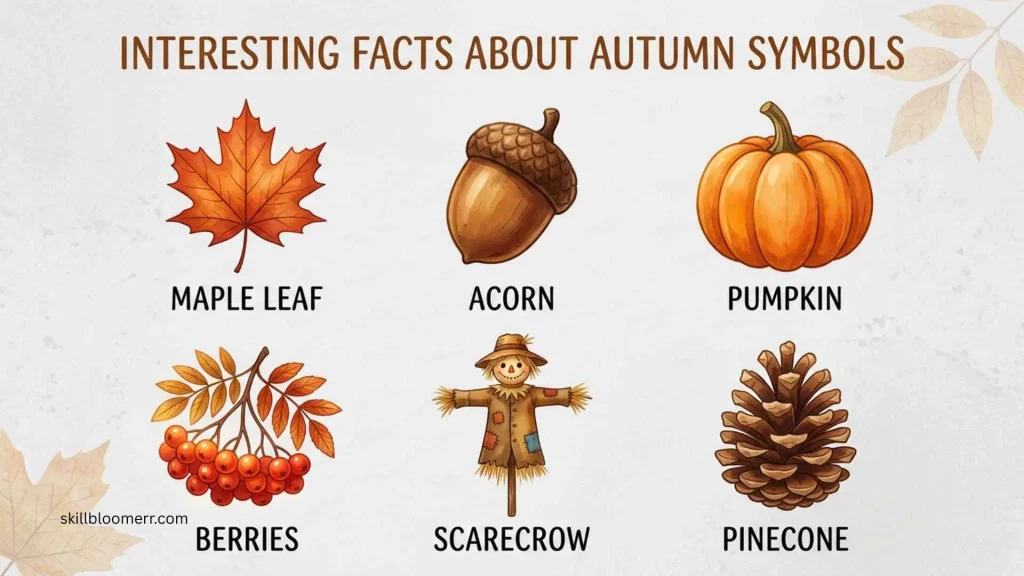
- Leaves change color because chlorophyll breaks down.
The green pigment fades, revealing yellow, orange, and red colors already present in leaves. - The oak tree has long represented strength.
Its acorns became symbols of potential because small seeds can grow into large trees. - The pumpkin became a Halloween symbol through cultural evolution.
Earlier harvest traditions helped shape its modern association. - Autumn festivals exist worldwide.
Many cultures celebrate seasonal changes through food, music, and community gatherings. - The cornucopia comes from ancient mythology.
The “horn of plenty” became a lasting symbol of abundance. - Autumn imagery is common in poetry.
Writers often use fall landscapes to discuss time, memory, and human emotions. - Maple leaves have cultural importance in Canada.
The maple leaf became a national symbol representing nature and identity. - Acorns appear in many decorative designs.
They represent growth, strength, and future possibilities. - Warm autumn colors influence interior design.
Many people associate fall colors with comfort and relaxation. - Autumn symbols connect humans with natural cycles.
They remind people that change is a normal part of life.
Related Symbols
Winter Symbols
Winter symbols such as snowflakes, ice, and evergreen trees represent rest, endurance, and renewal after autumn’s transition.
Spring Symbols
Spring symbols including flowers and butterflies represent rebirth and new beginnings.
Harvest Symbols
Harvest symbols such as wheat, corn, and fruits focus specifically on abundance and gratitude.
Nature Symbols
Trees, mountains, rivers, and animals connect autumn symbolism with broader natural themes.
Frequently Asked Questions
What are the most common autumn symbols?
The most common autumn symbols include falling leaves, pumpkins, apples, acorns, cornucopias, candles, and harvest crops. These symbols represent seasonal change, abundance, gratitude, and preparation for winter.
Why do leaves symbolize autumn?
Leaves symbolize autumn because trees naturally change during this season. Falling leaves represent transformation, letting go, and the natural cycle between growth and rest.
What does a pumpkin symbolize in autumn?
A pumpkin symbolizes harvest, prosperity, creativity, and seasonal celebration. It is also associated with Halloween because of traditions involving carved pumpkins and lanterns.
What do autumn colors represent?
Autumn colors represent warmth, change, maturity, and connection with nature. Orange often symbolizes energy, red represents transformation, and brown represents stability.
Are autumn symbols spiritual?
Many autumn symbols have spiritual meanings related to gratitude, reflection, renewal, and the cycle of life. However, interpretations vary among cultures and individuals.
What does an acorn symbolize?
An acorn symbolizes potential, strength, patience, and future growth. Because it can grow into a large oak tree, it represents small beginnings leading to great outcomes.
Why is the harvest associated with autumn?
Harvest is associated with autumn because many crops traditionally become ready for collection during this season. Communities celebrated successful harvests with festivals and ceremonies.
What is the meaning of a falling leaf tattoo?
A falling leaf tattoo often symbolizes change, personal growth, acceptance, and the beauty of temporary moments.
How are autumn symbols used today?
Today, autumn symbols appear in decorations, clothing, artwork, festivals, literature, branding, and personal designs such as tattoos and jewelry.
Do all cultures view autumn symbols the same way?
No. Different cultures interpret autumn symbols based on their history, environment, beliefs, and traditions. Some focus on harvest, while others emphasize reflection or seasonal beauty.
Key Takeaways
- Autumn symbols represent change, harvest, gratitude, and transformation.
- Leaves are powerful symbols of transition and natural cycles.
- Pumpkins represent harvest, creativity, and seasonal celebrations.
- Acorns symbolize strength, growth, and future potential.
- Different cultures interpret autumn symbols in unique ways.
- Fall imagery appears in art, literature, religion, and celebrations.
- Autumn symbols remind people that change is a natural part of life.
Conclusion
Autumn symbols carry meanings that go far beyond seasonal decoration. From falling leaves and pumpkins to acorns and harvest imagery, these symbols reflect humanity’s connection with nature, time, and personal transformation.
Across cultures and generations, autumn has represented both endings and beginnings. The season reminds people to appreciate change, celebrate abundance, and find beauty in every stage of life.
Whether used in art, traditions, literature, or personal expression, autumn symbols continue to inspire reflection, gratitude, and a deeper understanding of the natural world.

I’m Nathaniel Brooks, an educational writer who loves exploring ideas and making useful knowledge accessible to everyone. I write for SkillBloomerr with a focus on clear explanations, practical tips, and meaningful learning. My goal is to help readers discover something valuable every time they visit the site.
Books: Learn Something New and The Practical Knowledge Handbook
 Ethan Calloway
 Olivia Hartwell