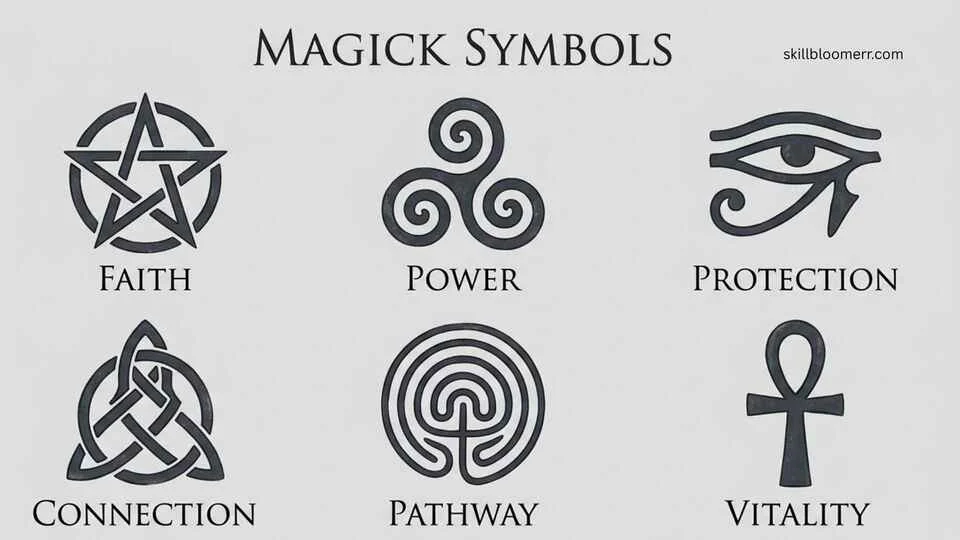
Magick symbols are visual signs, sigils, geometric figures, letters, and sacred emblems used in magical, esoteric, and spiritual traditions to represent ideas, invoke intentions, protect practitioners, focus meditation, or symbolize unseen forces. They appear in ancient manuscripts, ceremonial tools, talismans, grimoires, modern witchcraft, alchemy, astrology, tarot, and contemporary spiritual practices.
Although often associated with mystery, most magic symbols were created as symbolic languages rather than supernatural objects. Their meanings depend on historical context, religious tradition, philosophical interpretation, and the intentions of the people using them. Understanding these symbols requires looking beyond popular culture and examining their origins, evolution, and symbolism across different civilizations.
Whether you have encountered a pentagram on jewelry, an alchemical symbol in an old manuscript, planetary seals in ceremonial magic, or sigils in modern witchcraft, learning about magic symbols reveals centuries of cultural history, symbolism, philosophy, and spiritual practice.
Quick Meaning
Magick symbols are symbolic designs used in magical, spiritual, mystical, and esoteric traditions to express ideas, represent cosmic forces, focus intention, offer protection, or communicate hidden knowledge. Their meanings vary by culture and tradition, making historical context essential for accurate interpretation.
Symbol Overview Table
| Field | Details |
| Symbol Name | Magick Symbols |
| Primary Meaning | Intention, protection, transformation, spiritual connection, hidden knowledge |
| Category | Esoteric and Spiritual Symbols |
| Origin | Ancient civilizations including Egypt, Mesopotamia, Greece, Rome, and medieval Europe |
| Major Traditions | Hermeticism, Alchemy, Astrology, Kabbalah, Ceremonial Magic, Modern Witchcraft |
| First Known Use | Ancient civilizations (over 4,000 years ago for some symbolic systems) |
| Common Usage | Rituals, meditation, talismans, grimoires, jewelry, artwork, tattoos |
| Modern Meaning | Personal spirituality, manifestation, symbolism, self-discovery |
| Unicode | None for “magick symbols” collectively |
| Emoji Equivalent | No direct equivalent |
| Related Symbols | Pentagram, Hexagram, Sigils, Planetary Symbols, Alchemical Symbols, Triple Moon, Ankh, Eye of Horus |
What Do Magick Symbols Mean?
Magick symbols represent concepts rather than literal magical powers. Their purpose is to communicate ideas that words alone may not fully express.
Across traditions, they commonly symbolize:
- Protection
- Transformation
- Wisdom
- Balance
- Spiritual awakening
- Divine connection
- Manifestation of intention
- Harmony between natural forces
In ceremonial traditions, symbols function as visual languages. Practitioners believe they help organize thought, meditation, ritual, or symbolic action rather than acting independently.
For example:
- A protective symbol reminds the practitioner of safety.
- A planetary symbol aligns a ritual with a particular celestial body.
- An alchemical symbol represents both a physical substance and a philosophical concept.
- A sigil embodies a carefully crafted intention.
The meaning comes from both historical tradition and personal interpretation.
History and Origin
Ancient Beginnings
The roots of magic symbols extend into humanity’s earliest civilizations.
Ancient Egyptians covered temples with sacred hieroglyphs and protective signs. Mesopotamian priests carved symbolic seals into clay tablets. Early cultures believed symbols could preserve knowledge and connect humans with divine forces.
Rather than separating religion, philosophy, and magic, ancient societies often viewed them as interconnected.
Classical Greece and Rome
Greek philosophers contributed symbolic geometry and mystical mathematics.
The Pythagoreans believed numbers possessed spiritual qualities. Geometric figures such as circles, triangles, and stars became representations of universal harmony.
Roman mystery religions also adopted symbolic imagery for initiation rituals.
Medieval Europe
The Middle Ages witnessed the compilation of numerous grimoires—books describing ceremonial practices, planetary seals, angelic symbols, and protective diagrams.
Many symbols from this period combined:
- Biblical references
- Hebrew letters
- Greek philosophy
- Astrology
- Medieval alchemy
These traditions heavily influenced later Western ceremonial magic.
Renaissance Esotericism
During the Renaissance, scholars rediscovered classical philosophy and translated ancient texts attributed to Hermes Trismegistus.
This period blended:
- Astrology
- Alchemy
- Sacred geometry
- Kabbalah
- Christian mysticism
Many famous magical diagrams originate from this era.
Modern Revival
During the nineteenth and twentieth centuries, organizations studying Western esoteric traditions revived historical symbols.
Today, magick symbols appear in:
- Contemporary witchcraft
- Neo-pagan traditions
- Meditation
- Symbolic psychology
- Fantasy literature
- Popular culture
- Jewelry and fashion
Symbolism and Interpretation
Traditional Symbolism
Historically, magic symbols represented universal principles.
Examples include:
- Earth
- Air
- Fire
- Water
- Spirit
- Life
- Death
- Rebirth
- Cosmic order
- Divine intelligence
Each tradition interpreted these ideas differently.
Modern Interpretation
Many people today use magic symbols as personal symbols rather than religious objects.
Common modern meanings include:
- Personal growth
- Mindfulness
- Inner strength
- Creativity
- Healing
- Goal setting
- Self-reflection
Positive Symbolism
Positive meanings often include:
- Wisdom
- Protection
- Courage
- Balance
- Enlightenment
- Hope
- Renewal
- Transformation
Negative Associations
Some symbols have been misunderstood because of folklore, horror movies, or sensational media.
Historically, many symbols labeled “dark” originally represented:
- Balance
- Nature
- Five elements
- Divine protection
- Sacred mathematics
Context is crucial.
Psychological Interpretation
Psychologists interested in symbolism often view magical symbols as archetypes.
Rather than possessing objective supernatural power, symbols may:
- Focus attention
- Reinforce beliefs
- Support meditation
- Encourage visualization
- Aid memory
- Strengthen personal rituals
Their influence often comes through human cognition and meaning-making.
Cultural Significance
Magick symbols differ greatly across cultures.
Ancient Egypt
Egyptian symbols emphasized:
- Eternal life
- Divine kingship
- Cosmic order
- Protection in the afterlife
Mesopotamia
Symbols often represented:
- Gods
- Celestial bodies
- Royal authority
- Protective spirits
Greece
Greek traditions connected symbols with:
- Philosophy
- Mathematics
- Mysticism
- Harmony
Celtic Traditions
Celtic symbolism focused on:
- Nature
- Seasonal cycles
- Sacred knots
- Trees
- The interconnectedness of life
Jewish Mysticism
Kabbalistic traditions employ Hebrew letters, the Tree of Life, and complex symbolic systems to explore divine creation and spiritual understanding.
Modern Paganism
Modern practitioners often interpret historical symbols through contemporary spirituality, environmental awareness, and personal practice.
Religious or Spiritual Meaning
Many magic symbols overlap with religious traditions but should not be confused with official religious doctrine.
Sacred Geometry
Shapes such as circles, triangles, spirals, and hexagrams symbolize order in creation.
Ritual Practice
Symbols may appear on:
- Altars
- Candles
- Ritual tools
- Robes
- Talismans
Their purpose is generally symbolic and ceremonial.
Meditation
Many practitioners visualize symbols during meditation to encourage concentration and reflection.
Personal Spirituality
Some people wear magick symbols as reminders of:
- Personal values
- Healing journeys
- Protection
- Spiritual identity
Scientific or Technical Meaning
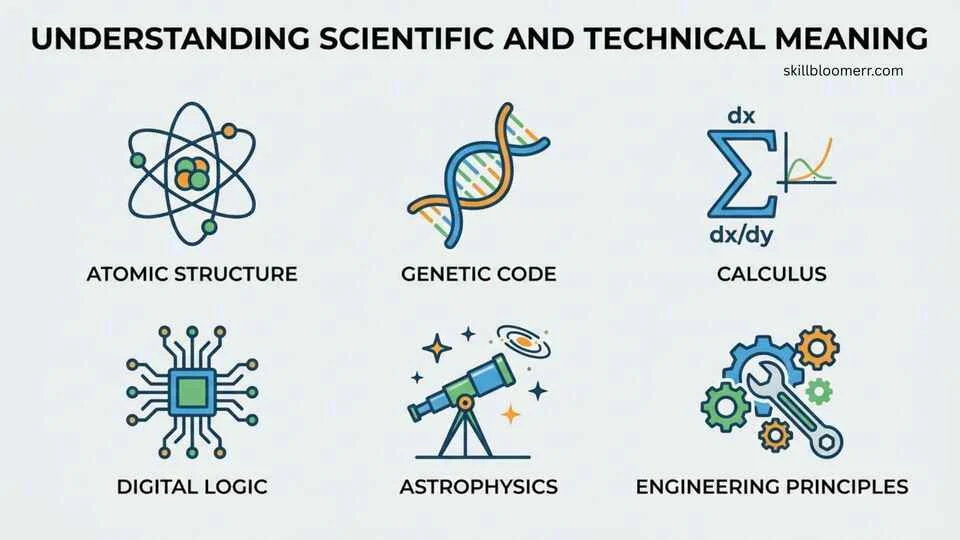
Magick symbols generally do not possess scientific meanings in themselves, but several related systems have historical links with scientific development.
Alchemy
Alchemical symbols represented metals, laboratory substances, and transformation processes.
Alchemy contributed ideas that eventually influenced early chemistry, although modern chemistry is based on empirical science rather than alchemical philosophy.
Astronomy and Astrology
Planetary symbols historically represented visible planets.
Astronomers once used many of the same symbols before standardized scientific notation became common.
Mathematics
Sacred geometry inspired philosophical discussions about mathematical perfection, symmetry, and proportion.
Where the Symbol Is Used
Magick symbols appear in many settings beyond ceremonial traditions.
Books and Grimoires
Historical manuscripts preserve thousands of symbolic diagrams used for teaching and ritual instruction.
Jewelry
Necklaces, rings, and bracelets often feature:
- Pentagrams
- Triple moons
- Sigils
- Planetary symbols
Some wear them for spirituality, while others appreciate their artistic design.
Tattoos
Many people choose symbolic tattoos representing:
- Transformation
- Protection
- Personal growth
- Connection to nature
Researching historical meanings before choosing a permanent design is advisable.
Art
Artists frequently incorporate magical symbolism into paintings, illustrations, sculpture, and digital artwork.
Architecture
Ancient buildings sometimes include protective carvings or geometric patterns believed to represent harmony or sacred space.
Modern Media
Films, novels, role-playing games, and fantasy worlds often adapt historical magic symbols for storytelling, though fictional depictions may differ significantly from historical sources.
Common Variations
Magick symbols include many distinct categories rather than a single universal design.
Pentagram
A five-pointed star representing balance, protection, and the five classical elements in many traditions.
Hexagram
A six-pointed geometric figure interpreted differently across religions and esoteric traditions.
Sigils
Custom-designed symbols representing specific intentions or goals.
Alchemical Symbols
Represent metals, elements, and philosophical concepts.
Planetary Symbols
Associated with celestial bodies and traditional astrology.
Elemental Symbols
Simple triangles and modified triangles represent:
- Fire
- Water
- Air
- Earth
Runes
Ancient Germanic letters later adopted into some magical traditions for divination and symbolism.
Common Misconceptions
All Magick Symbols Are Evil
This is false.
Many symbolize healing, protection, wisdom, or harmony.
Every Symbol Has One Fixed Meaning
Incorrect.
Meaning changes according to:
- Culture
- Historical period
- Religious tradition
- Personal practice
Every Symbol Has Ancient Origins
Not all do.
Some modern symbols were developed during the nineteenth and twentieth centuries.
Symbols Work Without Interpretation
Historically, symbols were understood within larger philosophical systems.
Their significance comes from knowledge, context, and intentional use rather than appearance alone.
Fiction Represents Historical Reality
Movies and games often modify symbols for dramatic effect.
Historical meanings are usually much more nuanced.
Interesting Facts
- The word “magick” uses an added “k.” Occult author Aleister Crowley popularized this spelling to distinguish spiritual practice from stage magic.
- Many magical symbols began as practical notation. Several alchemical signs originally functioned as shorthand for laboratory substances.
- Planetary symbols were once common in astronomy. Early scientific texts frequently used them before modern abbreviations became standard.
- Sacred geometry appears worldwide. Similar geometric designs developed independently in multiple civilizations.
- Sigils can be entirely original. Modern practitioners often create personalized symbols instead of copying historical ones.
- The pentagram predates modern witchcraft by thousands of years. It appeared in ancient Mesopotamia long before contemporary pagan traditions.
- Some grimoires combine multiple languages. Latin, Greek, Hebrew, and symbolic alphabets often appear together.
- Not every magical symbol was secret. Many were displayed openly on buildings, manuscripts, and ceremonial objects.
- Symbols often evolved through translation. As texts moved between cultures, meanings sometimes changed.
- Modern designers frequently use magical motifs for aesthetics. Fashion, graphic design, and entertainment borrow these symbols without religious intent.
Related Symbols
| Symbol | Relationship | Difference |
| Pentagram | Protection and balance | Five-pointed star associated with the five classical elements |
| Sigil | Intention and manifestation | Usually custom-created for a specific purpose |
| Triple Moon | Lunar symbolism | Represents phases of the Moon and feminine spirituality |
| Ankh | Life | Ancient Egyptian symbol of eternal life |
| Eye of Horus | Protection | Egyptian emblem associated with healing and restoration |
| Alchemical Symbols | Transformation | Focus on materials, elements, and philosophical change |
| Planetary Symbols | Celestial influence | Represent planets in astrology and historical astronomy |
| Runes | Symbolic alphabet | Germanic writing system with historical and symbolic meanings |
Frequently Asked Questions
Are magic symbols the same as religious symbols?
No. While some overlap with religious traditions, magic symbols belong to a wide range of philosophical, mystical, ceremonial, and spiritual systems. Their meanings depend on historical context and are not automatically tied to one religion.
Why is “magick” spelled with a “k”?
The spelling “magick” became popular in modern Western esoteric traditions to distinguish ceremonial or spiritual practices from stage magic and entertainment performed by illusionists.
Are magic symbols universally understood?
No. A symbol can have different meanings across cultures, historical periods, and traditions. Understanding its origin is essential before assigning a specific interpretation.
Can anyone use magic symbols?
Many people study or appreciate these symbols from historical, artistic, or cultural perspectives. However, when using symbols connected to living religious or spiritual traditions, respectful research and cultural awareness are important.
Do magic symbols have scientific proof of supernatural power?
Modern science does not verify supernatural effects attributed to magic symbols. Their documented value lies in cultural history, symbolism, artistic expression, and their psychological role in practices such as meditation or ritual.
What is the difference between a sigil and a traditional symbol?
A traditional symbol has an established historical meaning, while a sigil is often a unique design created to represent a specific intention or objective chosen by its creator.
Why do magic symbols appear in movies and games?
They create mystery, historical atmosphere, and visual interest. However, fictional portrayals frequently simplify or alter authentic meanings for storytelling purposes.
Are tattoos of magic symbols always spiritual?
No. Some people choose them for artistic reasons, while others value their historical, philosophical, or personal symbolism. The same design can have different meanings for different individuals.
Which magic symbol is most widely recognized?
The pentagram is probably the best-known magic symbol globally, though it has many historical interpretations ranging from protection and harmony to religious symbolism, depending on the tradition.
Key Takeaways
- Magick symbols are symbolic representations of spiritual, philosophical, and esoteric ideas.
- Their meanings depend heavily on historical and cultural context.
- Many originated in ancient civilizations long before modern occult traditions.
- Common themes include protection, transformation, wisdom, balance, and intention.
- Alchemy, astrology, sacred geometry, and ceremonial traditions all contributed important symbols.
- Popular culture often oversimplifies or misrepresents historical meanings.
- Modern uses range from meditation and jewelry to art, literature, and personal symbolism.
- Understanding the history behind a symbol leads to more accurate interpretation.
Conclusion
Magick symbols form one of history’s richest symbolic languages, connecting ancient civilizations, religious traditions, philosophy, art, and modern spirituality. Rather than representing a single belief system, they reflect thousands of years of human attempts to express invisible ideas through meaningful visual forms.
Whether encountered in medieval manuscripts, sacred geometry, alchemical texts, contemporary witchcraft, or modern design, magic symbols continue to inspire curiosity because they combine history, symbolism, culture, and personal interpretation. Appreciating their origins and context allows readers to understand these enduring symbols with greater accuracy and respect.

 Ethan Calloway
 Nathaniel Brooks