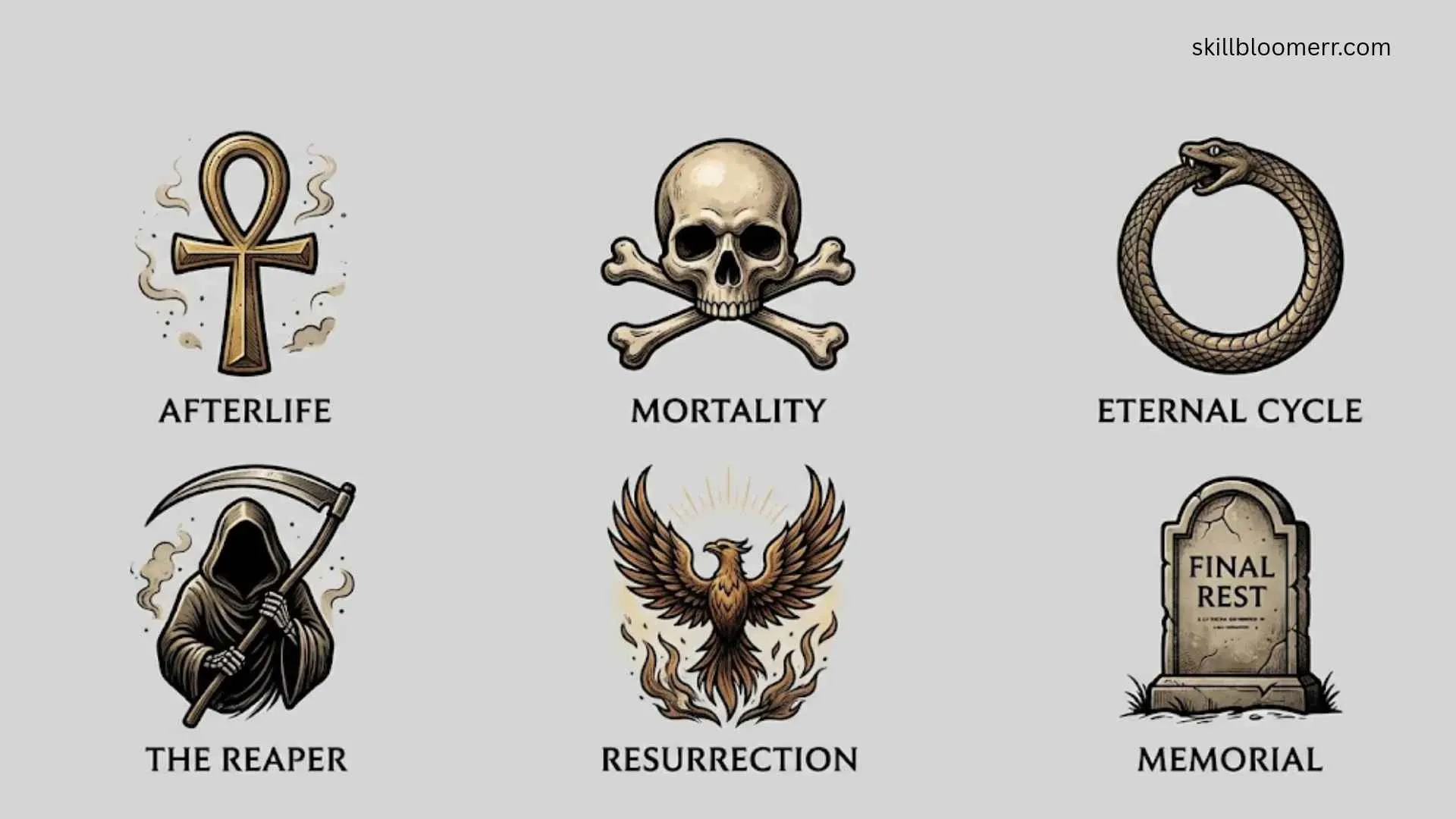
Ancient symbols of death represent humanity’s oldest attempts to understand mortality, the afterlife, transformation, and the mystery of existence. From skulls and hourglasses to Egyptian hieroglyphs and Celtic markings, these symbols appeared in temples, burial sites, artwork, jewelry, literature, and religious ceremonies across civilizations.
The meaning of ancient symbols of death is not limited to fear or endings. Many cultures viewed death as a transition, a spiritual journey, a reminder of life’s value, or a connection between the physical world and the unknown.
These symbols continue to appear today in tattoos, movies, architecture, fashion, and modern art.
This guide explores the history, meanings, cultural interpretations, religious connections, and modern uses of the most important death symbols from ancient civilizations around the world.
Quick Meaning of Ancient Symbols of Death
Ancient symbols of death are visual signs used by past civilizations to represent mortality, the end of physical life, spiritual transformation, rebirth, and the connection between life and the afterlife. Common examples include skulls, bones, ravens, hourglasses, black animals, tomb symbols, and ancient religious markings.
Symbol Overview Table
| Symbol Name | Primary Meaning | Category | Origin | Civilization or Culture | First Known Use | Common Usage | Modern Meaning |
| Skull | Mortality, death, human existence | Human symbol | Prehistoric era | Many cultures worldwide | Ancient burial practices | Art, warnings, tattoos | Death awareness, rebellion |
| Skeleton/Bones | Physical remains after death | Anatomical symbol | Ancient civilizations | Greek, Roman, European cultures | Ancient funerary art | Religion, art, warnings | Mortality and impermanence |
| Ankh | Life, eternal existence | Religious symbol | Ancient Egypt | Egyptians | Around 3000 BCE | Temples, tombs | Eternal life |
| Grim Reaper | Personification of death | Mythological symbol | Medieval Europe | European traditions | Middle Ages | Literature, art | Inevitable death |
| Hourglass | Passing of time and limited life | Time symbol | Ancient world | Europe and Mediterranean cultures | Ancient timekeeping traditions | Tomb art, paintings | Time running out |
| Raven | Death, mystery, prophecy | Animal symbol | Ancient mythology | Norse, Celtic, Greek traditions | Ancient myths | Stories and rituals | Wisdom, mystery |
| Memento Mori | Remember death | Philosophical symbol | Roman tradition | Roman and Christian cultures | Ancient Rome | Art and literature | Reminder to live wisely |
What Do Ancient Symbols of Death Mean?
Ancient symbols of death represent the relationship between human beings and mortality. They were created to explain something every society faces: the end of physical life.
While many people associate death symbols with darkness, ancient cultures often viewed them in more complex ways. Death could represent:
- The end of one stage and the beginning of another
- Spiritual transformation
- The journey into an afterlife
- Respect for ancestors
- The importance of living meaningfully
- The natural cycle of existence
A skull, for example, was not always a symbol of danger. In many traditions, it represented wisdom, awareness, and the temporary nature of human life.
History and Origin of Death Symbols
Early Human Burial Symbols
The earliest death symbols appeared alongside ancient burial practices. Archaeological discoveries show that prehistoric humans created rituals around death, including placing objects, tools, and decorations with the deceased.
These practices suggest that early societies believed death was more than a physical ending. Symbols helped communities express beliefs about spirits, ancestors, and the continuation of existence.
Ancient Egyptian Death Symbols
Ancient Egypt developed one of the world’s most detailed systems of death symbolism. Egyptians believed death was a transition into another form of existence.
Important Egyptian death-related symbols included:
- Ankh: Symbol of life and eternal existence
- Scarab beetle: Associated with rebirth and regeneration
- Eye of Horus: Protection and healing
- Tomb paintings: Guides for the journey after death
Egyptian pyramids, burial chambers, and funerary texts contained symbols designed to protect and guide souls.
Greek and Roman Death Symbolism
Ancient Greeks and Romans used death symbols to express ideas about fate, honor, and remembrance.
Common examples included:
- Skulls
- Funeral masks
- Laurel wreaths
- Tomb inscriptions
- Underworld imagery
The Greeks associated death with figures such as Hades, ruler of the underworld, while Romans often used memorial art to preserve family history.
Medieval European Death Symbols
During the Middle Ages, death symbolism became strongly connected with religion. Events such as wars and pandemics influenced how people viewed mortality.
Symbols like:
- The Grim Reaper
- Skeleton figures
- The danse macabre (dance of death)
reminded people that death comes to everyone regardless of wealth or social status.
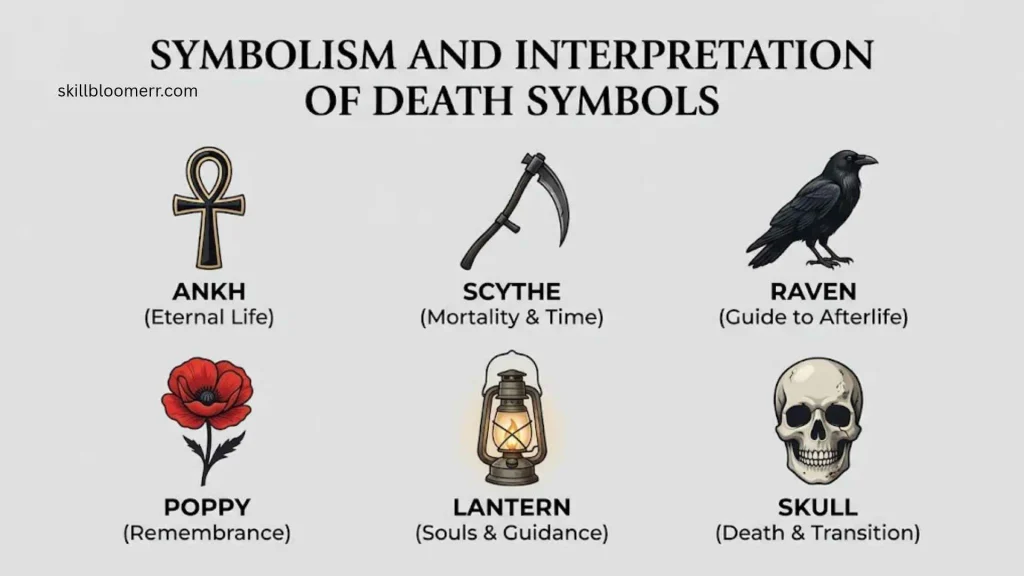
Symbolism and Interpretation of Death Symbols
Traditional Meanings
Traditional interpretations of death symbols often include:
- Mortality
- The afterlife
- Spiritual judgment
- Transformation
- Ancestor connection
- The cycle of nature
Different societies developed their own meanings based on religious beliefs, geography, and historical experiences.
Modern Meanings
Today, death symbols may represent:
- Personal transformation
- Overcoming fear
- Acceptance of change
- Rebellion against social rules
- Remembering loved ones
- Appreciation of life
A person wearing a skull tattoo may not be celebrating death. Instead, they may be expressing strength, survival, or a reminder to live fully.
Psychological Interpretation
Psychologically, death symbols help people process difficult ideas about mortality. They provide a visual language for discussing topics that are often uncomfortable.
Symbols of death can encourage:
- Self-reflection
- Emotional acceptance
- Understanding change
- Personal growth
They remind humans that recognizing death can increase appreciation for life.
Cultural Significance of Ancient Death Symbols

Ancient Egyptian Culture
Egyptian death symbols focused heavily on immortality and spiritual continuation. Death was viewed as a doorway rather than a final ending.
Burial objects, hieroglyphs, and temple artwork were created to support the deceased in the next world.
Celtic Culture
Celtic traditions often connected death with nature, seasons, and cycles of renewal.
Symbols associated with death and transformation included:
- Ravens
- Crows
- Sacred trees
- Spirals
These symbols represented change rather than simple destruction.
Norse Culture
Norse mythology contained powerful death symbols connected with warriors, fate, and the afterlife.
The raven was especially important because it was associated with Odin, knowledge, and battlefields.
Mexican Cultural Traditions
In Mexican traditions, especially during Día de los Muertos (Day of the Dead), skull imagery represents remembrance rather than fear.
The decorated sugar skull became a symbol of:
- Family connection
- Honoring ancestors
- Celebrating life
Asian Interpretations
Many Asian cultures view death symbols through ideas of balance, karma, rebirth, and spiritual transformation.
Death may represent a change in existence rather than complete disappearance.
Religious or Spiritual Meaning of Death Symbols
Christianity
Christian traditions often use death symbols to represent sacrifice, resurrection, and eternal life.
Examples include:
- Cross
- Skull at the foot of the cross in some artworks
- Cemetery symbols
The skull sometimes appears in Christian art as a reminder of human mortality.
Hinduism
Hindu traditions often view death as part of the cycle of birth, death, and rebirth.
Symbols connected with death may represent:
- Transformation
- Release from physical existence
- Spiritual awakening
Buddhism
Buddhist teachings frequently use meditation on death as a way to understand impermanence.
Death symbols can encourage awareness that all physical things change.
Where Ancient Symbols of Death Are Used Today
Ancient death symbols continue to appear in many areas of modern life.
Tattoos
Death symbols are popular tattoo designs because they can represent:
- Strength
- Personal change
- Survival
- Memory
- Acceptance of mortality
Jewelry
Skulls, bones, and ancient symbols appear in rings, necklaces, and bracelets as expressions of identity or philosophy.
Literature and Movies
Death symbolism appears frequently in:
- Horror stories
- Fantasy novels
- Mythological films
- Historical dramas
Authors use death symbols to explore fear, mystery, and human nature.
Architecture and Cemeteries
Gravestones, monuments, and memorial structures often contain traditional death imagery.
Examples include:
- Angels
- Skulls
- Hourglasses
- Broken columns
Common Variations of Death Symbols
Skull Variations
Different skull designs carry different meanings:
- Human skull: Mortality and existence
- Animal skull: Nature and power
- Decorated skull: Celebration and remembrance
Hourglass Variations
An hourglass may appear:
- With wings: Time moving quickly
- Broken: Life interrupted
- Combined with skulls: Mortality
Animal Death Symbols
Animals connected with death symbolism include:
- Raven
- Crow
- Owl
- Snake
- Black cat
Their meanings change depending on cultural context.
Common Misconceptions About Death Symbols

Death Symbols Always Represent Evil
This is one of the biggest misunderstandings. Many ancient death symbols were not created to represent evil. They often represented wisdom, transition, and respect for life.
Skulls Only Mean Danger
Skulls can symbolize many things, including courage, knowledge, protection, and remembrance.
All Cultures View Death the Same Way
Death symbolism varies greatly. One culture may see a symbol as frightening, while another may view it as sacred.
Ancient Symbols Have Only One Meaning
Symbols change over time. Their meaning depends on location, historical period, religion, and personal interpretation.
Interesting Facts About Ancient Symbols of Death
- Skulls are among humanity’s oldest symbols.
Humans have used skull imagery for thousands of years to represent mortality and identity. - The Egyptian ankh was not originally a death symbol.
It represented life and eternal existence, especially connected with beliefs about the afterlife. - The Grim Reaper is a relatively recent symbol.
It became widely recognized in medieval Europe. - Ravens appear in many death myths.
Their association with battlefields and mystery made them powerful symbols in different cultures. - Death symbols often teach life lessons.
Many traditions used them to encourage people to value their limited time. - The hourglass became connected with mortality because of time.
It visually represents life gradually running out. - Ancient tombs contained symbolic messages.
Many civilizations used artwork and inscriptions to communicate beliefs about death. - Death symbols are common in philosophy.
Thinkers used mortality symbols to explore meaning, existence, and human purpose. - Some cultures celebrate death instead of mourning it.
Traditions such as Día de los Muertos focus on remembrance and connection. - Death symbols continue evolving today.
Modern artists use ancient imagery to discuss identity, change, and personal experiences.
Related Symbols of Death
Skull Symbol
The skull is the most recognized death symbol. It represents mortality, human nature, and the temporary nature of life.
Grim Reaper Symbol
The Grim Reaper represents death as a personified figure who arrives at the end of life.
Hourglass Symbol
The hourglass focuses on time, reminding people that life has limits.
Raven Symbol
The raven represents mystery, intelligence, prophecy, and connections with death in various mythologies.
Ouroboros Symbol
The snake eating its tail represents cycles, renewal, and the endless nature of existence.
Frequently Asked Questions
What is the oldest symbol of death?
Some of the oldest death-related symbols come from prehistoric burial practices, including skull imagery and grave objects. These symbols show early human attempts to understand mortality, ancestors, and spiritual beliefs.
Why are skulls considered symbols of death?
Skulls represent death because they are the remaining physical structure after a person dies. Many cultures use skull imagery as a reminder of mortality, wisdom, and the temporary nature of human life.
Are death symbols always negative?
No. Many death symbols represent transformation, rebirth, remembrance, and spiritual growth. Their meaning depends on cultural background and personal interpretation.
What ancient culture had the strongest death symbolism?
Ancient Egypt developed one of the most detailed death symbol systems. Egyptian beliefs included elaborate rituals, tomb art, and symbols connected with eternal life.
What animal symbolizes death in ancient cultures?
Ravens and crows are among the most common animals associated with death symbolism. They appear in Norse, Celtic, and other mythological traditions.
What does a skull tattoo symbolize?
A skull tattoo may represent mortality, strength, overcoming challenges, remembrance, rebellion, or acceptance of life’s temporary nature.
Why did ancient people create death symbols?
Ancient people created death symbols to express beliefs about the afterlife, honor the dead, explain mysteries, and help communities understand loss.
Are death symbols used in religion?
Yes. Many religions use symbols connected with death, resurrection, rebirth, and spiritual transformation.
What is the meaning of memento mori?
Memento mori is a Latin phrase meaning “remember that you will die.” It encourages people to recognize mortality and live meaningful lives.
How are ancient death symbols used today?
Today, death symbols appear in tattoos, fashion, art, films, literature, jewelry, and spiritual practices as expressions of identity and philosophy.
Key Takeaways
- Ancient symbols of death represent more than endings; they often symbolize transformation and remembrance.
- Different civilizations created unique meanings for death-related imagery.
- Egyptian, Celtic, Norse, Greek, Roman, and Christian traditions all developed important death symbols.
- Skulls, ravens, hourglasses, and the Grim Reaper remain powerful modern symbols.
- Death symbolism often teaches people to appreciate life.
- Cultural context determines how a death symbol is understood.
- Many ancient symbols continue influencing modern art, religion, and personal expression.
Conclusion
Ancient symbols of death reveal how civilizations throughout history have tried to understand mortality, spirituality, and the meaning of existence. These symbols were never simply about fear. They represented life cycles, remembrance, transformation, and humanity’s search for answers about what comes after death.
From Egyptian temples and Roman monuments to modern tattoos and films, ancient symbols of death continue to influence the way people think about mortality. Their lasting power comes from their ability to connect past and present, reminding us that understanding death is also a way of understanding life.

I’m Olivia Hartwell, a writer passionate about learning, personal growth, and practical education. I enjoy researching new ideas and sharing them in a way that feels easy to understand and useful. Through my work with SkillBloomerr, I aim to give readers reliable information they can apply in real life.
Books: Small Steps, Big Growth and The Curious Mind
 Nathaniel Brooks