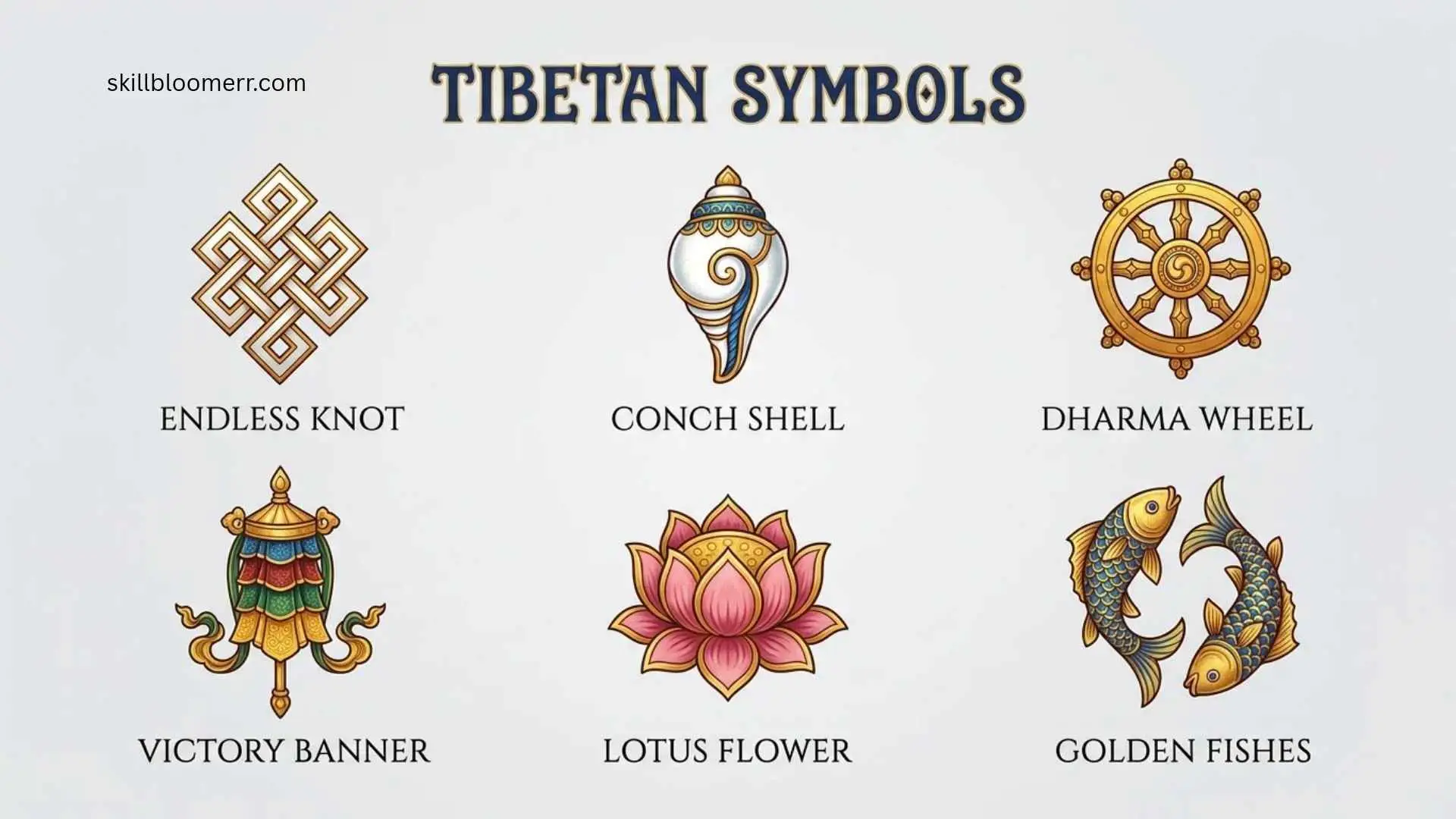
Tibetan symbols are sacred designs, artistic patterns, and spiritual representations that express the beliefs, philosophy, and traditions of Tibetan Buddhism and Himalayan cultures.
These symbols appear in temples, prayer flags, paintings, jewelry, tattoos, manuscripts, meditation objects, and traditional artwork.
Each Tibetan symbol carries a deeper message about wisdom, protection, compassion, balance, and the journey toward enlightenment. From the powerful Eight Auspicious Symbols to ancient Buddhist signs, these images help people understand complex spiritual ideas through simple visual forms.
In this guide, you will discover the meaning of Tibetan symbols, their historical origins, religious importance, cultural interpretations, common uses, variations, and the stories behind some of the most recognized symbols in Tibetan tradition.
Quick Meaning of Tibetan Symbols
Tibetan symbols are visual representations of Buddhist teachings, spiritual values, and cultural beliefs from Tibet and the Himalayan region. They often symbolize concepts such as enlightenment, protection, good fortune, compassion, wisdom, and harmony. Many Tibetan symbols are connected to Tibetan Buddhism and are used in rituals, meditation, art, and daily life.
Tibetan Symbols Overview Table
| Symbol Name | Primary Meaning | Category | Origin | Culture | First Known Use | Common Usage | Modern Meaning |
| Endless Knot | Interconnection, eternity, wisdom | Buddhist Symbol | Ancient India and Tibet | Tibetan Buddhism | Ancient Buddhist traditions | Art, jewelry, tattoos | Balance and connection |
| Lotus Flower | Purity and spiritual awakening | Buddhist Symbol | Ancient India | Himalayan Buddhism | Early Buddhist art | Meditation, paintings | Growth and transformation |
| Eight Auspicious Symbols | Blessings and enlightenment | Religious Symbol | Indian Buddhist tradition | Tibetan Buddhism | Early Buddhist teachings | Ceremonies and temples | Spiritual prosperity |
| Om Symbol | Sacred sound and consciousness | Spiritual Symbol | Indian traditions | Tibetan Buddhism and Hinduism | Ancient Sanskrit traditions | Meditation and chanting | Inner peace |
| Dharma Wheel | Buddha’s teachings and spiritual path | Buddhist Symbol | Ancient India | Buddhism worldwide | Around Buddha’s era | Temples and flags | Wisdom and guidance |
| Tibetan Knot | Eternal connection | Decorative Symbol | Tibetan culture | Tibet and Himalayas | Traditional Buddhist art | Crafts and jewelry | Unity and harmony |
What Do Tibetan Symbols Mean?
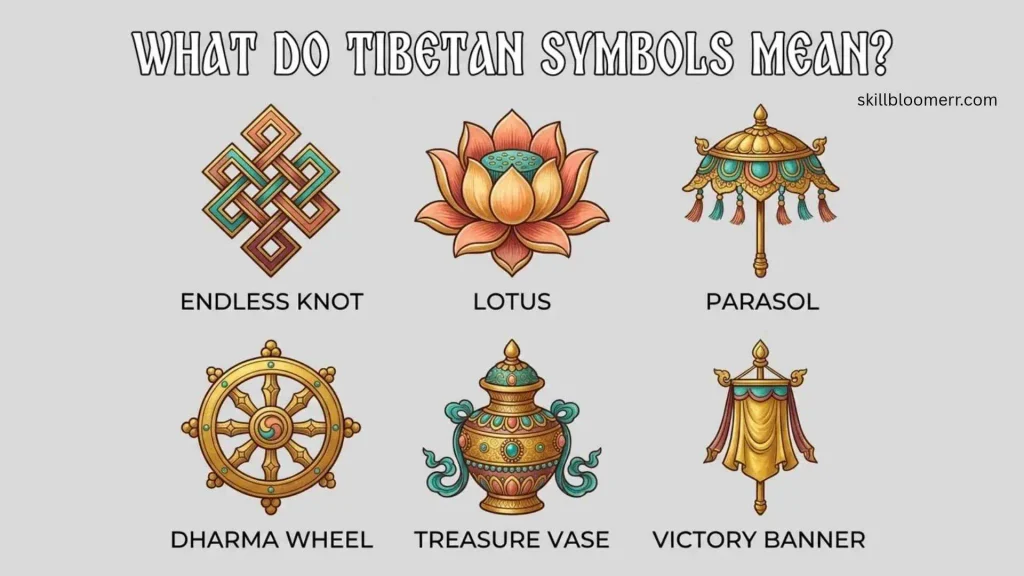
Tibetan symbols represent spiritual ideas that are central to Tibetan Buddhism and Himalayan philosophy. Instead of using only written teachings, Tibetan traditions use visual symbols to communicate deep concepts about life, consciousness, morality, and spiritual development.
Many symbols are designed to remind practitioners of important principles:
- Wisdom: Understanding reality beyond ordinary perception.
- Compassion: Showing kindness toward all living beings.
- Protection: Guarding against negative thoughts and harmful influences.
- Balance: Creating harmony between body, mind, and environment.
- Enlightenment: Achieving spiritual awakening and freedom from suffering.
The meaning of a Tibetan symbol can change depending on its context. A lotus flower in a temple painting may represent spiritual purity, while the same lotus design on jewelry may represent personal growth and inner strength.
History and Origin of Tibetan Symbols
Ancient Roots of Tibetan Symbolism
Tibetan symbols developed through a mixture of indigenous Tibetan traditions, Indian Buddhist teachings, and Himalayan artistic influences. Before Buddhism arrived in Tibet, the region followed the indigenous Bon tradition, which also used sacred symbols, protective signs, and spiritual imagery.
During the 7th century, Buddhism began spreading in Tibet through connections with India and neighboring regions. Over time, Tibetan artists and spiritual teachers adapted Buddhist symbols into unique Tibetan forms.
Development Through Tibetan Buddhism
Tibetan Buddhism became strongly established during the reign of King Songtsen Gampo in the 7th century. Later teachers, including Indian Buddhist masters such as Padmasambhava and Atisha, helped develop Tibetan religious traditions.
Symbols became important tools for:
- Teaching Buddhist philosophy
- Supporting meditation practices
- Decorating monasteries
- Creating sacred art
- Representing spiritual protection
Evolution Over Time
Originally, Tibetan symbols were mainly used in religious settings. Today, they appear worldwide in:
- Contemporary art
- Fashion
- Home decoration
- Meditation spaces
- Cultural exhibitions
- Personal jewelry
Although their use has expanded, many symbols continue to maintain their original spiritual meanings.
Symbolism and Interpretation of Tibetan Symbols
Traditional Meanings
Traditional Tibetan symbolism focuses on spiritual transformation. Many symbols are not decorative only; they serve as reminders of Buddhist teachings.
For example:
- The lotus flower represents rising above difficulties, just as a lotus grows from muddy water but blooms beautifully.
- The endless knot represents the connection between wisdom and compassion.
- The dharma wheel represents the path taught by Buddha.
Positive Symbolism
Common positive meanings include:
- Peace
- Protection
- Good fortune
- Spiritual awareness
- Emotional balance
- Knowledge
- Compassion
These meanings explain why Tibetan symbols are often placed in homes, meditation rooms, and personal objects.
Negative or Misunderstood Interpretations
Most Tibetan symbols are not considered negative. However, some people misunderstand them because they see them outside their original religious context.
For example:
- A fierce deity image may appear frightening but often represents protection against ignorance or harmful forces.
- A skull symbol in Tibetan Buddhist art does not usually represent death alone; it can symbolize transformation and freedom from attachment.
Psychological Interpretation
From a psychological perspective, symbols work as visual reminders. Seeing a meaningful symbol repeatedly can reinforce personal values, meditation practices, and emotional connections.
A person wearing an endless knot pendant may view it as a reminder of relationships, balance, or personal growth.
Cultural Significance of Tibetan Symbols
Tibetan symbols are deeply connected with the identity, history, and artistic traditions of Tibetan communities.
Tibetan Buddhism
In Tibetan Buddhism, symbols help explain teachings that are difficult to describe with words. Monks, artists, and practitioners use them during:
- Meditation
- Religious ceremonies
- Prayer practices
- Temple decoration
Himalayan Cultures
Tibetan symbols are also important in regions influenced by Tibetan culture, including:
- Nepal
- Bhutan
- Northern India
- Mongolia
- Himalayan communities
Different regions may create unique artistic styles while maintaining similar meanings.
Tibetan Art and Architecture
Symbols appear in:
- Thangka paintings
- Monastery walls
- Prayer wheels
- Sculptures
- Mandalas
- Ritual objects
Artists carefully follow traditional guidelines because the placement and design of symbols often have spiritual significance.
Religious or Spiritual Meaning of Tibetan Symbols

Tibetan symbols have strong spiritual importance, especially within Vajrayana Buddhism.
The Eight Auspicious Symbols
The Eight Auspicious Symbols are among the most recognized Tibetan Buddhist symbols. They represent blessings associated with Buddha’s teachings.
They include:
- Conch Shell: Represents the sound of Buddhist teachings spreading throughout the world.
- Endless Knot: Represents eternal connection and the relationship between wisdom and compassion.
- Lotus Flower: Represents purity and spiritual awakening.
- Dharma Wheel: Represents Buddhist teachings and the path toward enlightenment.
- Victory Banner: Represents overcoming obstacles and spiritual victory.
- Golden Fish: Represents freedom and happiness.
- Treasure Vase: Represents abundance and spiritual wealth.
- Parasol: Represents protection from suffering and harmful influences.
Meditation and Sacred Practice
Tibetan symbols are used during meditation because they help practitioners focus their minds. A symbol can act as a visual object for contemplation and spiritual reflection.
Mandalas
Mandalas are complex sacred diagrams used in Tibetan Buddhism. They represent the universe and are used as meditation tools.
A mandala often includes:
- Geometric patterns
- Deities
- Sacred directions
- Spiritual pathways
Where Tibetan Symbols Are Used
Temples and Monasteries
Tibetan symbols decorate religious buildings throughout Tibet and Himalayan regions. They appear on:
- Walls
- Doors
- Altars
- Prayer halls
Prayer Flags
Colorful Tibetan prayer flags often contain sacred symbols and mantras. They are traditionally believed to spread blessings and positive intentions through the wind.
Jewelry and Tattoos
Many people use Tibetan symbols in jewelry and tattoos because they represent personal beliefs such as:
- Spiritual growth
- Protection
- Inner peace
- Connection
However, respectful understanding is important because many symbols have sacred meanings.
Art and Literature
Tibetan symbols appear in:
- Religious manuscripts
- Paintings
- Sculptures
- Books about Buddhism
- Cultural artwork
Common Variations of Tibetan Symbols
Artistic Variations
The same symbol may look different depending on:
- Artist style
- Region
- Historical period
- Material used
For example, an endless knot may have simple lines in modern jewelry but highly detailed patterns in temple artwork.
Regional Variations
Tibetan-inspired symbols may differ between:
- Tibet
- Nepal
- Bhutan
- Mongolia
- Indian Himalayan regions
Local cultures often add their own artistic influences.
Modern Adaptations
Today, Tibetan symbols appear in:
- Minimalist designs
- Modern tattoos
- Digital artwork
- Fashion patterns
Modern versions may simplify traditional designs while keeping their symbolic meaning.
Common Misconceptions About Tibetan Symbols

Tibetan Symbols Are Only Decorative
Many people assume these symbols are simply artistic designs. In reality, they often carry philosophical and religious meanings.
All Tibetan Symbols Have the Same Meaning Everywhere
Symbol meanings can change based on:
- Religious tradition
- Cultural background
- Personal interpretation
Tibetan Symbols Are Only Buddhist
Many Tibetan symbols are connected to Buddhism, but some also reflect older Himalayan traditions, including Bon influences.
Wearing a Symbol Automatically Gives Protection
Traditionally, symbols are connected with spiritual practice and intention. Simply wearing a symbol does not replace ethical behavior or personal development.
Interesting Facts About Tibetan Symbols
- The endless knot has no beginning or end.
This design represents the interconnected nature of life and knowledge. - The lotus is one of Buddhism’s most important images.
Its growth from muddy water represents spiritual development. - Tibetan symbols often combine art and philosophy.
A single design can communicate complex teachings. - Prayer flags are connected with Tibetan spiritual traditions.
Their symbols and mantras represent blessings and compassion. - Mandalas can take many hours or days to create.
Traditional sand mandalas require patience and careful attention. - The dharma wheel is used across many Buddhist traditions.
It represents Buddha’s teachings and spiritual progress. - Colors have symbolic meanings in Tibetan art.
Different colors may represent elements, qualities, or spiritual concepts. - Tibetan symbols influenced Himalayan architecture.
Many monasteries incorporate symbolic designs into their structures. - Some Tibetan symbols are thousands of years old.
Their roots connect with ancient Indian and Himalayan traditions. - Tibetan symbolism continues to evolve.
Modern artists use traditional symbols while creating new interpretations.
Related Symbols
Buddhist Symbols
Buddhist symbols share many themes with Tibetan symbols, including:
- Enlightenment
- Compassion
- Wisdom
- Spiritual freedom
Hindu Symbols
Some Tibetan symbols have connections with Indian religious traditions, especially through shared historical development.
Celtic Symbols
Celtic symbols, like Tibetan symbols, often represent ideas such as eternity and connection, although their cultural origins are different.
Mandala Symbols
Mandala designs appear in several spiritual traditions and often represent unity, balance, and the structure of existence.
Frequently Asked Questions
What are the most important Tibetan symbols?
The most important Tibetan symbols include the endless knot, lotus flower, dharma wheel, conch shell, treasure vase, golden fish, victory banner, and parasol. These symbols are especially significant because they represent major Buddhist teachings and spiritual values.
What does the Tibetan endless knot symbolize?
The Tibetan endless knot symbolizes the connection between wisdom and compassion. Its continuous design represents eternity, interconnectedness, and the idea that all aspects of life are connected.
Are Tibetan symbols religious?
Many Tibetan symbols are religious because they developed within Tibetan Buddhism. However, some are also used culturally and artistically by people who appreciate their meanings beyond religious practice.
What does the lotus mean in Tibetan Buddhism?
The lotus represents purity, transformation, and enlightenment. Because the flower grows from muddy water but remains beautiful, it symbolizes rising above challenges and achieving spiritual growth.
Can anyone use Tibetan symbols?
People can appreciate Tibetan symbols, but they should understand their cultural and religious importance. Using sacred symbols respectfully helps preserve their meaning and honors the traditions behind them.
What does the Tibetan Om symbol mean?
The Om symbol represents sacred sound, consciousness, and spiritual awareness. It is connected with meditation practices and appears in several Indian and Himalayan spiritual traditions.
Why are Tibetan symbols used in tattoos?
Many people choose Tibetan symbols as tattoos because they represent personal values such as peace, strength, protection, and spiritual development. Understanding the original meaning is important before choosing a design.
What are Tibetan prayer flags?
Tibetan prayer flags are colorful cloth flags containing sacred texts, symbols, and images. They are traditionally placed outdoors because the wind carries prayers and blessings throughout the environment.
Are Tibetan symbols the same as Buddhist symbols?
Tibetan symbols overlap with Buddhist symbols but have unique Tibetan artistic and cultural characteristics. Tibetan Buddhism developed its own styles, interpretations, and ceremonial uses.
What is the meaning of Tibetan mandalas?
Tibetan mandalas represent the universe and spiritual pathways. They are used as meditation tools to help practitioners focus on inner awareness and enlightenment.
Key Takeaways
- Tibetan symbols communicate spiritual teachings through visual designs.
- Many symbols come from Tibetan Buddhism and ancient Himalayan traditions.
- The Eight Auspicious Symbols are among the most important Tibetan symbols.
- Meanings can vary depending on cultural and religious context.
- Tibetan symbols appear in temples, art, jewelry, tattoos, and meditation practices.
- Respectful understanding is important when using sacred designs.
- Symbols such as the lotus, endless knot, and dharma wheel represent universal ideas like wisdom, compassion, and transformation.
Conclusion
Tibetan symbols are much more than artistic decorations. They represent centuries of spiritual knowledge, cultural identity, and philosophical ideas developed across Tibet and the Himalayan world.
From the endless knot that expresses connection to the lotus that represents transformation, each symbol carries a message about human growth, awareness, and the search for meaning. Understanding Tibetan symbols allows people to appreciate not only their beauty but also the deep traditions and beliefs behind them.

I’m Nathaniel Brooks, an educational writer who loves exploring ideas and making useful knowledge accessible to everyone. I write for SkillBloomerr with a focus on clear explanations, practical tips, and meaningful learning. My goal is to help readers discover something valuable every time they visit the site.
Books: Learn Something New and The Practical Knowledge Handbook
 Olivia Hartwell