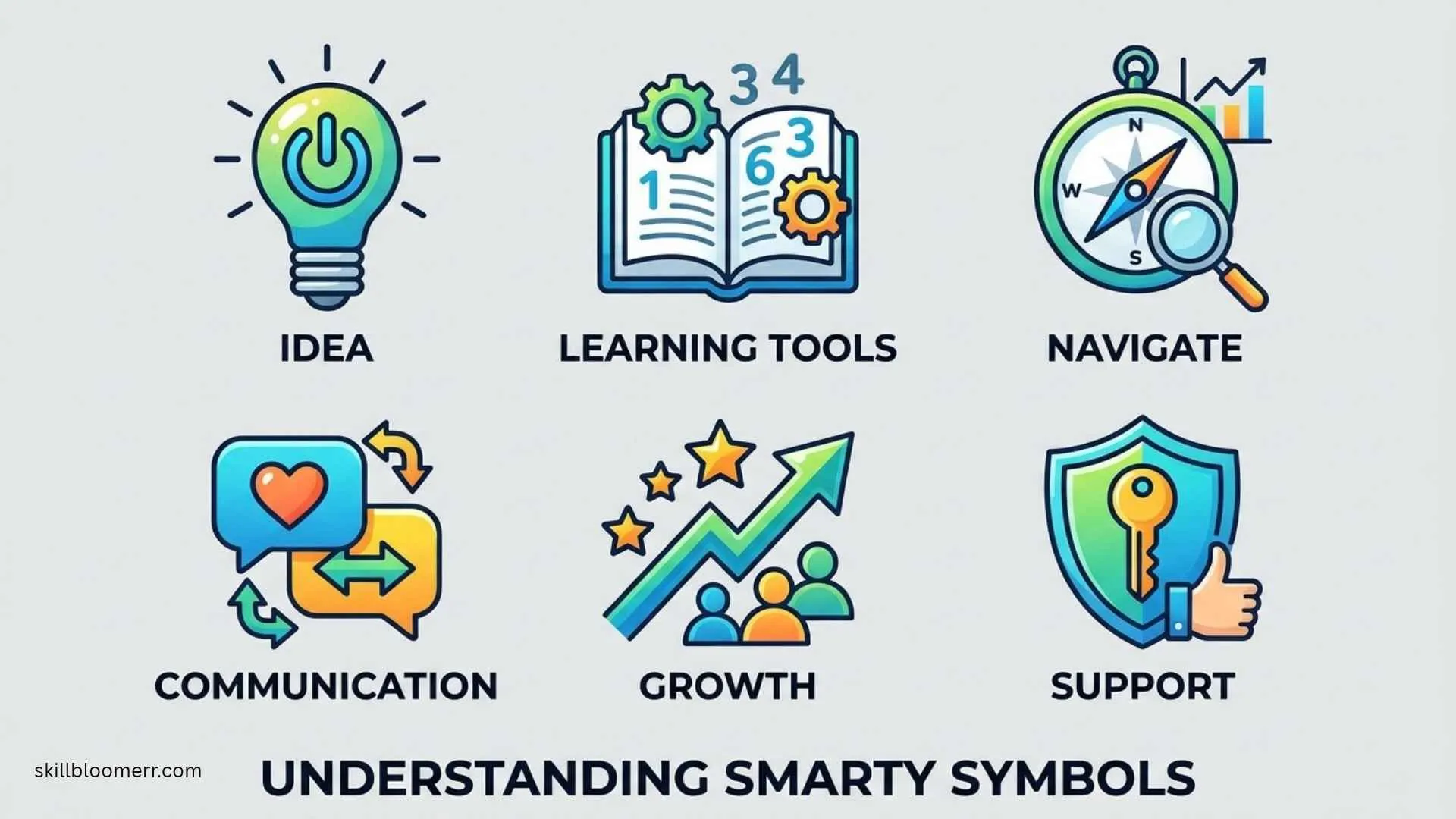
Smarty symbols are visual signs, icons, or characters designed to communicate information quickly through simple shapes, marks, or graphic elements. They appear in digital platforms, education tools, communication systems, branding, and everyday technology.
Understanding smart symbols helps people recognize meanings faster, improve digital communication, and interpret visual information correctly.
The meaning of a smarty symbol depends on where it appears, who created it, and how people use it. A symbol used in an educational app may represent learning or intelligence, while a similar-looking icon in software may indicate a feature, shortcut, or action.
This guide explains smarty symbols, their meanings, origins, applications, variations, and common misunderstandings so readers can understand how these visual elements work in modern communication.
Quick Meaning of Smarty Symbols
Smarty symbols are intelligent visual icons or signs created to represent ideas, actions, concepts, or information in a simple way. They are commonly used in digital interfaces, education, technology, and communication because they allow people to understand messages quickly without relying only on written words.
Smarty Symbols Overview Table
| Field | Information |
| Symbol Name | Smarty Symbols |
| Primary Meaning | Intelligent visual representation of ideas, actions, or information |
| Category | Digital symbols, educational icons, communication symbols |
| Origin | Developed through modern visual communication and interface design |
| Main Usage | Technology, learning platforms, apps, websites, branding |
| Meaning Today | Smart communication, knowledge, creativity, and simplified information |
| Related Concepts | Icons, emojis, pictograms, signs, visual language |
| Unicode | Depends on the individual symbol |
| Emoji Equivalent | Depends on design and purpose |
What Do Smarty Symbols Mean?
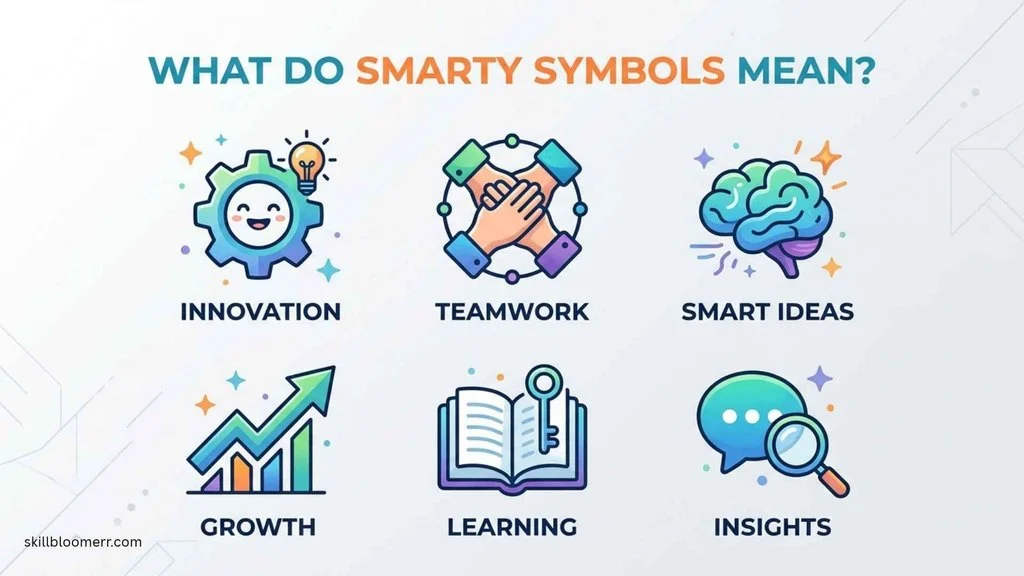
Smarty symbols represent the idea of making information easier to understand through visual communication. Instead of explaining an idea with long sentences, a symbol can deliver a message instantly.
For example:
- A light bulb symbol often represents ideas, creativity, or intelligence.
- A graduation cap symbol commonly represents education and learning.
- A gear symbol usually represents settings, tools, or technology.
- A magnifying glass often represents search or discovery.
The word “smarty” suggests intelligence, cleverness, or efficiency. Therefore, smarty symbols are often associated with smart thinking, knowledge sharing, problem-solving, and user-friendly design.
These symbols are not limited to one specific collection or official system. The term can describe many types of smart-looking or intelligent icons used in different environments.
History and Origin of Smarty Symbols
Early Development of Visual Communication
Humans have used symbols for thousands of years to communicate ideas. Ancient civilizations such as the Egyptians, Mesopotamians, Greeks, and Chinese developed visual writing systems where images represented objects, concepts, and meanings.
Ancient Egyptian hieroglyphs are one of the best-known examples of symbolic communication. Instead of using alphabetic words alone, Egyptians used images to express ideas, beliefs, and historical events.
Evolution Into Modern Icons
Over time, symbols became simpler and more universal. With the development of printing, transportation systems, computers, and digital technology, designers created symbols that people could understand quickly across languages.
The growth of computers and smartphones greatly increased the importance of symbols. Modern interfaces use icons because users need to navigate applications quickly.
Examples include:
- Save icons
- Search icons
- Notification symbols
- Sharing icons
- Educational symbols
- Artificial intelligence-related symbols
The Digital Age of Symbols
Today, smarty symbols are closely connected with user interface design. Designers create symbols that reduce confusion and improve accessibility.
A successful symbol must usually be:
- Easy to recognize
- Visually simple
- Memorable
- Culturally understandable
- Appropriate for its purpose
Symbolism and Interpretation of Smarty Symbols
Traditional Meaning
Traditional symbols often represent universal human ideas such as:
- Knowledge
- Protection
- Communication
- Growth
- Discovery
- Creativity
Many smart-themed symbols borrow meanings from older cultural symbols.
For example, the owl has historically represented wisdom in Greek culture because it was associated with Athena, the goddess of wisdom. Modern education symbols sometimes continue this connection between knowledge and intelligence.
Modern Meaning
In modern society, smarty symbols often represent:
- Innovation
- Learning
- Technology
- Intelligence
- Efficiency
- Digital progress
Technology companies frequently use smart-looking symbols to communicate advanced features or simple solutions.
Positive Symbolism
Smarty symbols commonly create positive associations, including:
- Progress
- Understanding
- Inspiration
- Problem-solving
- Creativity
- Confidence
They are often used in educational environments because visual learning can help people process information faster.
Negative Interpretations
Although most smarty symbols are positive, meanings can change depending on context.
Possible negative interpretations include:
- Overcomplication
- Artificial intelligence replacing human thinking
- Surveillance technology
- Information overload
A symbol itself does not have a fixed meaning. The environment around it influences interpretation.
Psychological Interpretation
From a psychological perspective, symbols work because humans naturally recognize patterns and connect images with ideas.
A familiar symbol reduces mental effort. For example, people quickly recognize a trash bin icon as a delete function without reading the word “delete.”
This process is known as visual recognition.
Cultural Significance of Smarty Symbols
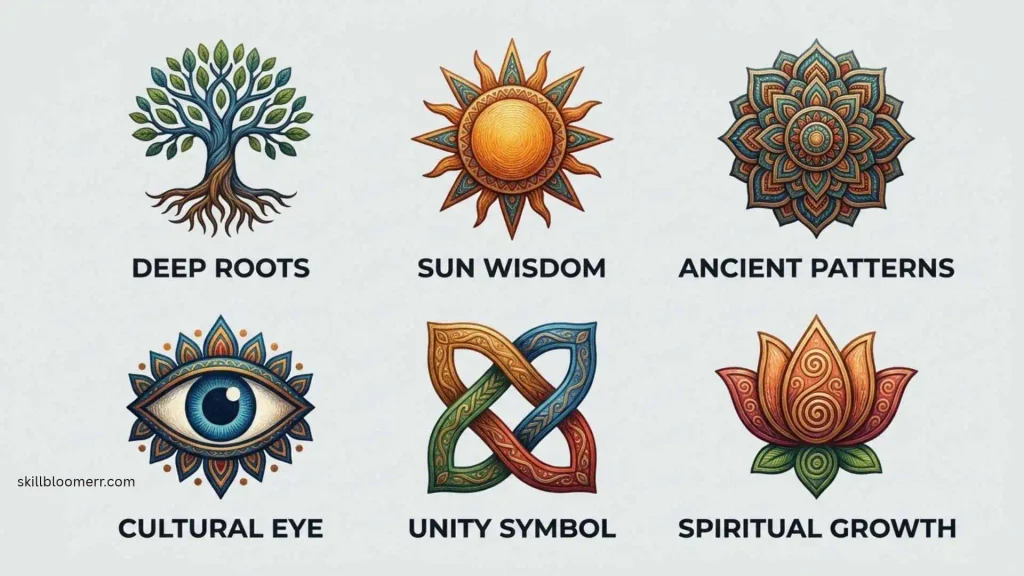
Symbols can have different meanings across cultures because societies develop unique associations with images.
Western Cultures
In many Western countries, symbols connected with intelligence often include:
- Light bulbs
- Books
- Graduation caps
- Owls
- Computers
These images are linked with education, innovation, and knowledge.
Eastern Cultures
Many Asian cultures place strong importance on symbols connected with wisdom, balance, and learning.
Examples include:
- Calligraphy symbols
- Traditional characters
- Nature-based symbols
- Philosophical imagery
Global Digital Culture
Digital symbols increasingly cross cultural boundaries. A search icon, notification symbol, or play button is recognized by billions of people worldwide.
However, designers must still consider cultural differences because some images may not have the same meaning everywhere.
Religious or Spiritual Meaning of Smarty Symbols
Smarty symbols do not have a specific religious meaning because they are mainly modern communication tools. However, some symbols associated with intelligence and wisdom have spiritual connections.
Wisdom Symbols
Throughout history, many religions and spiritual traditions have used symbols representing:
- Knowledge
- Enlightenment
- Understanding
- Divine wisdom
Examples include:
- Light as a symbol of truth and awareness
- Books representing sacred knowledge
- Eyes representing perception and understanding
These meanings may influence modern symbolic design.
Scientific or Technical Meaning of Smarty Symbols
Smarty symbols have strong connections with technology and digital systems.
Digital Interfaces
Modern software uses symbols to improve usability.
Examples:
| Symbol Type | Common Meaning |
| Magnifying glass | Search |
| Gear | Settings |
| Cloud | Online storage |
| Lock | Security |
| Bell | Notifications |
| Star | Favorite or important |
Artificial Intelligence and Smart Technology
Many modern products use symbols representing intelligence, automation, and digital assistance.
Examples include:
- AI assistant icons
- Machine learning symbols
- Smart home icons
- Data analysis symbols
These symbols communicate that a product includes advanced technology.
Education Technology
Learning platforms often use smarty-style symbols to represent:
- Courses
- Progress
- Achievements
- Learning tools
- Knowledge resources
Where Smarty Symbols Are Used
Technology
Technology is one of the largest areas where symbols are used.
Examples:
- Mobile apps
- Websites
- Computer software
- Smart devices
- Digital assistants
Education
Educational systems use symbols to make learning easier.
Examples:
- Online classrooms
- Learning games
- Study applications
- School websites
Business and Branding
Companies use intelligent-looking symbols to communicate:
- Innovation
- Trust
- Creativity
- Professional solutions
Books and Literature
Authors and publishers use symbols to represent themes such as:
- Knowledge
- Mystery
- Discovery
- Intelligence
Art and Design
Artists use symbols to express abstract ideas without using words.
Jewelry and Tattoos
Some people choose smart-themed symbols to represent:
- Personal growth
- Curiosity
- Learning
- Wisdom
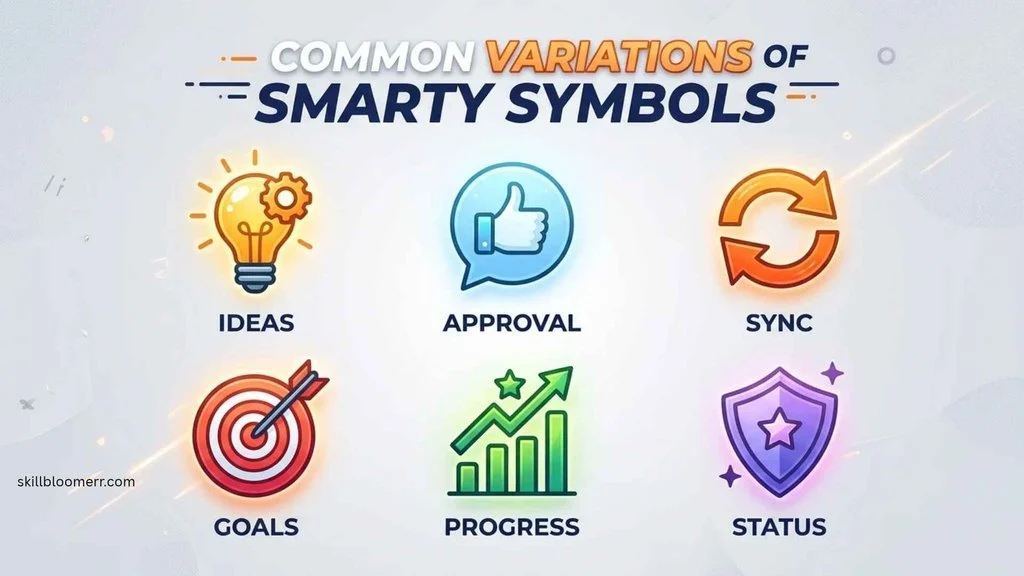
Common Variations of Smarty Symbols
Educational Symbols
These include:
- Books
- Pens
- Graduation caps
- Light bulbs
They usually represent learning and knowledge.
Technology Symbols
Common examples:
- Circuits
- Computer screens
- Digital networks
- AI-related icons
They represent innovation and modern intelligence.
Creative Symbols
These include:
- Stars
- Sparkles
- Light rays
- Brain imagery
They represent ideas and imagination.
Minimalist Modern Symbols
Modern designers often simplify symbols into clean shapes for easier recognition on small screens.
Common Misconceptions About Smarty Symbols
Misconception 1: All Symbols Have Universal Meanings
Not every symbol means the same thing everywhere. Context determines meaning.
Misconception 2: Symbols Replace Language Completely
Symbols support language but usually do not replace detailed explanations.
Misconception 3: A Smart Symbol Always Represents Artificial Intelligence
Many smart symbols represent general intelligence, creativity, or organization rather than AI specifically.
Misconception 4: Simple Symbols Are Easy to Design
Creating an effective symbol requires research, testing, and understanding user behavior.
Interesting Facts About Smarty Symbols
- Symbols existed before modern alphabets.
Ancient societies used visual communication long before many writing systems developed. - Icons reduce cognitive effort.
People often recognize familiar symbols faster than written instructions. - Digital symbols influence global communication.
Many icons are understood internationally regardless of language. - Symbol design requires psychology.
Designers study how people perceive shapes, colors, and patterns. - Simple designs are often the most powerful.
Many famous symbols use only basic shapes. - Symbols change over time.
A symbol’s meaning can evolve as technology and society change. - Education relies heavily on symbols.
Teachers use icons to organize information and improve understanding. - Symbols can create emotional connections.
People often associate certain icons with memories, experiences, or values. - Modern smartphones increased symbol usage.
Small screens require quick visual communication. - Cultural awareness is important in symbol design.
A symbol accepted in one culture may have a different meaning elsewhere.
Related Symbols
Icons
Icons are visual representations used mainly in digital interfaces. They often represent actions or tools.
Emojis
Emojis are standardized digital symbols used mainly for emotional expression and communication.
Pictograms
Pictograms use pictures to communicate information quickly.
Logos
Logos represent brands, organizations, and identities.
Signs
Signs provide instructions, warnings, or information in public spaces.
Frequently Asked Questions
What are smarty symbols?
Smarty symbols are visual signs or icons designed to communicate ideas, information, or actions quickly. They are commonly associated with intelligence, learning, technology, and efficient communication.
Why are symbols important in communication?
Symbols help people understand information faster because the human brain can recognize visual patterns quickly. They reduce language barriers and make instructions easier to follow.
Are smarty symbols officially recognized?
There is no single universal collection called “smarty symbols.” The term generally describes intelligent-looking or knowledge-related symbols used in different contexts.
Where are smarty symbols commonly used?
They are commonly found in technology interfaces, education platforms, websites, apps, branding, digital communication, and visual design.
Do symbols have the same meaning worldwide?
No. Cultural background, location, and context can influence how people interpret symbols.
What makes a symbol effective?
An effective symbol is simple, recognizable, meaningful, and easy to understand without additional explanation.
Are emojis considered smarty symbols?
Some emojis may represent smart concepts, but emojis are mainly designed for emotional and social communication.
Why do companies use smart-looking symbols?
Companies use them to communicate innovation, intelligence, creativity, and modern solutions.
Can symbols change meaning?
Yes. Symbol meanings evolve as societies, technologies, and cultures change.
How do designers create symbols?
Designers study users, cultural meanings, visual psychology, and practical requirements before creating symbols.
Key Takeaways
- Smarty symbols communicate ideas through simple visual designs.
- Their meanings depend on context, culture, and usage.
- Symbols have been part of human communication for thousands of years.
- Modern technology has increased the importance of visual icons.
- Education, business, and digital platforms rely heavily on symbols.
- Effective symbols are simple, recognizable, and meaningful.
- Symbol interpretation requires understanding historical and cultural backgrounds.
Conclusion
Smarty symbols represent the power of visual communication in a world where people need information quickly and clearly. From ancient symbols of wisdom to modern digital icons, symbols continue to shape how humans understand ideas, technology, and knowledge.
Whether used in education, software, branding, or everyday communication, these symbols help transform complex concepts into simple visual messages. Understanding their meanings allows people to interact more effectively with the digital and physical world around them.

I’m Nathaniel Brooks, an educational writer who loves exploring ideas and making useful knowledge accessible to everyone. I write for SkillBloomerr with a focus on clear explanations, practical tips, and meaningful learning. My goal is to help readers discover something valuable every time they visit the site.
Books: Learn Something New and The Practical Knowledge Handbook
 Olivia Hartwell