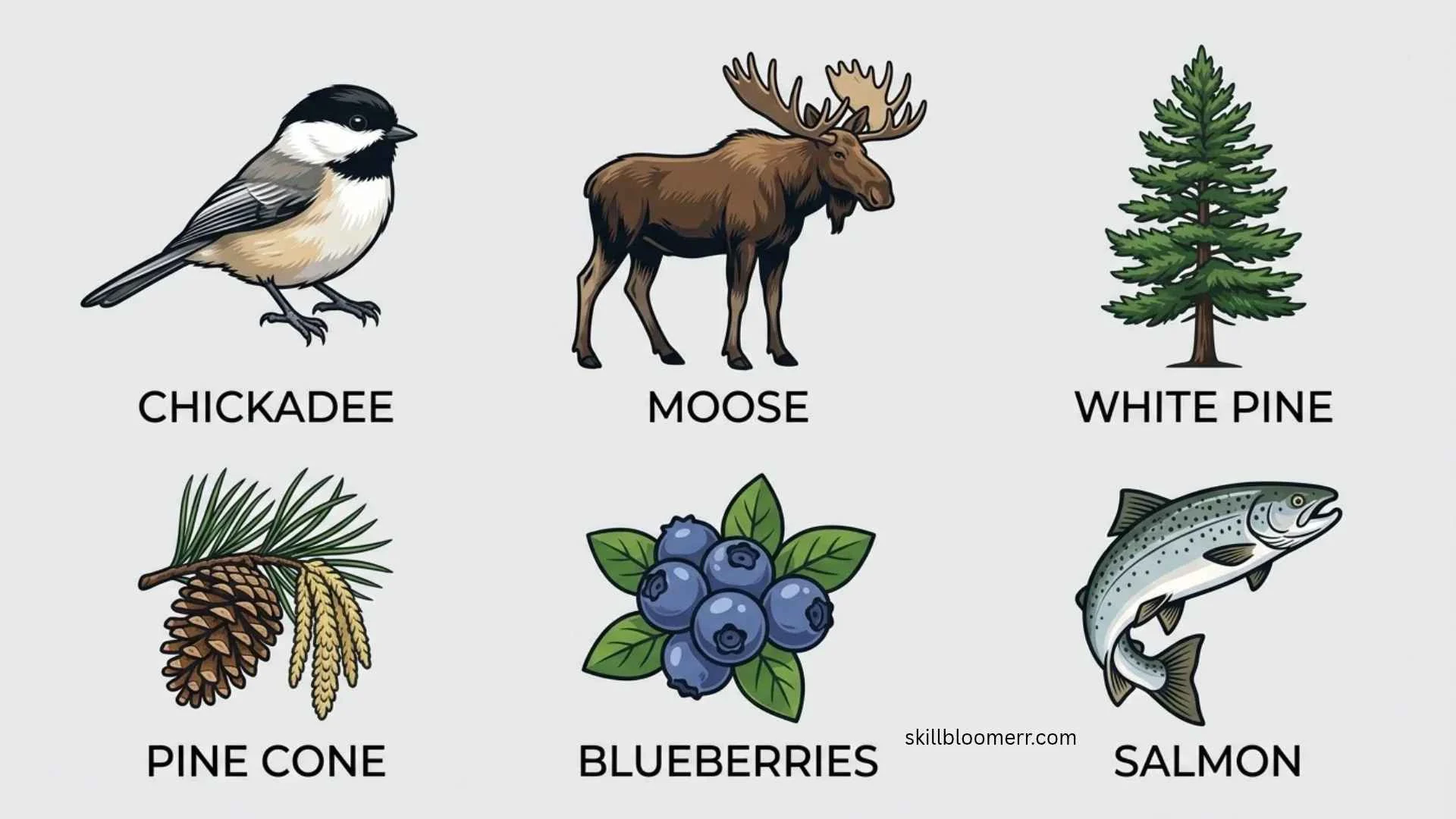
Maine symbols represent the natural beauty, history, culture, and identity of the northeasternmost state of the United States. From the iconic pine tree and moose to the state flag, seal, flower, animal, and maritime symbols, each emblem tells a story about Maine’s forests, coastline, traditions, and people.
People encounter Maine symbols on official documents, government buildings, road signs, tourism materials, artwork, clothing, jewelry, and local businesses. These symbols help explain what makes Maine unique: its connection to nature, independence, craftsmanship, and deep New England heritage.
Understanding Maine symbols provides a closer look at how a state uses images and traditions to preserve its history and communicate its values. This guide explores the meaning, origins, and importance of the most recognized symbols associated with Maine.
Quick Meaning of Maine Symbols
Maine symbols are official and cultural representations that express the state’s identity, history, and natural environment. They include the Maine state flag, seal, pine tree, moose, eastern white pine, white pine cone and tassel, chickadee, wild blueberry, and other emblems connected to Maine’s forests, wildlife, and traditions.
Maine Symbols Overview Table
| Symbol Name | Primary Meaning | Category | Origin | Cultural Connection | Modern Usage |
| Maine State Flag | State identity and heritage | Official Symbol | Maine state government | Maine history | Government, events, merchandise |
| Maine State Seal | Strength, independence, and natural resources | Official Emblem | 1820 | Early statehood | Official documents |
| Eastern White Pine | Forest heritage and economy | State Tree | 1895 | Timber industry | Art, education, branding |
| White Pine Cone and Tassel | Forestry importance | State Flower | 1895 | Lumber tradition | Decorations and symbols |
| Moose | Wilderness and wildlife | Animal Symbol | Cultural symbol | Northern forests | Tourism and artwork |
| Wild Blueberry | Agriculture and natural resources | Fruit Symbol | Cultural symbol | Maine farming | Food industry |
| Black-capped Chickadee | Small but resilient wildlife | State Bird | 1927 | Local ecosystems | Education and conservation |
| Lobster | Maritime culture | Cultural Symbol | Coastal tradition | Fishing communities | Tourism and cuisine |
What Do Maine Symbols Mean?
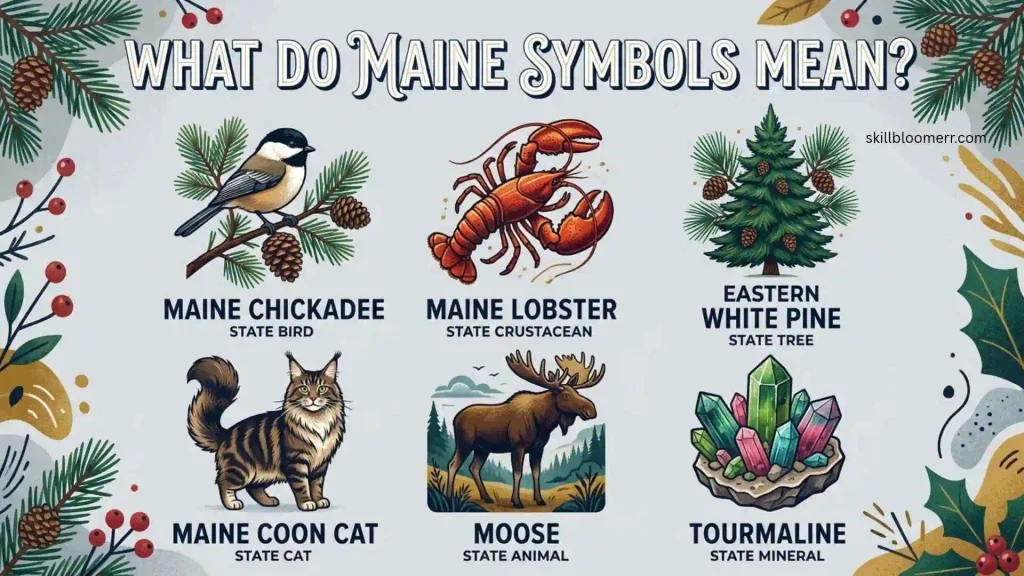
Maine symbols represent the relationship between people, nature, and history in the state. Unlike simple decorations, these symbols communicate important ideas about Maine’s environment, economy, and cultural traditions.
The most common meanings connected with Maine symbols include:
- Connection with nature: Maine is known for forests, mountains, lakes, coastline, and wildlife.
- Independence: The state’s history reflects self-reliance and strong local communities.
- Hard work and craftsmanship: Logging, fishing, shipbuilding, and farming shaped Maine’s identity.
- Conservation: Many symbols highlight the importance of protecting natural resources.
The symbols of Maine are especially connected to the state’s nickname, “The Pine Tree State,” which reflects the importance of forests throughout its history.
History and Origin of Maine Symbols
Early Roots of Maine Identity
Maine became the 23rd state of the United States on March 15, 1820, after separating from Massachusetts through the Missouri Compromise. From its earliest days, Maine’s identity was strongly connected to forests, waterways, and coastal industries.
Early settlers relied on:
- Timber harvesting
- Shipbuilding
- Fishing
- Farming
- Trade through coastal ports
These industries influenced the symbols later chosen to represent the state.
Development of Official State Symbols
Maine gradually adopted official symbols to preserve its heritage.
The Maine State Seal was created soon after statehood in 1820. It features a farmer, a seaman, a pine tree, and natural scenery, representing agriculture, maritime traditions, and forest resources.
The eastern white pine became Maine’s official state tree in 1895 because forests played a major role in the state’s economy and development.
The white pine cone and tassel were also adopted in 1895 as Maine’s official flower, recognizing the importance of the pine tree.
Evolution of Maine Symbols Over Time
Originally, Maine symbols reflected survival and industry. Today, they also represent:
- Environmental awareness
- Tourism
- Outdoor recreation
- Cultural pride
- Local craftsmanship
A pine tree once represented lumber production; today it also represents conservation, wilderness, and the natural beauty of Maine.
Symbolism and Interpretation of Maine Symbols
Traditional Meanings
Traditional Maine symbols are closely tied to natural resources.
The pine tree symbolizes:
- Strength
- Growth
- Stability
- Endurance
The ocean-related symbols represent:
- Exploration
- Trade
- Community
- Connection to the Atlantic coast
Wildlife symbols represent Maine’s untouched landscapes and respect for nature.
Modern Meanings
Today, Maine symbols often represent lifestyle and identity.
For many residents and visitors, Maine symbols suggest:
- Peaceful forests
- Outdoor adventure
- Simpler living
- Local traditions
- Authentic craftsmanship
A pine tree logo, lobster image, or moose illustration can immediately create an association with Maine.
Positive Symbolism
Maine symbols commonly express:
- Natural beauty
- Resilience
- Independence
- Sustainability
- Community pride
Negative or Misunderstood Symbolism
Some symbols can be misunderstood.
For example, the pine tree may be viewed only as a forestry symbol, but it also represents ecological responsibility. Similarly, the lobster symbol is not only about food but also represents generations of coastal workers.
Cultural Significance of Maine Symbols
Maine Symbols in Local Communities
Maine communities use symbols to maintain connections with their history. Small towns often include natural symbols in:
- Festivals
- Signs
- School logos
- Local artwork
- Community events
These images help residents celebrate shared traditions.
Maine’s Maritime Culture
The coastline has shaped Maine’s identity for centuries. Lobsters, boats, anchors, and ocean imagery remain important cultural symbols.
Fishing communities use these symbols to honor:
- Family traditions
- Coastal lifestyles
- Maritime skills
- Generational knowledge
Forest Culture and the Pine Tree State
Forests cover much of Maine’s landscape, making trees one of the strongest symbols of the state.
The pine tree represents:
- The lumber industry
- Rural communities
- Wilderness
- Environmental responsibility
The phrase “Pine Tree State” continues to connect Maine with its forest heritage.
Religious or Spiritual Meaning of Maine Symbols
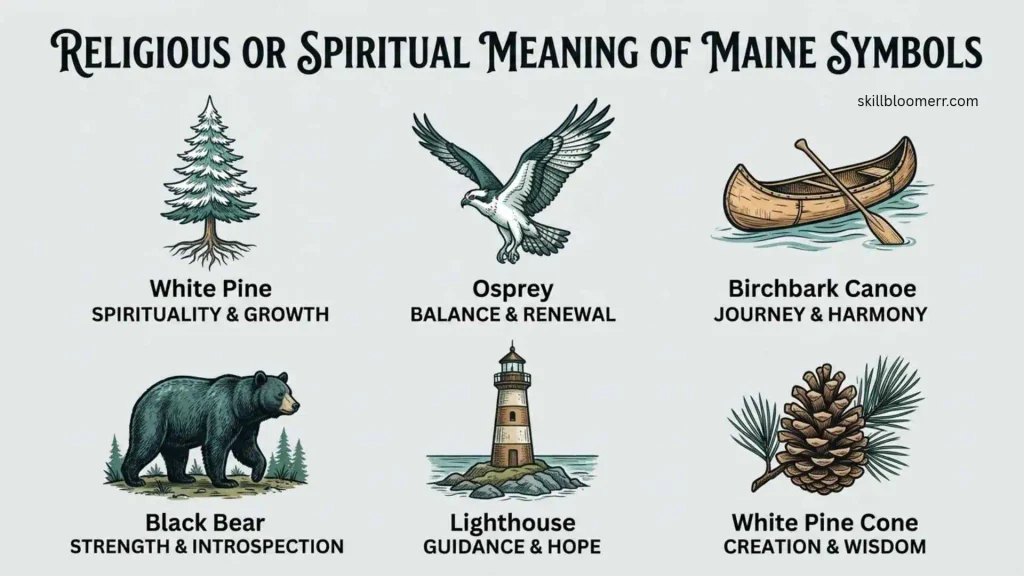
Maine symbols are not primarily religious symbols, but some have spiritual interpretations connected to nature.
Pine Tree Symbolism
Across many cultures, evergreen trees symbolize:
- Renewal
- Longevity
- Hope
- Life continuing through difficult seasons
Because pine trees remain green throughout winter, they are often associated with resilience.
Nature-Based Spiritual Connections
Some people view Maine’s forests, mountains, and coastline as places of reflection and spiritual connection. These interpretations are personal and cultural rather than official meanings.
Scientific or Technical Meaning of Maine Symbols
Eastern White Pine in Science
The eastern white pine, scientifically known as Pinus strobus, is an important forest species in North America.
It is studied for:
- Forest ecology
- Climate adaptation
- Wildlife habitats
- Sustainable forestry
Maine Wildlife Symbols
Animals such as moose and chickadees are connected to ecological research involving:
- Biodiversity
- Habitat conservation
- Population management
Agricultural Symbols
The wild blueberry represents Maine’s agricultural importance. Maine is known for producing large quantities of wild blueberries, which grow naturally in parts of the state.
Where Maine Symbols Are Used
Maine symbols appear in many areas of everyday life.
Government and Official Uses
Official symbols appear on:
- State documents
- Government buildings
- Licenses
- Educational materials
Tourism and Travel
Tourism organizations frequently use Maine symbols to promote:
- National parks
- Coastal destinations
- Outdoor activities
- Local products
Business and Branding
Companies use Maine imagery to communicate:
- Authenticity
- Local connection
- Quality craftsmanship
Common examples include:
- Pine tree logos
- Lobster illustrations
- Moose designs
- Ocean imagery
Art and Jewelry
Artists often incorporate Maine symbols into:
- Paintings
- Wood carvings
- Handmade jewelry
- Clothing designs
These items allow people to carry a connection to Maine culture.
Common Variations of Maine Symbols
Pine Tree Designs
Pine tree symbols appear in many styles:
- Simple outlines
- Detailed forest illustrations
- Vintage designs
- Modern logos
Maine Flag Variations
Different versions of Maine flags appear in artwork and merchandise. Some emphasize:
- The pine tree
- The state seal
- Maritime themes
Wildlife Representations
Moose and bird symbols may appear as:
- Realistic illustrations
- Cartoon designs
- Decorative patterns
Common Misconceptions About Maine Symbols

The Pine Tree Is Maine’s Only Symbol
The pine tree is one of the most recognizable symbols, but Maine has many official and cultural symbols.
Lobster Represents All of Maine
Lobster is strongly associated with Maine, but it mainly represents coastal culture. Inland Maine has equally important connections to forests, farming, and wildlife.
Maine Symbols Are Only Government Symbols
Many Maine symbols developed from traditions and community identity rather than official laws.
Interesting Facts About Maine Symbols
- Maine is called the Pine Tree State because of its extensive forests and historic timber industry.
- The eastern white pine can grow to impressive heights, making it one of the tallest trees in eastern North America.
- The Maine State Seal has remained connected to the state’s agricultural and maritime roots since statehood.
- The wild blueberry is strongly associated with Maine’s agricultural heritage.
- The moose became a popular cultural symbol because of Maine’s large wilderness areas.
- The chickadee was selected as Maine’s official state bird in 1927.
- Maine’s coastal symbols reflect centuries of fishing and shipbuilding traditions.
- Many Maine symbols appear in handmade crafts because of the state’s strong artisan culture.
- The pine cone and tassel represent the reproductive structures of the eastern white pine tree.
- Maine symbols often combine human history with environmental themes.
Related Symbols
New England Symbols
Maine symbols are connected with broader New England traditions, including:
- Maritime imagery
- Colonial history
- Forest landscapes
Nature Symbols
Related natural symbols include:
- Trees
- Mountains
- Rivers
- Wildlife
State Symbols of the United States
Every U.S. state has symbols representing its identity, including:
- State flowers
- State birds
- State animals
- State trees
Maine’s symbols are unique because of the strong connection between forests and the ocean.
Frequently Asked Questions About Maine Symbols
What is the most famous symbol of Maine?
The pine tree is one of the most famous symbols of Maine because it represents the state’s forests, history, and nickname, “The Pine Tree State.” It reflects Maine’s long relationship with timber, nature, and outdoor life.
Why is the pine tree important to Maine?
The pine tree is important because forests shaped Maine’s economy and communities. The eastern white pine provided timber for construction, shipbuilding, and trade while becoming a symbol of strength and natural beauty.
What animal represents Maine?
The moose is one of Maine’s most recognized animals. Although not the official state animal, it represents the state’s wilderness, forests, and abundant wildlife.
What flower represents Maine?
The white pine cone and tassel is Maine’s official flower. It represents the importance of the eastern white pine and the state’s forestry traditions.
What does the Maine State Seal represent?
The Maine State Seal represents agriculture, maritime traditions, forests, and natural resources. It includes imagery showing the relationship between people and the environment.
Why is lobster a symbol of Maine?
Lobster represents Maine because fishing has been central to coastal communities for generations. It symbolizes maritime heritage, local traditions, and the connection between people and the Atlantic Ocean.
What bird symbolizes Maine?
The black-capped chickadee is Maine’s official state bird. It represents resilience because it survives harsh northern winters and remains common throughout the state.
Are Maine symbols used outside the state?
Yes. Maine symbols appear on tourism products, clothing, artwork, food packaging, and souvenirs worldwide, helping people recognize Maine’s cultural identity.
How are Maine symbols different from other state symbols?
Maine symbols strongly emphasize the relationship between forests, wildlife, and the ocean. This combination makes Maine’s identity different from many other states.
Key Takeaways
- Maine symbols represent the state’s history, environment, and cultural identity.
- The pine tree is the strongest symbol connected with Maine’s nickname.
- Forests, wildlife, and maritime traditions influence many Maine symbols.
- Official symbols include the state seal, tree, flower, and bird.
- Cultural symbols such as lobster and moose reflect everyday Maine life.
- Maine symbols continue to evolve while preserving historical connections.
Conclusion
Maine symbols tell the story of a state shaped by forests, oceans, wildlife, and hardworking communities. The pine tree, lobster, moose, blueberry, chickadee, and other symbols are more than simple images; they represent generations of history and the values that define Maine.
From official government emblems to everyday artwork and local traditions, Maine symbols continue to connect people with the state’s natural beauty and cultural heritage. Understanding these symbols offers a deeper appreciation for why Maine remains known as a place of independence, resilience, and remarkable natural character.

I’m Olivia Hartwell, a writer passionate about learning, personal growth, and practical education. I enjoy researching new ideas and sharing them in a way that feels easy to understand and useful. Through my work with SkillBloomerr, I aim to give readers reliable information they can apply in real life.
Books: Small Steps, Big Growth and The Curious Mind