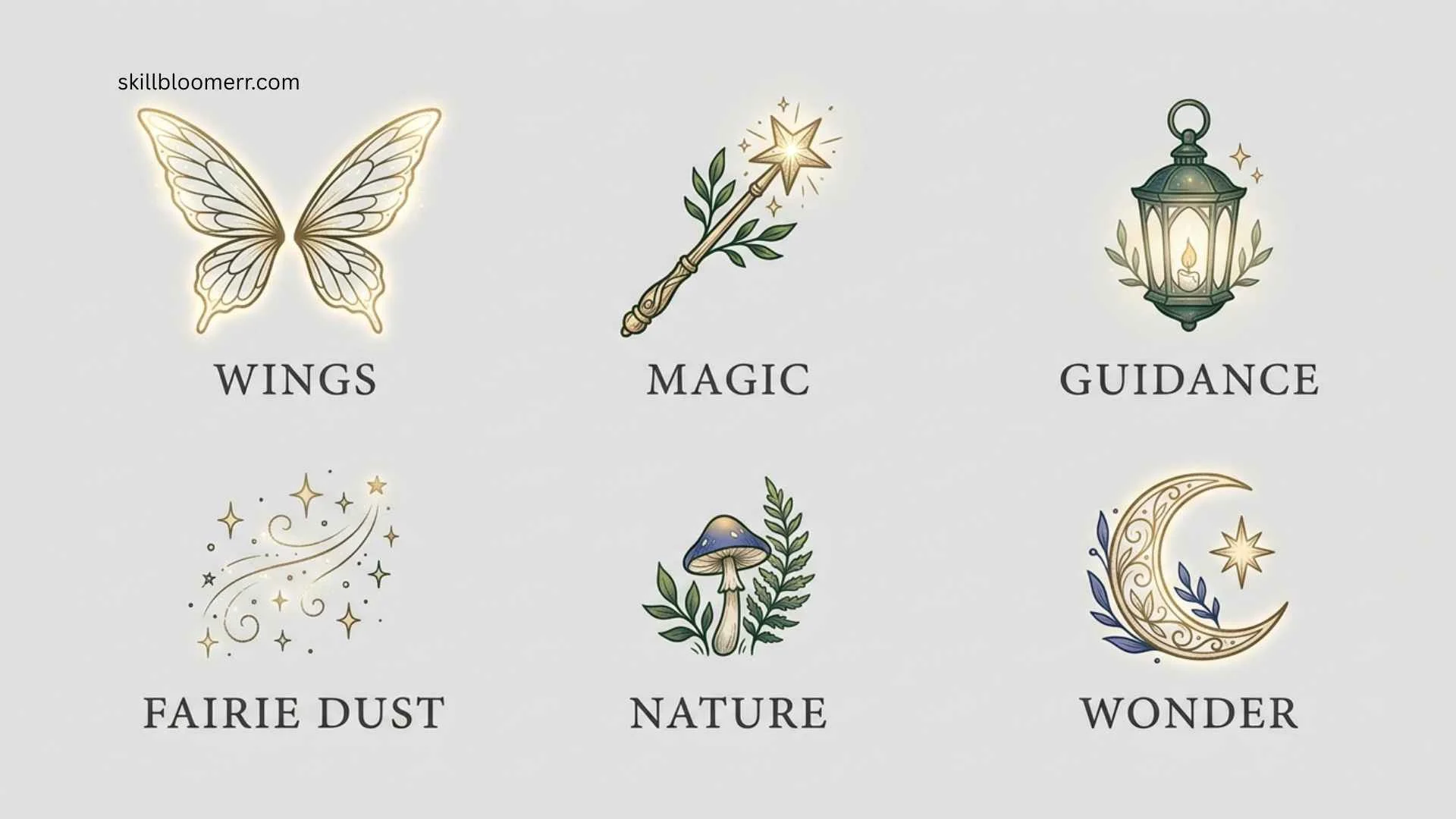
Fairy symbols represent magic, nature, transformation, imagination, and the mysterious connection between humans and the unseen world. These symbols appear in folklore, fantasy literature, artwork, jewelry, tattoos, mythology, and modern spiritual practices.
From ancient Celtic stories to modern fantasy worlds, fairy symbols have captured human curiosity for centuries. They often represent beauty, freedom, protection, dreams, and the hidden forces believed to exist beyond ordinary life.
This complete guide explores fairy symbols and their meanings, including their origins, cultural interpretations, spiritual associations, common uses, variations, misconceptions, and the reasons these magical images continue to inspire people today.
Quick Meaning of Fairy Symbols
Fairy symbols are visual representations connected with fairies, nature spirits, magic, and folklore. They commonly symbolize imagination, transformation, protection, freedom, innocence, and a connection with nature. Their meanings vary across cultures, but they often represent mystery, creativity, and the belief that unseen worlds exist alongside our own.
Fairy Symbols Overview Table
| Symbol Name | Primary Meaning | Category | Origin | Culture | First Known Use | Common Usage | Modern Meaning | Related Symbols |
| Fairy Wings | Freedom and transformation | Magical symbol | European folklore | Celtic, British, European traditions | Medieval folklore traditions | Art, tattoos, jewelry | Dreams, independence, personal growth | Butterfly, angel wings |
| Fairy Circle | Enchantment and spiritual connection | Nature symbol | European folklore | Celtic and English traditions | Ancient folk beliefs | Stories, gardens, fantasy art | Mystery and magical spaces | Stone circles, moon symbols |
| Fairy Wand | Magic and creativity | Fantasy symbol | Folklore and literature | European traditions | Medieval tales | Costumes, fantasy media | Personal power and imagination | Stars, staffs |
| Fairy Dust | Wishes and transformation | Folklore symbol | Fairy tales | Western fantasy culture | Literary traditions | Books, movies, decorations | Hope and positive change | Sparkles, stars |
| Fairy Door | Hidden worlds and protection | Decorative symbol | Modern fairy folklore | Contemporary traditions | 20th-century revival | Gardens and crafts | Curiosity and imagination | Doorways, portals |
| Fairy Ring | Mystery and supernatural connection | Nature symbol | European mythology | Celtic and Germanic folklore | Medieval beliefs | Folklore, literature | Wonder and natural magic | Circles, forests |
What Do Fairy Symbols Mean?
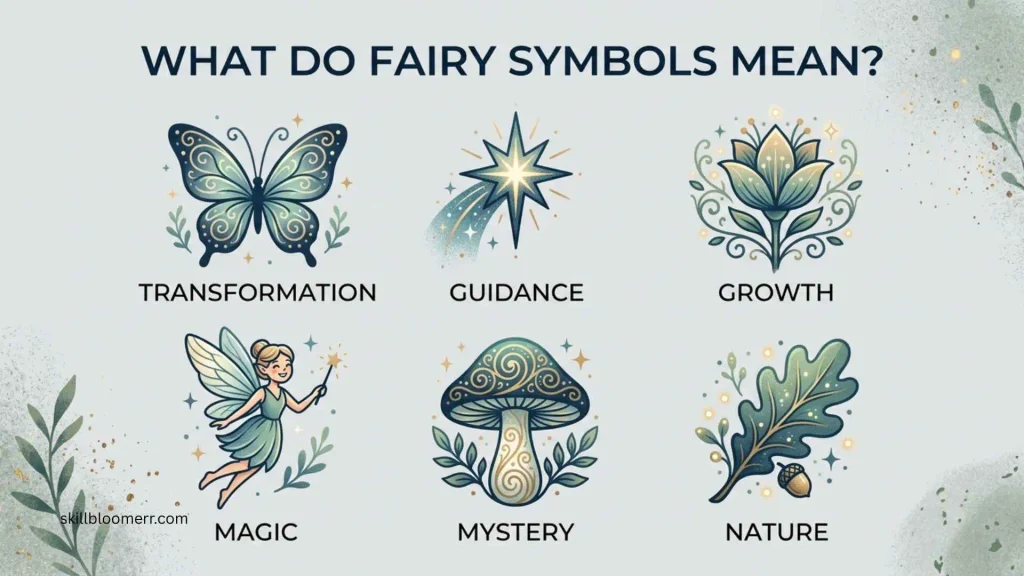
Fairy symbols represent ideas connected with magic, nature, imagination, and transformation. While their meanings differ depending on the culture and context, most fairy symbols share common themes related to wonder and mystery.
Magic and Mystery
One of the strongest meanings associated with fairy symbols is magic. Fairies are traditionally described as supernatural beings that exist between the human world and an invisible realm.
Symbols such as fairy wings, wands, and fairy circles represent the idea that life contains hidden possibilities beyond what people can immediately see.
Connection With Nature
Many fairy traditions connect these beings with forests, flowers, rivers, trees, and natural landscapes. Fairy symbols often represent respect for nature and the belief that the natural world has a spiritual or magical quality.
A fairy symbol placed in a garden, for example, may represent harmony between humans and the environment.
Transformation and Growth
Fairy wings and butterfly-like designs are commonly associated with personal transformation. They represent change, freedom, and the ability to grow into a new version of oneself.
This meaning explains why fairy symbols are popular choices for tattoos and personal artwork.
Imagination and Creativity
Fairy symbols also represent creativity, storytelling, and imagination. Writers, artists, and designers often use fairy imagery to express fantasy, dreams, and the power of creative thinking.
History and Origin of Fairy Symbols
Fairy symbols developed from centuries of folklore, mythology, and storytelling traditions. Although modern images of fairies are often associated with tiny winged creatures, earlier beliefs about fairies were much more diverse.
Ancient European Folklore
The roots of fairy symbolism can be traced to European folklore, especially traditions from Celtic, British, Irish, and Germanic cultures.
Early stories described fairies as mysterious beings connected with nature, ancestors, spirits, and supernatural forces. They were not always viewed as small, friendly creatures. In many older traditions, fairies could be powerful, unpredictable, and sometimes dangerous.
Celtic Influence
Celtic folklore strongly influenced modern fairy symbolism. Irish and Scottish legends often described fairy beings living in forests, hills, and hidden realms.
The concept of fairy mounds, enchanted places, and supernatural worlds contributed to symbols such as fairy circles and magical forests.
Medieval Development
During the medieval period, fairy stories became more connected with romance, literature, and legends. Writers began describing fairies as beautiful magical beings involved in human adventures.
Over time, fairy imagery became softer and more charming, especially in European art and storytelling.
Victorian Fairy Revival
The Victorian era played an important role in shaping the modern image of fairies. Artists and writers popularized the idea of tiny winged fairies living among flowers and forests.
Illustrations, children’s books, and fantasy artwork helped establish many fairy symbols recognized today.
Symbolism and Interpretation of Fairy Symbols
Fairy symbols carry different meanings depending on personal beliefs, cultural background, and artistic context.
Positive Symbolism
Common positive meanings include:
- Imagination and creativity
- Freedom and independence
- Natural harmony
- Beauty and grace
- Protection
- Hope and dreams
- Personal transformation
Many people choose fairy symbols because they represent optimism, wonder, and a connection to childhood imagination.
Negative Symbolism
In some traditional folklore, fairies were not always harmless. Certain legends described them as tricksters or powerful beings who could mislead humans.
Because of these older stories, fairy symbols may sometimes represent:
- Mystery
- Unpredictability
- Hidden dangers
- Illusions
These meanings depend heavily on the cultural tradition being discussed.
Psychological Interpretation
From a psychological perspective, fairy symbols can represent imagination, creativity, and the human desire to explore unknown possibilities.
They often connect with childhood wonder and the ability to see beauty beyond ordinary experiences.
Cultural Significance of Fairy Symbols
Fairy symbols appear in many cultures, especially in regions with strong folklore traditions.
Celtic and Irish Culture
In Irish folklore, fairies are often connected with nature, ancient landscapes, and supernatural worlds. Fairy hills, forests, and enchanted locations remain important parts of traditional storytelling.
British Folklore
British fairy traditions include stories about woodland spirits, fairy rings, and magical creatures. Many popular fairy images developed from British literature and art.
Modern Western Culture
Today, fairy symbols are widely used in fantasy entertainment, fashion, home decoration, and personal expression.
Movies, novels, games, and artwork have transformed fairies into symbols of imagination and magical adventure.
Japanese and East Asian Fantasy Influence
Although traditional Japanese folklore has different supernatural beings, modern fantasy culture sometimes blends fairy-like concepts with spirits, nature creatures, and magical characters.
This shows how fairy symbolism continues to evolve globally.
Religious or Spiritual Meaning of Fairy Symbols
Fairy symbols are not part of major organized religions in the same way as sacred religious symbols. However, some spiritual traditions and modern belief systems associate them with nature, energy, and unseen forces.
Nature Spirituality
Some nature-based spiritual practices view fairy symbols as reminders of environmental respect, balance, and connection with the natural world.
Modern Spiritual Interpretations
In contemporary spirituality, fairy imagery may symbolize:
- Inner creativity
- Positive energy
- Personal transformation
- Connection with nature
- Emotional healing
These interpretations are personal beliefs rather than universally accepted religious meanings.
Where Fairy Symbols Are Used
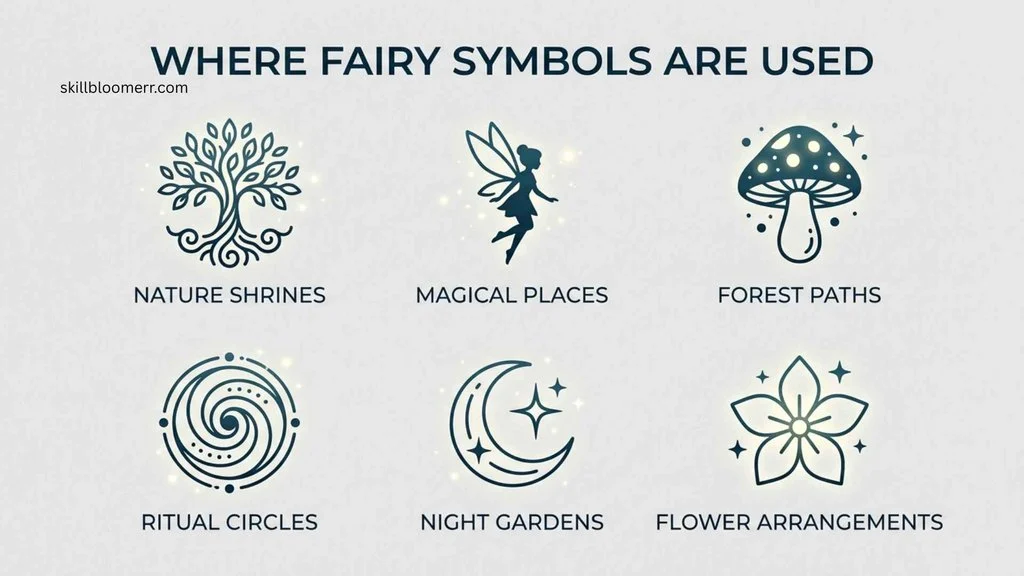
Fairy symbols appear in many forms of art and everyday life.
Literature and Storytelling
Fairies are common characters in:
- Fairy tales
- Fantasy novels
- Children’s books
- Mythology collections
- Poetry
Authors use fairy symbols to explore themes such as courage, dreams, and hidden worlds.
Jewelry and Fashion
Fairy wings, fairy silhouettes, and magical designs are popular in:
- Necklaces
- Rings
- Bracelets
- Clothing designs
- Accessories
People often wear these symbols as personal expressions of creativity and individuality.
Tattoos
Fairy tattoos commonly represent:
- Freedom
- Transformation
- Dreams
- Femininity
- Fantasy
- Personal journeys
The meaning depends on the individual’s experience and design choices.
Home and Garden Decoration
Fairy doors, fairy gardens, and miniature fairy houses are popular decorative items. They create a sense of imagination and encourage people to engage creatively with outdoor spaces.
Movies and Games
Fairy symbols appear in fantasy entertainment, including:
- Fantasy films
- Video games
- Animated stories
- Role-playing games
They often represent magical abilities, hidden worlds, or supernatural characters.
Common Variations of Fairy Symbols
Fairy symbols have many different designs depending on artistic style and cultural influence.
Fairy Wings
Fairy wings are among the most recognized fairy symbols. They usually represent:
- Freedom
- Dreams
- Spiritual growth
- Transformation
Wing designs may resemble butterflies, insects, birds, or fantasy creations.
Fairy Circles
A fairy circle is traditionally believed to be a magical gathering place for fairies. In folklore, entering one could lead to supernatural experiences.
Today, fairy circles represent mystery, nature, and imagination.
Fairy Doors
Fairy doors are small decorative doors placed in gardens, trees, or homes. They symbolize hidden worlds, creativity, and curiosity.
Fairy Wands
Fairy wands represent magical power, creativity, and the ability to create change.
Common Misconceptions About Fairy Symbols
Fairies Were Always Small Winged Creatures
The tiny winged fairy image is relatively modern. Older folklore often described fairies as powerful spirits or supernatural beings without wings.
Fairy Symbols Have One Universal Meaning
Fairy symbols do not have a single fixed meaning. Their interpretation changes based on culture, personal beliefs, and artistic context.
Fairy Symbols Are Only for Children
Although fairies appear in children’s stories, fairy symbolism is also meaningful for adults. Many people use fairy designs to represent creativity, independence, and personal growth.
Interesting Facts About Fairy Symbols
- Fairy wings became popular through Victorian-era art rather than ancient folklore.
- Fairy circles were once considered mysterious places connected with supernatural activity in European traditions.
- Many fairy legends connect these beings with forests, hills, and natural landscapes.
- The modern image of fairies was strongly influenced by literature and illustration.
- Fairy symbols often combine elements from nature, including flowers, butterflies, trees, and stars.
- Fairy doors became popular as a modern decorative tradition in gardens.
- Fairy imagery appears frequently in fantasy games because it represents magical abilities.
- Different cultures have their own versions of nature spirits similar to fairies.
- Fairy symbols are popular tattoo designs because they allow personal interpretation.
- Fairy symbolism continues to evolve through movies, books, and digital art.
Related Symbols
Butterfly Symbol
The butterfly symbolizes transformation and change. Like fairy wings, it represents growth and personal development.
Angel Wings
Angel wings are associated with protection, spirituality, and higher guidance. Fairy wings usually focus more on imagination and nature.
Moon Symbol
The moon often represents mystery, dreams, and hidden knowledge, making it a common companion symbol with fairy imagery.
Tree Symbol
Trees represent nature, wisdom, and connection with the earth. They frequently appear in fairy folklore.
Star Symbol
Stars symbolize hope, wishes, and dreams, which connect closely with fairy themes.
Frequently Asked Questions
What is the meaning of fairy symbols?
Fairy symbols generally represent magic, imagination, freedom, nature, transformation, and mystery. Their meanings vary depending on cultural background and personal interpretation. Many people use fairy symbols to express creativity, dreams, and a connection with the natural world.
Are fairy symbols ancient?
Fairy symbols come from ancient and medieval folklore traditions, especially in Europe. However, many modern fairy images, such as tiny winged fairies, developed more recently through literature, art, and popular culture.
What do fairy wings symbolize?
Fairy wings usually symbolize freedom, transformation, dreams, and personal growth. They are often connected with the idea of overcoming limitations and exploring new possibilities.
What does a fairy tattoo mean?
A fairy tattoo can represent different things, including independence, imagination, beauty, transformation, and a love for fantasy. The meaning depends on the person’s chosen design and personal story.
Are fairy symbols spiritual?
Fairy symbols can have spiritual meanings for some people, especially those who connect them with nature, energy, and personal growth. However, they are not official symbols of major religions.
What culture do fairy symbols come from?
Fairy symbols are strongly connected with European folklore, especially Celtic, Irish, Scottish, and British traditions. Over time, they have become part of global fantasy culture.
What does a fairy door symbolize?
A fairy door symbolizes hidden possibilities, imagination, curiosity, and the idea of magical worlds existing beyond everyday life.
Are fairy symbols good luck?
Some people view fairy symbols as good luck charms because they represent protection, hope, and positive energy. This belief comes from folklore rather than scientific evidence.
What is the difference between fairies and spirits?
Fairies are often described as a specific type of supernatural being in European folklore, while spirits are a broader category that includes many types of supernatural entities across different cultures.
Why are fairy symbols popular today?
Fairy symbols remain popular because they represent creativity, wonder, fantasy, and the desire to maintain a connection with imagination and nature.
Key Takeaways
- Fairy symbols represent magic, imagination, nature, and transformation.
- Their origins come mainly from European folklore traditions.
- Modern fairy imagery was shaped by literature and Victorian art.
- Fairy wings symbolize freedom and personal growth.
- Fairy circles represent mystery and hidden worlds.
- Fairy symbols have different meanings across cultures.
- They are widely used in tattoos, jewelry, art, and fantasy media.
- Fairy symbolism continues to evolve in modern culture.
Conclusion
Fairy symbols continue to inspire people because they represent some of humanity’s deepest ideas: imagination, mystery, transformation, and connection with nature. From ancient folklore to modern fantasy worlds, these symbols have evolved while keeping their magical appeal.
Whether used in artwork, jewelry, tattoos, stories, or personal beliefs, fairy symbols remind us of creativity and the possibility of seeing beyond the ordinary. Their meanings may change across cultures, but their connection with wonder and imagination remains timeless.

I’m Nathaniel Brooks, an educational writer who loves exploring ideas and making useful knowledge accessible to everyone. I write for SkillBloomerr with a focus on clear explanations, practical tips, and meaningful learning. My goal is to help readers discover something valuable every time they visit the site.
Books: Learn Something New and The Practical Knowledge Handbook
 Ethan Calloway
 Olivia Hartwell