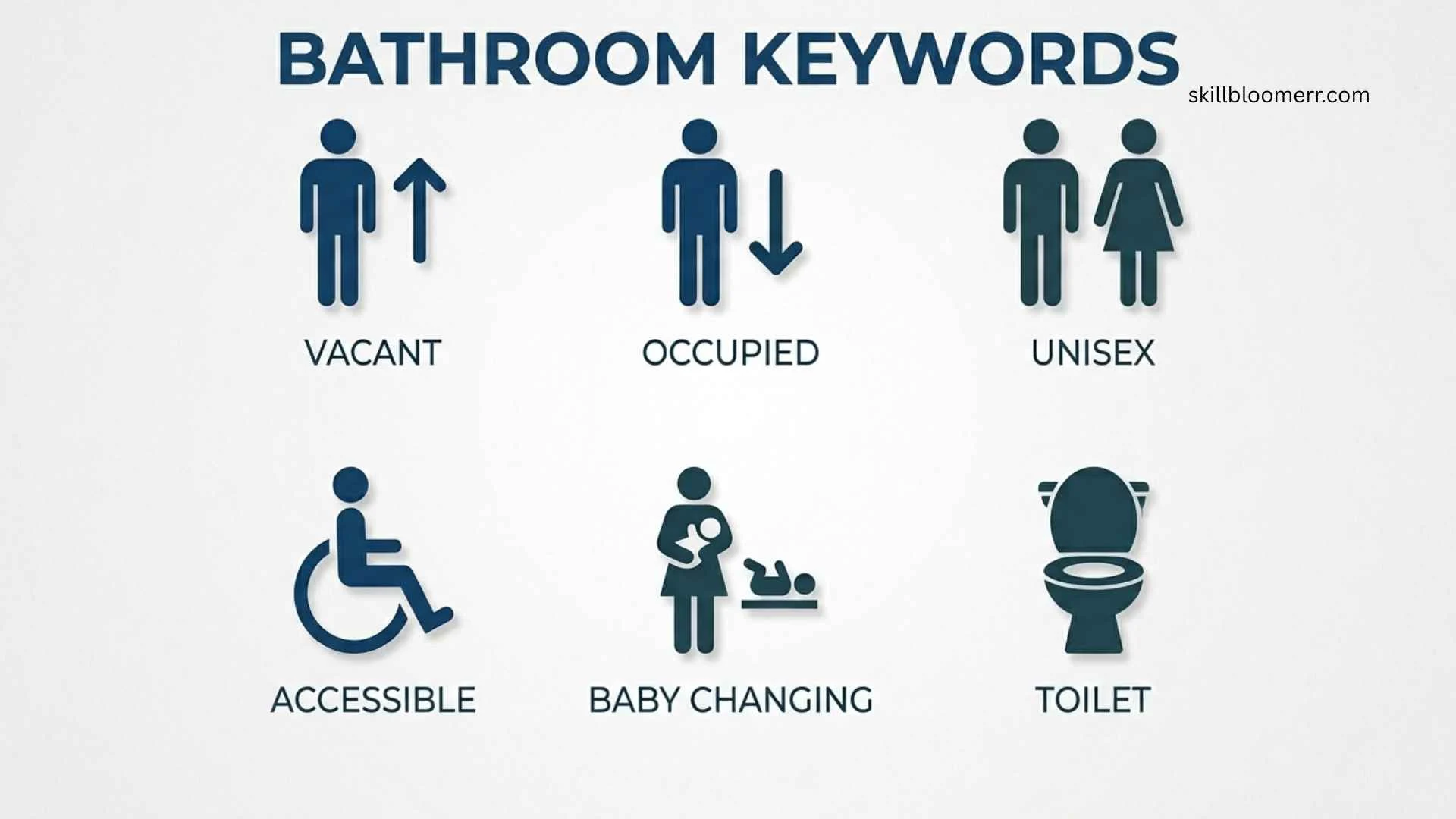
Bathroom symbols are universal visual signs designed to help people quickly identify restroom facilities without needing to read words. These symbols appear in airports, shopping malls, schools, restaurants, hospitals, hotels, offices, and public buildings around the world.
The most familiar bathroom symbols include the male figure, female figure, wheelchair accessibility symbol, family restroom icon, and gender-neutral restroom signs. Although they look simple, these symbols carry important meanings related to communication, accessibility, culture, and human behavior.
Understanding bathroom symbols helps travelers, designers, architects, and everyday users recognize restroom signs across different countries and environments. This guide explains their meanings, origins, cultural differences, variations, and modern uses.
Quick Meaning of Bathroom Symbols
Bathroom symbols are internationally recognized signs that indicate restroom locations and identify who the facility is designed for. The most common symbols use simple human shapes, colors, and icons to communicate gender, accessibility, and restroom purpose quickly without relying on language.
Symbol Overview Table
| Symbol Element | Meaning |
| Symbol Name | Bathroom Symbols / Restroom Icons |
| Primary Meaning | Identifying restroom facilities and users |
| Category | Public information symbols, wayfinding signs |
| Origin | Developed from international signage systems |
| Main Culture Influence | Global public design standards |
| First Known Use | Early 20th-century public facility signage development |
| Common Usage | Airports, malls, schools, offices, transportation hubs |
| Modern Meaning | Accessibility, inclusion, and navigation |
| Unicode | No single universal bathroom symbol Unicode character |
| Emoji Equivalent | 🚻 Restroom, 🚹 Men’s restroom, 🚺 Women’s restroom |
| Related Symbols | Accessibility symbol, baby changing icon, family restroom sign |
What Do Bathroom Symbols Mean?
Bathroom symbols are visual communication tools that help people locate and understand restroom facilities quickly. Their main purpose is to replace written language with images that can be understood by people from different countries and language backgrounds.
The most common bathroom symbols include:
- Male restroom symbol: A simplified human figure traditionally representing men’s facilities.
- Female restroom symbol: A simplified human figure traditionally representing women’s facilities.
- Gender-neutral restroom symbol: A person icon, combined figures, or inclusive wording representing facilities available to all genders.
- Accessible restroom symbol: The international wheelchair symbol indicating facilities designed for people with disabilities.
- Family restroom symbol: An icon showing caregivers, children, or family groups.
These symbols are not meant to represent every individual perfectly. Instead, they function as quick visual signals that allow people to make decisions within seconds.
Modern restroom signage focuses less on traditional gender assumptions and more on clarity, accessibility, and inclusion. Many buildings now combine symbols with text labels to improve understanding.
History and Origin of Bathroom Symbols
Early Development of Public Restroom Signs
The need for bathroom symbols developed as cities grew and public buildings became more complex. Before standardized signs existed, restroom identification often depended on written words such as “Men,” “Women,” “Ladies,” or “Gentlemen.”
Written signs created challenges for international travelers and people who could not read the local language. As transportation systems, tourism, and global business expanded, designers searched for universal visual communication methods.
During the 20th century, public information symbols became increasingly important. Airports, train stations, and international events required signs that visitors could understand quickly.
Influence of International Symbol Systems
Modern bathroom symbols are part of a larger movement toward universal symbols and wayfinding systems.
Organizations such as the International Organization for Standardization (ISO) helped establish principles for creating clear public symbols. These systems encouraged:
- Simple shapes
- Strong visual contrast
- Easy recognition
- Minimal cultural confusion
Bathroom icons became part of this global approach to information design.
Evolution of Restroom Symbols Over Time
Traditional restroom symbols often showed:
- Men as a simple figure wearing pants
- Women as a simple figure wearing a skirt or dress
These designs became widely recognized, but they also created discussions about whether clothing-based differences accurately represented gender.
Modern designs increasingly use:
- Neutral human figures
- Text labels
- Combined symbols
- Inclusive restroom icons
The evolution reflects broader changes in architecture, accessibility, and social understanding.
Symbolism and Interpretation
Traditional Meaning of Bathroom Symbols
Traditionally, bathroom symbols represented separation between male and female restroom facilities.
The symbols were created to answer a simple question:
Which restroom should a person use?
Their purpose was practical rather than symbolic. They helped organize public spaces and reduce confusion.
Modern Interpretation of Restroom Icons
Today, bathroom symbols represent more than gender identification. They can communicate:
- Privacy
- Safety
- Accessibility
- Public convenience
- Inclusive design
A restroom symbol is now considered part of a building’s overall communication system.
Positive Symbolism
Bathroom symbols can represent:
- Equal access to public facilities
- Respect for personal needs
- Efficient communication
- Universal understanding
A well-designed restroom sign allows people to navigate unfamiliar places confidently.
Negative or Debated Interpretations
Some traditional restroom symbols have been criticized because:
- They may reinforce outdated gender stereotypes.
- Clothing-based designs may oversimplify identity.
- Some users may feel excluded by limited categories.
Because of these concerns, many designers now prefer clearer and more inclusive approaches.
Cultural Significance of Bathroom Symbols
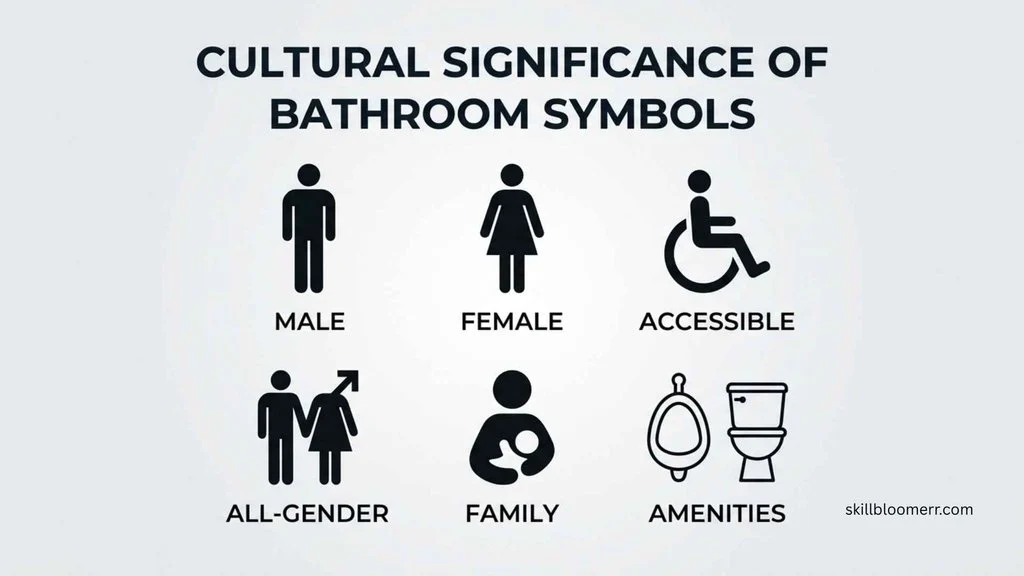
Bathroom symbols are used globally, but their appearance and interpretation can vary between cultures.
Western Countries
In many Western countries, traditional restroom symbols commonly use:
- A male stick figure
- A female figure wearing a triangular skirt shape
- Wheelchair accessibility icons
These designs are familiar because they have appeared in public spaces for decades.
Asian Countries
Many Asian countries use similar international symbols, especially in airports, hotels, and shopping centers. However, some locations add additional text because visitors may come from different cultural backgrounds.
Japan, for example, often uses highly detailed restroom signage because public facilities may include multiple options such as:
- Western-style toilets
- Japanese-style toilets
- Accessible toilets
- Baby care areas
European Countries
European restroom signs often combine:
- Universal symbols
- Local language labels
- Accessibility markings
Because Europe has many languages and high international travel, clear visual communication is especially important.
Cultural Differences in Interpretation
A symbol that feels obvious in one country may not be immediately understood somewhere else.
For example:
- Clothing-based gender icons may not have the same meaning everywhere.
- Color meanings can differ between cultures.
- Local customs may influence restroom organization.
This shows why modern symbol designers focus on simplicity and universal recognition.
Religious or Spiritual Meaning
Bathroom symbols generally do not have religious or spiritual meanings. They are practical communication tools created for public navigation and accessibility.
However, cleanliness and personal hygiene have spiritual importance in many religions.
Examples include:
- Ritual cleanliness practices in Judaism and Islam
- Purification traditions in Hinduism
- Respect for cleanliness in many Buddhist communities
These beliefs influence attitudes toward bathrooms and hygiene but are separate from the symbols themselves.
Scientific or Technical Meaning
Bathroom symbols do not have a mathematical or scientific meaning, but they are connected to technical fields such as:
Human Factors Design
Designers study how people recognize and respond to symbols. Effective restroom signs rely on:
- Visual simplicity
- Shape recognition
- Contrast
- Placement
- Universal understanding
Architecture and Building Standards
Architects use restroom symbols in:
- Floor plans
- Building maps
- Emergency evacuation guides
- Public information systems
Accessibility Standards
Accessibility symbols communicate important technical requirements.
The wheelchair symbol, officially known as the International Symbol of Access (ISA), indicates facilities designed to accommodate people with disabilities.
Accessibility signs are used for:
- Accessible bathrooms
- Parking spaces
- Entrances
- Elevators
- Transportation facilities
Where Bathroom Symbols Are Used
Bathroom symbols appear in many environments where quick identification is important.
Public Buildings
Common locations include:
- Shopping malls
- Libraries
- Schools
- Government buildings
- Museums
These signs help visitors navigate large spaces.
Transportation Areas
Airports, train stations, and bus terminals rely heavily on restroom symbols because travelers often come from different countries.
Symbols reduce dependence on language and improve accessibility.
Hospitality Industry
Hotels and restaurants use restroom icons to guide guests discreetly.
Common examples include:
- Hotel directories
- Restaurant entrances
- Conference centers
- Tourist attractions
Digital Platforms
Bathroom symbols also appear digitally through:
- Mobile maps
- Travel applications
- Website icons
- Emoji systems
The restroom emoji 🚻 is one example of how physical symbols have entered digital communication.
Common Variations of Bathroom Symbols
Traditional Gender Symbols
The classic versions include:
- Male figure icon
- Female figure icon
These remain common worldwide.
Gender-Neutral Restroom Symbols
Modern alternatives may show:
- A single human figure
- Combined male and female symbols
- A toilet icon
- Text such as “All Gender Restroom”
These designs aim to make facilities easier to understand for everyone.
Family Restroom Symbols
Family restroom signs often include:
- Adult and child figures
- Parent and child icons
- Baby changing symbols
They indicate spaces designed for caregivers and children.
Accessibility Symbols
Accessible bathroom signs usually include the wheelchair symbol along with restroom identification.
They indicate features such as:
- Wider doors
- Grab bars
- More maneuvering space
- Accessible fixtures
Common Misconceptions About Bathroom Symbols
Bathroom symbols may look simple, but many people misunderstand their purpose, history, or meaning. These signs are designed for quick recognition, not to represent every person or situation perfectly.
Misconception 1: Bathroom Symbols Are Universal Everywhere
Although many restroom icons are internationally recognized, they are not identical across all countries. Different regions may use different designs, colors, and labels depending on language, culture, and accessibility standards.
A traveler should not assume that every restroom symbol will look exactly the same as the one used in their home country.
Misconception 2: The Female Symbol Represents Clothing
One common misunderstanding is that the traditional female restroom symbol represents women because of the skirt shape.
The skirt-like design became popular because designers wanted a quick visual difference between two similar human figures. However, it is a design convention rather than a literal representation of clothing preferences.
Misconception 3: Bathroom Symbols Define Identity Completely
Traditional restroom symbols were created for organizing public spaces, not for describing the full range of human identities.
Modern restroom design increasingly focuses on:
- Clear communication
- Accessibility
- Privacy
- User comfort
Many facilities now combine symbols with written explanations to reduce confusion.
Misconception 4: Color Determines the Meaning
Some people believe colors such as blue for men and pink for women are universal rules. They are not.
Colors vary widely between locations. Many modern signs avoid gender-based colors and use neutral designs with strong contrast for better visibility.
Misconception 5: The Wheelchair Symbol Means Only Disability
The accessibility symbol does indicate facilities designed for people with disabilities, but it also represents broader principles of inclusive design.
Accessible restrooms can benefit:
- Older adults
- People recovering from injuries
- Parents with strollers
- People carrying large items
Accessibility features often improve convenience for many users.
Interesting Facts About Bathroom Symbols
1. Bathroom Icons Are Part of Wayfinding Design
Bathroom symbols belong to a larger field called wayfinding, which helps people navigate unfamiliar environments. Airports, hospitals, universities, and museums use similar visual systems to guide visitors.
2. Restroom Signs Help Overcome Language Barriers
A person may not understand a foreign word for “bathroom,” but a familiar restroom symbol can communicate the meaning immediately. This makes symbols especially valuable in international locations.
3. The Wheelchair Symbol Is Internationally Recognized
The International Symbol of Access is one of the most recognizable accessibility signs worldwide. It appears on restroom doors, parking spaces, transportation services, and public facilities.
4. Bathroom Symbols Are Designed for Quick Recognition
Professional sign designers consider factors such as:
- Viewing distance
- Lighting conditions
- Human attention span
- Visual simplicity
A good symbol should communicate its meaning within seconds.
5. Restroom Signs Influence Building Design
Architects consider restroom locations early during building planning. Clear signs are part of creating safe and easy-to-navigate environments.
6. Digital Maps Use Restroom Symbols
Navigation apps and digital maps often use restroom icons to help users locate facilities in unfamiliar places.
This shows how traditional physical symbols have moved into digital environments.
7. Emoji Systems Include Bathroom Symbols
Unicode, the global text encoding standard, includes restroom-related emoji symbols such as:
- 🚻 Restroom
- 🚹 Men’s restroom
- 🚺 Women’s restroom
These digital symbols allow people to communicate restroom-related information quickly.
8. Airport Design Relies Heavily on Symbols
International airports use symbols extensively because passengers may speak dozens of different languages. Visual signs reduce dependence on written instructions.
9. Bathroom Symbols Are Studied in Design Research
Researchers analyze symbols to understand how humans recognize images, process information, and make decisions in public spaces.
10. Modern Signs Often Combine Images and Words
Although symbols are powerful, many experts recommend combining icons with text because words provide additional clarity and reduce misunderstanding.
Related Symbols Connected to Bathroom Signs
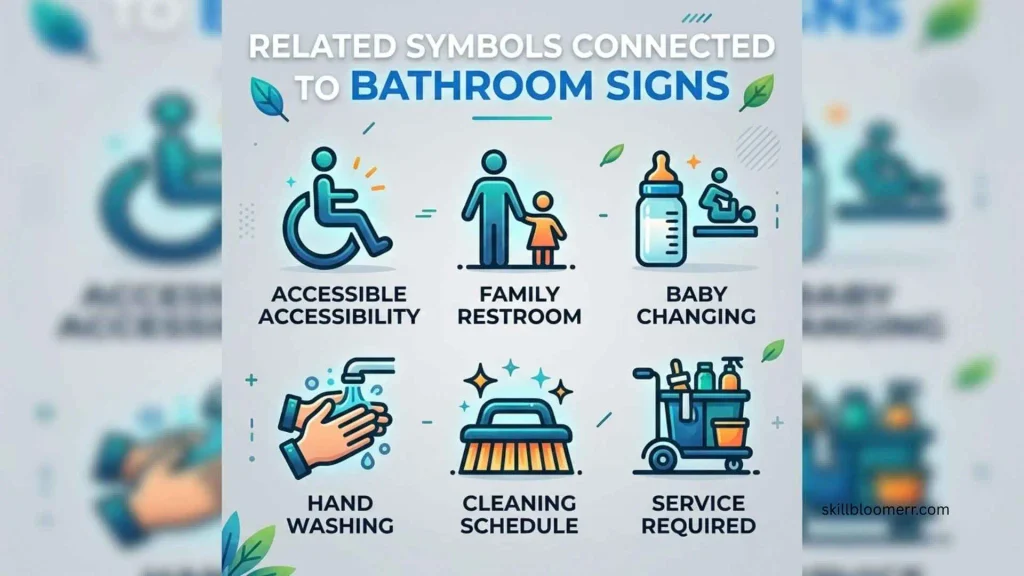
Accessibility Symbol
The wheelchair accessibility symbol indicates facilities designed to support people with disabilities.
It is commonly found on:
- Accessible restroom doors
- Parking spaces
- Building entrances
- Elevators
Unlike gender symbols, it focuses on physical access rather than user category.
Family Restroom Symbol
Family restroom signs usually represent spaces for caregivers and children.
They may include:
- Adult figures
- Child figures
- Baby changing icons
These facilities support parents, guardians, and people who need additional space.
Baby Changing Symbol
This symbol indicates a location where parents or caregivers can change an infant’s diaper.
It is often placed near:
- Restrooms
- Family rooms
- Public facilities
Toilet Symbol
Some locations use a simple toilet bowl icon instead of human figures. This design focuses on the function of the room rather than the users.
Gender-Neutral Symbol
Gender-neutral restroom signs may use:
- A single person icon
- A restroom symbol without gender indicators
- Text-based labels
These designs emphasize universal access.
Frequently Asked Questions About Bathroom Symbols
What are bathroom symbols used for?
Bathroom symbols are used to identify restroom locations and provide information about who can use a facility. They help people navigate public spaces quickly without relying only on written language. These symbols are especially useful in airports, tourist areas, and international buildings where visitors may speak different languages.
Why are bathroom symbols important?
Bathroom symbols are important because they provide fast, universal communication. They help people find restrooms, understand accessibility options, and move through unfamiliar environments more easily. Good restroom signage improves safety, convenience, and independence for many different users.
Who created the first bathroom symbols?
There is no single inventor credited with creating modern bathroom symbols. They developed gradually through public signage systems, transportation design, and international wayfinding practices during the 20th century. Many organizations and designers contributed to making restroom icons more recognizable worldwide.
Why do men’s and women’s restroom symbols look different?
Traditional men’s and women’s restroom symbols were designed to create quick visual differences between two similar human figures. Clothing shapes, such as pants and skirt outlines, became common design choices. These differences are visual conventions rather than exact representations of people.
Are bathroom symbols the same in every country?
No, bathroom symbols vary between countries. Many nations use similar human figures because they are widely recognized, but designs, colors, and labels can differ. Cultural expectations, language, and accessibility requirements influence how restroom signs are created.
What does the wheelchair bathroom symbol mean?
The wheelchair symbol indicates that a restroom has accessibility features intended for people with disabilities. These may include wider doors, additional space, support bars, and accessible fixtures. The symbol represents inclusive access rather than a restriction on who may enter.
What is the meaning of a gender-neutral bathroom symbol?
A gender-neutral bathroom symbol represents a restroom designed for use without separating people by gender categories. These signs may show a neutral human figure, a combined symbol, or a written label explaining that the facility is open to everyone.
Why do airports use bathroom symbols instead of only words?
Airports use bathroom symbols because passengers come from many linguistic backgrounds. A recognizable icon allows travelers to understand directions quickly, even if they cannot read the local language. Symbols make international navigation easier and more efficient.
Are bathroom symbols considered a type of language?
Bathroom symbols are part of visual communication rather than a spoken language. They work like a visual vocabulary, allowing people to understand information through images, shapes, and signs instead of words.
Can bathroom symbols change in the future?
Yes, bathroom symbols continue to evolve as societies develop new approaches to accessibility, inclusion, and design. Future restroom signs may focus more on universal symbols, clearer labels, and user-friendly designs that serve diverse communities.
Key Takeaways
- Bathroom symbols are visual signs used to identify restroom facilities quickly.
- They developed from the need for universal communication in public spaces.
- Traditional symbols include male, female, accessibility, and family restroom icons.
- Modern restroom design focuses on clarity, accessibility, and inclusion.
- Symbols help overcome language barriers in international locations.
- Colors and designs vary between cultures and countries.
- The wheelchair symbol represents accessibility and inclusive design.
- Many modern signs combine images with text for better understanding.
- Bathroom symbols are important elements of architecture and wayfinding.
- Digital platforms and emoji systems have adapted restroom symbols for online communication.
Conclusion
Bathroom symbols may appear simple, but they represent an important part of human communication and public design. These small visual signs help millions of people find essential facilities every day, regardless of language, location, or background.
From traditional male and female restroom icons to modern accessible and gender-neutral designs, bathroom symbols continue to evolve with society’s changing needs. Their purpose remains the same: creating clear, fast, and understandable communication in shared spaces.
Understanding the meaning behind bathroom symbols helps us appreciate how design, culture, technology, and accessibility work together to make public environments easier for everyone to navigate.

I’m Olivia Hartwell, a writer passionate about learning, personal growth, and practical education. I enjoy researching new ideas and sharing them in a way that feels easy to understand and useful. Through my work with SkillBloomerr, I aim to give readers reliable information they can apply in real life.
Books: Small Steps, Big Growth and The Curious Mind
 Ethan Calloway
 Nathaniel Brooks