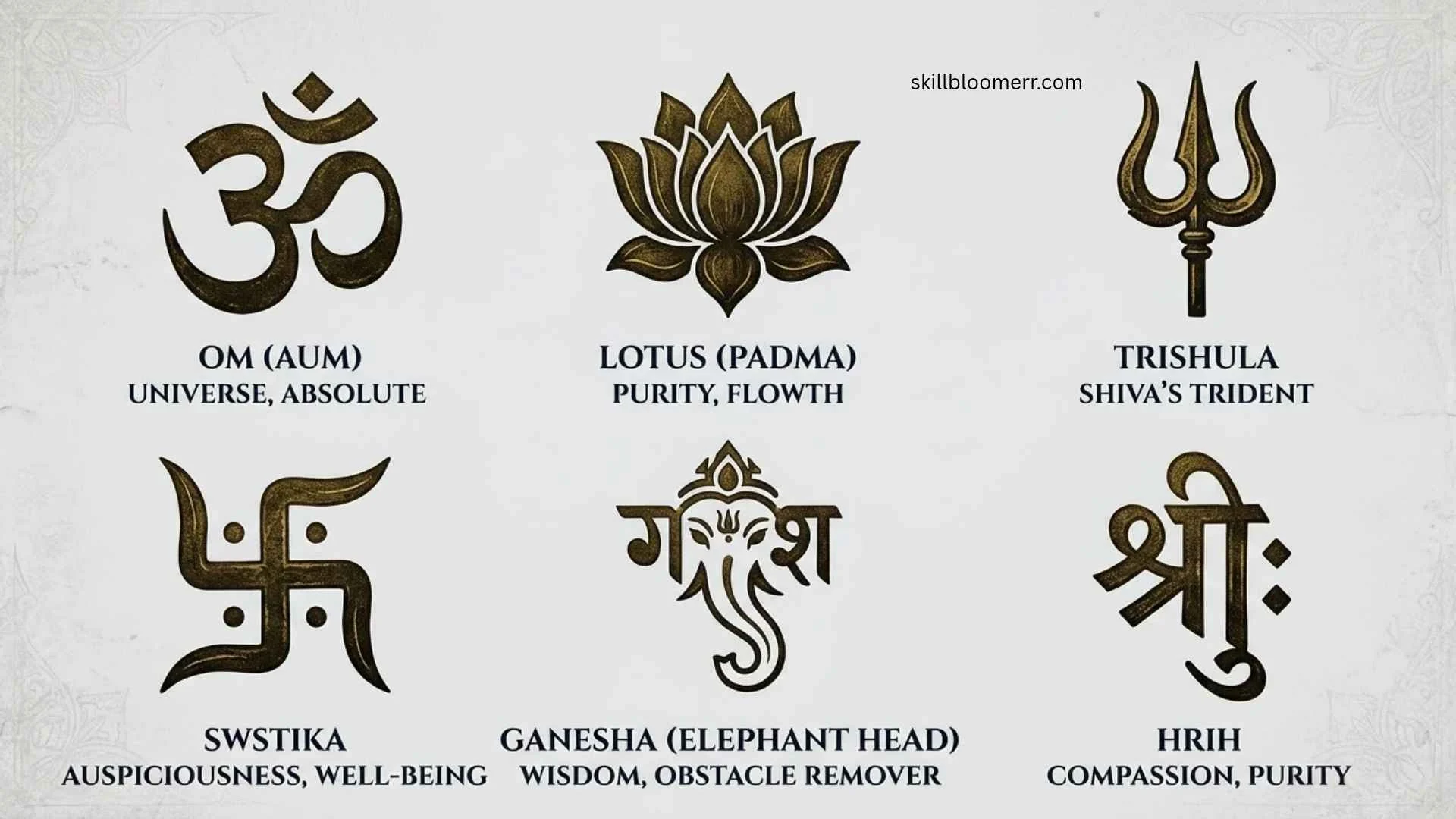
Sanskrit symbols are ancient visual expressions connected with the Sanskrit language, Hindu traditions, Indian philosophy, spirituality, yoga, meditation, and cultural identity.
These symbols carry meanings that go beyond simple designs because they often represent ideas such as consciousness, divine energy, balance, protection, wisdom, and the connection between humans and the universe.
You may encounter Sanskrit symbols in temples, spiritual texts, yoga studios, meditation spaces, jewelry, tattoos, artwork, manuscripts, and modern wellness practices. Popular examples include Om (ॐ), the Swastika (卐), the Lotus (पद्म), the Trishula (त्रिशूल), and Sanskrit script itself.
Understanding Sanskrit symbols and meanings requires looking at their history, religious importance, linguistic roots, and cultural context. Each symbol developed through centuries of philosophical thought and represents different aspects of Indian civilization.
Quick Meaning of Sanskrit Symbols
Sanskrit symbols are sacred signs, letters, and visual representations that express spiritual concepts, philosophical ideas, and cultural values from ancient India. They are commonly associated with Hinduism, Buddhism, Jainism, yoga, meditation, and Sanskrit literature, with meanings related to harmony, enlightenment, protection, and universal consciousness.
Sanskrit Symbols Overview Table
| Symbol Name | Primary Meaning | Category | Origin | Culture | Historical Use | Modern Usage |
| Om (ॐ) | Universal sound, divine consciousness | Spiritual symbol | Ancient India | Hindu, Buddhist, Jain traditions | Vedic texts and meditation | Yoga, meditation, jewelry, tattoos |
| Swastika (卐) | Good fortune, prosperity, well-being | Sacred symbol | Ancient India | Hinduism, Buddhism, Jainism | Rituals and architecture | Festivals, religious art |
| Lotus (पद्म) | Purity, spiritual awakening | Nature symbol | Ancient India | Hindu and Buddhist traditions | Religious texts and sculptures | Meditation, art, jewelry |
| Trishula (त्रिशूल) | Power, creation, preservation, destruction | Divine symbol | Ancient India | Hinduism | Associated with Shiva | Temples and spiritual artwork |
| Sanskrit Script (देवनागरी) | Sacred language representation | Writing system | Ancient India | Indian traditions | Scriptures and literature | Education and cultural art |
| Namaste (नमस्ते) | Respect and greeting | Gesture symbol | Ancient India | Indian culture | Social and spiritual practice | Global wellness culture |
What Do Sanskrit Symbols Mean?
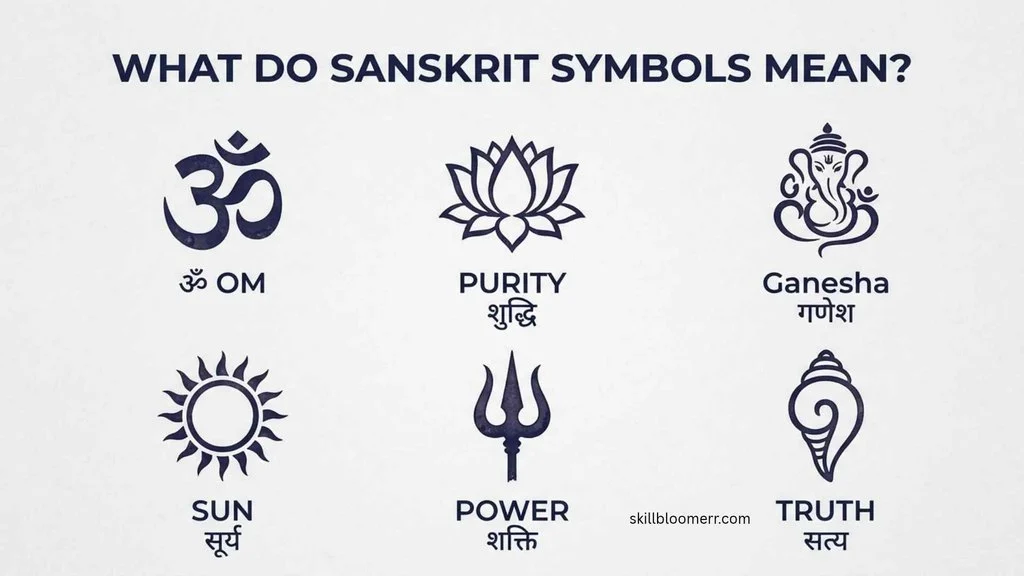
Sanskrit symbols represent deep philosophical ideas rather than only decorative designs. Many symbols developed from the spiritual traditions of ancient India, where visual forms were used to communicate concepts that were difficult to express through ordinary language.
The meanings of Sanskrit symbols often include:
- Connection between humans and the divine
- Balance between physical and spiritual life
- The cycle of creation and renewal
- Inner peace and self-awareness
- Protection and positive energy
- Knowledge and enlightenment
Unlike modern logos that usually have a fixed meaning, many Sanskrit symbols have layers of interpretation. Their meaning can change depending on religious tradition, historical period, and cultural context.
History and Origin of Sanskrit Symbols
Ancient Roots in Indian Civilization
Sanskrit symbols originated in the Indian subcontinent thousands of years ago. They developed alongside Sanskrit, one of the world’s oldest recorded languages, which became the language of many important Hindu philosophical and religious texts.
Ancient Indian thinkers used sounds, letters, geometric forms, and natural images to represent complex spiritual concepts. These symbols appeared in:
- Vedic traditions
- Hindu temples
- Buddhist teachings
- Jain philosophy
- Yoga practices
- Ancient manuscripts
The Vedic period introduced many ideas that later became connected with Sanskrit symbols, including concepts of cosmic order, meditation, sacred sound, and universal balance.
Evolution Through Religious Traditions
Over centuries, Sanskrit symbols evolved through different Indian spiritual traditions.
Hindu traditions connected symbols with deities, rituals, and philosophical ideas. Buddhist traditions adapted certain symbols to represent enlightenment and spiritual paths. Jain traditions used symbolic forms to communicate principles such as non-violence and liberation.
This evolution explains why the same symbol may have different interpretations across cultures.
Symbolism and Interpretation of Sanskrit Symbols
Traditional Meanings
Traditional Sanskrit symbolism focuses on spiritual awareness and cosmic principles.
For example:
- Om represents the sacred vibration believed to connect all existence.
- Lotus represents spiritual growth emerging from difficult conditions.
- Swastika traditionally represents prosperity and good fortune.
- Trishula represents divine power and the balance of creation, preservation, and transformation.
These meanings come from religious philosophy, mythology, and cultural practices.
Modern Meanings
Today, Sanskrit symbols are used worldwide in:
- Meditation practices
- Yoga communities
- Personal artwork
- Jewelry designs
- Tattoos
- Interior decoration
Many people choose these symbols because they represent mindfulness, peace, strength, or personal growth.
However, modern interpretations may differ from traditional meanings. Understanding the original cultural background helps prevent misunderstandings.
Psychological Interpretation
From a psychological perspective, symbols can influence human thinking by creating associations with certain ideas.
For example:
- Om may encourage feelings of calm and focus.
- Lotus imagery may represent personal transformation.
- Circular symbols may suggest unity and completeness.
Symbolic thinking is common across cultures because humans naturally use images to represent complex emotions and beliefs.
Cultural Significance of Sanskrit Symbols
Hindu Culture
In Hindu traditions, Sanskrit symbols are deeply connected with religious practices. They appear in temples, ceremonies, scriptures, and household rituals.
Symbols often represent:
- Deities
- Universal principles
- Spiritual protection
- Sacred sounds
- Philosophical teachings
The Om symbol is among the most recognized sacred symbols in Hinduism.
Buddhist Culture
Buddhist traditions use several symbols connected with Indian philosophical ideas.
Examples include:
- Lotus flower: enlightenment and purity
- Dharma wheel: teachings of Buddha
- Om syllable: sacred sound in some Buddhist traditions
These symbols appear throughout Buddhist art and architecture.
Jain Culture
Jain traditions also preserve important Indian symbolic traditions. Symbols may represent spiritual liberation, ethical living, and the path toward enlightenment.
Global Cultural Influence
Today, Sanskrit symbols have become internationally recognized. They appear in yoga studios, meditation centers, fashion, and wellness industries.
While global use has increased awareness, respectful understanding of their original meaning remains important.
Religious and Spiritual Meaning of Sanskrit Symbols
Om (ॐ) and Spiritual Consciousness
Om is one of the most important Sanskrit symbols. It is considered a sacred sound representing the essence of ultimate reality.
In many Hindu traditions, Om appears at the beginning of prayers, chants, and spiritual texts.
It is associated with:
- Meditation
- Universal consciousness
- Spiritual awareness
- The connection between mind and universe
Lotus Symbol and Enlightenment
The lotus flower holds powerful spiritual meaning in Indian traditions.
Because the lotus grows from muddy water while producing a beautiful flower, it represents:
- Purity despite difficulties
- Personal transformation
- Spiritual awakening
- Growth beyond limitations
Swastika Symbol
The traditional Sanskrit swastika symbol is an ancient sign of good fortune and prosperity.
In Hindu, Buddhist, and Jain traditions, it has historically represented:
- Success
- Harmony
- Auspicious beginnings
- Positive energy
It is important to distinguish the ancient Indian symbol from the 20th-century misuse of a similar symbol by Nazi Germany, which gave it a different modern association in many parts of the world.
Scientific or Technical Meaning of Sanskrit Symbols
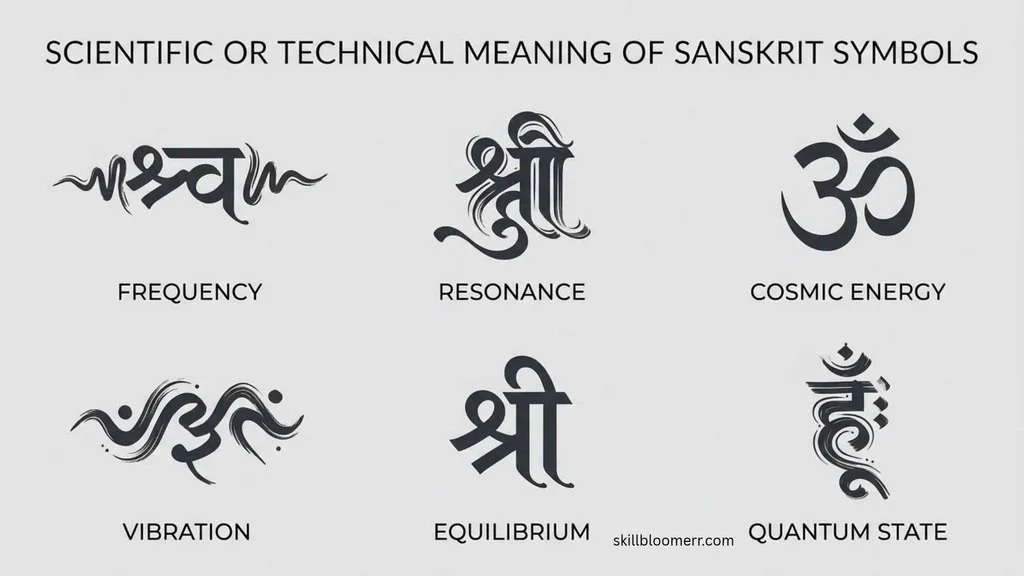
Sanskrit symbols generally do not have scientific meanings in the modern technical sense. However, some have connections with areas of study.
Linguistics
Sanskrit script and phonetics are important subjects in linguistics because Sanskrit has a highly organized grammatical structure.
The study of Sanskrit contributed to:
- Comparative linguistics
- Understanding Indo-European languages
- Historical language research
Sound and Meditation Research
The chanting of Sanskrit sounds, including Om, has been studied in relation to meditation, relaxation, and attention practices.
Scientific research generally examines physiological effects of meditation and chanting rather than proving spiritual meanings.
Where Sanskrit Symbols Are Used
Religious Places
Sanskrit symbols appear in:
- Hindu temples
- Buddhist monasteries
- Jain religious spaces
- Prayer areas
They are often carved into walls, displayed on objects, or included in ceremonial designs.
Yoga and Meditation
Modern yoga practices commonly use Sanskrit symbols.
Examples include:
- Om symbols in meditation rooms
- Chakra symbols
- Sanskrit mantras
- Devanagari writing
Jewelry and Tattoos
Many people wear Sanskrit symbols as personal reminders of:
- Spiritual goals
- Inner strength
- Peace
- Personal beliefs
Before using a Sanskrit tattoo or symbol, it is recommended to understand the exact meaning and cultural background.
Art and Architecture
Sanskrit symbols appear in:
- Traditional Indian paintings
- Temple designs
- Sculptures
- Decorative patterns
- Manuscripts
Common Variations of Sanskrit Symbols
Om Variations
The Om symbol may appear in different artistic styles depending on region and designer.
Variations include:
- Traditional Devanagari forms
- Decorative calligraphy
- Modern minimalist designs
Swastika Variations
Traditional Indian swastikas may differ in:
- Direction of rotation
- Decorative patterns
- Regional styles
Different traditions may assign different meanings to these forms.
Sanskrit Letter Designs
Individual Sanskrit letters are often transformed into artistic symbols.
Examples include:
- Mantra-based designs
- Calligraphic artwork
- Decorative script tattoos
Common Misconceptions About Sanskrit Symbols
Sanskrit Symbols Are Only Religious
Although many Sanskrit symbols have religious origins, they also represent philosophy, culture, language, and artistic traditions.
Every Sanskrit Symbol Has One Fixed Meaning
Many symbols have multiple interpretations depending on context.
A symbol used in a temple may carry a different meaning than the same symbol used in modern artwork.
Sanskrit and Hindi Are the Same Language
Sanskrit and Hindi are related but different languages. Sanskrit is an ancient classical language, while Hindi developed later as a modern Indo-Aryan language.
All Sanskrit Symbols Are Mantras
Not every Sanskrit symbol is a mantra. Some are letters, images, religious signs, or philosophical representations.
Interesting Facts About Sanskrit Symbols
- Om is one of the most internationally recognized Sanskrit symbols.
It appears in yoga and meditation communities around the world. - Sanskrit symbols often combine language and philosophy.
Many symbols represent both written sounds and deeper concepts. - The lotus is a symbol shared across several Asian traditions.
Its meaning often connects with purity and spiritual growth. - The swastika is much older than its modern negative association.
Ancient cultures used similar forms as symbols of good fortune. - Sanskrit writing influenced many Indian scripts.
Several modern writing systems developed through historical relationships with Brahmi-based scripts. - Sanskrit symbols are common in temple architecture.
They often communicate religious stories and philosophical ideas. - Yoga helped spread Sanskrit symbols globally.
International yoga practices introduced many people to Sanskrit terminology and imagery. - Sanskrit has a strong connection with sound symbolism.
Many traditions emphasize the importance of pronunciation and vibration. - Symbols help preserve cultural memory.
They allow complex ideas to survive across generations. - Sanskrit symbols continue to evolve.
Modern artists often combine traditional meanings with contemporary designs.
Related Symbols
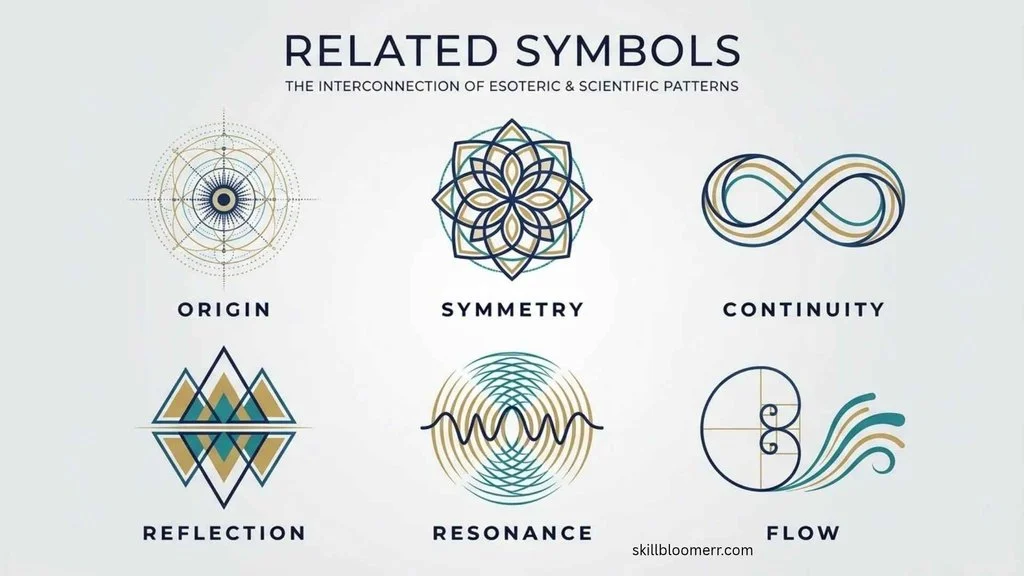
Chakra Symbols
Chakras are energy-center symbols associated with certain Indian spiritual traditions. They are commonly used in yoga and meditation practices.
Mandala Symbols
Mandala designs represent harmony, balance, and the structure of the universe. They are important in Hindu and Buddhist traditions.
Yantra Symbols
Yantras are geometric sacred diagrams used in meditation and spiritual practices.
Devanagari Script
Devanagari is a writing system used for Sanskrit and several modern Indian languages. It is often associated with Sanskrit texts.
Frequently Asked Questions
What is the most famous Sanskrit symbol?
The most famous Sanskrit symbol is Om (ॐ). It represents sacred sound, universal consciousness, and spiritual connection in many Indian traditions. It is widely used in Hindu practices, yoga, meditation, and spiritual artwork around the world.
What does the Om symbol mean?
The Om symbol represents the idea of ultimate reality and the connection between all existence. In many traditions, chanting Om is considered a meditation practice that helps create focus and awareness.
Are Sanskrit symbols religious?
Many Sanskrit symbols have religious origins, especially within Hinduism, Buddhism, and Jainism. However, they are also used culturally, artistically, and philosophically outside formal religious settings.
What does the Sanskrit lotus symbol mean?
The lotus symbolizes purity, spiritual growth, and enlightenment. Its connection comes from the flower’s ability to grow from muddy water while remaining beautiful, representing personal transformation.
Is the Sanskrit swastika different from the Nazi symbol?
Yes. The traditional Sanskrit swastika is an ancient symbol of good fortune, prosperity, and harmony used in Indian religions for thousands of years. The Nazi movement later adopted a similar shape and gave it a completely different and harmful association.
Can Sanskrit symbols be used as tattoos?
Yes, many people use Sanskrit symbols as tattoos. However, it is important to verify the meaning, spelling, and cultural significance before permanently applying a Sanskrit design.
Is Sanskrit still used today?
Yes. Sanskrit is still studied, used in religious ceremonies, taught academically, and preserved through cultural institutions. It remains an important classical language of India.
What is the difference between Sanskrit symbols and Sanskrit letters?
Sanskrit letters are part of the writing system used to represent sounds. Sanskrit symbols may include letters, sacred signs, geometric designs, and visual representations of philosophical concepts.
Why are Sanskrit symbols important?
Sanskrit symbols preserve thousands of years of cultural, religious, linguistic, and philosophical knowledge. They provide visual ways to understand complex ideas about life, consciousness, and spirituality.
Key Takeaways
- Sanskrit symbols represent ancient Indian ideas about spirituality, philosophy, and culture.
- Om (ॐ) is one of the most recognized Sanskrit symbols worldwide.
- Many symbols have different meanings depending on cultural and religious context.
- Sanskrit symbols appear in temples, yoga, meditation, art, jewelry, and tattoos.
- Understanding historical background prevents cultural misunderstandings.
- Sanskrit symbols connect language, sound, visual design, and philosophy.
- Traditional meanings should be respected when using these symbols today.
Conclusion
Sanskrit symbols and meanings reflect thousands of years of Indian history, philosophy, spirituality, and artistic expression. These symbols are more than decorative designs because they preserve ideas about consciousness, balance, wisdom, and human connection.
From the sacred Om symbol to the lotus flower and ancient Sanskrit script, each symbol carries layers of cultural significance. Learning their origins and meanings allows people to appreciate them with greater respect and understanding.
Whether found in meditation practices, religious traditions, artwork, or modern designs, Sanskrit symbols continue to inspire people around the world through their timeless messages of harmony, knowledge, and spiritual growth.

I’m Olivia Hartwell, a writer passionate about learning, personal growth, and practical education. I enjoy researching new ideas and sharing them in a way that feels easy to understand and useful. Through my work with SkillBloomerr, I aim to give readers reliable information they can apply in real life.
Books: Small Steps, Big Growth and The Curious Mind