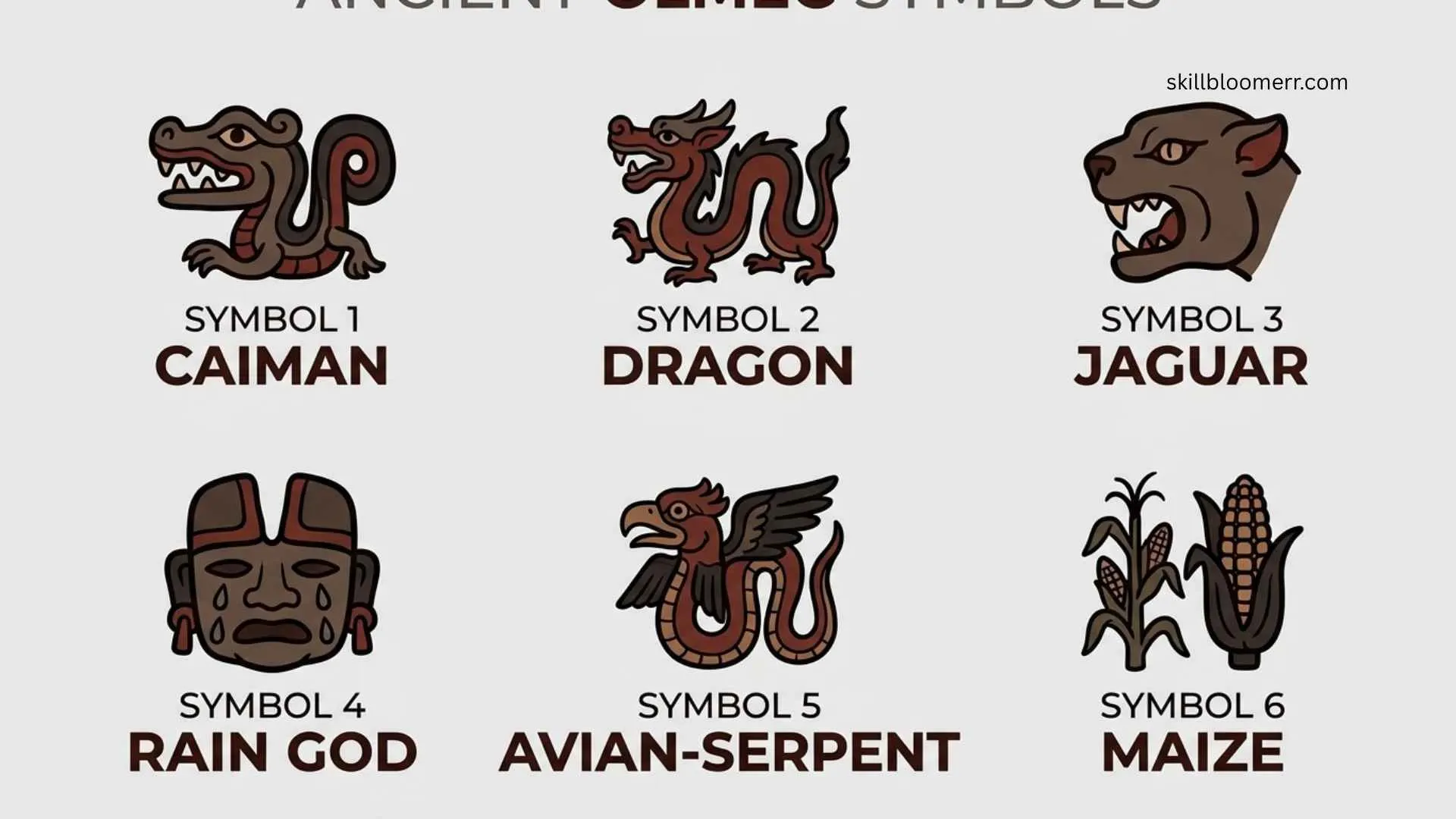
Olmec symbols are some of the earliest known visual expressions of ancient Mesoamerican civilization. Created by the Olmec people between approximately 1500 BCE and 400 BCE, these symbols represented powerful ideas about nature, spirituality, leadership, fertility, animals, and the connection between humans and supernatural forces.
The meaning of Olmec symbols can be seen in stone monuments, jade carvings, pottery, figurines, and ceremonial objects discovered across the Gulf Coast region of present-day Mexico. These ancient designs continue to fascinate historians because they influenced later civilizations, including the Maya and Aztec cultures.
From mysterious jaguar figures to possible early writing signs, Olmec symbols reveal how one of the Americas’ earliest civilizations understood the world around them. This guide explains their meanings, origins, cultural importance, spiritual connections, and modern influence.
Quick Meaning of Olmec Symbols
Olmec symbols are ancient artistic signs created by the Olmec civilization to represent spiritual beliefs, natural forces, social power, and cultural identity. Common themes include jaguars, maize, rain, fertility, rulers, and supernatural beings. Although some meanings remain uncertain, these symbols provide important insights into early Mesoamerican thought.
Symbol Overview Table
| Field | Information |
| Symbol Name | Olmec Symbols |
| Primary Meaning | Spiritual beliefs, nature, power, transformation, and cultural identity |
| Category | Ancient Mesoamerican symbols |
| Origin | Gulf Coast region of Mexico |
| Civilization or Culture | Olmec civilization |
| Time Period | Approximately 1500 BCE–400 BCE |
| Major Centers | San Lorenzo, La Venta, Tres Zapotes |
| Materials Used | Stone, jade, clay, wood, and ceramics |
| Common Usage | Monuments, rituals, artwork, ornaments, and ceremonial objects |
| Modern Meaning | Ancient wisdom, heritage, strength, and mystery |
| Writing Connection | Possible early glyphic writing system |
| Unicode | Not available |
| Emoji Equivalent | No official emoji equivalent |
| Related Symbols | Jaguar, serpent, maize, rain, supernatural beings |
What Do Olmec Symbols Mean?
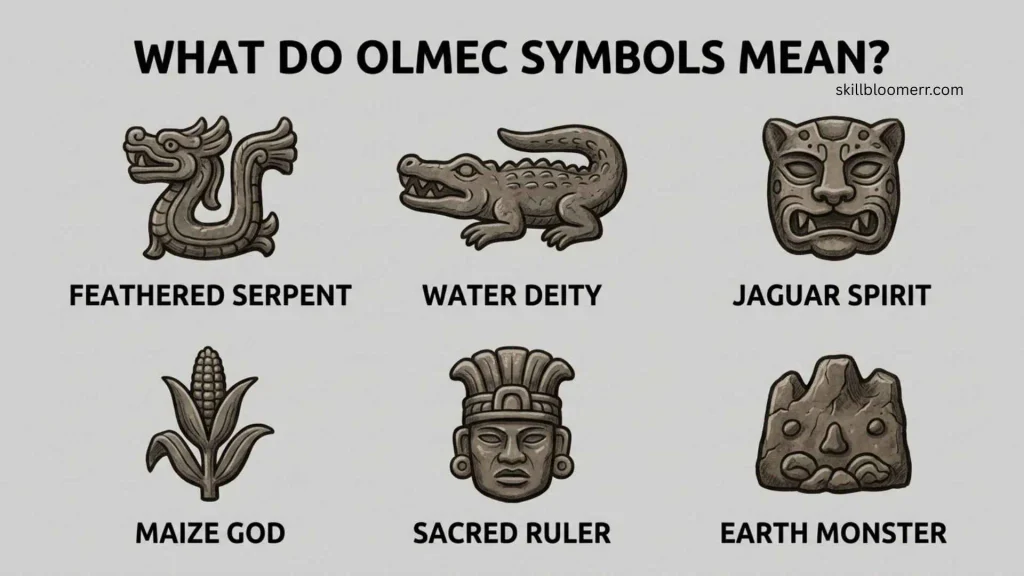
Olmec symbols represent the beliefs and worldview of one of the earliest complex civilizations in the Americas. Unlike modern symbols that usually have one fixed meaning, Olmec imagery often carried several possible interpretations depending on where it appeared and how it was used.
The Olmec people used symbols to communicate ideas about:
- Spiritual power
- Natural forces
- Social status
- Religious ceremonies
- Political authority
- Human connections with animals and nature
Many Olmec symbols focused on the idea that humans, animals, and supernatural forces were connected. Their artwork often blended human and animal characteristics, suggesting beliefs about transformation and communication with spiritual beings.
The most recognized themes include:
- Jaguar imagery: Associated with strength, supernatural power, and transformation.
- Maize symbolism: Connected with agriculture, fertility, and life.
- Water and rain symbols: Represented growth, survival, and renewal.
- Rulers and monuments: Showed authority and sacred leadership.
Because the Olmec left limited written records, researchers study symbols by examining artifacts, archaeological locations, and similarities with later Mesoamerican cultures.
History and Origin of Olmec Symbols
The Origin of Olmec Symbolism
Olmec symbols originated in the Gulf Coast region of ancient Mexico, especially in the areas now known as Veracruz and Tabasco. The Olmec civilization developed one of the earliest urban societies in Mesoamerica.
Major Olmec centers included:
- San Lorenzo
- La Venta
- Tres Zapotes
These locations contained large ceremonial structures, sculptures, and objects decorated with symbolic imagery.
The Olmec period predates famous civilizations such as the Maya and Aztec, making their symbolic traditions among the oldest in the Americas.
Development of Olmec Artistic Language
Olmec artists created a unique visual language using realistic and supernatural images. Their artwork often combined humans with powerful animals, creating figures that represented ideas beyond ordinary life.
Common artistic features included:
- Large human heads
- Jaguar-like facial features
- Serpent imagery
- Abstract patterns
- Animal-human combinations
These designs were not simply decorative. They carried messages about religion, identity, and power.
Olmec Symbols and Early Writing
Some researchers believe the Olmec developed one of the earliest writing systems in the Americas. Evidence such as the Cascajal Block suggests that the Olmec may have used organized signs to record information.
However, unlike Maya writing, Olmec symbols have not been fully deciphered. Scholars continue studying these signs through archaeology, linguistics, and comparisons with later Mesoamerican writing systems.
Symbolism and Interpretation of Olmec Symbols
Jaguar Symbol Meaning
The jaguar is one of the most important symbols in Olmec art. It appears frequently on sculptures, figurines, and ceremonial objects.
The jaguar likely represented:
- Strength
- Authority
- Courage
- Spiritual power
- Connection with the supernatural world
The animal was significant because jaguars were powerful predators that lived in the forests of Mesoamerica. Their ability to move silently through darkness may have contributed to their association with mystery and spiritual forces.
The Were-Jaguar Symbol
The were-jaguar is perhaps the most recognizable Olmec supernatural image. It combines human and jaguar features, creating a unique figure found in many Olmec artifacts.
Typical characteristics include:
- Large eyes
- Open mouth
- Downturned lips
- Human and animal features combined
Researchers have suggested several interpretations, including:
- A rain-related supernatural being
- A symbol of fertility
- A representation of transformation
- A connection between rulers and spiritual power
The exact meaning remains debated because no complete Olmec explanation survives.
Maize Symbolism
Maize was essential to life in ancient Mesoamerica. The Olmec depended on agriculture, making maize a powerful cultural symbol.
Maize imagery represented:
- Growth
- Renewal
- Fertility
- Sustenance
- The cycle of life
Later Mesoamerican cultures continued using maize symbolism in religious traditions and mythology.
Water and Rain Symbolism
Water was necessary for agriculture and survival, so rain held deep importance in Olmec society.
Water-related symbolism represented:
- Fertility
- Agricultural success
- Life creation
- Spiritual renewal
Many supernatural figures in Mesoamerican art are connected with rain and water themes.
Cultural Significance of Olmec Symbols
Olmec symbols were important because they helped communicate cultural beliefs, social organization, and religious ideas.
The symbols were especially connected with leadership. Large monuments and ceremonial objects showed the power of rulers and their relationship with sacred forces.
Symbols and Political Power
Olmec rulers likely used symbolic art to demonstrate authority. Monumental sculptures required enormous effort, showing that they were connected with important social and political purposes.
Examples include:
- Colossal heads representing powerful individuals
- Ceremonial objects linked with elite groups
- Public monuments displaying cultural identity
Symbols helped create shared beliefs among communities.
Influence on Later Civilizations
The Olmec influenced many later Mesoamerican cultures.
Their symbolic traditions can be seen in:
- Maya religious imagery
- Zapotec artistic styles
- Later concepts of sacred rulers
- Animal-based spiritual symbolism
The Olmec legacy continued long after their civilization declined.
Religious and Spiritual Meaning of Olmec Symbols
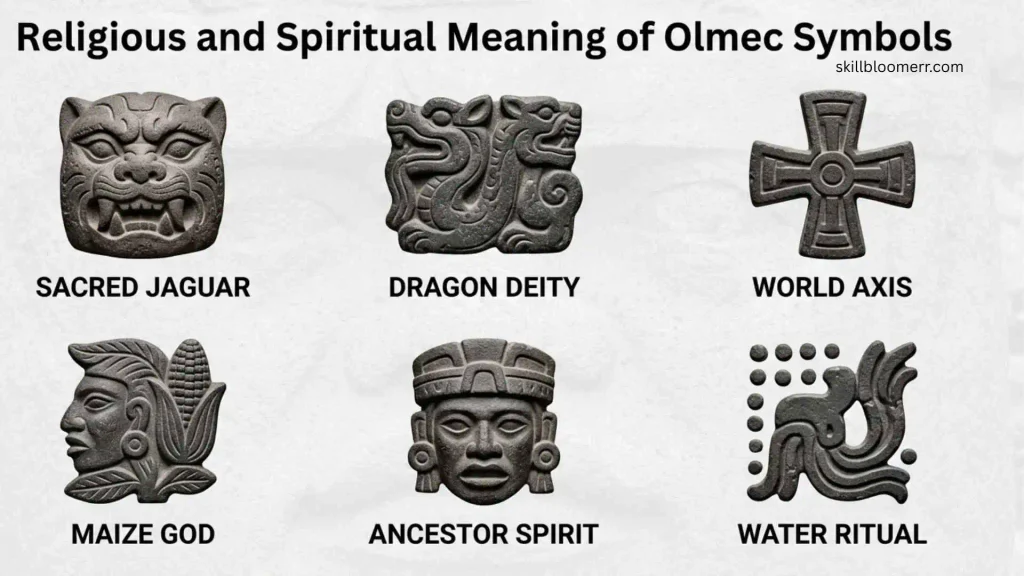
Olmec symbols had strong spiritual connections because the Olmec viewed nature and the supernatural world as closely connected.
Their artwork suggests beliefs involving:
- Sacred animals
- Spiritual transformation
- Communication with supernatural forces
- Balance between humans and nature
Sacred Animals in Olmec Beliefs
Animals were not only admired for their physical abilities. They were seen as beings with spiritual importance.
Important animals included:
- Jaguar
- Serpent
- Bird
- Fish
These animals represented different aspects of the natural and spiritual worlds.
Ceremonial Use of Symbols
Many symbolic objects were likely used during rituals.
Examples include:
- Jade ornaments
- Carved stone objects
- Figurines
- Ceremonial tools
These objects connected people with spiritual beliefs and community traditions.
Where Olmec Symbols Are Used Today
Today, Olmec symbols appear in museums, education, artwork, jewelry, and cultural designs.
Museums and Archaeological Sites
Visitors can see Olmec artifacts in museums that preserve ancient Mesoamerican history.
Important examples include:
- Colossal heads
- Jade carvings
- Ceramic figures
- Stone monuments
These artifacts help researchers understand ancient Olmec society.
Jewelry and Art
Modern artists often use Olmec-inspired designs in:
- Necklaces
- Sculptures
- Decorative objects
- Paintings
Many people choose these designs because they represent history, strength, and cultural connection.
Tattoos
Olmec symbols are sometimes used in tattoos to represent:
- Ancient knowledge
- Personal strength
- Connection with nature
- Cultural appreciation
However, modern meanings may differ from original Olmec interpretations.
Common Variations of Olmec Symbols
Jaguar Variations
Jaguar symbols appear in several forms:
- Full animal representations
- Human-jaguar figures
- Jaguar facial designs
Each variation may emphasize different ideas such as power, transformation, or spirituality.
Supernatural Figures
Some Olmec images combine multiple features:
- Human faces
- Animal characteristics
- Abstract forms
These figures likely represented spiritual beings rather than ordinary humans.
Abstract Symbols
Some Olmec signs appear as simple shapes or patterns. Their meanings remain uncertain because researchers lack complete written explanations.
Common Misconceptions About Olmec Symbols
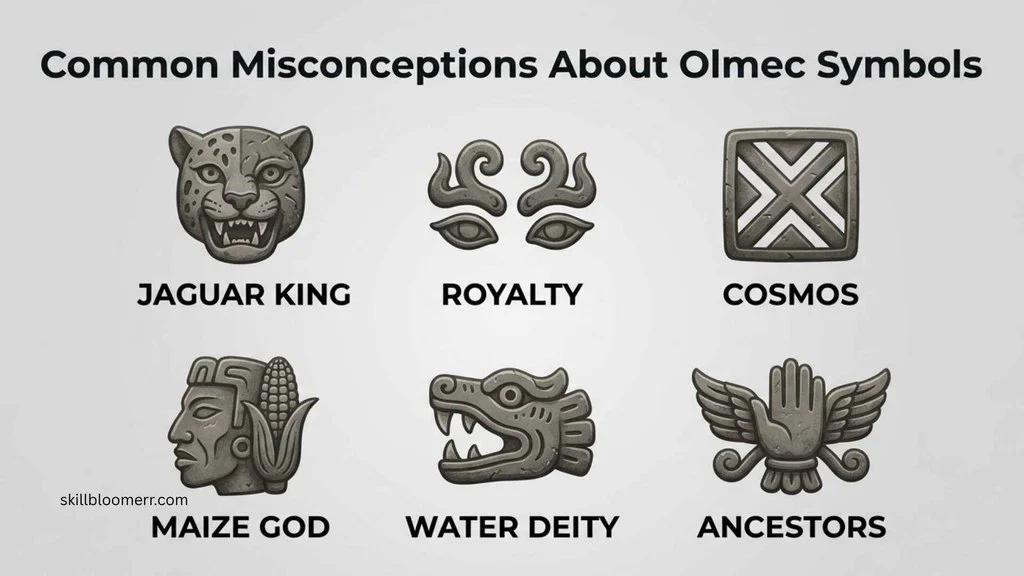
Not Every Symbol Has a Confirmed Meaning
Many websites present exact meanings for every Olmec symbol, but scholars often disagree. Some interpretations are based on evidence, while others remain theories.
Olmec Symbols Are Not Aztec Symbols
The Olmec existed more than a thousand years before the Aztec Empire. Although later cultures borrowed ideas, Olmec symbols belong to an earlier tradition.
Olmec Symbols Were Not Only Religious
Although spirituality was important, symbols also represented:
- Political power
- Social identity
- Artistic creativity
- Cultural traditions
Interesting Facts About Olmec Symbols
- Olmec symbols are among the oldest symbolic traditions in the Americas.
- The jaguar appears repeatedly throughout Olmec artwork because it represents power and mystery.
- The Olmec created some of the largest stone sculptures in ancient America.
- Jade was highly valued because it represented life and fertility.
- Some researchers believe Olmec signs may represent an early writing system.
- Olmec symbols influenced later Maya and other Mesoamerican traditions.
- Many Olmec artifacts show connections between humans and animals.
- The meaning of several Olmec symbols remains unknown today.
- Archaeologists continue discovering new information through modern technology.
- Olmec symbolism remains important in studies of ancient American history.
Related Symbols
Maya Glyphs
Maya glyphs developed into a more complete writing system. Unlike Olmec symbols, many Maya glyphs have been successfully translated.
Aztec Symbols
Aztec symbols focused on themes such as gods, warfare, calendars, and mythology.
Jaguar Symbols
Jaguar imagery continued across Mesoamerica and remained connected with power and spirituality.
Serpent Symbols
Serpent imagery represented transformation, fertility, and supernatural forces in many Mesoamerican cultures.
Frequently Asked Questions
What are Olmec symbols?
Olmec symbols are ancient images and signs created by the Olmec civilization. They appeared on monuments, pottery, jade objects, and ceremonial items. These symbols represented ideas related to nature, spirituality, rulers, animals, and supernatural beliefs.
What is the most famous Olmec symbol?
The jaguar-related imagery, especially the were-jaguar figure, is the most famous Olmec symbol. It represents a combination of human and animal characteristics and is often interpreted as a symbol of transformation, power, and spiritual connection.
Did Olmec symbols have written meanings?
Some Olmec signs may have been part of an early writing system, but many meanings remain uncertain. Researchers continue studying artifacts to understand how these symbols were used.
Why are jaguars important in Olmec culture?
Jaguars were important because they represented strength, power, and supernatural abilities. Their presence in Olmec art suggests they held deep spiritual significance.
Where were Olmec symbols discovered?
Olmec symbols have been found mainly in Mexico’s Gulf Coast region, especially around San Lorenzo, La Venta, and Tres Zapotes archaeological sites.
Are Olmec symbols still used today?
Yes. Modern artists, historians, museums, and cultural groups use Olmec-inspired designs to celebrate ancient Mesoamerican heritage.
What materials did Olmec artists use?
Olmec artists created symbols using stone, jade, clay, wood, and other materials. Jade objects were especially valuable because they were associated with life and renewal.
Did Olmec symbols influence the Maya?
Yes. Many artistic and religious themes from Olmec culture influenced later Mesoamerican civilizations, including the Maya.
Key Takeaways
- Olmec symbols are among the oldest symbolic traditions in Mesoamerica.
- They represented spirituality, nature, power, fertility, and transformation.
- Jaguar imagery was one of the most important Olmec themes.
- Many meanings remain debated because Olmec writing is not fully understood.
- The Olmec influenced later civilizations such as the Maya.
- Modern interpretations should be separated from confirmed historical meanings.
Conclusion
Olmec symbols reveal the creativity, spirituality, and complexity of one of the earliest civilizations in the Americas. Through jaguar imagery, supernatural figures, agricultural symbols, and ceremonial designs, the Olmec created a visual language that connected humans with nature and the spiritual world.
Although many meanings remain mysterious, these ancient symbols continue to provide valuable insights into Mesoamerican history. The study of Olmec symbols helps us understand how early societies used art and imagery to explain their beliefs, identity, and relationship with the universe.

 Ethan Calloway
 Olivia Hartwell
 Nathaniel Brooks