The cross is one of the most recognized symbols in human history. The copy and paste symbols represent different ideas depending on culture, religion, history, and personal interpretation. People use cross symbols in text messages, social media posts, documents, designs, tattoos, religious discussions, and digital communication.
From ancient civilizations to modern technology, the cross has developed many meanings. For Christians, it is mainly connected with the crucifixion of Jesus Christ and represents faith, sacrifice, salvation, and hope. In other contexts, it can represent balance, protection, life, direction, or a simple decorative mark.
This guide explains the meaning, history, variations, cultural importance, and modern uses of cross symbols so you can understand what each symbol represents and choose the right one for your purpose.
Quick Meaning of Copy and Paste Symbols Cross
A cross symbol is a graphical sign made from two intersecting lines, usually one vertical and one horizontal. The copy and paste symbols cross commonly represent Christianity, faith, sacrifice, protection, balance, and spiritual connection. Different cross designs carry unique meanings based on their historical, religious, and cultural backgrounds.
Symbol Overview Table
| Field | Details |
| Symbol Name | Cross Symbol |
| Primary Meaning | Faith, sacrifice, Christianity, protection, balance |
| Category | Religious, cultural, symbolic, decorative |
| Origin | Ancient civilizations; later strongly associated with Christianity |
| Main Culture | Christianity, European traditions, Middle Eastern history |
| First Known Use | Ancient civilizations before Christianity |
| Common Usage | Religion, jewelry, tattoos, art, text communication |
| Modern Meaning | Faith, remembrance, identity, hope, decoration |
| Unicode Examples | ✝, ✞, ✟, ☦, † |
| Emoji Equivalent | ✝️ Cross Emoji |
| Related Symbols | Crucifix, Celtic Cross, Orthodox Cross, Ankh |
What Does the Cross Symbol Mean?
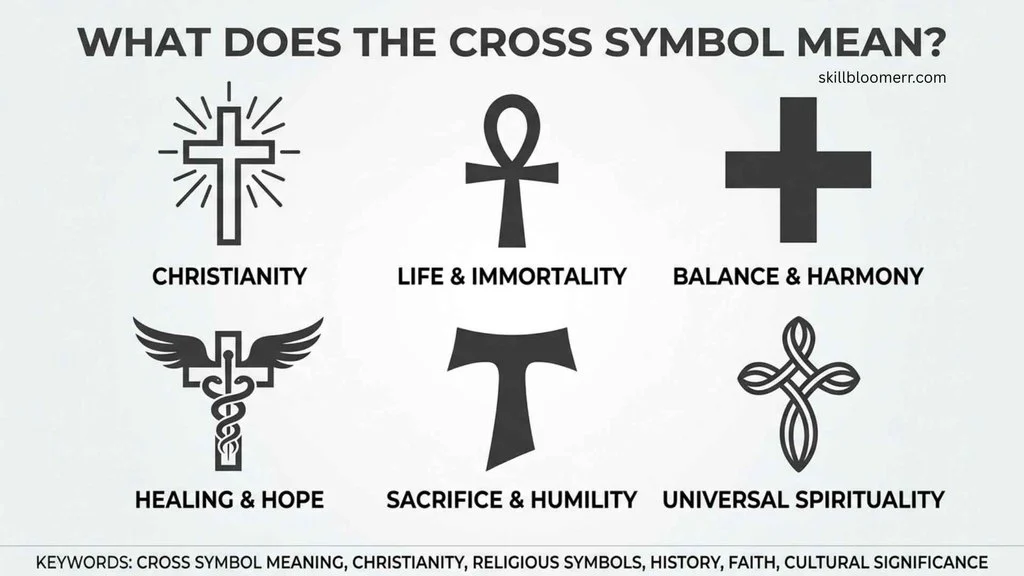
The cross symbol has many meanings, but its most widely recognized meaning is connected to Christianity. It represents the cross on which Jesus Christ was crucified according to Christian belief. For millions of Christians worldwide, it symbolizes redemption, forgiveness, love, sacrifice, and eternal life.
However, the meaning of a cross depends on its design and context. A simple cross used in a message may only express religious identity or support. A cross on a map may indicate a location. A medical cross may represent healthcare. A decorative cross may represent tradition or artistic style.
The symbol’s power comes from its ability to communicate complex ideas through a simple shape.
History and Origin of the Cross Symbol
Ancient Origins Before Christianity
The cross shape existed thousands of years before Christianity. Ancient cultures used intersecting lines in art, symbols, and religious practices. Similar shapes appeared in civilizations such as ancient Egypt, Mesopotamia, and parts of Europe.
These early forms did not always carry the same meaning as the Christian cross. Some represented concepts such as the sun, life, nature, directions, or cosmic balance.
The Cross in Christianity
The cross became a central Christian symbol after the crucifixion of Jesus Christ in the first century CE. Early Christians initially used other symbols, such as the fish symbol (Ichthys), because the cross was associated with Roman execution.
Over time, the cross transformed from a symbol of suffering into one of hope, resurrection, and faith.
Development Through History
Different Christian communities developed their own versions of the cross. These designs reflected local traditions, artistic styles, and theological beliefs.
Examples include:
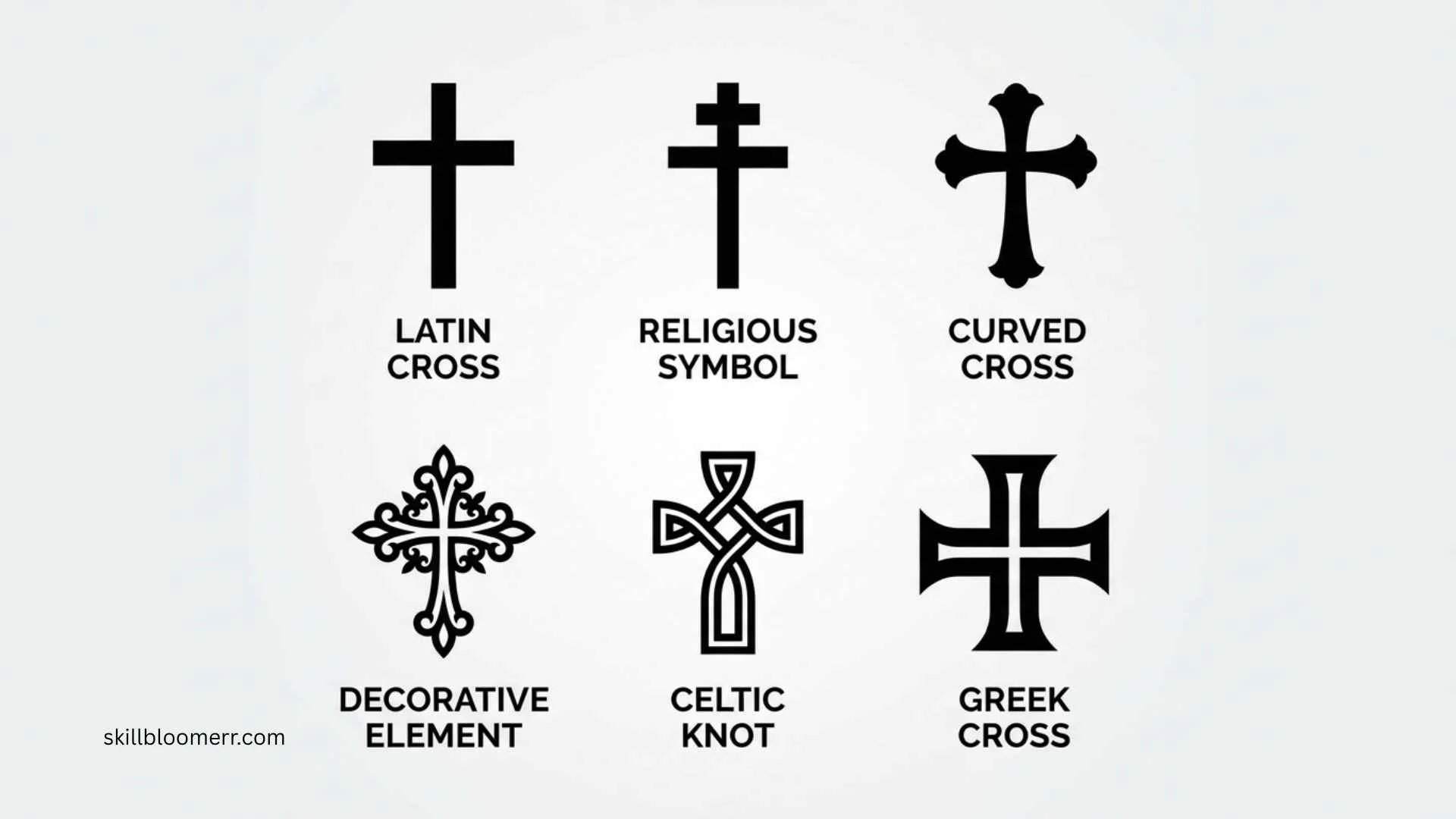
- Latin Cross used widely in Western Christianity
- Greek Cross used in Eastern Christian traditions
- Orthodox Cross associated with Eastern Orthodox churches
- Celtic Cross connected with Celtic Christian heritage
Symbolism and Interpretation of the Cross
Traditional Meaning of the Cross
The traditional Christian meaning of the cross includes:
- Sacrifice
- Salvation
- Forgiveness
- Love
- Faith
- Resurrection
- Spiritual protection
For believers, the cross serves as a reminder of Jesus Christ’s sacrifice and God’s love.
Modern Meaning of the Cross
Today, the cross can represent many ideas beyond religion, including:
- Personal beliefs
- Family traditions
- Cultural heritage
- Memory of loved ones
- Strength during difficult times
- Hope and encouragement
Many people wear cross necklaces or tattoos as personal expressions of identity.
Positive Symbolism
Common positive interpretations include:
- Hope during challenges
- Connection with spirituality
- Protection
- Peace
- Moral guidance
- Compassion
Negative or Controversial Interpretations
Although the cross is mainly viewed positively, some historical contexts have created controversy. Certain groups have used cross imagery for political purposes or as symbols unrelated to its original religious meaning.
The interpretation depends heavily on context, location, and intention.
Cultural Significance of the Cross Symbol
Christian Culture
In Christian communities, the cross is one of the most important religious symbols. It appears in churches, artwork, ceremonies, books, and personal items.
Many Christians use the sign of the cross during prayer as an act of devotion.
European Traditions
Across Europe, crosses appear in architecture, historical monuments, cemeteries, and family traditions. Celtic crosses, especially in Ireland and Scotland, combine Christian symbolism with older artistic traditions.
African and Latin American Traditions
Many African and Latin American Christian communities incorporate crosses into festivals, clothing, art, and religious ceremonies.
The cross often represents community, faith, and cultural identity.
Modern Global Culture
Today, cross symbols appear worldwide in:
- Fashion
- Jewelry
- Graphic design
- Digital communication
- Memorial art
- Tattoos
Their meanings vary depending on personal and cultural background.
Religious or Spiritual Meaning of the Cross
The cross has deep religious importance, especially in Christianity.
Christianity
For Christians, the cross represents:
- The crucifixion of Jesus Christ
- The forgiveness of sins
- God’s love for humanity
- Hope of resurrection
- Spiritual salvation
Different Christian denominations may use different cross designs.
Catholic Tradition
In Catholicism, the crucifix is especially important. It includes the figure of Jesus on the cross and focuses on Christ’s suffering and sacrifice.
Eastern Orthodox Tradition
The Orthodox Cross often includes additional horizontal bars. Each element carries symbolic meaning connected with Christian theology.
Other Spiritual Interpretations
Outside Christianity, cross-like shapes may represent:
- Balance between opposing forces
- Connection between earth and sky
- Four directions
- Universal harmony
These interpretations depend on the culture using the symbol.
Scientific or Technical Meaning of Cross Symbols
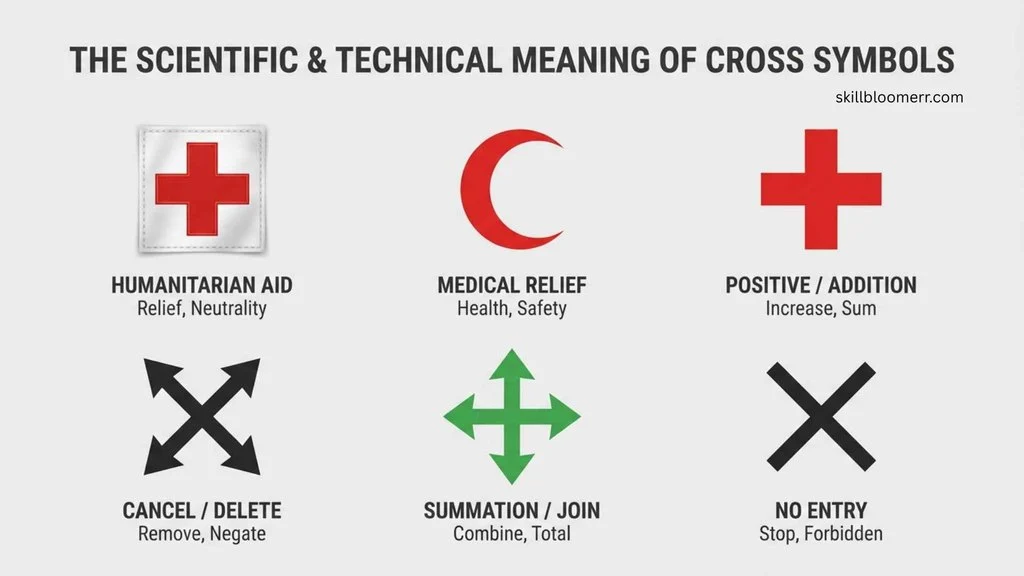
The cross shape also has practical meanings outside religion.
Mathematics
A cross symbol can represent:
- Addition (+)
- Multiplication (×)
- Coordinate axes
- Intersection points
Medicine
The cross is commonly associated with healthcare organizations. The Red Cross symbol, for example, represents humanitarian aid and medical assistance.
Maps and Navigation
A cross mark can indicate:
- Locations
- Points of interest
- Historical sites
- Geographic positions
Digital Communication
Unicode provides several cross characters that people can copy and paste into digital content.
Examples:
- ✝ Latin Cross
- ✞ Shadowed White Latin Cross
- ✟ Outline Cross
- ☦ Orthodox Cross
- † Dagger Cross
Where the Cross Symbol Is Used
The cross appears in many areas of everyday life.
Religion
Common religious uses include:
- Churches
- Prayer materials
- Religious artwork
- Ceremonies
- Bibles
- Jewelry
Technology and Digital Media
People use copy and paste cross symbols in:
- Social media posts
- Usernames
- Messages
- Bios
- Digital artwork
Tattoos and Fashion
Cross tattoos often represent:
- Faith
- Personal beliefs
- Memories
- Protection
- Identity
Architecture and Art
Cross designs appear in:
- Church buildings
- Paintings
- Sculptures
- Monuments
Common Variations of Cross Symbols
Latin Cross (✝)
The Latin Cross is the most recognized Christian cross. It has a shorter horizontal line crossing a longer vertical line.
Meaning:
- Christianity
- Jesus Christ’s crucifixion
- Salvation
Greek Cross (✚)
The Greek Cross has four equal arms.
Meaning:
- Balance
- Equality
- Christian tradition
Orthodox Cross (☦)
The Orthodox Cross includes additional bars.
Meaning:
- Eastern Orthodox Christianity
- Spiritual teachings
Celtic Cross
The Celtic Cross includes a circle around the intersection.
Meaning:
- Celtic heritage
- Christianity
- Eternity
Simple Text Crosses
Digital users often copy symbols such as:
- ✝
- †
- ✞
- ✟
These are commonly used for decoration or communication.
Common Misconceptions About Cross Symbols
The Cross Was Only Created by Christianity
This is incorrect. Cross-shaped designs existed before Christianity in different cultures. Christianity gave the cross its most famous religious meaning.
Every Cross Has the Same Meaning
Different cross designs have different histories and interpretations. A Celtic Cross and an Orthodox Cross are not identical in meaning.
The Cross Always Represents Religion
Not always. In mathematics, medicine, maps, and technology, the cross can have completely different meanings.
All Cross Symbols Are Interchangeable
Unicode cross symbols may look similar, but their historical meanings can differ.
Interesting Facts About Cross Symbols
- The cross is one of the most recognizable symbols in the world because of its connection with Christianity and global cultural influence.
- The Latin Cross became especially widespread through Western Christian traditions.
- Ancient cross-like designs existed before Christianity, showing that simple geometric shapes can develop different meanings over time.
- The Red Cross symbol is internationally recognized for humanitarian work and medical assistance.
- Cross necklaces became popular forms of religious jewelry in many cultures.
- The Celtic Cross combines Christian symbolism with traditional Celtic artistic elements.
- The cross shape appears naturally in mathematics, navigation, and scientific diagrams.
- Many countries include cross designs in historical artwork, architecture, and national heritage symbols.
- Digital cross symbols allow people to express ideas quickly without using images.
- Cross tattoos often represent personal experiences rather than only religious beliefs.
Related Symbols
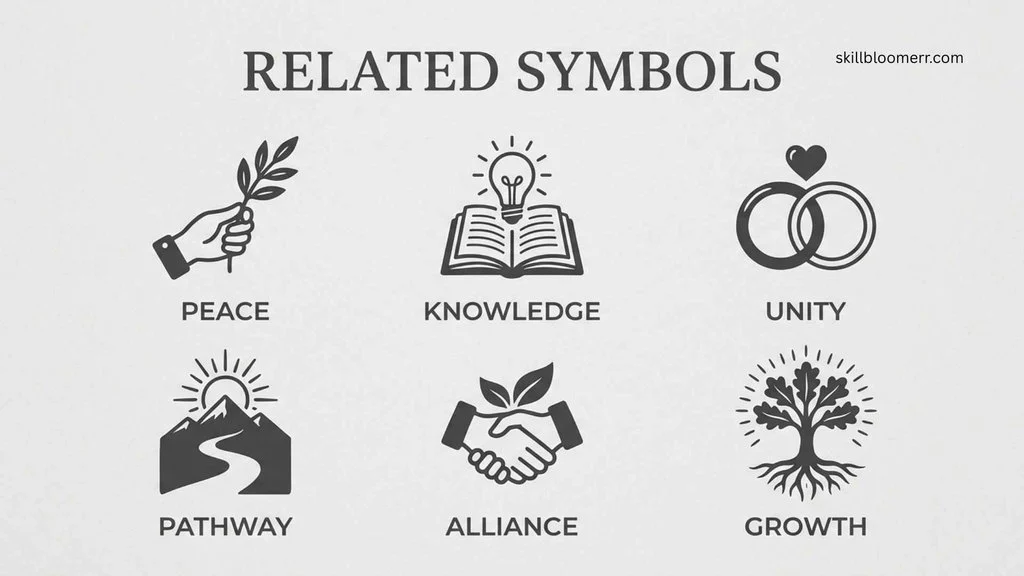
Crucifix
A crucifix includes the image of Jesus Christ on the cross. It focuses on the sacrifice and suffering of Christ.
Ankh
The Egyptian ankh is a cross-like symbol representing life and immortality in ancient Egyptian culture.
Ichthys Fish Symbol
The fish symbol was used by early Christians and represented Christian identity.
Star of David
The Star of David is a major Jewish symbol and has a different religious history from the cross.
Peace Symbol
The peace symbol represents harmony and differs from the religious meaning of the cross.
Frequently Asked Questions
What does the cross symbol mean?
The cross symbol commonly represents Christianity, faith, sacrifice, salvation, and hope. However, its meaning changes depending on the culture and situation. It can also represent balance, location, mathematics, healthcare, or decoration.
How do I copy and paste a cross symbol?
You can copy a cross symbol by selecting one of these characters: ✝ ✞ ✟ ☦ †. Highlight the symbol, copy it, and paste it wherever you need it, including messages, documents, websites, and social media profiles.
Is the cross symbol only a Christian symbol?
No. While the cross is strongly associated with Christianity, cross-like shapes existed in older cultures. Today, crosses can represent religion, mathematics, medicine, design, and cultural traditions.
What is the difference between a cross and a crucifix?
A cross is a simple structure made of intersecting lines. A crucifix includes the figure of Jesus Christ attached to the cross and is especially important in Catholic tradition.
What does a cross tattoo symbolize?
A cross tattoo may symbolize faith, personal beliefs, remembrance, strength, protection, or cultural identity. The meaning depends on the person wearing it and their personal story.
What is the most common cross symbol?
The Latin Cross is the most widely recognized cross symbol. It is commonly associated with Christianity and the crucifixion of Jesus Christ.
What does the plus sign have to do with the cross?
The plus sign (+) has a similar shape but usually has a mathematical meaning. It represents addition rather than religious symbolism.
Can I use cross symbols in usernames and social media?
Yes. Many platforms allow Unicode cross symbols in usernames, profiles, captions, and messages, although individual platform rules may vary.
Why are there different types of crosses?
Different cross designs developed because of regional traditions, religious denominations, artistic styles, and historical changes.
Are cross symbols available in Unicode?
Yes. Unicode includes several cross characters that users can copy and paste into digital content.
Key Takeaways
- The cross is one of the world’s most recognized symbols.
- Its main meaning is connected with Christianity, faith, sacrifice, and hope.
- Different cultures interpret cross symbols in different ways.
- Ancient cross-like designs existed before Christianity.
- Cross symbols are used in religion, technology, medicine, art, and communication.
- Different designs, such as Latin, Celtic, and Orthodox crosses, have unique meanings.
- Copy and paste cross symbols make digital communication easier.
- The meaning of a cross depends on its context and cultural background.
Conclusion
The copy and paste symbols cross represent much more than a simple design. Throughout history, it has carried powerful meanings connected with faith, culture, identity, and human expression. From ancient symbols to modern digital characters, the cross continues to communicate ideas of belief, hope, remembrance, and connection.
Whether used in religious settings, online conversations, artwork, or personal designs, each cross symbol carries a story shaped by history and interpretation. Understanding these differences helps people use the symbol respectfully and recognize its importance across cultures.

I’m Olivia Hartwell, a writer passionate about learning, personal growth, and practical education. I enjoy researching new ideas and sharing them in a way that feels easy to understand and useful. Through my work with SkillBloomerr, I aim to give readers reliable information they can apply in real life.
Books: Small Steps, Big Growth and The Curious Mind
 Ethan Calloway
 Nathaniel Brooks