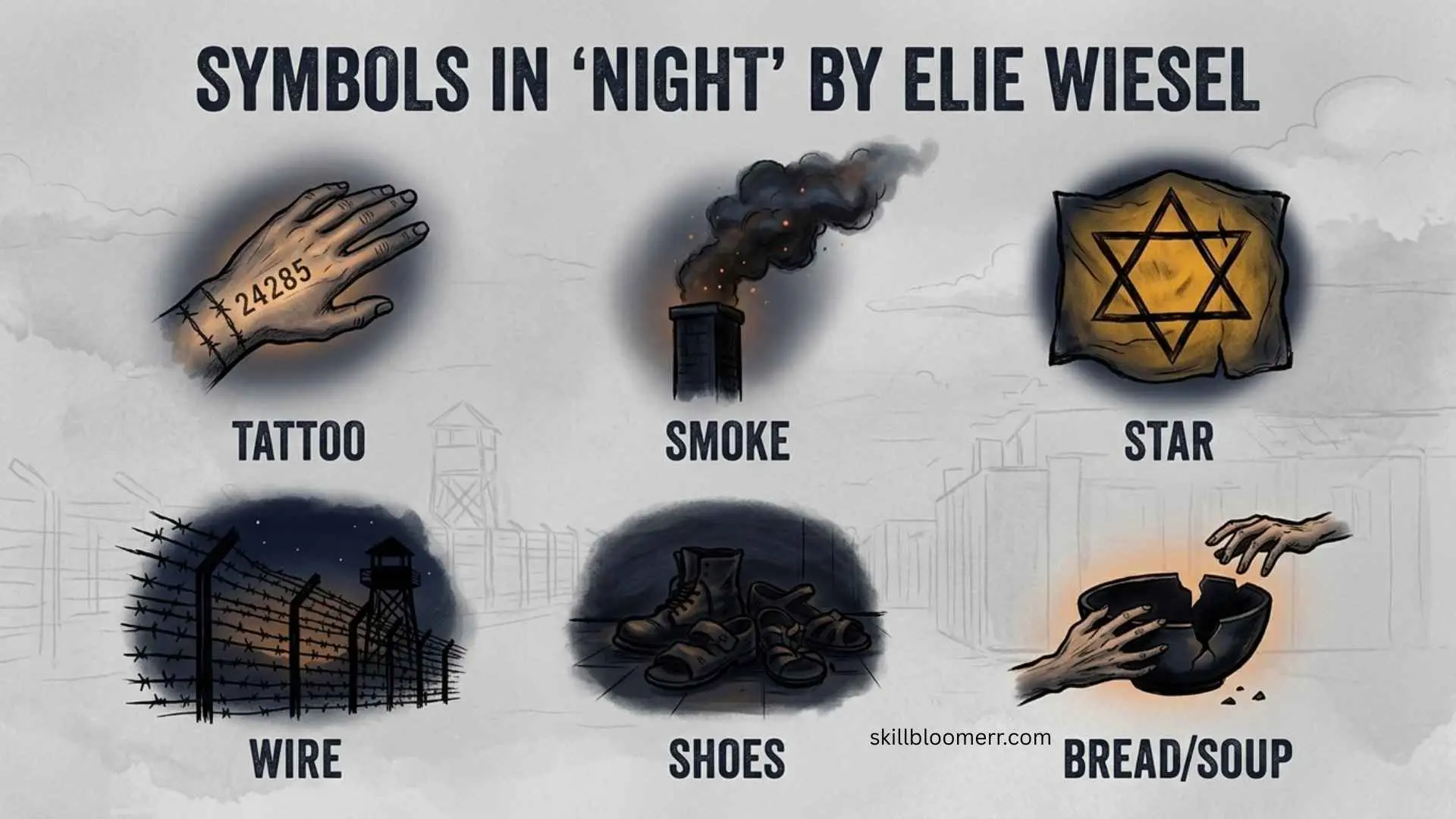
The symbols in Night by Elie Wiesel reveal the deep emotional and historical impact of the Holocaust through powerful images of darkness, fire, silence, hunger, and survival.
These symbols help readers understand the suffering, fear, and spiritual struggles experienced by Eliezer, the young narrator of the memoir.
Published in 1956, Night is Elie Wiesel’s autobiographical account of his experiences during the Holocaust, including his imprisonment at Auschwitz and Buchenwald. Through carefully chosen symbols, Wiesel transforms personal memories into universal lessons about humanity, cruelty, faith, and the importance of remembering history.
Readers encounter the symbols in Night in literature classrooms, Holocaust studies, historical discussions, and cultural analysis. Understanding these symbols allows readers to explore how Wiesel communicates emotions and ideas that cannot always be explained through ordinary language.
Quick Meaning of Symbols in Night by Elie Wiesel
The symbols in Night by Elie Wiesel represent suffering, loss, fear, faith struggles, survival, and the destruction of human dignity during the Holocaust. The most important symbols, including night, fire, silence, food, and eyes, show how extreme cruelty affected people physically, emotionally, and spiritually.
Symbol Overview Table
| Symbol Name | Primary Meaning | Category | Origin | Culture | Common Usage | Modern Meaning | Related Symbols |
| Night and Darkness | Suffering, fear, hopelessness, spiritual struggle | Literary Symbol | Religious and literary traditions | Jewish and Western literature | Represents difficult periods | Memory, trauma, and uncertainty | Shadow, darkness, storm |
| Fire | Destruction, death, cruelty, violence | Literary Symbol | Ancient cultural symbolism | Holocaust literature | Represents destruction | Warning against hatred and oppression | Flame, ash |
| Silence | Abandonment, unanswered suffering, isolation | Literary Symbol | Human communication traditions | Holocaust narratives | Represents lack of response | Reflection and remembrance | Empty space |
| Food | Survival, hunger, desperation | Literary Symbol | Human survival experience | Holocaust memoirs | Represents basic needs | Resilience and human struggle | Bread, water |
| Eyes | Identity, emotion, witnessing | Literary Symbol | Human expression | Literature and art | Shows inner feelings | Truth and memory | Tears, vision |
What Do the Symbols in Night by Elie Wiesel Mean?
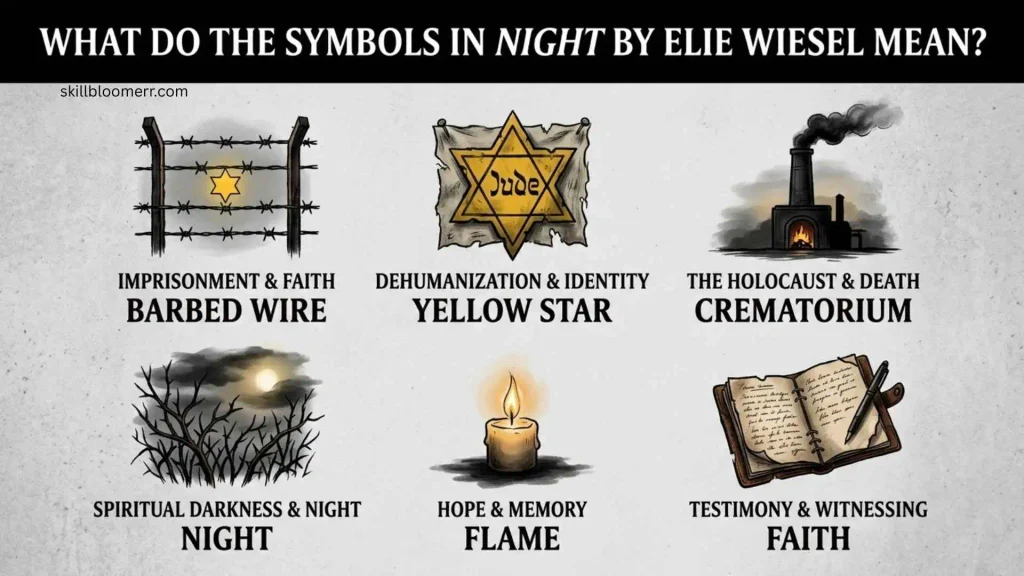
The symbols in Night represent the physical and emotional experiences of Holocaust victims, especially Eliezer’s transformation from an innocent child into a survivor shaped by trauma. Wiesel uses simple images to express complex ideas about suffering, faith, survival, and human dignity.
These symbols are important because they connect personal experiences with larger historical meanings. Instead of only describing events, Wiesel uses symbolic language to help readers understand the emotional reality behind the Holocaust.
How Symbols Support the Main Themes of Night
The major symbols in the memoir connect with several important themes:
- Loss of innocence: Eliezer loses his childhood beliefs after experiencing extreme suffering.
- Faith and doubt: Symbols of darkness and silence represent his struggle to understand God and suffering.
- Survival: Symbols related to hunger and physical weakness show the fight to stay alive.
- Memory: Symbols preserve the experiences of Holocaust victims for future generations.
Why Symbolism Is Important in Holocaust Literature
Holocaust experiences involve extreme suffering that can be difficult to describe. Symbolism allows writers and survivors to communicate emotions, memories, and ideas in a powerful way.
At night, ordinary things become meaningful. Darkness is no longer just the absence of light. Fire is no longer only a natural element. Food is no longer simply nourishment. Each symbol carries the weight of human experience.
History and Origin of Symbolism in Night
The Holocaust Background Behind the Symbols
The symbols in Night are connected to the historical events of the Holocaust, when Nazi Germany and its allies murdered approximately six million Jewish people during World War II.
Elie Wiesel experienced persecution, imprisonment, starvation, forced labor, and the loss of family members during his time in Nazi concentration camps. His memoir reflects these experiences and presents the emotional consequences of survival.
Because these symbols come from real historical suffering, they carry importance beyond literature. They represent the experiences of countless individuals who suffered during the Holocaust.
The Literary Tradition of Symbolism
Symbolism has been used by writers for centuries to represent deeper meanings through objects, images, and events. Authors often use symbols because certain emotions and experiences are too complex to explain directly.
Wiesel follows this tradition by using familiar images but giving them meanings connected to Holocaust history. His symbols allow readers to understand both personal suffering and universal human struggles.
Symbolism and Interpretation in Night by Elie Wiesel
The Symbol of Night and Darkness
Night is the central symbol of Wiesel’s memoir. It represents fear, suffering, uncertainty, and spiritual darkness.
The title itself reflects the transformation of Eliezer’s life. Before the Holocaust, he lived with family, faith, and hope. After entering the concentration camp system, his world becomes filled with death, violence, and despair.
Night also represents the loss of innocence. Eliezer’s understanding of religion and humanity changes as he witnesses unimaginable cruelty.
The Symbol of Fire
Fire symbolizes destruction, death, and the cruelty of Nazi persecution.
One of the strongest images connected to fire in Night is the crematory ovens at Birkenau. Fire becomes a symbol of the systematic destruction of human lives and the dangers of unchecked hatred.
Although fire can represent warmth, life, and renewal in many cultures, Wiesel presents it as an image of fear and destruction because of its connection to Holocaust suffering.
The Symbol of Silence
Silence represents abandonment, isolation, and unanswered suffering.
Throughout the memoir, silence appears when victims experience pain without receiving help. It also reflects Eliezer’s spiritual struggle as he questions why innocent people suffer.
The symbol encourages readers to think about the responsibility of individuals and societies to respond to injustice.
The Symbol of Food
Food represents survival, hunger, and the loss of normal human life.
Before the Holocaust, food represented family and daily routines. Inside the concentration camps, food becomes a desperate symbol of survival.
A small piece of bread or a portion of soup represents the struggle between life and death. Wiesel uses food to show how extreme conditions can change the meaning of ordinary objects.
The Symbol of Eyes
Eyes symbolize identity, emotion, and witnessing.
Descriptions of eyes throughout Night reveal fear, exhaustion, and hopelessness. Eyes become a way to show feelings that characters cannot express verbally.
The symbol also connects with remembrance because survivors’ testimonies allow future generations to witness and understand Holocaust history.
Cultural Significance of Symbols in Night
Jewish Cultural Meaning
The symbols in Night connect with Jewish history, traditions, and experiences of persecution.
Themes such as suffering, exile, faith, and survival have appeared throughout Jewish literature and history. However, Holocaust survivors responded to their experiences in different ways. Some maintained religious beliefs, while others struggled with questions about faith.
Wiesel presents his own personal journey rather than claiming to represent every survivor’s experience.
Holocaust Memory and Education
The symbols in Night are important tools in Holocaust education. They help students understand the human experiences behind historical facts.
Symbols such as darkness, fire, and silence encourage discussions about prejudice, discrimination, human rights, and the importance of remembering past tragedies.
Religious and Spiritual Meaning of Symbols in Night
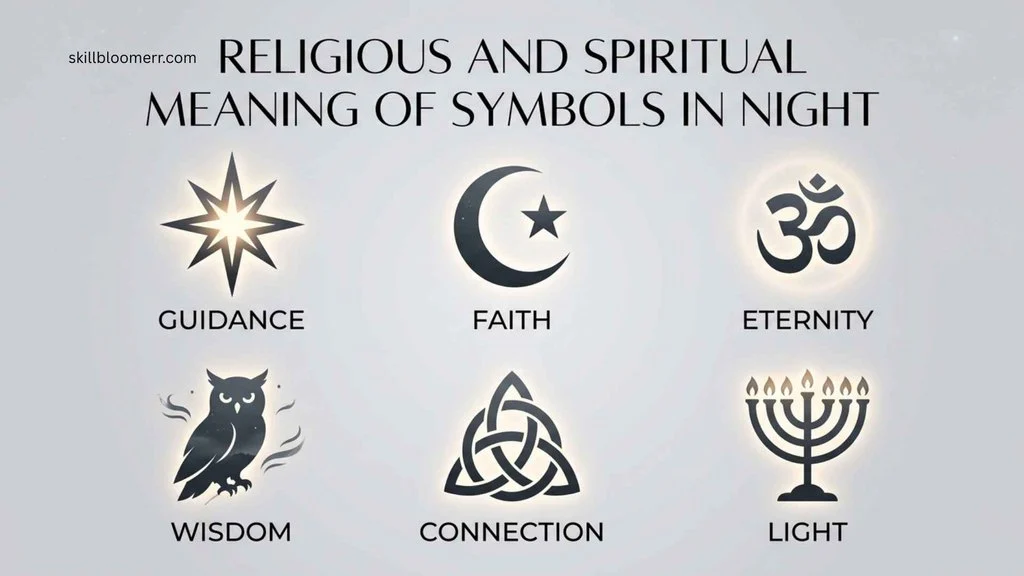
Faith and Spiritual Conflict
Faith plays an important role in Eliezer’s identity at the beginning of Night. He studies religious teachings and seeks a deeper understanding of God.
The suffering he experiences creates a spiritual conflict. The darkness symbol represents his struggle with questions about faith, justice, and divine presence.
Wiesel does not provide simple answers. Instead, he presents the emotional reality of someone trying to understand suffering.
Biblical Connections
The symbol of night has connections to biblical traditions where darkness can represent hardship, testing, or separation.
However, Wiesel gives this traditional symbol a historical meaning by connecting it with the Holocaust. The darkness represents both personal suffering and the consequences of human cruelty.
Where the Symbols in Night Are Used
Literature Studies
The symbols in Night are commonly studied in literature courses to explore:
- Symbolism
- Character development
- Historical fiction and memoir writing
- Themes of survival and memory
Holocaust Education
Schools and educational organizations use Night to teach about the Holocaust and the importance of human rights.
Art and Memorials
Artists and memorial designers often use related symbols such as candles, darkness, empty spaces, and flames to represent remembrance and loss.
Historical Discussions
The symbols provide a way to discuss genocide prevention, discrimination, and the importance of protecting human dignity.
Common Variations of Symbol Interpretation
Night as Fear or Memory
Some readers interpret night as a symbol of fear and suffering, while others see it as a symbol of memory and the lasting effects of trauma.
Fire as Destruction or Warning
Fire mainly represents destruction in Night, but it also serves as a warning about the dangers of hatred and violence.
Silence as Absence or Reflection
Silence may represent abandonment, but it can also represent the difficulty of expressing painful experiences.
Common Misconceptions About Symbols in Night
Every Symbol Has Only One Meaning
Literary symbols often have multiple interpretations. Different readers may understand the same symbol in different ways based on historical and personal perspectives.
Night Only Represents Darkness
The symbol of night represents more than physical darkness. It includes emotional suffering, spiritual questions, fear, and uncertainty.
The Memoir Is Only About One Person
Although Night focuses on Eliezer’s experiences, its symbols connect to broader lessons about humanity and the consequences of hatred.
Interesting Facts About Symbols in Night by Elie Wiesel
1. The Title Night Has a Deeper Meaning
The title represents emotional and spiritual darkness, not only nighttime. It captures the hopelessness and suffering experienced during the Holocaust.
2. Fire Has Multiple Cultural Meanings
While fire can symbolize life and renewal in many cultures, Wiesel uses it to represent destruction because of its connection to Holocaust violence.
3. Ordinary Objects Become Powerful Symbols
Wiesel transforms simple things such as bread, darkness, and silence into symbols of survival and suffering.
4. Symbolism Helps Preserve Memory
The symbols allow readers to connect emotionally with Holocaust history and remember the experiences of victims.
5. The Symbols Reflect Human Transformation
Many symbols show how extreme suffering changes people’s beliefs, emotions, and understanding of life.
6. Silence Is Both Personal and Historical
Silence represents Eliezer’s internal struggles and the failure of the outside world to prevent suffering.
7. The Symbols Are Still Studied Today
Students and scholars continue analyzing these symbols because they provide insight into history, literature, and human behavior.
8. Symbols Connect Individual and Universal Experiences
Although based on Wiesel’s story, the symbols represent broader struggles against oppression and injustice.
Related Symbols
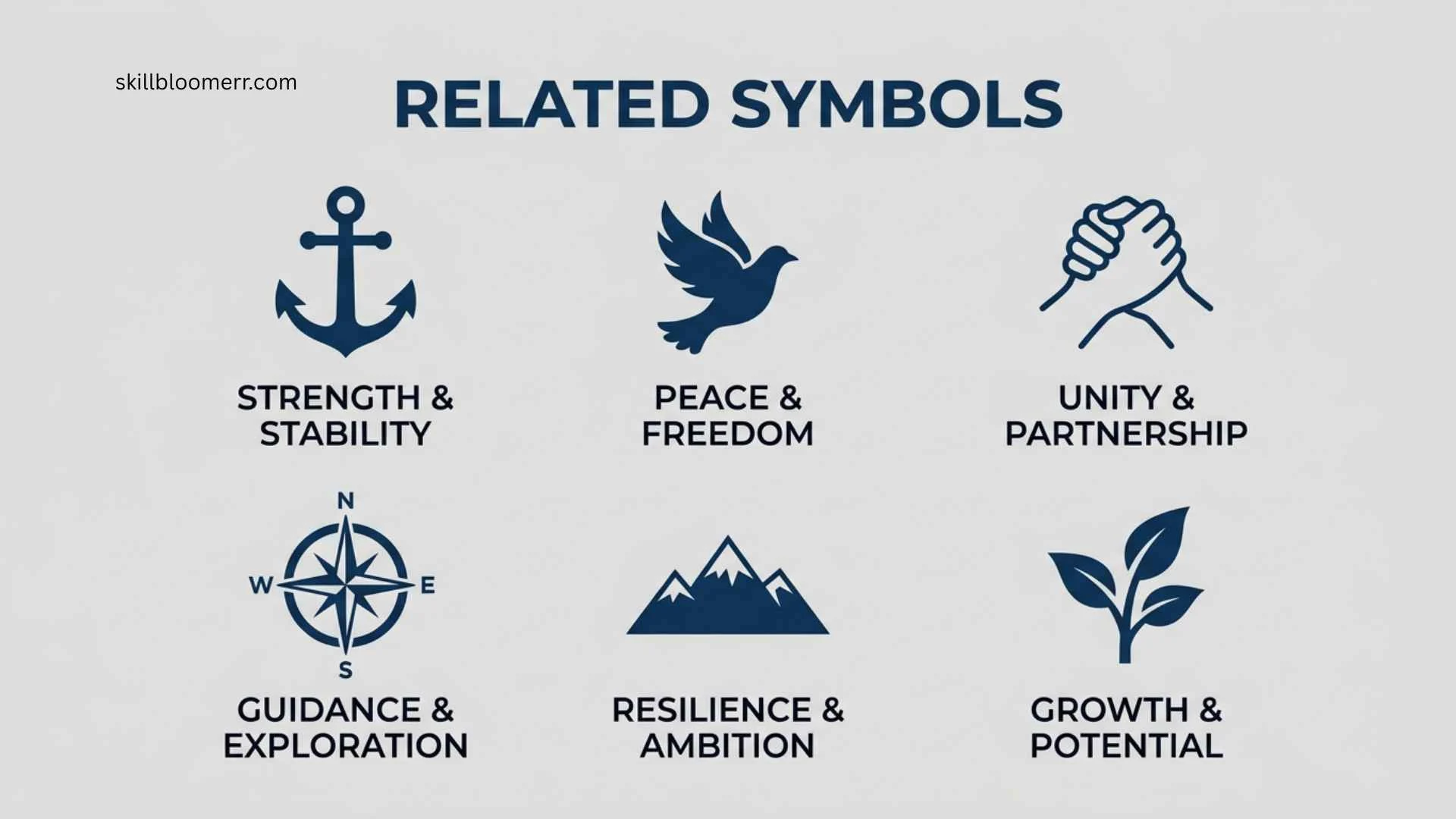
The Candle Symbol
A candle represents remembrance, hope, and honoring those who have died. It is commonly used in memorial traditions.
The Dove Symbol
The dove represents peace and the hope of reconciliation after suffering and conflict.
The Broken Chain Symbol
A broken chain symbolizes freedom from oppression and the recovery of human rights.
The Empty Chair Symbol
An empty chair represents absence, loss, and remembrance of people who are no longer present.
Frequently Asked Questions
What is the most important symbol in Night by Elie Wiesel?
The most important symbol is night itself. It represents suffering, fear, hopelessness, and spiritual struggle. The title connects to Eliezer’s experiences during the Holocaust and shows how his world changes from one of faith and security into one filled with uncertainty and pain.
What does fire symbolize in Night?
Fire symbolizes destruction, death, and the cruelty of Nazi persecution. It represents the loss of human life and the devastating effects of hatred. Wiesel uses fire to show how violence can destroy both individuals and entire communities.
Why is the title Night symbolic?
The title represents more than darkness. It symbolizes emotional suffering, fear, loss of faith, and the difficult experiences faced by Holocaust victims. It reflects the darkness that entered Eliezer’s life during his imprisonment.
What does silence represent in Night?
Silence represents abandonment, unanswered suffering, and the difficulty of explaining trauma. It also reflects Eliezer’s spiritual questions when he struggles to understand why innocent people experience extreme pain.
How does food function as a symbol in Night?
Food symbolizes survival and desperation. In the concentration camps, food becomes a reminder of the basic human need to survive. It shows how suffering can change ordinary objects into symbols of life and hope.
Are the symbols in Night historically accurate?
Yes. The symbols are based on Elie Wiesel’s real experiences during the Holocaust. However, their meanings also extend beyond his personal story to represent broader human experiences of suffering and survival.
Why does Elie Wiesel use symbolism?
Wiesel uses symbolism to express emotions and experiences that are difficult to describe directly. Symbols help readers understand the psychological and emotional impact of the Holocaust.
How do symbols help readers understand the Holocaust?
Symbols make historical events more personal by showing the emotions behind the facts. They help readers understand fear, loss, survival, and the importance of remembering victims.
Key Takeaways
- The symbols in Night by Elie Wiesel reveal suffering, survival, memory, and faith struggles.
- Night and darkness represent fear, despair, and spiritual uncertainty.
- Fire symbolizes destruction and the consequences of hatred.
- Silence represents abandonment and unanswered suffering.
- Food represents survival under extreme conditions.
- Eyes symbolize identity, emotion, and witnessing.
- Wiesel uses symbolism to preserve Holocaust memory.
- The symbols connect personal experiences with universal human lessons.
Conclusion
The symbols in Night by Elie Wiesel transform a personal Holocaust memoir into a powerful exploration of suffering, survival, faith, and memory. Through images of darkness, fire, silence, hunger, and human expression, Wiesel communicates experiences that are difficult to describe.
These symbols help readers understand the emotional impact of the Holocaust and recognize the importance of protecting human dignity. Their meanings continue to influence literature, education, and discussions about history and humanity.
By studying the symbols in Night, readers gain a deeper understanding of Elie Wiesel’s message: remembering the past is essential to preventing future suffering.

I’m Ethan Calloway, an English writer and lifelong learner who enjoys turning complex ideas into clear, practical content. At SkillBloomerr, I focus on useful topics that help readers build knowledge, improve their skills, and feel more confident in everyday learning. I believe good writing should be simple, engaging, and genuinely helpful.
Books: The Everyday Learning Guide and Build Better Skills
 Olivia Hartwell
 Nathaniel Brooks