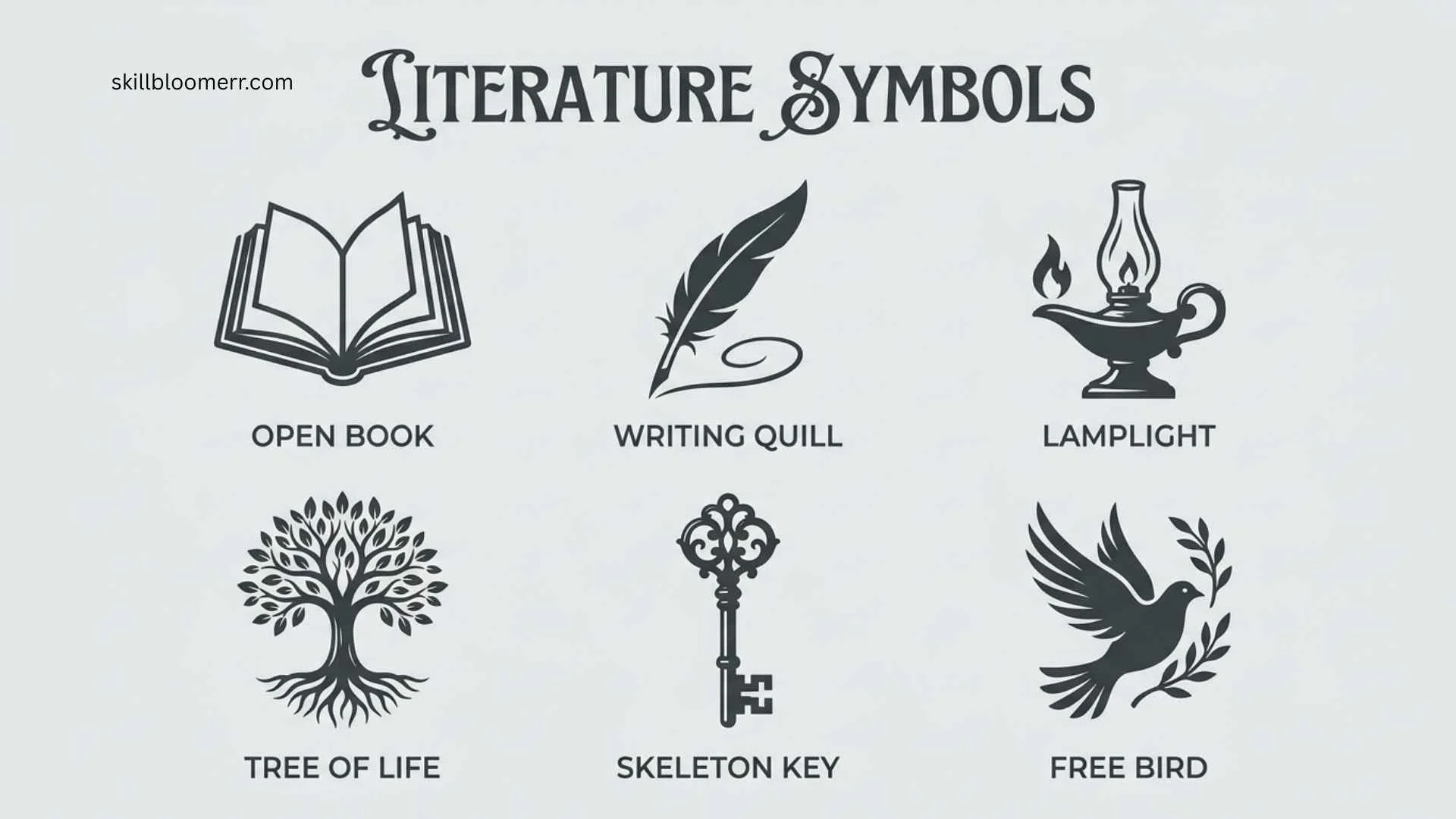
Literature symbols are objects, characters, settings, colors, or ideas that represent deeper meanings beyond their literal purpose. Writers use symbols to express emotions, reveal themes, explore human experiences, and allow readers to discover hidden messages within stories, poems, novels, and plays.
From the green light in The Great Gatsby to the mockingbird in To Kill a Mockingbird, symbols appear throughout literature as powerful tools for storytelling. They help readers understand complex ideas such as love, freedom, death, identity, morality, and human nature.
Understanding literature symbols allows readers to look beyond the surface of a story. Instead of seeing only what happens, readers can explore why certain objects, images, or events appear and what larger ideas they represent.
Quick Meaning of Literature Symbols
Literature symbols are elements in a written work that represent deeper meanings beyond their literal appearance. A symbol can be an object, person, place, color, animal, action, or event that connects to larger themes, emotions, cultural ideas, or universal human experiences.
Symbol Overview Table
| Field | Details |
| Symbol Name | Literature Symbols |
| Primary Meaning | Objects or elements representing deeper ideas |
| Category | Literary device |
| Origin | Ancient storytelling traditions |
| Civilization or Culture | Greek, Roman, Asian, African, European, and global literary traditions |
| First Known Use | Ancient myths, oral traditions, and classical literature |
| Common Usage | Novels, poetry, drama, short stories, mythology |
| Modern Meaning | A tool for expressing hidden themes and complex ideas |
| Related Concepts | Metaphor, allegory, imagery, motif, theme |
| Literary Examples | The green light, the rose, the journey, the storm |
What Do Literature Symbols Mean?
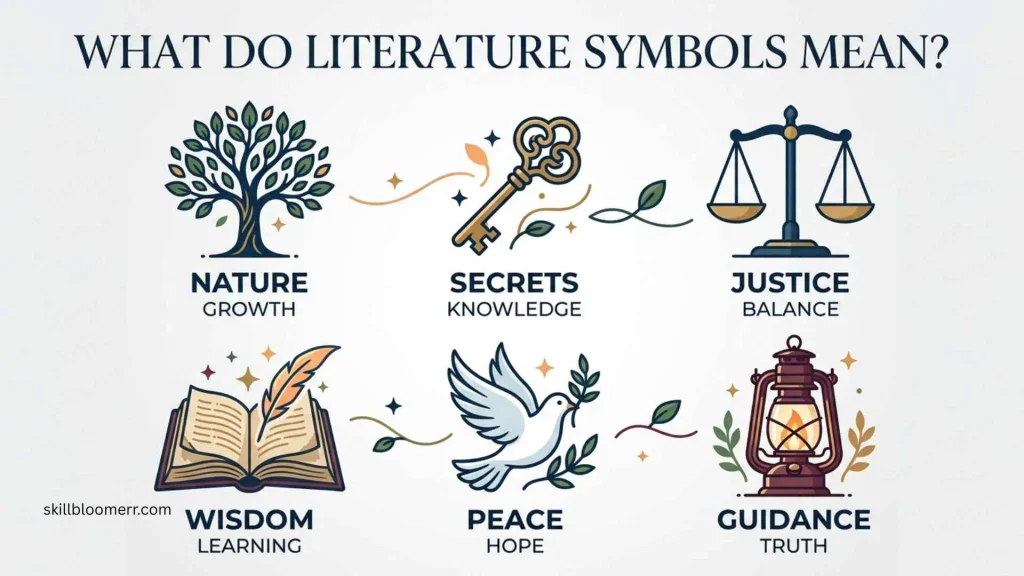
Literature symbols represent ideas that are larger than their physical form. A symbol works on two levels: the literal level and the symbolic level.
For example, a rose in a story may simply be a flower, but it can also represent love, beauty, passion, secrecy, or even loss depending on the context. The meaning of a symbol is not always fixed. Writers shape meanings through characters, settings, cultural backgrounds, and themes.
Symbols help authors communicate ideas that may be difficult to explain directly. Instead of writing that a character feels trapped, an author might describe a locked room, a cage, or a narrow path to symbolize limitation and isolation.
Common meanings found in literature symbols include:
- Love and relationships: roses, hearts, rings, gardens
- Death and change: darkness, winter, falling leaves
- Hope and renewal: light, sunrise, spring
- Freedom: birds, open roads, wings
- Knowledge: books, eyes, lamps
- Power: crowns, swords, thrones
- Conflict: storms, battles, broken objects
The meaning of any symbol depends on the story’s context. A snake may represent danger in one work but wisdom or transformation in another.
History and Origin of Symbolism in Literature
Ancient Roots of Literary Symbols
The use of symbols in literature began with early human storytelling. Ancient civilizations used symbolic images in myths, religious texts, and oral traditions to explain nature, human behavior, and spiritual beliefs.
Ancient Greek mythology is filled with symbolic meanings. The phoenix represented rebirth, the labyrinth represented confusion and challenges, and the journey of heroes often symbolized personal growth.
Ancient Egyptian literature and religious texts also relied heavily on symbols. Images such as the scarab represented renewal, while the ankh represented life.
Symbolism in Classical Literature
Greek and Roman writers used symbols to communicate philosophical and moral ideas. Stories were often designed to represent larger truths about society, leadership, human weaknesses, and destiny.
For example, in Greek tragedies, storms, darkness, and natural events often reflected emotional struggles or conflicts faced by characters.
Symbolism During the Middle Ages
Medieval literature frequently used religious and moral symbols. Animals, colors, and objects carried specific meanings connected to Christianity and cultural beliefs.
Examples include:
- White representing purity
- Lions representing courage or royalty
- Gardens representing paradise
- Light representing divine truth
Modern Development of Literary Symbolism
During the 19th and 20th centuries, symbolism became a major literary movement. Writers began using symbols more subtly, allowing readers to interpret meanings rather than receiving direct explanations.
Authors such as William Butler Yeats and T. S. Eliot used complex symbolic systems to explore spirituality, society, memory, and human psychology.
Symbolism and Interpretation in Literature
Traditional Meanings of Literary Symbols
Many symbols have traditional associations developed through history and culture.
Examples:
| Symbol | Common Meaning |
| Light | Hope, truth, knowledge |
| Darkness | Fear, mystery, ignorance |
| Water | Life, change, purification |
| Fire | Destruction, passion, transformation |
| Tree | Growth, family, connection |
| Road | Journey, choices, destiny |
| Mirror | Identity, self-reflection |
However, readers should avoid assuming every symbol has one universal meaning. Context always matters.
Modern Interpretations of Symbols
Modern writers often create personal or unique symbols. An object may gain meaning through a character’s experiences rather than traditional symbolism.
For example, a broken watch may symbolize:
- A lost relationship
- A frozen moment in time
- A character’s inability to move forward
The same object can represent different ideas in different stories.
Positive and Negative Symbolism
Symbols can communicate both positive and negative ideas.
A bird may symbolize:
Positive meanings:
- Freedom
- Dreams
- Escape
- Independence
Negative meanings:
- Loneliness
- Distance
- Loss
A symbol’s meaning depends on how it functions within the narrative.
Psychological Interpretation of Symbols
Psychologists such as Carl Jung explored how certain images appear repeatedly across cultures. Jung suggested that some symbols connect with shared human experiences and unconscious patterns.
In literature, these recurring images are sometimes called archetypes. Examples include:
- The hero’s journey
- The wise mentor
- The forbidden place
- The struggle between light and darkness
Cultural Significance of Literature Symbols
Symbols reflect the values, beliefs, and experiences of different cultures. A symbol that has one meaning in one society may represent something completely different elsewhere.
Western Literary Traditions
Western literature often uses symbols connected to:
- Christianity
- Greek mythology
- Medieval traditions
- Romantic ideals
- Social movements
Examples include:
- The cross representing sacrifice or faith
- The garden representing innocence or paradise
- The journey representing personal discovery
Eastern Literary Traditions
Asian literature frequently uses symbols connected to nature, balance, spirituality, and philosophy.
Examples:
- The lotus representing purity and enlightenment
- The moon representing beauty and reflection
- Bamboo representing resilience and flexibility
Indigenous and Global Traditions
Many Indigenous storytelling traditions use animals, landscapes, and natural elements as symbols connected to ancestry, spirituality, and community relationships.
A wolf, eagle, river, or mountain may represent identity, guidance, protection, or connection to nature.
Religious or Spiritual Meaning of Literature Symbols
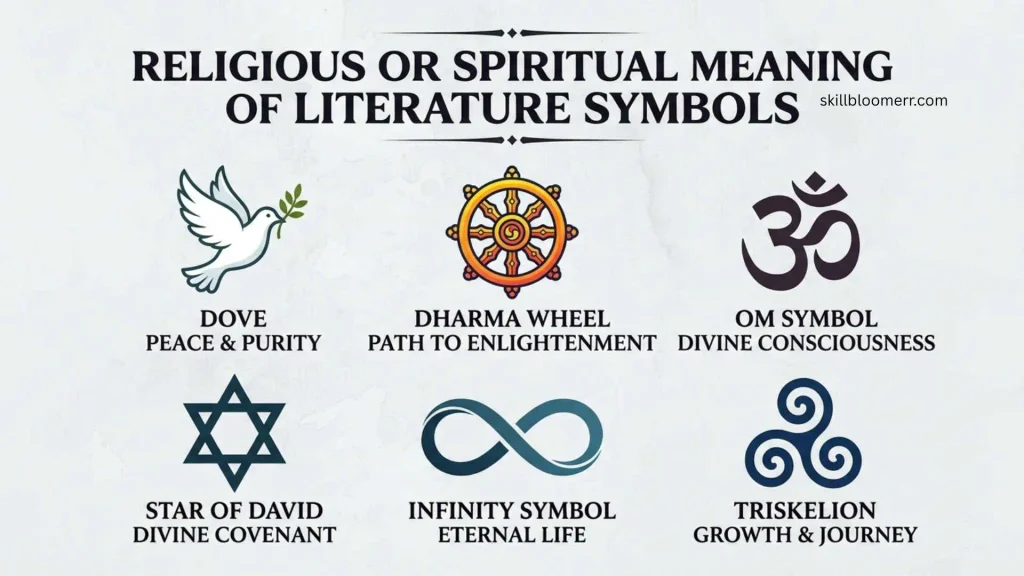
Literary symbols often appear in religious texts, spiritual stories, and works influenced by faith traditions.
Common spiritual symbols include:
| Symbol | Spiritual Meaning |
| Light | Divine guidance or truth |
| Water | Renewal and purification |
| Fire | Transformation or spiritual power |
| Tree | Life and connection |
| Path | Spiritual journey |
Religious symbolism appears in works such as biblical literature, Islamic storytelling traditions, Hindu epics, Buddhist writings, and many other cultural texts.
Writers may use religious symbols to explore questions about morality, purpose, suffering, and human existence.
Scientific or Technical Meaning of Symbols in Literature
Literature symbols are not scientific symbols, but writers often borrow ideas from science and nature.
Examples include:
Nature as Symbol
Natural events often represent human experiences:
- Seasons can symbolize stages of life.
- Storms can represent emotional conflict.
- Stars can symbolize dreams or destiny.
Mathematical and Scientific Ideas
Some modern literature uses scientific concepts symbolically:
- Time represents change or mortality.
- Space represents isolation or exploration.
- Evolution represents transformation.
Science-based symbolism allows writers to connect human emotions with larger ideas about existence.
Where Literature Symbols Are Used
Literary symbols appear across many forms of creative expression.
Novels
Authors use symbols to develop themes and character development.
Examples:
- The green light in The Great Gatsby represents dreams and unreachable desires.
- The conch shell in Lord of the Flies represents order and civilization.
Poetry
Poets often rely heavily on symbols because poetry uses condensed language.
Examples:
- A bird may represent freedom.
- A flower may represent beauty or temporary life.
Drama and Plays
Stage objects, costumes, and settings often carry symbolic meaning.
Examples:
- A throne may represent authority.
- A storm may represent emotional chaos.
Film and Popular Culture
Modern storytelling continues to use literary symbols in movies, television, and games.
Examples:
- Colors representing emotions
- Objects representing memories
- Settings representing psychological states
Common Variations of Literature Symbols
Universal Symbols
Universal symbols have meanings recognized across many cultures.
Examples:
- Light representing hope
- Darkness representing fear
- Water representing life
Cultural Symbols
These depend on specific traditions.
Examples:
- Dragons symbolize power in many Asian cultures.
- Dragons may represent danger in some Western stories.
Personal Symbols
Authors may create symbols unique to their stories.
A character’s childhood toy, family home, or personal object may gain symbolic meaning throughout the narrative.
Modern Symbol Adaptations
Contemporary writers often create new symbols connected to:
- Technology
- Social identity
- Environmental issues
- Digital culture
Common Misconceptions About Literature Symbols
Every Object Is Not Automatically a Symbol
Readers sometimes assume every detail has a hidden meaning. While authors may intentionally use symbols, some objects exist simply to support the story.
Symbols Do Not Have Only One Meaning
A symbol can represent different ideas depending on:
- Historical period
- Culture
- Author’s intention
- Reader interpretation
Symbolism Is Not the Same as Metaphor
Metaphors compare two things directly, while symbols represent broader concepts throughout a work.
Readers Should Consider Context
Understanding symbolism requires examining:
- The entire story
- Character development
- Historical background
- Author’s purpose
Interesting Facts About Literature Symbols
- Symbols existed before written literature. Ancient oral traditions used symbolic storytelling long before books existed.
- Colors are among the most common literary symbols. Writers frequently use colors to express emotions and themes.
- Animals often represent human qualities. Lions, wolves, birds, and snakes frequently symbolize personality traits or social ideas.
- A symbol’s meaning can change over time. Cultural changes can transform how readers interpret the same image.
- Many famous literary symbols come from everyday objects. Simple items like clocks, flowers, and doors often become powerful symbols.
- Symbols help readers connect emotionally with stories. They allow complex ideas to be understood through familiar images.
- Dreams are often symbolic in literature. Writers use dreams to explore fears, desires, and hidden thoughts.
- Symbolism is common in poetry. Poets use symbols to express deep emotions with fewer words.
- Mythology strongly influences literary symbols. Many modern symbols come from ancient myths.
- Symbols encourage multiple interpretations. Great literature often remains meaningful because readers discover new meanings over time.
Related Literary Concepts and Symbols
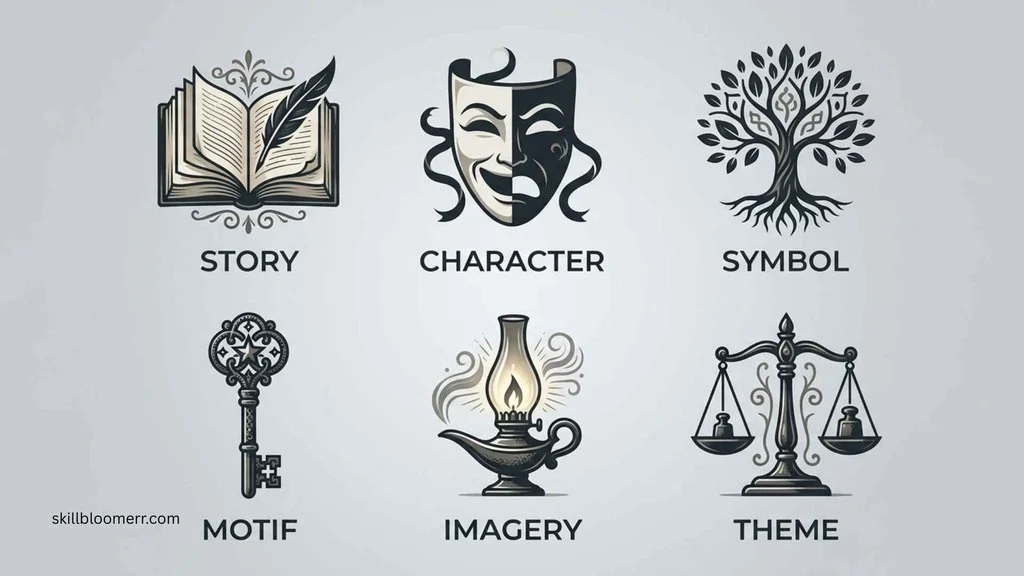
Metaphor
A metaphor directly compares two ideas to create meaning.
Allegory
An allegory is a story where characters and events represent larger moral, political, or philosophical ideas.
Motif
A motif is a repeated element that supports a theme.
Imagery
Imagery uses descriptive language to create sensory experiences.
Archetype
An archetype is a recurring character, image, or situation found across cultures.
Frequently Asked Questions About Literature Symbols
What are literature symbols?
Literature symbols are objects, characters, places, colors, or events that represent deeper meanings beyond their literal purpose. Writers use them to communicate themes, emotions, and ideas that may not be directly explained.
Why do authors use symbols in literature?
Authors use symbols to make stories richer and more meaningful. Symbols allow writers to express complex ideas such as love, identity, conflict, and human nature in ways that encourage deeper thinking.
How do you identify a symbol in a story?
Look for objects, images, or events that appear repeatedly or seem unusually important. Consider how the element connects to characters, themes, conflicts, and the overall message of the story.
Can the same symbol have different meanings?
Yes. Symbols depend on context, culture, and the writer’s purpose. A snake may symbolize danger in one story but wisdom or transformation in another.
What is the difference between a symbol and a theme?
A symbol is an element that represents an idea, while a theme is the larger message or lesson explored by a work. Symbols often help communicate themes.
Are symbols always intentional?
Not always. Some symbols are deliberately created by authors, while others may develop through reader interpretation and cultural understanding.
What are common symbols in literature?
Common literary symbols include light, darkness, water, seasons, journeys, animals, flowers, mirrors, and natural landscapes. Their meanings depend on the story.
Why are symbols important for literary analysis?
Symbols help readers understand deeper meanings and explore how writers communicate ideas. They are important tools for analyzing themes, characters, and messages.
Do modern books still use symbols?
Yes. Contemporary novels, films, and digital stories continue using symbols to explore modern topics such as technology, identity, society, and human relationships.
Key Takeaways
- Literature symbols represent deeper meanings beyond their literal appearance.
- Symbols help writers communicate themes, emotions, and complex ideas.
- Symbol meanings depend on context, culture, and interpretation.
- Ancient myths and religious traditions strongly influenced literary symbolism.
- Symbols appear in novels, poetry, drama, films, and modern storytelling.
- Readers should analyze symbols by examining the entire work, not isolated objects.
- Great symbols remain powerful because different generations can discover new meanings.
Conclusion
Literature symbols transform ordinary objects, places, and actions into meaningful parts of storytelling. They allow writers to explore human emotions, cultural beliefs, and universal experiences without directly explaining every idea.
From ancient myths to modern novels, symbols continue to shape how people understand stories. Learning how to recognize and interpret literature symbols helps readers discover deeper messages, appreciate creative writing, and connect with the powerful ideas hidden beneath the surface of words.
References
- Oxford University Press literary studies resources
- Encyclopaedia Britannica articles on literature and symbolism
- The Poetry Foundation educational resources on poetry and literary devices
- The Modern Language Association research resources for literary analysis

I’m Ethan Calloway, an English writer and lifelong learner who enjoys turning complex ideas into clear, practical content. At SkillBloomerr, I focus on useful topics that help readers build knowledge, improve their skills, and feel more confident in everyday learning. I believe good writing should be simple, engaging, and genuinely helpful.
Books: The Everyday Learning Guide and Build Better Skills
 Olivia Hartwell
 Nathaniel Brooks