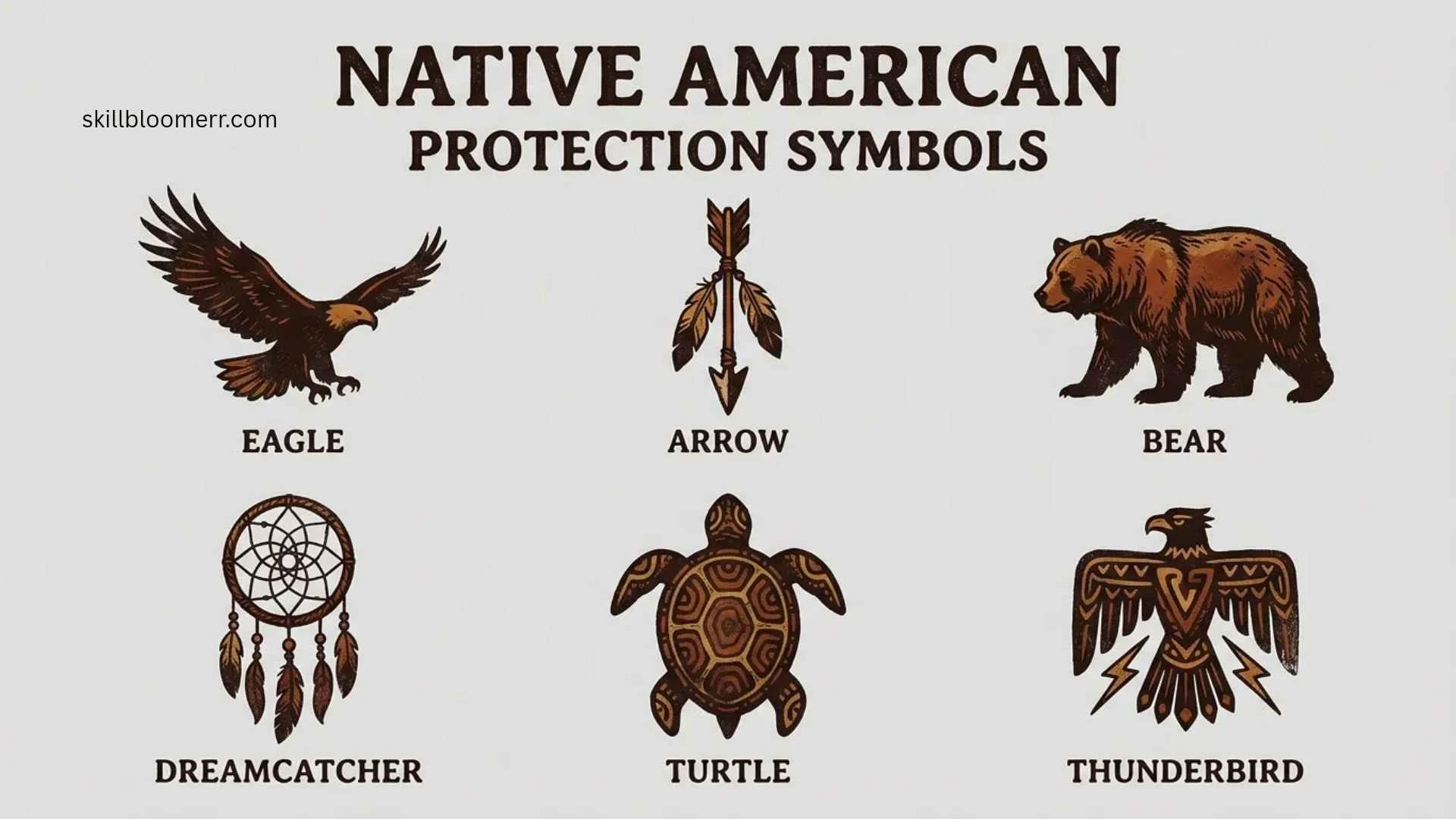
Native American protection symbols represent deep connections between people, nature, ancestors, animals, and spiritual forces. These symbols have been used by many Indigenous nations across North America to express protection, guidance, strength, healing, and harmony.
Their meanings are not universal because each tribe, language, and cultural tradition has its own beliefs and interpretations.
From petroglyphs carved into stone to designs found on pottery, clothing, jewelry, beadwork, tattoos, and ceremonial objects, Native American protection symbols continue to inspire curiosity and respect.
Understanding these symbols requires looking beyond their appearance and learning about the cultures that created them.
In this guide, you will discover the meanings, origins, cultural importance, spiritual connections, common examples, misconceptions, and modern uses of Native American protection symbols while respecting their historical and cultural context.
Quick Meaning of Native American Protection Symbols
Native American protection symbols are traditional designs and images used by various Indigenous cultures to represent safety, spiritual guidance, strength, connection with ancestors, and protection from negative forces. Common examples include the bear, eagle, turtle, arrow, medicine wheel, thunderbird, and protective patterns found in tribal art.
Native American Protection Symbols Overview Table
| Symbol Name | Primary Meaning | Category | Origin | Culture or Civilization | Historical Use | Modern Meaning |
| Bear Symbol | Strength, courage, protection | Animal Symbol | Ancient Indigenous traditions | Many Native American nations | Ceremonies, stories, art | Inner strength and safety |
| Eagle Symbol | Spiritual connection and protection | Animal Symbol | Indigenous North America | Many Plains and Southwestern tribes | Sacred ceremonies | Wisdom and higher guidance |
| Turtle Symbol | Protection, stability, creation | Animal Symbol | Ancient oral traditions | Eastern Woodlands and other nations | Stories and artwork | Patience and grounding |
| Thunderbird Symbol | Power, transformation, protection | Mythological Symbol | Indigenous mythology | Pacific Northwest tribes | Totem art and legends | Spiritual power |
| Medicine Wheel | Balance, healing, harmony | Spiritual Symbol | Plains traditions | Several Indigenous nations | Teaching and ceremonies | Personal balance |
| Arrow Symbol | Direction, defense, movement | Cultural Symbol | Indigenous hunting traditions | Many tribes | Tools and artwork | Purpose and protection |
| Dreamcatcher | Protection from bad dreams | Spiritual Craft | Ojibwe tradition | Anishinaabe people | Handmade protective objects | Peaceful sleep |
| Wolf Symbol | Loyalty, guidance, family | Animal Symbol | Indigenous storytelling | Various nations | Art and legends | Community and intuition |
What Do Native American Protection Symbols Mean?
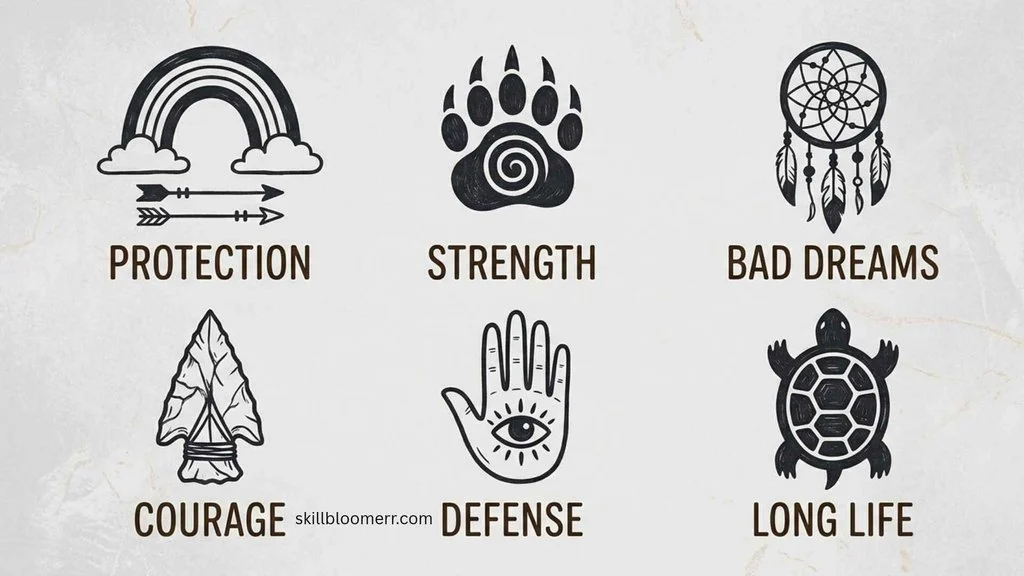
Native American protection symbols represent the belief that humans are connected with the natural world, spiritual beings, animals, and ancestral wisdom. These symbols often communicate ideas of safety, balance, courage, and guidance rather than acting as simple decorative designs.
Many Indigenous cultures view symbols as a way to preserve knowledge. A symbol can tell a story, represent a teaching, identify a clan relationship, or connect a person with spiritual traditions.
The meaning of a symbol depends on:
- The specific Indigenous nation
- The historical period
- The material where it appears
- The ceremony or purpose behind its use
- The stories connected to it
For example, an eagle may symbolize spiritual connection in one community, while another culture may emphasize different meanings related to leadership or vision.
A key point is that there is no single “Native American symbol system.” Indigenous peoples of North America include hundreds of distinct nations with different languages, histories, and traditions.
History and Origin of Native American Protection Symbols
Ancient Origins of Indigenous Symbolism
Native American symbolic traditions developed thousands of years before European contact. Archaeological evidence shows that Indigenous peoples used images, patterns, and markings on rock surfaces, pottery, tools, clothing, and ceremonial objects.
Petroglyphs and pictographs found throughout North America demonstrate how symbols were used to record:
- Spiritual beliefs
- Animal relationships
- Important events
- Migration stories
- Environmental knowledge
Symbols were often connected to oral traditions. Instead of being read like a written language, they were understood through stories passed from generation to generation.
Protection Symbols in Different Indigenous Regions
Native American cultures developed unique symbolic traditions based on their environment.
Plains Indigenous Traditions
Many Plains nations, including the Lakota, Cheyenne, and Blackfeet, used animal imagery, geometric patterns, and spiritual symbols connected to hunting, warfare, healing, and ceremonies.
The eagle, buffalo, horse, and thunderbird hold important roles in many Plains traditions.
Southwestern Indigenous Traditions
Nations such as the Navajo (Diné), Hopi, and Pueblo peoples developed rich artistic traditions involving geometric designs, pottery symbols, sand paintings, and weaving patterns.
Many symbols represent:
- Harmony
- Balance
- Protection
- Relationship with the earth
Eastern Woodlands Traditions
Indigenous nations from eastern North America often incorporated animal symbolism, clan systems, and spiritual teachings into artwork and storytelling.
Animals such as turtles, wolves, and bears frequently appear in cultural traditions.
Symbolism and Interpretation of Native American Protection Symbols
Bear Symbol Meaning
The bear is one of the most recognized protective symbols in many Indigenous cultures.
Common meanings include:
- Strength
- Courage
- Healing
- Protection
- Leadership
The bear is often respected as a powerful animal connected with physical and spiritual strength. In some traditions, bear stories teach lessons about bravery, survival, and responsibility.
Modern interpretations often associate the bear symbol with personal confidence and resilience.
Eagle Symbol Meaning
The eagle has significant spiritual importance among many Native American nations.
It is commonly associated with:
- Vision
- Freedom
- Wisdom
- Connection between humans and the Creator
Because eagles fly high above the earth, many Indigenous traditions view them as carrying prayers or messages between the human world and the spiritual world.
Eagle feathers are especially respected and have ceremonial importance in many communities.
Turtle Symbol Meaning
The turtle represents protection, patience, and stability.
In many Indigenous creation stories, the turtle is connected with the idea of Turtle Island, a name used by some Indigenous peoples for North America.
The turtle often symbolizes:
- Longevity
- Earth connection
- Protection
- Wisdom
Its shell represents safety and endurance.
Thunderbird Symbol Meaning
The Thunderbird is a powerful supernatural being found in many Indigenous traditions, especially among Pacific Northwest cultures.
It is often associated with:
- Storms
- Transformation
- Strength
- Protection
Stories describe the Thunderbird as a powerful spiritual force connected with thunder, lightning, and natural energy.
Dreamcatcher Meaning
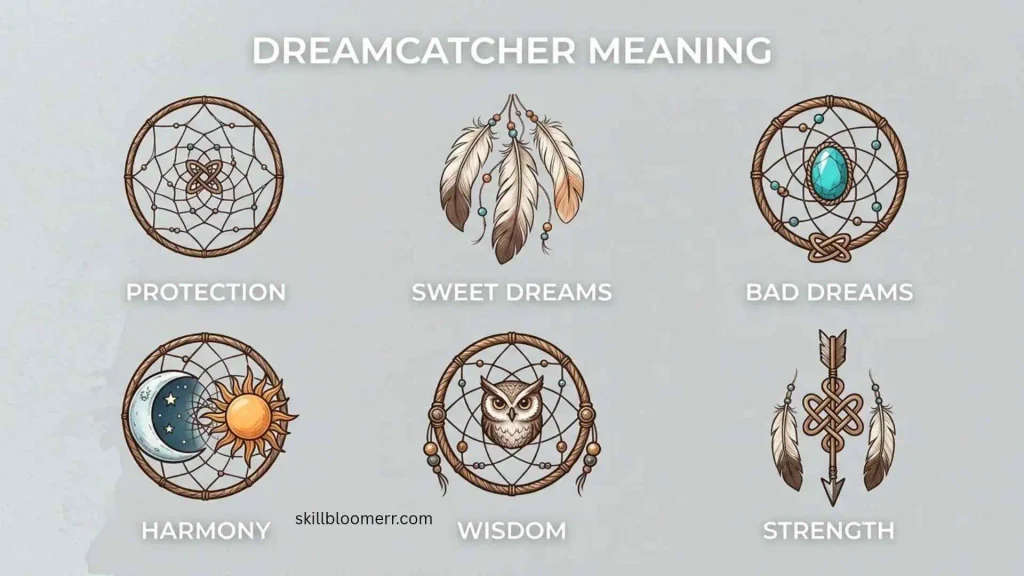
The dreamcatcher is one of the most widely recognized Native American protective objects.
The tradition comes from the Ojibwe (Anishinaabe) people. Traditionally, dreamcatchers were handmade objects placed near sleeping areas to protect children from harmful dreams.
A traditional dreamcatcher may include:
- A circular frame
- A woven web
- Feathers
- Beads
The circle often represents the cycle of life, while the web is traditionally associated with filtering dreams.
Today, dreamcatchers are popular worldwide, but many Indigenous communities emphasize the importance of respecting their cultural origins.
Cultural Significance of Protection Symbols
Native American protection symbols are more than decorations. They often carry cultural knowledge, identity, and spiritual teachings.
Connection With Nature
Many Indigenous traditions emphasize relationships between humans and the natural world. Animals are not simply symbols; they are respected beings with their own roles and lessons.
A wolf may represent community and loyalty. A bear may represent strength. An eagle may represent spiritual awareness.
These meanings reflect relationships built through generations of observation and storytelling.
Connection With Ancestors
Symbols can preserve ancestral knowledge. A design passed down through generations can connect modern people with historical traditions.
Patterns on clothing, pottery, and artwork may communicate family identity, tribal history, or spiritual teachings.
Regional Differences in Meaning
The same symbol may have different meanings among different nations.
For example:
- The bear may represent healing in one tradition and protection in another.
- The eagle may represent prayer, leadership, or spiritual connection depending on the community.
- Geometric patterns may carry specific meanings known only within certain cultural groups.
Understanding these differences prevents oversimplification.
Religious or Spiritual Meaning of Native American Protection Symbols
Many Native American protection symbols have spiritual significance, but Indigenous beliefs are diverse and cannot be reduced to one religion.
Spiritual meanings may involve:
- Relationship with the Creator
- Respect for ancestors
- Connection with animals
- Balance between humans and nature
- Healing traditions
Ceremonial symbols may appear in:
- Prayer objects
- Sacred clothing
- Ritual items
- Storytelling traditions
- Community ceremonies
Some symbols are considered sacred and should not be copied or used without understanding their cultural importance.
Where Native American Protection Symbols Are Used
Native American symbols appear in many forms, including:
Art and Crafts
Traditional artwork may include symbols on:
- Pottery
- Baskets
- Beadwork
- Textiles
- Carvings
Jewelry
Protective symbols are commonly found on:
- Necklaces
- Bracelets
- Rings
- Pendants
However, authentic Indigenous-made jewelry often carries cultural meaning beyond appearance.
Tattoos
Many people choose Native American-inspired tattoos because they connect with ideas of:
- Strength
- Protection
- Spirituality
However, individuals should research meanings carefully and avoid using sacred designs disrespectfully.
Literature and Storytelling
Symbols appear in Indigenous literature, legends, and oral traditions as ways of teaching values and history.
Architecture and Public Art
Some Indigenous communities incorporate traditional patterns into modern buildings, murals, and cultural centers.
Common Variations of Native American Protection Symbols
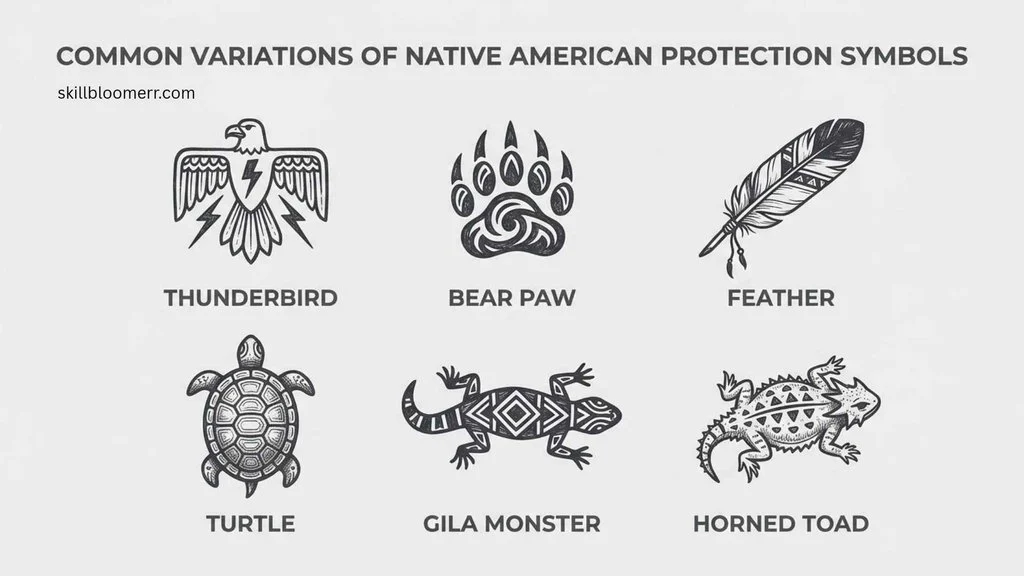
Animal Variations
Animals commonly represented include:
- Bear
- Eagle
- Wolf
- Turtle
- Buffalo
- Hawk
- Deer
Each animal may carry different meanings depending on tribal tradition.
Geometric Variations
Common patterns include:
- Circles
- Spirals
- Lines
- Cross-like designs
- Repeated patterns
These may represent concepts such as cycles, movement, balance, or connection.
Modern Adaptations
Today, Native American-inspired designs appear in:
- Fashion
- Home decoration
- Logos
- Tattoos
- Digital artwork
Modern versions should be approached carefully because some designs have sacred meanings.
Common Misconceptions About Native American Protection Symbols
Myth 1: All Native American Symbols Have the Same Meaning
This is incorrect. Hundreds of Indigenous nations have different languages and traditions.
Myth 2: Every Animal Symbol Is a Universal Native American Symbol
Animals have different meanings across cultures. A bear does not represent exactly the same idea everywhere.
Myth 3: Native American Symbols Are Only Decorative
Many symbols carry stories, teachings, and cultural identity.
Myth 4: Anyone Can Use Sacred Symbols Without Understanding Them
Some symbols and ceremonial objects have deep cultural importance. Respect and education are essential.
Interesting Facts About Native American Protection Symbols
- Many Indigenous symbols are connected to oral storytelling rather than written language.
- The eagle is respected in many Native American cultures because of its connection with the sky and spiritual communication.
- Dreamcatchers originated with the Ojibwe people, although they are now recognized worldwide.
- Animal symbols often represent relationships between humans and nature rather than simple character traits.
- Some Indigenous symbols are only understood within specific communities.
- Petroglyphs provide evidence of ancient symbolic traditions across North America.
- The circle is an important design element in many Indigenous traditions because it can represent cycles and connection.
- Totem poles are not simply “family decorations”; they often communicate histories, identities, and stories among Northwest Coast peoples.
- Symbol meanings can change as cultures continue to evolve.
- Respectful learning is important because symbols are connected to living Indigenous communities.
Related Symbols
Celtic Protection Symbols
Celtic symbols such as knots and spirals often represent eternity, connection, and protection. They come from different cultural traditions than Native American symbols.
Norse Protection Symbols
Norse symbols, including runic designs, developed in Scandinavian cultures and often relate to mythology and protection.
African Adinkra Symbols
Adinkra symbols from West Africa communicate ideas such as wisdom, strength, and unity.
Buddhist Protection Symbols
Buddhist symbols often represent spiritual protection, enlightenment, and compassion.
Frequently Asked Questions About Native American Protection Symbols
What is the strongest Native American protection symbol?
There is no single strongest symbol because meanings vary among Indigenous nations. Symbols such as the eagle, bear, turtle, and thunderbird are often associated with protection, strength, or spiritual power in different traditions.
What Native American symbol means protection?
Several symbols can represent protection, including the bear for strength, turtle for safety and stability, and certain ceremonial designs created within specific tribal traditions.
Are Native American protection symbols religious?
Some are connected with spiritual beliefs and ceremonies, while others represent cultural identity, history, or storytelling. Their meanings depend on the specific Indigenous community.
What does a Native American eagle symbol mean?
The eagle often represents spiritual connection, wisdom, vision, and communication with higher powers in many Indigenous traditions.
Is the dreamcatcher a Native American protection symbol?
Yes. The dreamcatcher comes from the Ojibwe tradition and was traditionally associated with protecting sleepers from harmful dreams.
Can anyone wear Native American symbols?
People can appreciate Indigenous art, but they should learn the meaning and cultural background of symbols, especially when dealing with sacred or ceremonial designs.
What animal represents protection in Native American culture?
Animals such as bears, turtles, eagles, and wolves may represent protection in different traditions, but meanings vary between Indigenous nations.
Are Native American symbols still used today?
Yes. Indigenous artists and communities continue using traditional symbols in artwork, ceremonies, education, and cultural expression.
What is the meaning of the Native American circle symbol?
The circle often represents cycles, connection, balance, and relationships between different parts of life in many Indigenous traditions.
Key Takeaways
- Native American protection symbols represent ideas of safety, strength, balance, and spiritual connection.
- Indigenous symbols are connected to specific cultures and should not be treated as universal designs.
- Animals such as bears, eagles, turtles, and wolves carry important meanings in many traditions.
- Dreamcatchers originated from the Ojibwe people.
- Symbol meanings are preserved through art, storytelling, ceremonies, and cultural practices.
- Respectful understanding is essential when using Indigenous-inspired designs.
Conclusion
Native American protection symbols are powerful expressions of history, spirituality, nature, and cultural identity. Their meanings go far beyond their visual appearance because each symbol carries stories, traditions, and relationships passed through generations.
Learning about these symbols helps us appreciate the diversity of Indigenous cultures and understand why certain images continue to hold deep significance today. Whether found in artwork, jewelry, storytelling, or ceremonies, Native American protection symbols remind us of the importance of respect, connection, and harmony with the world around us.

I’m Ethan Calloway, an English writer and lifelong learner who enjoys turning complex ideas into clear, practical content. At SkillBloomerr, I focus on useful topics that help readers build knowledge, improve their skills, and feel more confident in everyday learning. I believe good writing should be simple, engaging, and genuinely helpful.
Books: The Everyday Learning Guide and Build Better Skills
 Olivia Hartwell