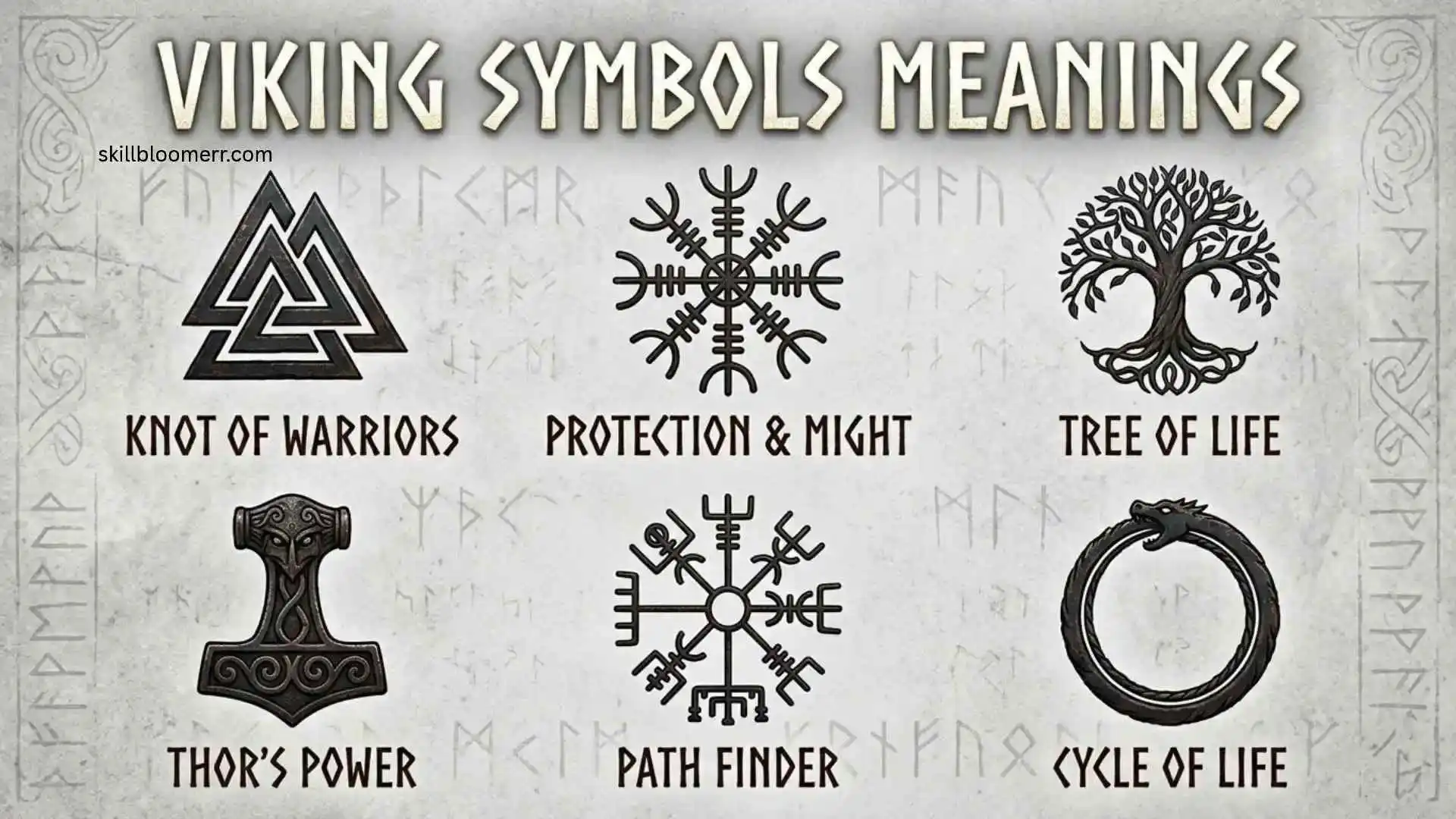
Viking symbols are powerful visual marks connected to the beliefs, mythology, and daily life of the ancient Norse people. A meaning tattoo Viking symbols design often represents strength, protection, courage, destiny, wisdom, loyalty, or a connection to Norse heritage. These symbols appear today in tattoos, jewelry, artwork, books, movies, games, and modern cultural expressions.
From the famous Valknut and Mjölnir hammer to runes and the Vegvísir compass symbol, Viking-inspired designs attract people because they carry deep stories from Viking Age Scandinavia.
However, many modern interpretations combine historical meanings with personal beliefs, so understanding the original context helps create a more respectful and meaningful tattoo choice.
This guide explains the history, meanings, cultural background, spiritual interpretations, common variations, and modern uses of Viking symbols so readers can understand what each design truly represents before choosing one.
Quick Meaning
Viking symbols are ancient Norse designs that represent ideas such as protection, bravery, honor, power, wisdom, and connection to the gods. A meaning tattoo Viking symbols design allows people to express personal values while drawing inspiration from Scandinavian mythology, Viking Age traditions, runic writing, and Norse spiritual beliefs.
Viking Symbols Overview Table
| Symbol Name | Primary Meaning | Category | Origin | Civilization or Culture | First Known Use | Common Usage | Modern Meaning | Related Symbols |
| Mjölnir (Thor’s Hammer) | Protection, strength, divine power | Mythological symbol | Norse mythology | Viking Age Scandinavia | Viking Age artifacts | Jewelry, amulets, tattoos | Courage and protection | Thor, lightning symbols |
| Valknut | Death, honor, connection to Odin | Mythological symbol | Norse culture | Ancient Scandinavia | Viking Age carvings | Tattoos, artwork | Destiny and warrior spirit | Odin symbols |
| Vegvísir | Guidance and direction | Icelandic magical symbol | Icelandic tradition | Medieval Iceland | 19th-century manuscripts | Tattoos, navigation designs | Finding one’s path | Compass symbols |
| Ægishjálmur | Protection and power | Icelandic magical symbol | Icelandic grimoires | Icelandic folklore | Medieval traditions | Tattoos and art | Strength and defense | Runes |
| Yggdrasil | Life, connection, balance | Cosmic symbol | Norse mythology | Scandinavian tradition | Ancient myths | Artwork, tattoos | Growth and interconnectedness | Tree symbols |
| Runes | Knowledge, communication, fate | Writing system | Germanic cultures | Scandinavia and Northern Europe | Before Viking Age | Inscriptions, tattoos | Wisdom and mystery | Elder Futhark |
| Helm of Awe | Fearlessness, protection | Magical symbol | Icelandic tradition | Norse culture | Medieval Iceland | Tattoos and jewelry | Inner strength | Ægishjálmur |
| Ouroboros (Jörmungandr connection) | Cycles and eternity | Mythological symbol | Multiple cultures | Norse mythology connection | Ancient traditions | Art and tattoos | Renewal and infinity | Serpent symbols |
What Do Viking Symbols Mean?
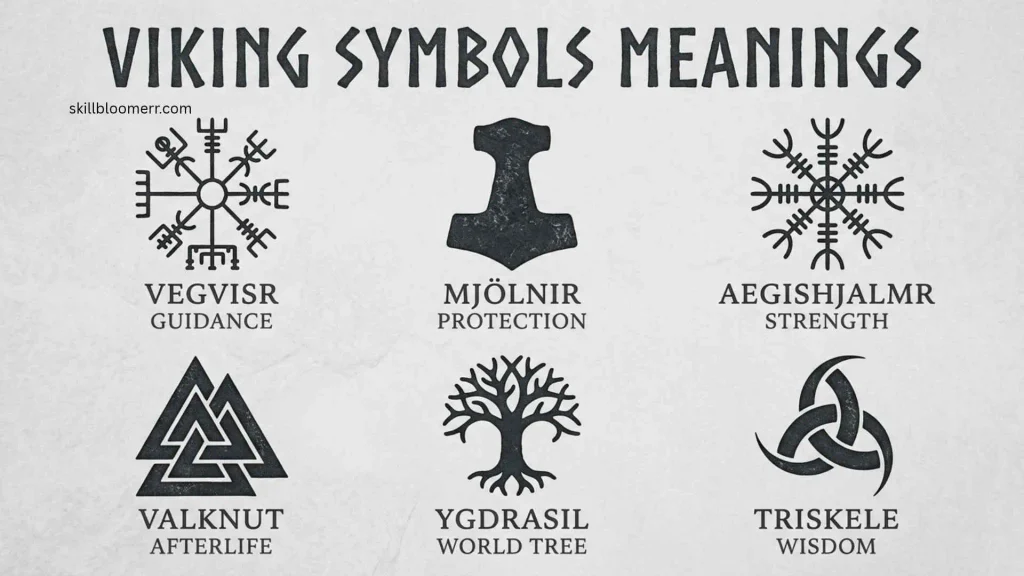
Viking symbols carry different meanings depending on their historical source, mythological connection, and modern interpretation. The ancient Norse people used symbols to represent their relationship with gods, nature, fate, warfare, protection, and the unseen world.
A Viking tattoo is usually not just a decorative image. Many people choose these designs because they connect with specific values:
- Strength during difficult times
- Protection from danger
- Courage and bravery
- Personal transformation
- Family and ancestry
- Wisdom and knowledge
- Freedom and exploration
- Spiritual connection
It is important to understand that not every symbol commonly called “Viking” was actually used during the Viking Age (approximately 793–1066 CE). Some popular tattoo symbols come from later Icelandic magical traditions or modern interpretations of Norse mythology.
History and Origin of Viking Symbols
The Viking Age and Scandinavian Culture
The Viking Age began around the late eighth century and lasted until the eleventh century. Viking communities came mainly from modern-day Denmark, Norway, and Sweden. They were known as explorers, traders, warriors, farmers, and craftsmen.
Symbols were an important part of Norse culture. They appeared on:
- Weapons
- Ships
- Jewelry
- Stones
- Tools
- Religious objects
- Personal belongings
The meanings of these symbols were closely connected to Norse mythology, which included gods such as Odin, Thor, Freyja, Tyr, and Loki.
Norse Mythology and Symbolic Meaning
Norse mythology described a universe connected through Yggdrasil, the great world tree. The stories explained concepts such as creation, death, honor, fate, and rebirth.
Symbols helped people communicate complex ideas visually. A hammer could represent Thor’s protection, while a tree could represent the connection between different worlds.
Runes and Ancient Scandinavian Writing
Runes were letters used by Germanic and Scandinavian peoples before and during the Viking Age. The earliest runic alphabet was called Elder Futhark.
Runes were used for:
- Names
- Memorial inscriptions
- Messages
- Ownership marks
- Magical purposes in some traditions
Today, many people choose individual runes as tattoos because they associate them with specific meanings such as protection, success, strength, or transformation.
Symbolism and Interpretation of Viking Tattoo Designs
Protection and Strength
Protection is one of the strongest themes in Viking symbolism. Many Norse symbols were believed to provide spiritual defense or represent the strength needed to overcome challenges.
Examples include:
- Mjölnir, Thor’s hammer
- Helm of Awe
- Ægishjálmur
A person choosing these symbols may be expressing resilience, courage, or the desire to remain strong through hardship.
Warrior Spirit and Courage
Viking culture valued bravery, loyalty, and honor. Symbols connected to warriors often represent:
- Fearlessness
- Determination
- Sacrifice
- Commitment
The Valknut, associated with Odin and fallen warriors, is often interpreted as a symbol of warrior dedication and connection with Valhalla.
Wisdom and Knowledge
Odin, one of the most important Norse gods, represented wisdom, knowledge, magic, and sacrifice. Symbols connected with Odin often represent the search for understanding and personal growth.
Examples:
- Runes
- Ravens
- Valknut
- Spear symbols
Fate and Destiny
The concept of fate was central to Norse beliefs. The Norns, mythical figures associated with destiny, were believed to influence the lives of gods and humans.
Some Viking-inspired tattoos represent acceptance of life’s journey and the belief that every experience shapes a person’s path.
Cultural Significance of Viking Symbols
Scandinavian Heritage
In Scandinavian countries, Viking symbols are connected to historical identity, archaeology, and cultural heritage. Museums across Norway, Sweden, and Denmark preserve Viking artifacts showing how symbols appeared in everyday life.
For many people of Scandinavian ancestry, these designs represent family history and connection to their roots.
Modern Global Culture
Today, Viking symbols are popular worldwide. They appear in:
- Tattoo culture
- Fantasy literature
- Television series
- Video games
- Clothing designs
- Jewelry
Popular media has increased interest in Norse mythology, but fictional portrayals sometimes mix historical facts with creative storytelling.
Personal Interpretation
Modern tattoo meanings are often personal. Two people may choose the same Viking symbol for completely different reasons.
For example:
- One person may choose Mjölnir for protection.
- Another may choose it because of admiration for Thor mythology.
- Someone else may choose it as a symbol of overcoming challenges.
Religious or Spiritual Meaning of Viking Symbols
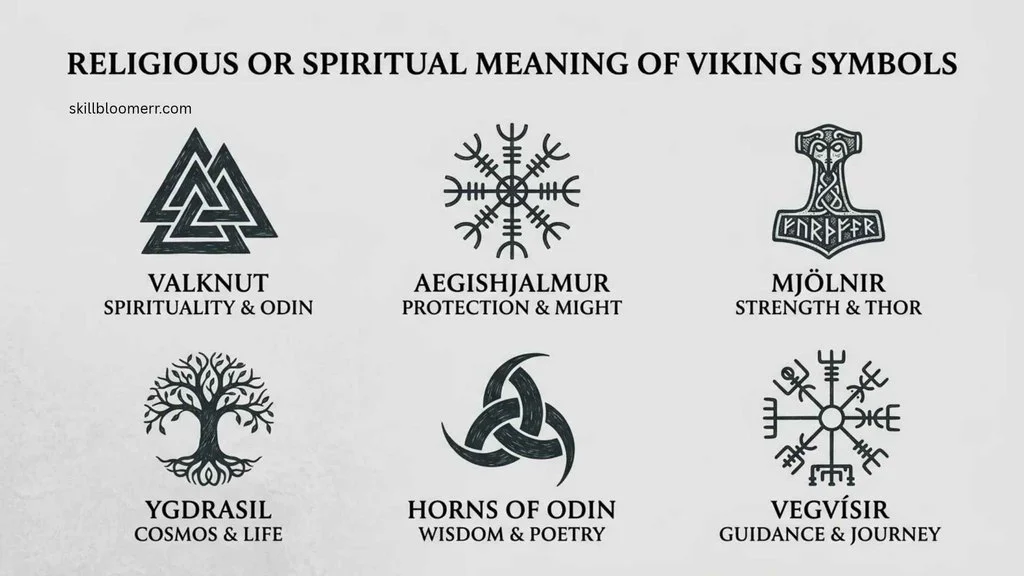
Norse symbols were originally connected to the spiritual beliefs of ancient Scandinavian societies. The Norse religion, often called Old Norse religion, included beliefs about gods, spirits, ancestors, and cosmic forces.
Connection to Norse Gods
Different symbols were associated with different deities:
Thor
- Mjölnir hammer
- Strength
- Protection
- Thunder
Odin
- Ravens
- Valknut
- Wisdom
- Knowledge
- Warriors
Freyja
- Cats
- Falcons
- Love
- Fertility
- Magic
Tyr
- Warrior symbolism
- Justice
- Sacrifice
Modern Spiritual Interpretations
Many people today use Viking symbols as spiritual reminders rather than religious objects. They may represent:
- Inner strength
- Personal growth
- Connection with nature
- Respect for ancestors
However, modern spiritual meanings should be separated from historically documented Norse beliefs.
Where Viking Symbols Are Used Today
Tattoos
Tattoos are one of the most common modern uses of Viking symbols. People choose designs based on personal meaning, appearance, and connection to Norse history.
Popular Viking tattoo ideas include:
- Thor’s hammer
- Viking compass
- Norse runes
- Odin’s symbols
- Wolves
- Ravens
- Dragons
- Viking ships
- World tree designs
Jewelry
Viking-inspired necklaces, rings, bracelets, and pendants often feature:
- Mjölnir
- Valknut
- Runes
- Yggdrasil
Historically, hammer-shaped pendants were worn during the Viking Age, and modern jewelry continues this tradition-inspired style.
Art and Media
Viking symbols appear in:
- Historical books
- Fantasy novels
- Movies
- Television shows
- Video games
They help visually communicate themes of adventure, mythology, and ancient civilizations.
Clothing and Branding
Many modern brands use Viking-inspired imagery to create associations with:
- Strength
- Adventure
- Tradition
- Exploration
However, some symbols have also been misused by extremist groups, making historical understanding important when interpreting them.
Common Viking Symbol Variations
Mjölnir Variations
Thor’s hammer designs can include:
- Simple hammer shapes
- Detailed Norse artwork
- Runes around the hammer
- Animal decorations
The meaning usually remains connected to protection and strength.
Rune Tattoo Variations
Rune tattoos may include:
- Single runes
- Rune combinations
- Elder Futhark inscriptions
- Decorative rune circles
The meaning depends on the specific rune and historical interpretation.
Viking Compass Designs
The Vegvísir is often drawn as a circular symbol with several arms. Modern tattoo artists frequently customize it with:
- Runes
- Wolves
- Trees
- Ships
- Geometric patterns
Common Misconceptions About Viking Symbols
Not All Viking Symbols Are From the Viking Age
Some popular designs are often called “Viking symbols” but come from later Icelandic traditions.
For example, Vegvísir and Ægishjálmur are mainly found in later Icelandic magical manuscripts rather than confirmed Viking Age artifacts.
Vikings Did Not Use Every Symbol as a Tattoo
Modern tattoo culture has transformed many historical symbols. Ancient Norse people used symbols on objects, but there is limited evidence that they practiced tattoo traditions similar to modern tattoo culture.
Symbols Did Not Always Have One Fixed Meaning
Ancient symbols can have multiple interpretations. Their meaning depends on:
- Historical context
- Location
- Time period
- Material used
- Cultural purpose
Interesting Facts About Viking Symbols
- Mjölnir was one of the most popular Norse symbols. Archaeologists have discovered many hammer-shaped pendants from Viking Age sites.
- Runes were both practical and symbolic. They were used for writing messages but also appeared in contexts connected with beliefs and rituals.
- Yggdrasil connects multiple worlds in Norse mythology. The world tree represents the structure of the cosmos.
- Valknut is strongly associated with Odin. It appears on several Viking Age artifacts, although its exact meaning remains debated by scholars.
- Ravens had special importance in Norse mythology. Odin was associated with two ravens named Huginn and Muninn.
- Viking symbols were often combined. Craftspeople decorated objects with multiple symbols to create complex visual meanings.
- Some modern Viking symbols are newer than people think. Popular designs may come from medieval Iceland rather than the Viking Age.
- Viking symbolism influences modern fantasy culture. Many books, films, and games use Norse-inspired imagery.
- Ships were powerful symbols in Viking society. They represented exploration, travel, and connection between worlds.
- Personal meaning matters in modern tattoos. Today, people often adapt historical symbols to represent their own experiences.
Related Symbols
Celtic Symbols
Celtic knots and Norse symbols are sometimes compared because both traditions use complex patterns and nature-based imagery. However, they come from different cultures.
Samurai Symbols
Like Viking symbols, Japanese warrior symbols often represent honor, discipline, and courage, but they come from different historical traditions.
Egyptian Symbols
Symbols such as the Ankh also represent concepts like life and protection, making them popular choices for meaningful tattoos.
Native American Symbols
Some Indigenous symbols also represent nature, spirituality, and ancestry, but each culture has its own traditions and meanings.
Frequently Asked Questions
What is the most popular Viking tattoo symbol?
The most popular Viking tattoo symbols include Mjölnir, Valknut, Vegvísir, Yggdrasil, and runes. Mjölnir is especially common because it represents protection, strength, and the power of Thor in Norse mythology.
What does a Viking compass tattoo mean?
A Viking compass tattoo usually represents guidance, protection, and finding the correct path in life. The Vegvísir symbol is often associated with navigation, although its documented history comes from later Icelandic traditions rather than the Viking Age.
Are Viking tattoos historically accurate?
Some Viking tattoos are based on authentic Norse symbols, while others are modern interpretations. Symbols such as Mjölnir and runes have historical connections, but many modern designs combine different elements creatively.
What Viking symbol represents strength?
Mjölnir, Thor’s hammer, is one of the strongest symbols associated with power and protection. Other symbols connected with strength include warrior imagery, wolves, and certain runes.
What does the Valknut tattoo mean?
The Valknut is commonly associated with Odin, warriors, death, and destiny. Its exact historical meaning is uncertain, but many modern interpretations connect it with courage, sacrifice, and spiritual transformation.
Is Vegvísir a real Viking symbol?
Vegvísir is a genuine Icelandic symbol, but evidence suggests it comes from later Icelandic magical traditions rather than the Viking Age. Today, it is commonly used as a symbol of guidance.
Can anyone get a Viking symbol tattoo?
Yes, anyone can choose a Viking-inspired tattoo. However, learning the historical background helps people choose symbols respectfully and understand their original cultural context.
What rune is best for a Viking tattoo?
The best rune depends on the intended meaning. Some people choose runes associated with protection, strength, success, or transformation, but rune meanings can vary depending on historical interpretation.
Key Takeaways
- Viking symbols represent ideas such as strength, protection, wisdom, destiny, and courage.
- Not every modern “Viking” symbol originated during the Viking Age.
- Mjölnir, Valknut, runes, and Yggdrasil are among the most recognized Norse-inspired designs.
- Modern tattoo meanings often combine historical symbolism with personal experiences.
- Understanding cultural history creates a more meaningful tattoo choice.
- Norse symbols continue to influence art, literature, jewelry, and popular culture.
Conclusion
A meaning tattoo Viking symbols design is more than an attractive image. These symbols carry connections to Norse mythology, Scandinavian history, ancient writing systems, and cultural traditions. Whether someone chooses Thor’s hammer for protection, runes for wisdom, or Yggdrasil for life and connection, each symbol tells a unique story.
Understanding the origins and interpretations of Viking symbols helps people appreciate their deeper meaning while avoiding common misconceptions. These ancient designs continue to inspire modern generations because they represent timeless human ideas such as courage, resilience, exploration, and the search for meaning.
I’m Nathaniel Brooks, an educational writer who loves exploring ideas and making useful knowledge accessible to everyone. I write for SkillBloomerr with a focus on clear explanations, practical tips, and meaningful learning. My goal is to help readers discover something valuable every time they visit the site.
Books: Learn Something New and The Practical Knowledge Handbook
 Olivia Hartwell