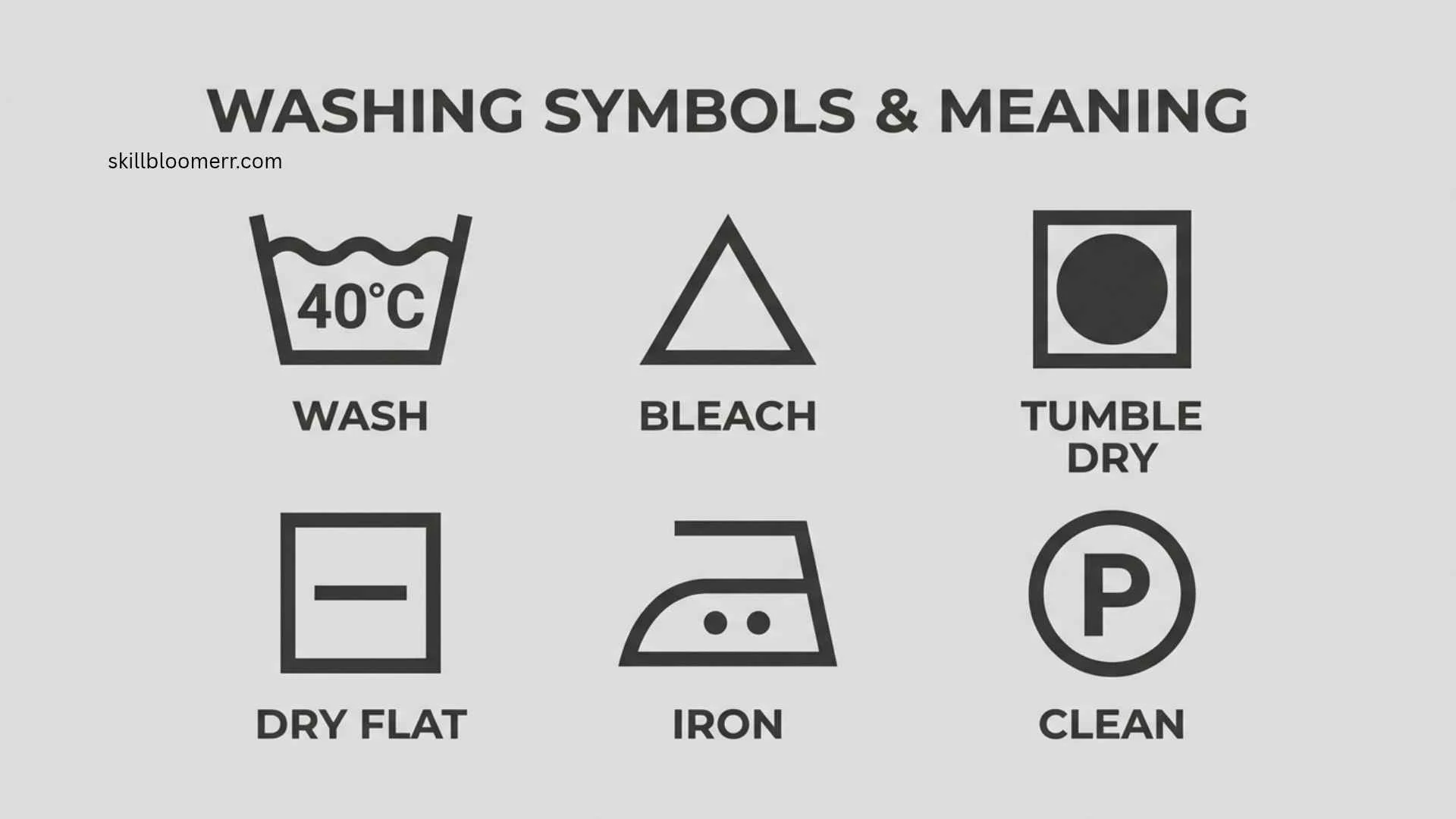
Washing symbols and meaning help you understand how to properly clean, dry, iron, and care for your clothes without damaging the fabric. These small icons appear on clothing labels, bedding, towels, and other textiles to provide instructions from manufacturers.
Many people remove clothing tags or ignore laundry symbols, but these signs contain important information about water temperature, washing methods, drying options, and special care requirements. Understanding them can help clothes last longer, maintain their color, and keep their original shape.
This complete guide explains washing symbols and meaning in simple terms, including common laundry icons, their history, cultural differences, practical uses, and mistakes to avoid.
Quick Meaning of Washing Symbols
Washing symbols are universal care icons found on clothing labels that explain how a garment should be washed, dried, ironed, bleached, or professionally cleaned. They help protect fabrics by showing the safest cleaning methods recommended by the manufacturer.
Washing Symbols Overview Table
| Symbol Name | Primary Meaning | Category | Origin | Common Usage | Modern Meaning |
| Washing Tub Symbol | How to wash clothing | Laundry Care | International textile standards | Clothing labels | Water washing instructions |
| Hand Wash Symbol | Wash gently by hand | Washing Method | Global textile industry | Delicate fabrics | Avoid machine washing |
| Triangle Symbol | Bleaching instructions | Fabric Care | International care labeling | Clothing maintenance | Bleach allowed or restricted |
| Square Symbol | Drying instructions | Drying Care | Textile labeling systems | Laundry care | Safe drying method |
| Iron Symbol | Ironing temperature | Heat Care | Garment industry | Clothing finishing | Heat limits |
| Circle Symbol | Professional cleaning | Dry Cleaning | Textile industry | Special garments | Professional care |
What Do Washing Symbols Mean?
Washing symbols are visual instructions placed on fabric care labels to show the correct way to clean and maintain clothing. Each symbol represents a specific care process, including washing, bleaching, drying, ironing, and professional cleaning.
Instead of using written instructions in multiple languages, manufacturers use internationally recognized symbols so consumers around the world can understand garment care information quickly.
For example:
- A tub filled with water means the item can be washed.
- A hand inside the tub means hand washing is required.
- A crossed-out symbol means that method should not be used.
- Dots inside symbols show temperature limits.
These symbols reduce confusion and prevent common laundry mistakes such as shrinking wool sweaters, fading dark clothing, or damaging delicate fabrics.
History and Origin of Laundry Care Symbols
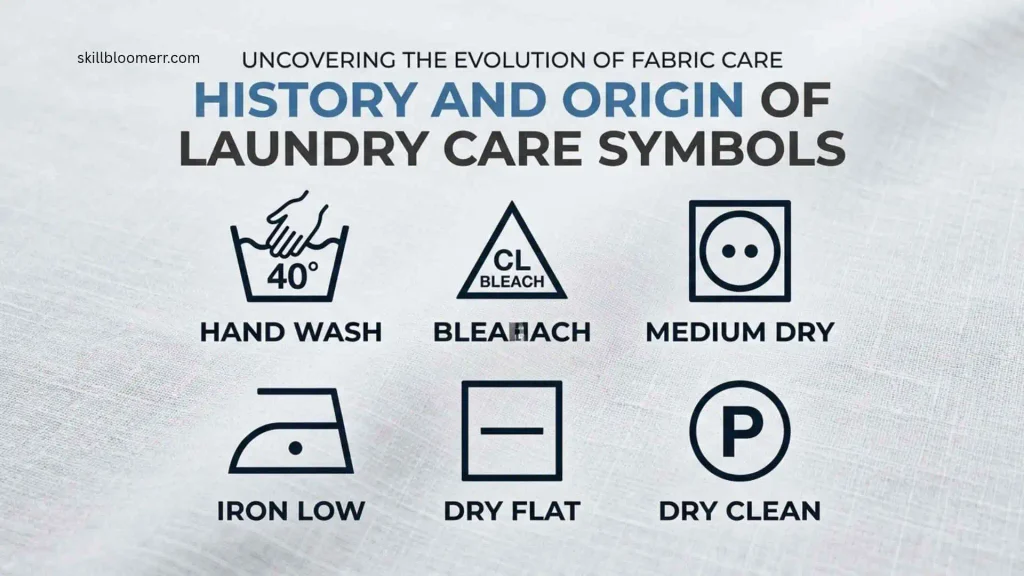
Laundry symbols developed because clothing manufacturers needed a simple way to communicate care instructions across different countries and languages.
Before standardized symbols existed, clothing labels often contained written instructions. As international clothing production increased, manufacturers needed a universal system that consumers could understand regardless of their language.
The modern care labeling system is influenced by international standards organizations, including the International Organization for Standardization (ISO). Many countries use similar symbols based on these global textile guidelines.
In the United States, clothing manufacturers commonly follow care labeling rules established by the Federal Trade Commission (FTC). These rules require manufacturers to provide accurate care instructions for textile products.
Over time, washing symbols evolved from simple washing instructions into a complete visual language covering:
- Washing
- Bleaching
- Drying
- Ironing
- Professional cleaning
Today, these symbols appear on everyday products such as shirts, jeans, jackets, curtains, blankets, and sportswear.
Symbolism and Interpretation of Laundry Symbols
Unlike cultural symbols that represent ideas or beliefs, laundry symbols are practical communication tools. Their meaning comes from standardized design rather than tradition or mythology.
Traditional Meaning of Washing Symbols
Traditionally, washing symbols were created to answer one important question:
How can this item be cleaned safely?
The symbols communicate:
- Recommended washing method
- Maximum heat level
- Fabric protection requirements
- Cleaning restrictions
Modern Meaning of Laundry Symbols
Today, laundry symbols represent:
- Fabric protection
- Consumer guidance
- Product quality
- Sustainable clothing care
They also support environmentally friendly practices by helping people avoid unnecessary washing damage and premature clothing replacement.
Positive Symbolism
Washing symbols have several positive meanings:
- Care and responsibility
- Protection of valuable items
- Longer garment lifespan
- Better household management
- Reduced textile waste
Negative Interpretations
Although these symbols are helpful, some people find them confusing because:
- Similar icons look almost identical.
- Different countries may use slightly different systems.
- Small labels can be difficult to read.
Cultural Significance of Washing Symbols
Laundry symbols are used worldwide, but their interpretation can vary slightly depending on regional standards.
United States
In the United States, care labels commonly include symbols along with written instructions. Manufacturers must provide reliable cleaning guidance for consumers.
Europe
European countries often use a standardized symbol system based on international textile labeling practices. Many garments sold across Europe use symbols without extensive written explanations.
Asia
Asian clothing markets frequently use international laundry symbols because many garments are produced for global trade.
Global Importance
The universal nature of laundry symbols allows:
- International clothing sales
- Easier garment care
- Reduced language barriers
- Better consumer understanding
Scientific or Technical Meaning of Washing Symbols
Laundry symbols do not have mathematical or scientific meanings, but they are based on textile science and material behavior.
Fabric manufacturers consider factors such as:
- Fiber strength
- Water absorption
- Heat resistance
- Chemical reactions
- Color stability
For example:
- Cotton can usually tolerate higher temperatures.
- Wool requires gentle treatment because heat and movement can cause shrinking.
- Synthetic fibers may react differently to high heat.
Laundry symbols translate these technical considerations into simple visual instructions.
Where Washing Symbols Are Used
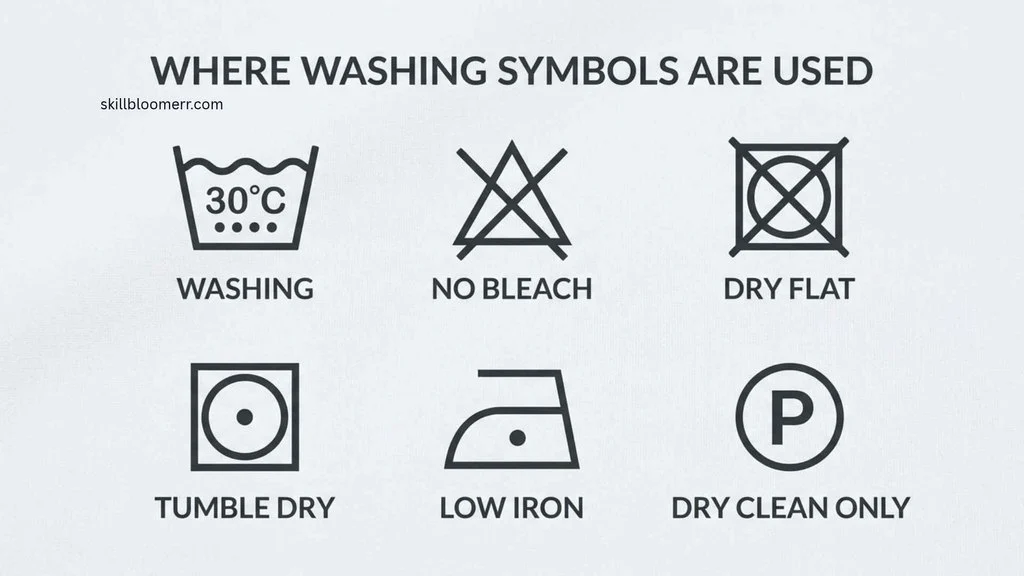
Washing symbols appear in many everyday situations.
Clothing Labels
The most common use is on:
- Shirts
- Pants
- Dresses
- Jackets
- Underwear
- Sportswear
Household Textiles
Symbols also appear on:
- Bed sheets
- Pillow covers
- Blankets
- Curtains
- Towels
Fashion Industry
Designers and manufacturers use care symbols to help customers maintain products properly.
Retail and Online Shopping
Many online stores include care information based on these symbols to help buyers understand product maintenance before purchasing.
Common Washing Symbol Variations
Laundry symbols may look slightly different depending on the country, manufacturer, or textile standard.
Washing Tub Variations
A basic washing tub symbol may include:
- Numbers showing maximum temperature
- Dots showing heat levels
- Lines underneath showing gentle cycles
Drying Symbol Variations
Drying symbols include:
- Square with circle = tumble drying
- Square with lines = air drying methods
- Crossed symbol = do not dry this way
Iron Symbol Variations
Iron symbols use dots:
- One dot = low heat
- Two dots = medium heat
- Three dots = high heat
Common Misconceptions About Washing Symbols
Myth 1: More Water Means Cleaner Clothes
Many people believe hot water and strong washing cycles always clean better. However, some fabrics can become damaged by excessive heat or harsh washing.
Myth 2: All Clothes Can Be Machine Washed
Some garments require hand washing or professional cleaning because machine movement can damage delicate fibers.
Myth 3: A Crossed Symbol Is Optional
A crossed-out symbol means the method should be avoided. Ignoring it may permanently damage the item.
Myth 4: All Countries Use Identical Labels
Many symbols are similar worldwide, but small differences may exist between regional standards.
Interesting Facts About Washing Symbols
- Laundry symbols create a universal language.
They allow people from different countries to understand clothing care without translation. - The washing tub is one of the most recognized textile symbols.
It immediately tells users that water washing instructions are available. - Dots inside symbols represent temperature levels.
This system appears in washing, drying, and ironing symbols. - Crossed symbols indicate restrictions.
A diagonal cross usually means a specific care method should not be used. - Laundry symbols help reduce textile waste.
Proper care can extend clothing life and reduce unnecessary replacement. - Delicate fabrics often have special instructions.
Materials such as silk and wool require careful handling. - Care labels are legally regulated in many countries.
Governments often require manufacturers to provide accurate garment care information. - Symbols support global fashion markets.
International clothing brands rely on common symbols to communicate with customers worldwide. - Modern washing machines also use symbols.
Many appliances use similar icons for wash programs. - Laundry symbols combine design and science.
Their simple appearance represents complex textile care information.
Related Laundry Symbols
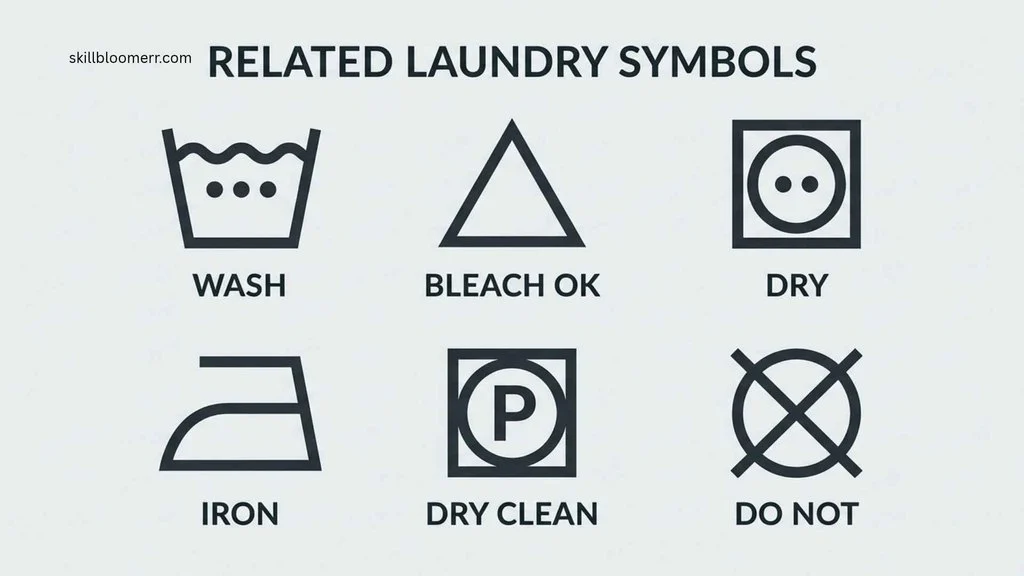
Bleach Symbol
The triangle symbol explains whether bleach can safely be used.
- Empty triangle = bleach allowed
- Crossed triangle = no bleach
- Lines inside triangle = limited bleach types
Drying Symbol
The square symbol explains safe drying methods.
It may indicate:
- Tumble drying
- Air drying
- Flat drying
- Hanging methods
Ironing Symbol
The iron symbol explains how much heat a fabric can handle.
Dry Cleaning Symbol
The circle symbol provides instructions for professional cleaning services.
Frequently Asked Questions
What are washing symbols and meaning on clothing labels?
Washing symbols and meaning refer to the small icons found on garment labels that explain how clothing should be washed, dried, ironed, bleached, or professionally cleaned. They help consumers choose safe laundry methods and prevent damage such as shrinking, fading, or fabric weakening.
Why are washing symbols important?
Washing symbols are important because they provide manufacturer-approved care instructions. Following these symbols helps maintain clothing quality, protects delicate materials, saves money, and increases the lifespan of garments.
What does a tub symbol mean on laundry labels?
A tub symbol means the garment can be washed with water. Numbers or dots inside the symbol show the maximum recommended washing temperature, while lines underneath indicate gentle or special washing cycles.
What does a crossed-out washing symbol mean?
A crossed-out washing symbol means that the specific cleaning method should not be used. For example, a crossed-out washing tub means the garment should not be washed with water and may require another cleaning method.
What does the hand wash symbol mean?
The hand wash symbol shows that the garment needs gentle cleaning by hand instead of a regular washing machine cycle. It is commonly used for delicate fabrics such as wool, silk, and certain specialty materials.
Are laundry symbols the same worldwide?
Many laundry symbols are internationally recognized, but some regional differences exist. Countries may follow different labeling standards while using similar designs to communicate garment care instructions.
Can I ignore clothing care symbols?
Ignoring care symbols can damage clothing. Incorrect washing temperatures, drying methods, or cleaning products may cause shrinking, color loss, stretching, or permanent fabric damage.
What do dots mean in washing symbols?
Dots indicate heat levels. More dots usually mean higher temperatures are allowed. This system helps consumers understand safe temperature limits for washing, drying, and ironing.
Where can I learn more about textile care standards?
Reliable information about textile labeling can be found through organizations such as the Federal Trade Commission (FTC), International Organization for Standardization (ISO), and textile industry resources.
Key Takeaways
- Washing symbols explain how to care for clothing safely.
- They cover washing, drying, ironing, bleaching, and professional cleaning.
- The symbols create a universal language for garment care.
- Temperature limits are shown through numbers or dots.
- Crossed symbols mean a cleaning method should be avoided.
- Following care labels helps clothing last longer.
- Laundry symbols are based on textile science and manufacturing standards.
- Understanding these icons prevents common laundry mistakes.
Conclusion
Washing symbols and meaning provide a simple way to understand how clothing should be cared for. These small icons represent important information about fabric protection, cleaning methods, temperature limits, and maintenance requirements.
By learning common laundry symbols, anyone can make better decisions when washing clothes, caring for household textiles, and protecting valuable garments. Whether you are handling everyday clothing or delicate fabrics, understanding these symbols helps preserve quality and extend the life of your items.

I’m Ethan Calloway, an English writer and lifelong learner who enjoys turning complex ideas into clear, practical content. At SkillBloomerr, I focus on useful topics that help readers build knowledge, improve their skills, and feel more confident in everyday learning. I believe good writing should be simple, engaging, and genuinely helpful.
Books: The Everyday Learning Guide and Build Better Skills
 Olivia Hartwell