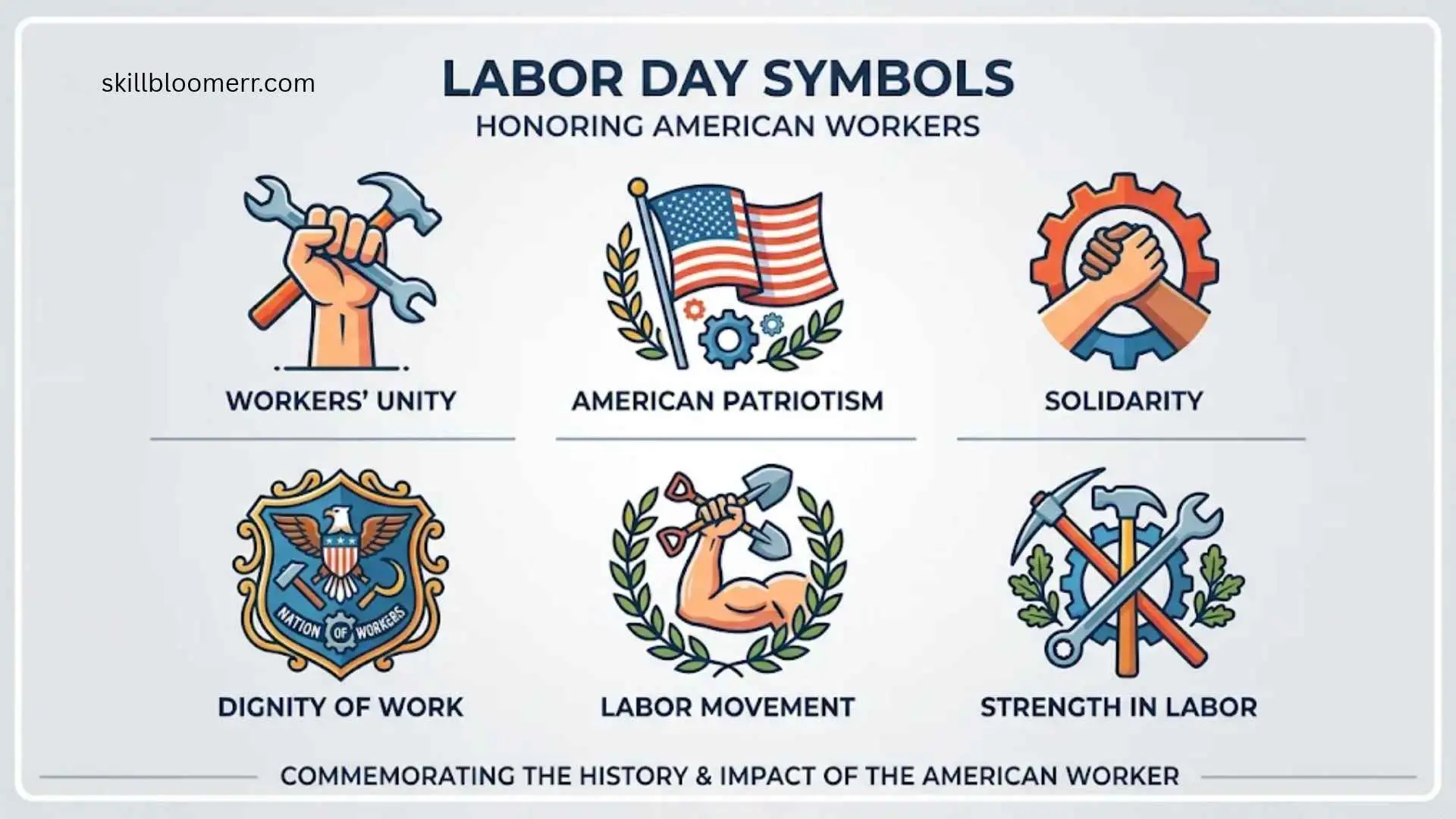
Labor Day symbols represent the history, achievements, and values of workers who helped shape modern society. These symbols appear during Labor Day celebrations, parades, posters, workplace events, and educational materials across the United States.
From the raised fist and worker tools to the American flag and the Labor Day parade tradition, each symbol carries a deeper message about workers’ rights, unity, fairness, and the contributions of labor movements.
Understanding these symbols helps explain why Labor Day is more than just a holiday.
This guide explores labor day symbols, their meanings, origins, cultural importance, and how they continue to represent the relationship between workers, communities, and social progress.
Quick Meaning of Labor Day Symbols
Labor Day symbols are visual representations of workers’ contributions, labor rights, unity, and the history of the American labor movement. Common symbols include hands, tools, factories, gears, flags, and worker imagery. They honor the efforts of employees and the struggles that led to better working conditions.
Labor Day Symbols Overview Table
| Symbol Name | Primary Meaning | Category | Origin | Culture | First Known Use | Common Usage | Modern Meaning | Related Symbols |
| Worker’s Hand | Labor, teamwork, contribution | Human Symbol | Labor movements | American labor culture | 19th century | Posters, campaigns, events | Strength and cooperation | Raised fist, handshake |
| Raised Fist | Unity and workers’ rights | Social Symbol | Labor activism | Global movements | 19th–20th century | Protests, artwork, signs | Solidarity and collective action | Equality symbols |
| Hammer and Tools | Skilled work and craftsmanship | Occupational Symbol | Industrial societies | Working communities | Ancient tool traditions | Labor posters, logos | Value of skilled workers | Gear, wrench |
| Gear/Cog | Industry and production | Industrial Symbol | Mechanical engineering | Manufacturing culture | Industrial Revolution era | Factory imagery | Progress and innovation | Factory symbol |
| American Flag | National identity and civic pride | National Symbol | United States history | American culture | 18th century | Parades and ceremonies | Freedom and shared values | Eagle symbol |
| Factory | Industry and employment | Economic Symbol | Industrial Revolution | Working-class history | 18th century onward | Education and media | Economic contribution | Gear symbol |
| Worker Silhouette | Human contribution | Representation Symbol | Modern design | Global culture | 20th century | Awareness campaigns | Importance of every worker | Human figure |
| Handshake | Cooperation and agreement | Social Symbol | Ancient traditions | Many cultures | Ancient history | Workplace events | Partnership and respect | Helping hands |
What Do Labor Day Symbols Mean?
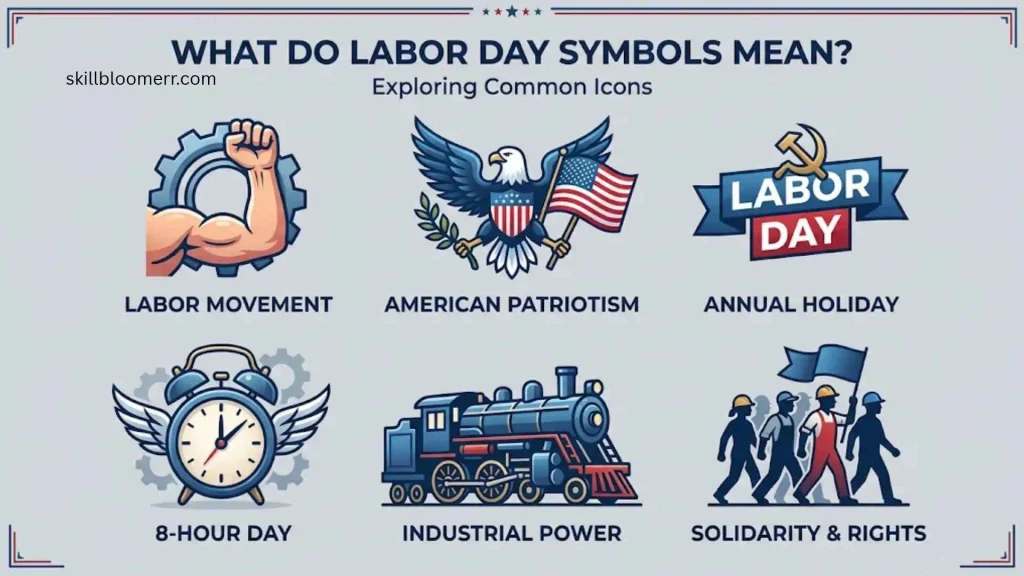
Labor Day symbols represent the importance of workers and the role labor has played in building communities, industries, and economies. They remind people that progress often comes from cooperation between individuals who contribute their skills and effort.
These symbols are not limited to one profession. They represent factory workers, teachers, healthcare professionals, farmers, construction workers, office employees, service workers, and many others who support society.
The Main Ideas Behind Labor Day Symbols
Most Labor Day symbols communicate several important ideas:
- Hard work: Recognizing the effort people put into their jobs.
- Unity: Showing that workers can achieve change when they work together.
- Fairness: Representing the struggle for safe workplaces and fair treatment.
- Progress: Highlighting how labor contributes to economic and social development.
- Respect: Honoring the value of every type of work.
History and Origin of Labor Day Symbols
Labor Day symbols developed alongside the growth of organized labor movements in the 19th century. During the Industrial Revolution, many workers faced long hours, unsafe conditions, and low wages. Labor organizations began using powerful images to communicate their demands and unite communities.
The first Labor Day celebrations in the United States emerged in the late 19th century. Workers organized parades, speeches, and gatherings to recognize the achievements of labor movements. These events helped popularize images connected with workers, such as tools, hands, and groups of people marching together.
The Evolution of Labor Movement Imagery
Early labor symbols focused mainly on physical work and industrial occupations. Images of hammers, factories, and workers wearing protective clothing reflected the industrial economy of the time.
Over the years, Labor Day symbols expanded to include a wider range of workers. Modern imagery often emphasizes diversity, teamwork, technology, and the idea that all professions contribute to society.
Symbolism and Interpretation of Labor Day Symbols
Labor Day symbols carry different meanings depending on their design and context. A symbol used in a parade may communicate unity, while the same image in a workplace campaign may represent appreciation.
Traditional Meanings
Traditional interpretations include:
- Hands: Human effort, cooperation, and productivity.
- Tools: Skill, craftsmanship, and professional ability.
- Gears: Industry, machinery, and economic growth.
- Workers standing together: Community and solidarity.
- Flags: National pride and shared responsibility.
Modern Meanings
Today, Labor Day symbols often represent:
- Workplace equality
- Employee recognition
- Professional achievement
- Economic participation
- Collaboration between workers and organizations
Psychological Interpretation
Symbols connected with labor often create feelings of pride, belonging, and respect. Images of hands or groups of people can remind viewers that individual efforts contribute to larger achievements.
Cultural Significance of Labor Day Symbols
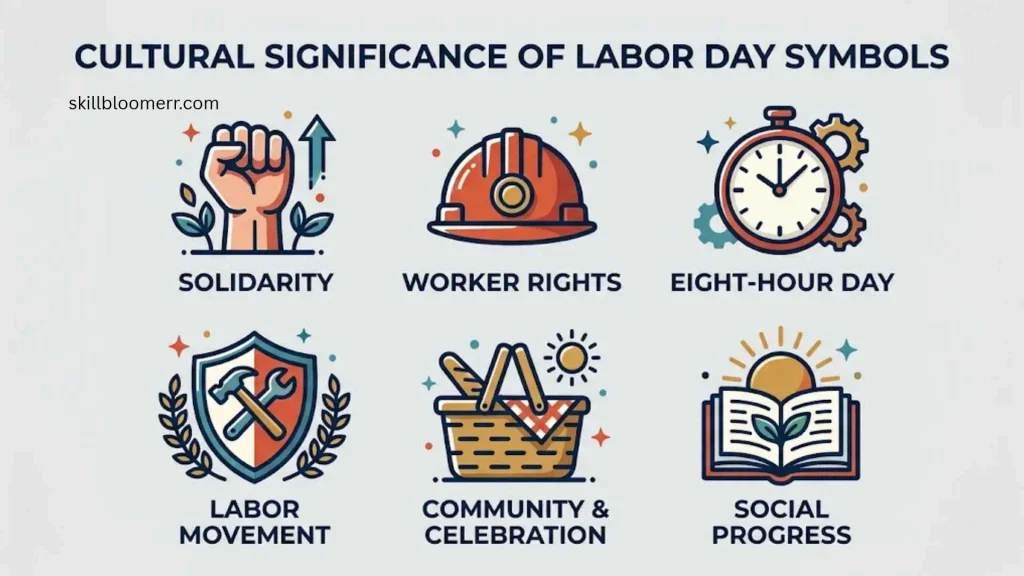
Labor Day symbols have strong cultural importance in the United States because the holiday recognizes the relationship between workers and national development.
Different communities may emphasize different symbols depending on their history and experiences.
American Labor Culture
In the United States, Labor Day imagery commonly focuses on:
- Workers’ achievements
- Union history
- Workplace improvements
- Community celebrations
- Appreciation for employees
Global Labor Connections
Although Labor Day traditions differ worldwide, many countries recognize workers through similar symbols. Hands, tools, and unity imagery appear in international labor celebrations because they represent universal ideas about effort and cooperation.
Where Labor Day Symbols Are Used
Labor Day symbols appear in many forms, including:
Parades and Public Events
Labor Day parades often feature banners, flags, signs, and artwork showing workers and community values.
Educational Materials
Schools and history resources use labor symbols to explain:
- The labor movement
- Workers’ rights
- Industrial history
- Social changes
Workplace Recognition
Companies may use Labor Day imagery in messages celebrating employees and acknowledging their contributions.
Posters and Digital Media
Modern Labor Day graphics frequently use:
- Hands
- Tools
- Gears
- Worker illustrations
- Patriotic colors
These designs help communicate appreciation quickly.
Common Variations of Labor Day Symbols
Labor Day symbols have changed over time and vary by region, organization, and purpose.
Traditional Industrial Designs
Older designs often include:
- Factories
- Steel tools
- Machinery
- Construction imagery
These reflect the industrial roots of labor history.
Modern Workplace Designs
Contemporary designs may include:
- Diverse groups of workers
- Digital technology symbols
- Office environments
- Healthcare imagery
- Service industry representations
These reflect today’s broader workforce.
Regional Differences
Different regions may highlight industries important to their communities. For example:
- Manufacturing areas may use factory imagery.
- Agricultural communities may use farming tools.
- Coastal regions may include maritime work symbols.
Common Misconceptions About Labor Day Symbols
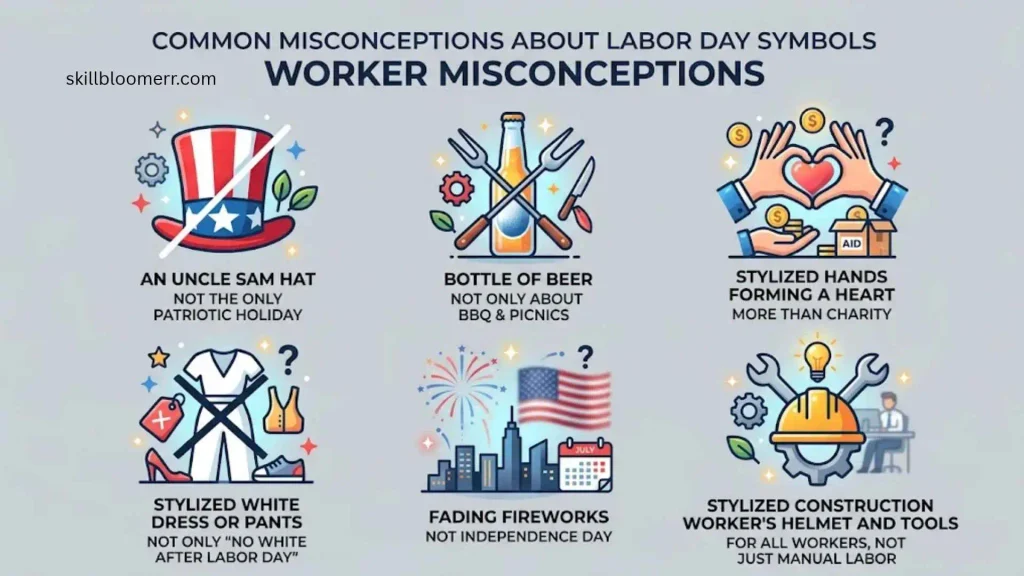
Labor Day Symbols Only Represent Factory Workers
This is a common misunderstanding. Modern Labor Day symbols represent all workers, including professionals, service employees, educators, healthcare workers, and independent workers.
The Raised Fist Always Means the Same Thing
The raised fist is used by many social movements. While it can represent labor solidarity, its meaning depends on the organization and context where it appears.
Labor Day Symbols Are Only Political
Many labor symbols have historical connections to social movements, but they are also used for appreciation, education, and community celebrations.
Tools Are the Only Important Labor Symbols
Tools are common because of industrial history, but symbols like hands, teamwork images, and flags are equally important.
Interesting Facts About Labor Day Symbols
- Hands are among the oldest labor symbols.
Hands represent human effort because almost every form of work involves skill, movement, and creativity. - The gear became popular during the Industrial Revolution.
The cogwheel represented machines, factories, and the connection between workers and industry. - Labor symbols changed with technology.
Modern workers may be represented by computers, digital tools, and communication networks instead of only traditional tools. - Parades helped spread labor imagery.
Early Labor Day celebrations used public displays to unite workers and communicate shared goals. - Many labor symbols are internationally recognized.
Images like hands, tools, and groups of workers appear in labor celebrations around the world. - The handshake represents cooperation.
Unlike symbols focused on struggle, the handshake emphasizes partnership and agreement. - Labor symbols appear outside Labor Day.
They are also used for workplace appreciation events, employee campaigns, and labor history education. - Colors influence labor symbolism.
Red is often associated with labor movements because of its historical connection with workers’ organizations, although meanings vary. - Worker symbols have expanded beyond physical labor.
Modern interpretations recognize mental, creative, and service-based professions. - Labor imagery connects history with the present.
These symbols remind people that workplace conditions today developed through historical efforts.
Related Symbols to Labor Day Symbols
Raised Fist Symbol
The raised fist represents unity, resistance, and collective action. In labor contexts, it often symbolizes workers joining together for common goals.
Gear Symbol
The gear represents industry, machinery, engineering, and production. It is commonly associated with manufacturing and technical work.
Handshake Symbol
The handshake represents cooperation, agreement, and professional relationships. It focuses more on partnership than struggle.
American Flag Symbol
The American flag represents national identity and is often included in Labor Day celebrations to connect workers’ contributions with civic pride.
Hammer and Sickle Symbol
The hammer and sickle have historical connections to labor movements and political ideologies, but their meanings are different from general Labor Day imagery.
Frequently Asked Questions
What are the most common Labor Day symbols?
The most common Labor Day symbols include hands, tools, gears, factories, workers standing together, American flags, and raised fists. These symbols represent labor, teamwork, workers’ rights, and the historical contributions of employees.
Why are hands used as a Labor Day symbol?
Hands symbolize human effort, skill, and cooperation. Since nearly every occupation depends on human ability and action, hands became a powerful representation of the value workers bring to society.
Does the raised fist represent Labor Day?
The raised fist is often connected with labor movements because it represents unity and collective strength. However, its meaning can vary depending on the group, country, or situation where it is displayed.
When did Labor Day symbols become popular?
Labor Day symbols became widely recognized during the late 19th and early 20th centuries as organized labor movements grew in the United States. Posters, parades, and public demonstrations helped spread these images.
Are Labor Day symbols only used in America?
No. While Labor Day has strong American roots, many labor symbols are used worldwide. Images representing workers, unity, and fairness appear in labor celebrations across many countries.
What does the gear symbol mean on Labor Day?
The gear represents industry, manufacturing, technology, and productivity. It reflects the important relationship between workers, machines, and economic development.
Are Labor Day symbols related to unions?
Many Labor Day symbols have connections to union history because labor organizations played a major role in improving workplace conditions. However, these symbols can also represent workers generally.
Why are tools shown in Labor Day artwork?
Tools represent skill, craftsmanship, and the physical contributions of workers. They became especially common during periods when manufacturing and industrial jobs shaped the economy.
How are Labor Day symbols used today?
Today, Labor Day symbols appear in advertisements, social media graphics, workplace messages, educational resources, and community events to recognize workers and their achievements.
What is the difference between Labor Day symbols and worker symbols?
Labor Day symbols specifically connect to the holiday celebrating workers, while worker symbols have broader meanings related to jobs, professions, and human effort throughout the year.
Key Takeaways
- Labor Day symbols represent workers, unity, achievement, and social progress.
- Hands, tools, gears, factories, and flags are among the most recognized symbols.
- These symbols developed from the history of labor movements in the 19th century.
- Modern interpretations include all types of workers, not only industrial employees.
- Labor symbols communicate ideas of respect, cooperation, and contribution.
- Their meanings can change depending on cultural and historical context.
Conclusion
Labor Day symbols tell the story of workers and their lasting impact on society. From simple images of hands and tools to modern designs showing diverse workplaces, these symbols connect the past with the present.
Understanding labor day symbols helps explain why Labor Day is more than a day away from work. It is a reminder of the effort, cooperation, and achievements that continue to shape communities and economies around the world.

I’m Olivia Hartwell, a writer passionate about learning, personal growth, and practical education. I enjoy researching new ideas and sharing them in a way that feels easy to understand and useful. Through my work with SkillBloomerr, I aim to give readers reliable information they can apply in real life.
Books: Small Steps, Big Growth and The Curious Mind