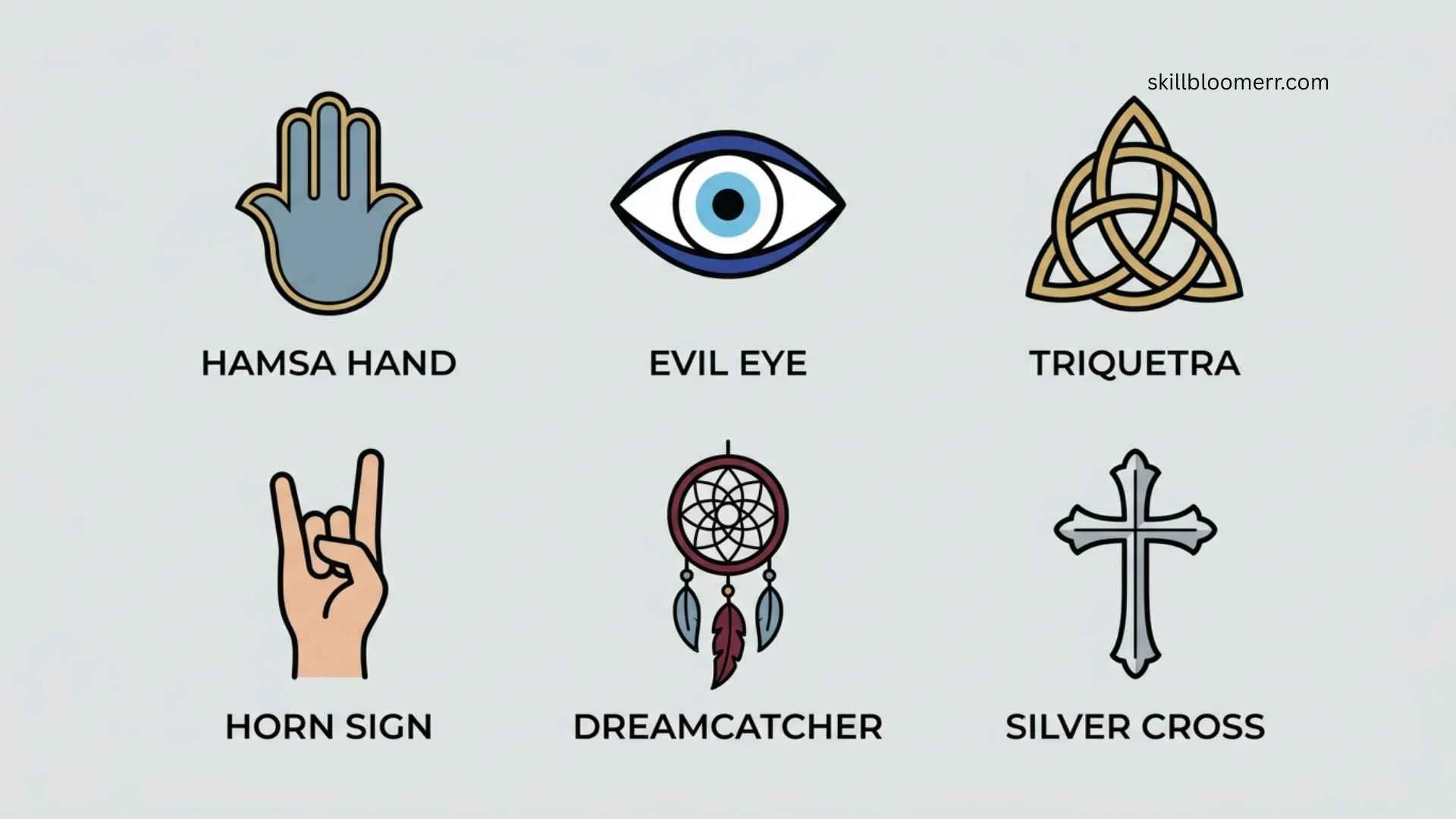
Protection from evil has been a universal human concern throughout history. Across civilizations, people have created symbols, amulets, sacred signs, and protective motifs to guard against misfortune, harmful intentions, illness, and unseen spiritual dangers. Today, these symbols of protection from evil appear in jewelry, architecture, religious art, tattoos, home décor, literature, and popular culture.
While many people view them as expressions of faith or cultural identity, others appreciate them as reminders of hope, resilience, and inner strength rather than objects with supernatural power.
Whether carved above a doorway, worn around the neck, embroidered into clothing, or displayed inside a home, protective symbols often represent the desire for safety, peace, and divine guidance. Understanding their origins helps distinguish authentic historical meanings from modern myths and internet misconceptions.
Quick Meaning
Symbols of protection from evil are cultural, religious, or spiritual signs believed to guard individuals, families, places, or communities from harm, negative influences, bad luck, or malevolent forces. Their meanings differ across traditions, but most represent safety, divine protection, purification, courage, wisdom, or blessings rather than magical guarantees.
Symbol Overview Table
| Field | Information |
| Symbol Name | Symbols of Protection from Evil |
| Primary Meaning | Protection, safety, blessing, spiritual defense |
| Category | Religious, Spiritual, Cultural, Mythological |
| Origins | Ancient civilizations worldwide |
| Common Cultures | Egyptian, Greek, Roman, Celtic, Norse, Middle Eastern, Hindu, Buddhist, Jewish, Christian, Islamic, Indigenous traditions |
| Earliest Known Use | More than 5,000 years ago in ancient civilizations |
| Traditional Uses | Amulets, architecture, rituals, jewelry, manuscripts, clothing |
| Modern Uses | Jewelry, tattoos, home décor, art, meditation, fashion |
| Universal Themes | Hope, resilience, divine guidance, protection, courage |
| Unicode | Varies by individual symbol |
| Emoji Equivalent | 🧿 ✝️ ☸️ ☯️ ☪️ ✡️ (for applicable symbols) |
| Related Symbols | Eye of Horus, Hamsa, Cross, Nazar, Pentacle, Triquetra, Om, Endless Knot, Dreamcatcher, Thor’s Hammer |
What Do Symbols of Protection From Evil Mean?
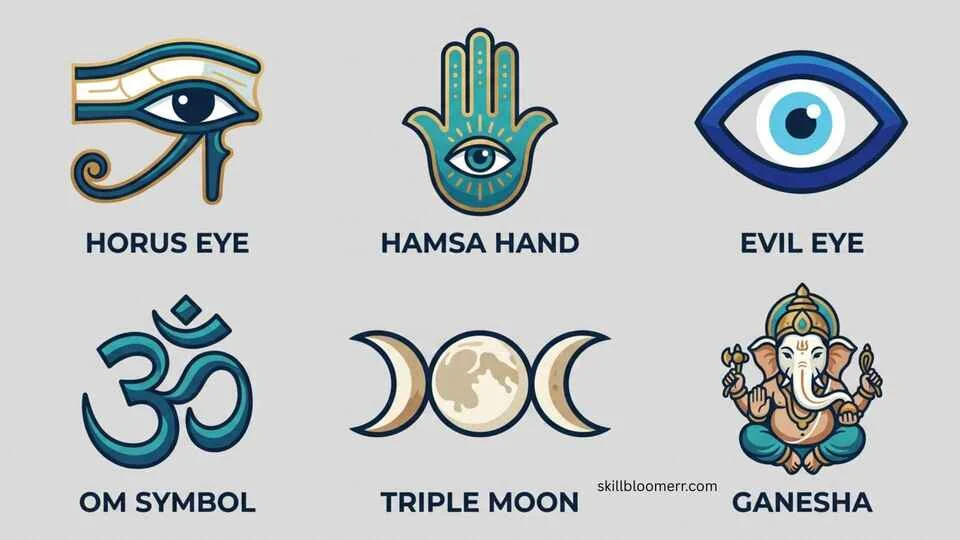
At their core, symbols of protection from evil express humanity’s desire to feel secure in an unpredictable world. They are visual representations of beliefs about safety, divine care, justice, healing, and spiritual balance.
Although different cultures developed these symbols independently, many share similar themes.
Protection Against Harm
The most common meaning is defense against physical, emotional, or spiritual harm.
Historically, people feared more than visible dangers. Disease, natural disasters, crop failures, wars, and unexplained illnesses were often attributed to supernatural causes. Protective symbols became reminders that higher powers, ancestors, or sacred forces watched over individuals and communities.
Rather than functioning as weapons, these symbols generally served as signs of trust, faith, or spiritual connection.
Warding Off Negative Energy
Many traditions teach that jealousy, envy, curses, or malicious intentions can negatively affect a person’s well-being.
Protective symbols are often believed to:
- Deflect harmful intentions
- Reflect negativity away
- Encourage positive energy
- Promote emotional stability
- Reinforce spiritual confidence
For example, the blue eye amulet commonly known as the “evil eye charm” is intended to protect against harmful envy rather than causing harm to others.
Divine Presence
Many protective symbols are directly connected to a deity or sacred teaching.
Examples include:
- The Christian Cross symbolizes Christ’s victory over sin and death.
- The Star of David represents Jewish identity and divine relationship.
- Om represents ultimate spiritual reality in Hindu traditions.
- Buddhist symbols emphasize wisdom overcoming suffering.
In these traditions, the symbol itself is not considered powerful on its own. Instead, its significance comes from what it represents.
Inner Strength
Modern interpretations increasingly focus on psychological meaning rather than supernatural protection.
Many people wear protective symbols to remind themselves to:
- Stay hopeful
- Face adversity
- Maintain faith
- Practice mindfulness
- Remember family traditions
- Feel emotionally grounded
This symbolic use reflects personal identity more than literal belief.
Community and Identity
Protective symbols often identify membership in a cultural or religious community.
For example:
- Wearing a cross may express Christian faith.
- Displaying a mezuzah identifies a Jewish household.
- Hanging certain protective motifs at a doorway may preserve local traditions.
In these cases, protection is closely linked with belonging and shared belief.
History and Origin
The use of protective symbols stretches back thousands of years, making it one of humanity’s oldest artistic and spiritual traditions.
Rather than originating from a single civilization, protective symbols emerged independently across the world as societies sought ways to explain danger and express hope.
Prehistoric Beginnings
Long before written history, humans decorated caves, carved stones, painted bodies, and created personal ornaments.
Archaeologists believe some of these markings may have served ritual purposes, including protection during hunting, childbirth, or seasonal ceremonies.
Although the exact meanings remain uncertain, evidence suggests symbolic thinking developed tens of thousands of years ago.
Simple geometric designs such as circles, spirals, zigzags, and concentric patterns likely carried ritual significance long before organized religions appeared.
Ancient Egypt
Ancient Egypt produced some of history’s most recognizable protective symbols.
Egyptians believed life continued after death, making spiritual protection essential.
Protective symbols appeared on:
- Tomb walls
- Jewelry
- Sarcophagi
- Temple entrances
- Religious manuscripts
Among the best-known examples are:
- Eye of Horus
- Ankh
- Djed Pillar
- Tyet Knot
Each represented different forms of protection, healing, stability, or eternal life.
Priests also inscribed protective formulas alongside these symbols to invoke divine guardianship.
Mesopotamia
In ancient Mesopotamia, protective symbols were often combined with written prayers and divine imagery.
Clay tablets describe rituals intended to protect homes from evil spirits.
People buried protective figurines beneath buildings, placed guardian statues near entrances, and wore engraved seals representing powerful gods.
Winged protective beings frequently appeared in palace architecture as guardians of kings and cities.
Ancient Greece and Rome
Greek and Roman cultures blended mythology, philosophy, and religion.
Protective symbols appeared on:
- Shields
- Coins
- Household shrines
- Temples
- Jewelry
The Gorgoneion—an image of Medusa’s head—was believed to frighten away danger. Rather than honoring Medusa herself, the image functioned as an apotropaic symbol, meaning it was intended to turn away evil.
Romans also carried amulets for children, soldiers, and travelers.
Many households kept protective figures dedicated to family guardian spirits.
Celtic Europe
The Celts developed intricate knotwork that symbolized continuity, eternity, and interconnectedness.
Unlike decorative patterns with obvious beginnings and endings, endless knots represented life without interruption.
Although historians debate whether every knot carried protective meaning, many later Christian and folk traditions associated Celtic knot designs with divine safeguarding and eternal life.
The Triquetra eventually became one of the best-known protective motifs linked to both Celtic heritage and Christian symbolism.
Norse Traditions
Scandinavian societies valued symbols connected with strength, courage, and divine assistance.
Thor’s Hammer (Mjölnir) became a symbol of protection because Thor defended both gods and humanity from destructive forces.
Warriors sometimes wore miniature hammer pendants.
Other Norse symbols—including certain runes and the Vegvísir in later Icelandic manuscripts—have become associated with guidance and protection, though not all are documented in Viking Age sources. Distinguishing medieval evidence from modern interpretation is important.
South Asia
In Hinduism, Buddhism, and Jainism, many sacred symbols emphasize spiritual protection through wisdom rather than combat.
Examples include:
- Om
- Lotus
- Dharma Wheel
- Endless Knot
- Swastika (an ancient symbol of well-being and auspiciousness in South Asia, distinct from its later misuse by the Nazi regime)
These symbols generally represent harmony, enlightenment, prosperity, and divine order.
Middle Eastern Traditions
Throughout the Middle East, protective motifs became deeply connected with family life.
The Hamsa hand eventually appeared in Jewish, Islamic, Christian, and regional folk traditions.
Likewise, blue eye amulets became especially common in parts of Türkiye, Greece, and neighboring regions as symbols intended to guard against the “evil eye,” a widespread belief that envy or excessive admiration could bring misfortune.
These traditions demonstrate how symbols often travel across cultures, adapting new meanings while preserving their original protective purpose.
Medieval and Early Modern Europe
During the Middle Ages, protective symbols were frequently integrated into churches, homes, manuscripts, and everyday objects.
People carved crosses into wooden beams, inscribed protective prayers in books, and placed symbolic marks near entrances to seek divine blessing. Folklore also introduced house marks, protective circles, and geometric carvings intended to guard families from perceived supernatural threats.
As literacy spread, written sacred texts increasingly became protective objects alongside visual symbols, reflecting the belief that faith, prayer, and sacred words offered stronger protection than the physical sign alone.
Symbolism and Interpretation
Symbols of protection from evil carry meanings that extend beyond their physical appearance. While each tradition has its own beliefs, many protective symbols communicate similar ideas about safety, hope, spiritual resilience, and the triumph of good over harmful influences. Their interpretations have evolved over time, shaped by religion, folklore, philosophy, and modern culture.
Traditional Symbolism
Traditionally, protective symbols were closely connected to a community’s worldview. People believed the visible symbol represented an invisible reality, such as divine care, ancestral guidance, cosmic balance, or spiritual vigilance.
Common traditional meanings include:
- Divine protection from danger
- Blessings for health and prosperity
- Protection during travel
- Safety for newborns and families
- Victory of good over evil
- Spiritual purity
- Wisdom overcoming ignorance
- Harmony between humanity and the divine
Many ancient societies also believed that displaying a protective symbol at the entrance of a home or place of worship created a sacred boundary between the outside world and the protected space within.
Modern Symbolism
Today, many people wear protective symbols without believing they possess supernatural powers. Instead, the symbols often represent personal values, cultural identity, or emotional encouragement.
Modern meanings frequently include:
- Inner strength during difficult times
- Emotional resilience
- Hope for the future
- Connection with family traditions
- Cultural pride
- Spiritual mindfulness
- Peace and positivity
For example, someone may wear a Hamsa pendant as a reminder to remain compassionate, while another person may wear a cross as an expression of Christian faith. In both cases, the symbol’s importance comes from the meaning the wearer associates with it.
Positive Symbolism
Across cultures, protective symbols commonly represent positive qualities such as:
- Courage
- Faith
- Wisdom
- Justice
- Healing
- Compassion
- Protection
- Renewal
- Good fortune
- Perseverance
Many symbols also remind people that protection is not merely about avoiding harm but about cultivating virtues that help individuals face life’s challenges with confidence.
Negative Symbolism and Misuse
Although protective symbols are generally associated with positive meanings, misunderstandings can lead to negative interpretations.
Examples include:
- Treating a cultural symbol as a fashion trend without understanding its significance.
- Assuming all protective symbols belong to one religion.
- Believing that every ancient symbol has magical powers.
- Confusing symbols from different historical periods.
Some symbols have also been misappropriated or altered in ways that distort their original meanings. Understanding historical context helps avoid these misconceptions.
Psychological Interpretation
From a psychological perspective, symbols can influence thoughts and emotions by serving as meaningful reminders.
Researchers in psychology and anthropology have long recognized that symbols can:
- Strengthen personal identity
- Reinforce cultural belonging
- Reduce anxiety through familiar rituals
- Encourage confidence during stressful situations
- Promote mindfulness and intentional living
Importantly, this psychological effect should not be confused with scientific proof of supernatural protection. The emotional value of a symbol depends on personal belief, cultural context, and individual experience.
Cultural Significance
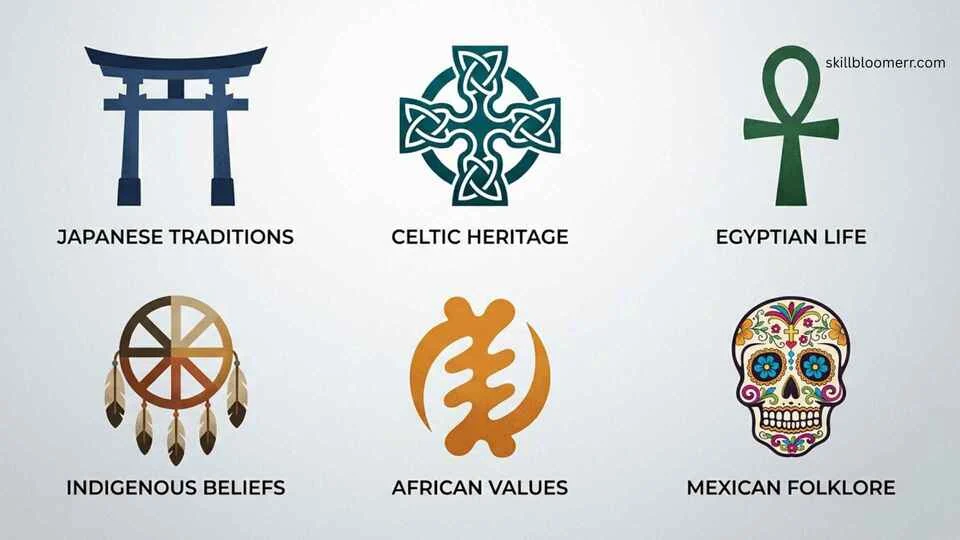
Nearly every civilization has developed its own symbols of protection from evil. While their forms differ, the underlying desire for safety and well-being is remarkably similar across cultures.
Ancient Egyptian Culture
Ancient Egyptians believed that life was filled with both visible and invisible dangers. Protective symbols played an essential role in daily life and the afterlife.
Common examples include:
- Eye of Horus for healing and protection
- Ankh for life
- Djed Pillar for stability
- Scarab beetle for renewal
These symbols appeared on temples, jewelry, tombs, and sacred texts.
Greek and Roman Traditions
The ancient Greeks used frightening images to frighten away evil.
One famous example is the Gorgoneion, depicting the head of Medusa. It was placed on shields, buildings, and armor to repel danger rather than celebrate monsters.
Romans expanded these practices by wearing amulets, decorating homes with guardian figures, and invoking household deities for protection.
Jewish Traditions
In Judaism, protection is understood primarily as coming from God rather than from objects themselves.
Protective traditions include:
- The Mezuzah placed on doorposts
- The Star of David as a symbol of Jewish identity
- Psalms and prayers for divine protection
Some Jewish communities also use the Hamsa as a cultural symbol, although interpretations vary.
Christian Traditions
Christianity teaches that God’s protection comes through faith rather than through magical objects.
Common protective symbols include:
- The Cross
- The Chi-Rho
- The Ichthys (fish symbol)
- Images of guardian angels
- Sacred medals in some Christian traditions
These symbols remind believers of Christ’s sacrifice, hope, redemption, and God’s presence.
Islamic Traditions
Islam emphasizes that ultimate protection belongs to Allah alone.
Muslims commonly seek protection through:
- Prayer (du’a)
- Recitation of the Qur’an
- Specific verses such as Ayat al-Kursi
- Trust in Allah (tawakkul)
In some regions, cultural traditions also include symbols such as the Hamsa, though scholars differ on their religious significance. It is important to distinguish cultural customs from core Islamic teachings.
Hindu Traditions
Hinduism contains numerous sacred symbols associated with blessing and spiritual well-being.
Examples include:
- Om
- Lotus
- Swastika (ancient auspicious symbol)
- Trishula
- Tilak markings
These symbols emphasize harmony, divine presence, prosperity, and spiritual awakening rather than protection through magic.
Buddhist Traditions
Buddhist symbols focus less on defending against evil beings and more on overcoming suffering, ignorance, and attachment.
Important symbols include:
- Dharma Wheel
- Endless Knot
- Lotus
- Parasol
- Victory Banner
Protection comes through wisdom, ethical living, and enlightenment.
Indigenous Traditions
Many Indigenous cultures around the world developed protective symbols connected to nature, ancestors, and community.
Examples include:
- Dreamcatchers among the Ojibwe people
- Protective masks
- Sacred animal motifs
- Clan symbols
- Medicine wheels
These symbols often reflect relationships between humans, the natural world, and spiritual traditions passed down through generations.
Religious or Spiritual Meaning
Protective symbols often derive their significance from religious teachings rather than the physical object itself. Most major religions emphasize that genuine protection comes from God, the divine, or spiritual practice—not from the material symbol alone.
Protection Through Faith
In many religious traditions, symbols serve as visual reminders of faith.
They encourage believers to:
- Pray regularly
- Live ethically
- Trust in divine guidance
- Remember sacred teachings
- Strengthen spiritual discipline
Without faith or sincere intention, the symbol itself is generally not considered powerful.
Sacred Objects Versus Sacred Meanings
Religious scholars often distinguish between:
Sacred object: A physical item used during worship.
Sacred meaning: The spiritual truth represented by that object.
For example:
- A cross represents Christ’s sacrifice.
- A mezuzah reminds Jewish families of God’s commandments.
- Prayer beads assist meditation and devotion.
- Om represents ultimate reality in Hindu philosophy.
The meaning is considered more important than the material object.
Pilgrimage and Blessings
Many believers bring home religious items after visiting sacred places.
These may include:
- Crosses
- Icons
- Prayer cards
- Blessed medals
- Holy water containers
- Sacred cloth
Their value lies in the faith and memories they represent rather than in any independent supernatural power.
Spiritual Protection Across Traditions
Despite theological differences, many religions encourage similar practices:
- Prayer
- Meditation
- Charity
- Ethical living
- Compassion
- Forgiveness
- Community worship
These practices are consistently presented as stronger forms of spiritual protection than reliance on symbols alone.
Scientific or Technical Meaning
Unlike mathematical or engineering symbols, most protective symbols do not have scientific definitions. However, they have been studied extensively in several academic disciplines.
Anthropology
Anthropologists examine protective symbols as expressions of culture.
They study:
- Why societies create symbols
- How symbols evolve
- How traditions spread between civilizations
- The role of symbols in identity and ritual
Archaeology
Archaeologists use protective symbols to interpret ancient artifacts.
Finding a symbol on pottery, jewelry, or architecture can reveal information about:
- Religious beliefs
- Trade networks
- Burial customs
- Social organization
Psychology
Psychologists recognize that meaningful symbols can influence emotions and behavior.
A protective symbol may help individuals:
- Feel calmer
- Remember personal values
- Build confidence
- Reduce stress through familiar rituals
These psychological effects are well documented, although they do not demonstrate supernatural protection.
Art History
Art historians analyze protective symbols by examining:
- Design evolution
- Regional styles
- Religious influences
- Materials used
- Symbolic composition
Their work helps distinguish authentic historical symbols from modern reinterpretations.
Where the Symbols Are Used
Protective symbols appear in countless settings around the world, reflecting both ancient traditions and modern cultural practices.
Jewelry
One of the most common uses is in personal jewelry.
Examples include:
- Necklaces
- Bracelets
- Rings
- Earrings
- Pendants
People may wear these items to express faith, preserve cultural heritage, or carry a meaningful reminder throughout the day.
Homes and Architecture
Many cultures place protective symbols near entrances or within living spaces.
Common locations include:
- Front doors
- Doorframes
- Gates
- Windows
- Courtyards
- Family altars
Historically, these placements symbolized welcoming blessings while discouraging harmful influences.
Places of Worship
Churches, synagogues, mosques, temples, monasteries, and shrines often incorporate protective symbolism into:
- Stained glass
- Carvings
- Calligraphy
- Sculptures
- Murals
- Sacred furnishings
These designs reinforce religious teachings and create spaces dedicated to worship and reflection.
Clothing and Textiles
Protective motifs are embroidered or woven into:
- Traditional garments
- Wedding attire
- Children’s clothing
- Ceremonial robes
- Blankets
- Shawls
Such decorations often represent blessings for health, prosperity, or family unity.
Literature and Manuscripts
Throughout history, scribes decorated manuscripts with sacred symbols, illuminated initials, and protective prayers.
These additions reflected the belief that wisdom and divine guidance should accompany written knowledge.
Art and Decorative Objects
Artists continue to incorporate protective symbols into:
- Paintings
- Ceramics
- Sculptures
- Wall hangings
- Glasswork
- Contemporary design
In modern contexts, these works often celebrate cultural heritage rather than supernatural beliefs.
Common Variations
Although people often search for a single “symbol of protection from evil,” there is no universal protective symbol recognized by every culture or religion. Instead, civilizations developed their own visual traditions based on local beliefs, sacred texts, myths, and artistic styles. Understanding these variations helps avoid confusing one symbol with another.
Ancient Egyptian Variations
Ancient Egypt produced several protective symbols, each with a distinct purpose.
| Symbol | Traditional Meaning | Common Use |
| Eye of Horus | Healing, protection, restoration | Jewelry, tombs, temples |
| Ankh | Life and eternal existence | Religious art, amulets |
| Djed Pillar | Stability and strength | Temple carvings, funerary objects |
| Tyet (Knot of Isis) | Protection associated with Isis | Burial rituals and amulets |
| Scarab | Renewal and transformation | Seals, jewelry, funerary objects |
Rather than replacing one another, these symbols often appeared together to represent multiple forms of divine protection.
Middle Eastern Variations
Protective symbols across the Middle East evolved through centuries of cultural exchange.
Common examples include:
- Hamsa Hand – Symbolizes blessing, protection, and divine care.
- Nazar Amulet (Blue Eye) – Traditionally associated with protection from the evil eye.
- Protective Calligraphy – Sacred verses displayed in homes and places of worship.
Although these symbols are often grouped together today, they originated in different historical contexts and are interpreted differently across communities.
European Variations
Europe’s protective traditions combine influences from pre-Christian beliefs and later Christian symbolism.
Examples include:
- Celtic knots
- Triquetra
- Christian Cross
- Chi-Rho
- Saint medals
- House marks carved into wooden beams
- Heraldic shields
Each reflects a different historical period and cultural tradition.
Asian Variations
Across Asia, protective symbolism often emphasizes harmony and spiritual balance.
Common symbols include:
- Om
- Endless Knot
- Dharma Wheel
- Lotus
- Parasol
- Guardian lions
- Temple guardians
These symbols generally represent wisdom overcoming suffering rather than physical defense.
Indigenous Variations
Indigenous communities around the world developed unique protective traditions based on local environments and ancestral teachings.
Examples include:
- Dreamcatchers
- Medicine wheels
- Clan emblems
- Animal guardians
- Sacred masks
- Totemic imagery
Their meanings vary greatly between nations and should never be generalized as representing all Indigenous cultures.
Modern Adaptations
Today, designers frequently reinterpret protective symbols in contemporary styles.
Popular adaptations include:
- Minimalist line art
- Geometric tattoos
- Modern jewelry
- Digital illustrations
- Home décor
- Fashion accessories
- Phone cases
- Wall art
While visually appealing, these modern designs may simplify or combine symbols from different traditions. Learning the original meaning before wearing or displaying a symbol demonstrates respect for the culture from which it came.
Common Misconceptions
Because protective symbols appear widely on social media, in fashion, and in popular entertainment, misconceptions are common. Separating historical facts from modern myths leads to a better understanding of their significance.
Misconception 1: Every Protective Symbol Has Magical Powers
Reality: Most religious traditions teach that protection comes from God, spiritual practice, ethical living, or faith—not from the physical object itself. The symbol serves as a reminder of those beliefs rather than functioning as an independent source of supernatural power.
Misconception 2: All Cultures Use the Same Symbol
Reality: Every civilization developed its own protective imagery. A symbol considered sacred in one culture may have little or no significance in another.
Misconception 3: The Evil Eye Symbol Causes Evil
Reality: The blue eye amulet is traditionally intended to guard against harmful envy, not to create or attract evil. Its purpose is protective rather than harmful.
Misconception 4: Ancient Symbols Always Have One Meaning
Reality: Meanings change over time. A symbol may represent different ideas depending on the historical period, region, religion, or artistic context.
Misconception 5: Wearing a Symbol Guarantees Safety
Reality: No reputable religious tradition teaches that simply wearing a symbol guarantees protection from all harm. Most emphasize personal faith, moral conduct, wisdom, or prayer as the true source of spiritual security.
Misconception 6: Every Protective Tattoo Has Ancient Origins
Reality: Many tattoo designs marketed as “ancient protection symbols” are modern artistic creations inspired by historical motifs. Their popularity does not necessarily reflect authentic historical use.
Misconception 7: All Protective Symbols Belong to Religion
Reality: Some symbols are religious, while others come from folklore, mythology, family traditions, or cultural customs. Their meanings should not be automatically treated as religious doctrines.
Misconception 8: Similar Designs Mean the Same Thing
Reality: Two symbols may look alike but represent entirely different ideas. Context, culture, and history determine meaning far more than appearance alone.
Interesting Facts
1. Protective symbols appeared long before written language.
Archaeological discoveries show that humans created symbolic markings thousands of years before formal writing systems developed, suggesting that symbolic communication was one of humanity’s earliest forms of expression.
2. Nearly every civilization developed protective symbols independently.
Ancient Egypt, Mesopotamia, China, Mesoamerica, India, Europe, and Indigenous cultures all created their own traditions without sharing a single universal design.
3. The same symbol can have multiple meanings.
For example, the Eye of Horus represents healing, restoration, protection, royal authority, and completeness depending on its historical context.
4. Architecture often included protective symbolism.
Many historical buildings feature carved symbols above entrances, windows, or gates to express blessings, hospitality, or divine guardianship over the household.
5. Travelers frequently carried protective amulets.
Merchants, sailors, pilgrims, and soldiers often wore symbols during dangerous journeys, reflecting both spiritual belief and emotional reassurance.
6. Protective symbols influenced art and literature.
From medieval illuminated manuscripts to modern fantasy novels and films, artists have long used protective imagery to represent courage, hope, and the struggle between good and evil.
7. Some symbols became global through trade.
Trade routes such as the Silk Road and Mediterranean maritime networks helped spread artistic motifs, allowing protective symbols to travel far beyond their places of origin.
8. Color often enhances symbolic meaning.
Blue, gold, white, red, and green frequently appear in protective traditions. Different cultures associate these colors with qualities such as purity, wisdom, prosperity, healing, or divine favor.
9. Modern psychology recognizes the value of meaningful symbols.
Even without claims of supernatural power, symbols can encourage resilience, reinforce identity, and provide emotional comfort during stressful situations.
10. Respectful use requires cultural understanding.
Learning a symbol’s historical and religious background helps prevent misuse and promotes appreciation for the traditions that created it.
Related Symbols
Many protective symbols share similar themes but differ in origin, meaning, and religious significance.
| Symbol | Primary Meaning | How It Differs |
| Eye of Horus | Healing and protection | Ancient Egyptian symbol linked to Horus |
| Hamsa | Blessing and protection | Common in Middle Eastern and North African traditions |
| Nazar | Protection from the evil eye | Specifically associated with guarding against envy |
| Christian Cross | Salvation and faith | Represents Christ’s sacrifice and resurrection |
| Star of David | Jewish identity and covenant | Religious and cultural symbol rather than a universal protective charm |
| Om | Sacred sound and spiritual unity | Represents ultimate reality in Hindu philosophy |
| Endless Knot | Interconnection and wisdom | Buddhist symbol emphasizing eternal continuity |
| Dreamcatcher | Cultural symbol associated with dreams | Originates from Ojibwe traditions and should be understood within that cultural context |
| Thor’s Hammer (Mjölnir) | Strength and divine protection | Rooted in Norse mythology |
| Triquetra | Unity and eternity | Associated with Celtic art and later Christian symbolism |
Choosing a Symbol Respectfully: A Simple Decision Guide
Question: Why do you want a protective symbol?
⬇️
To express religious faith?
→ Choose a symbol that aligns with your own religious beliefs and understand its spiritual significance.
⬇️
To honor your cultural heritage?
→ Select a symbol connected to your family’s traditions and learn its historical background.
⬇️
For personal inspiration or resilience?
→ Choose a symbol whose meaning genuinely resonates with your values rather than following trends.
⬇️
Planning a tattoo or permanent artwork?
→ Research its history carefully, ensure the design is accurate, and consider consulting knowledgeable cultural or religious sources to avoid unintended meanings.
Best Practices for Using Protective Symbols
- Learn the symbol’s authentic history before displaying or wearing it.
- Respect the beliefs of the culture or religion from which it originates.
- Avoid combining unrelated sacred symbols purely for decoration.
- Distinguish between historical evidence and modern internet folklore.
- Remember that many traditions emphasize faith, ethical living, and compassion over reliance on physical objects.
- When purchasing artwork or jewelry, support artisans and businesses that accurately represent the symbol’s cultural heritage.
Frequently Asked Questions
What are the most common symbols of protection from evil?
The most widely recognized protective symbols include the Eye of Horus, Hamsa Hand, Nazar (evil eye amulet), Christian Cross, Star of David, Om, Endless Knot, Triquetra, Thor’s Hammer (Mjölnir), and Dreamcatcher. Each comes from a different cultural or religious tradition and carries its own unique historical meaning.
Do symbols of protection from evil really work?
Whether protective symbols “work” depends on personal belief and religious tradition. Historically, many communities viewed them as reminders of faith, divine guidance, or cultural identity. There is no scientific evidence that symbols themselves possess supernatural powers, but many people find them emotionally meaningful and spiritually encouraging.
What is the difference between the evil eye and the evil eye symbol?
The evil eye is a belief found in many cultures that envy or malicious attention can bring misfortune. The evil eye symbol, often called the Nazar, is a protective amulet traditionally worn or displayed to guard against that harmful influence. They are not the same thing.
Can anyone wear a protective symbol?
In most cases, yes, but it is important to understand and respect the symbol’s origin and significance. Wearing a sacred symbol only as a fashion accessory without learning its meaning may be considered disrespectful by members of the culture or religion from which it comes.
Which protective symbol is considered the oldest?
No single symbol can be identified as the oldest. Archaeological evidence shows that ancient civilizations—including those of Egypt, Mesopotamia, and prehistoric Europe—used protective markings and amulets thousands of years ago. Several traditions developed independently, making it impossible to credit one universal first symbol.
Are protective symbols always religious?
No. Some symbols are deeply rooted in religion, while others come from folklore, mythology, family customs, or cultural traditions. For example, the Christian Cross has a specific religious meaning, while certain folk amulets developed outside formal religious practice.
Why do people place protective symbols above doors?
Doorways have long been viewed as symbolic boundaries between the outside world and the home. Many cultures placed protective symbols, blessings, or sacred inscriptions above entrances to express hopes for safety, hospitality, and divine protection over everyone entering the household.
Are protective tattoos historically accurate?
Some are, but many modern tattoo designs simplify or combine symbols from different cultures. Before choosing a tattoo, research its authentic history and traditional meaning. Understanding the original context helps avoid spreading misinformation or unintentionally misrepresenting a sacred symbol.
Can different protective symbols be combined?
Artistically, symbols can be combined, but doing so should be approached thoughtfully. Since each symbol has its own cultural, historical, or religious background, combining unrelated sacred symbols without understanding their meanings may unintentionally cause offense or distort their original significance.
Why are protective symbols still popular today?
Protective symbols continue to resonate because they represent timeless human values such as hope, courage, faith, resilience, healing, and belonging. Even for people who do not believe in supernatural protection, these symbols often serve as meaningful reminders of personal beliefs, family traditions, or cultural heritage.
Key Takeaways
- Symbols of protection from evil exist in nearly every civilization and reflect humanity’s universal desire for safety, hope, and spiritual well-being.
- Their meanings vary widely depending on historical, cultural, and religious context.
- Most religious traditions teach that true protection comes from faith, ethical living, prayer, or spiritual practice rather than the physical symbol itself.
- Popular examples include the Eye of Horus, Hamsa Hand, Nazar, Christian Cross, Om, Triquetra, Endless Knot, Dreamcatcher, and Thor’s Hammer.
- Many protective symbols have evolved over centuries and should be understood within their original traditions.
- Modern use often emphasizes cultural identity, personal inspiration, and emotional resilience rather than supernatural power.
- Learning a symbol’s authentic history encourages respectful appreciation and helps avoid common misconceptions.
- Similar-looking symbols can have very different meanings, making historical context essential.
Conclusion
Symbols of protection from evil have accompanied humanity for thousands of years, appearing in temples, homes, jewelry, sacred texts, works of art, and everyday life. Although their designs differ across cultures, they share a common purpose: expressing the hope that goodness, wisdom, and divine guidance can overcome fear and adversity.
From the Eye of Horus in ancient Egypt to the Hamsa of the Middle East, from the Christian Cross to the Buddhist Endless Knot and the Hindu Om, these symbols reveal how different societies have sought comfort, meaning, and spiritual reassurance. They are not interchangeable, nor do they all carry the same beliefs, yet each reflects the values of the people who created and preserved it.
Today, symbols of protection from evil continue to inspire people around the world. Whether worn as jewelry, displayed in a home, incorporated into art, or honored as part of a living faith, their greatest value lies in the stories they tell about human resilience, cultural heritage, and the enduring search for peace, hope, and protection.

 Ethan Calloway
 Nathaniel Brooks