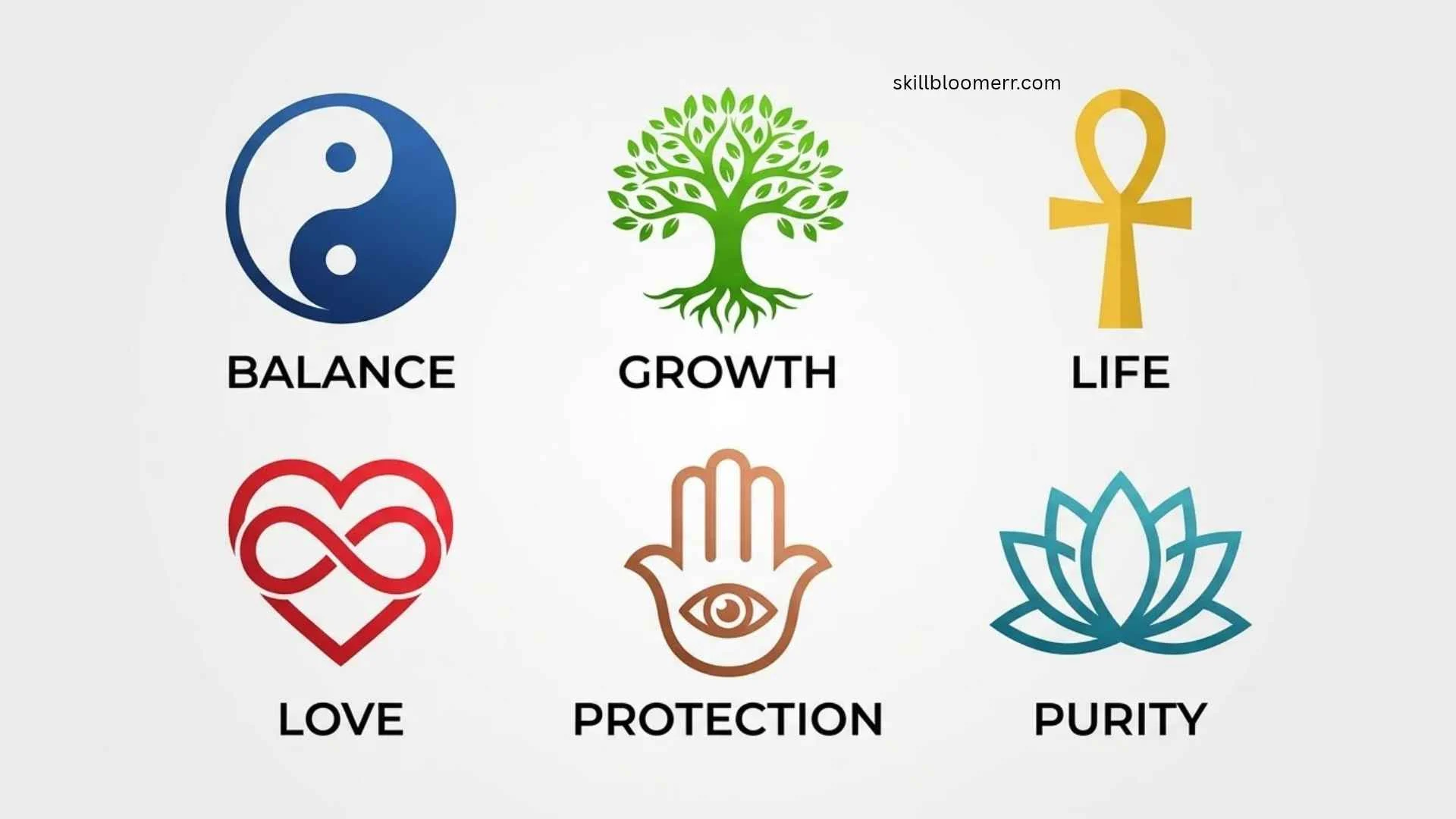
Symbols are powerful visual languages that communicate ideas, beliefs, emotions, and information without using many words. From ancient carvings and religious signs to modern logos, emojis, mathematical marks, and digital icons, symbols meanings help people understand concepts that connect history, culture, science, and human experience.
Every day, people encounter symbols on road signs, phones, clothing, books, architecture, jewelry, flags, and technology. A simple shape, color, animal, or mark can represent identity, protection, love, power, knowledge, spirituality, or warning.
Understanding symbols’ meanings reveals how civilizations have used visual communication for thousands of years. This guide explores the history, cultural importance, interpretation, and modern uses of symbols while explaining why the same symbol can have different meanings in different societies.
Quick Meaning of Symbols Meanings
Symbol meanings refer to the ideas, messages, emotions, and concepts represented by visual signs, shapes, objects, colors, or images. A symbol can communicate cultural beliefs, religious ideas, scientific concepts, personal identity, or practical information. Its meaning often changes depending on history, location, and context.
Symbol Overview Table
| Category | Details |
| Symbol Name | Symbol |
| Primary Meaning | Representation of an idea, object, belief, or concept |
| Category | Visual communication, cultural expression, language |
| Origin | Ancient human communication systems |
| Civilization or Culture | Used by nearly all human civilizations |
| First Known Use | Prehistoric cave markings and early human art |
| Common Usage | Religion, technology, mathematics, art, communication |
| Modern Meaning | Fast visual communication and identity expression |
| Related Concepts | Signs, icons, codes, gestures, emblems |
| Unicode | Many individual symbols have Unicode characters |
| Emoji Equivalent | Many modern symbols exist as emojis |
What Do Symbols Mean?
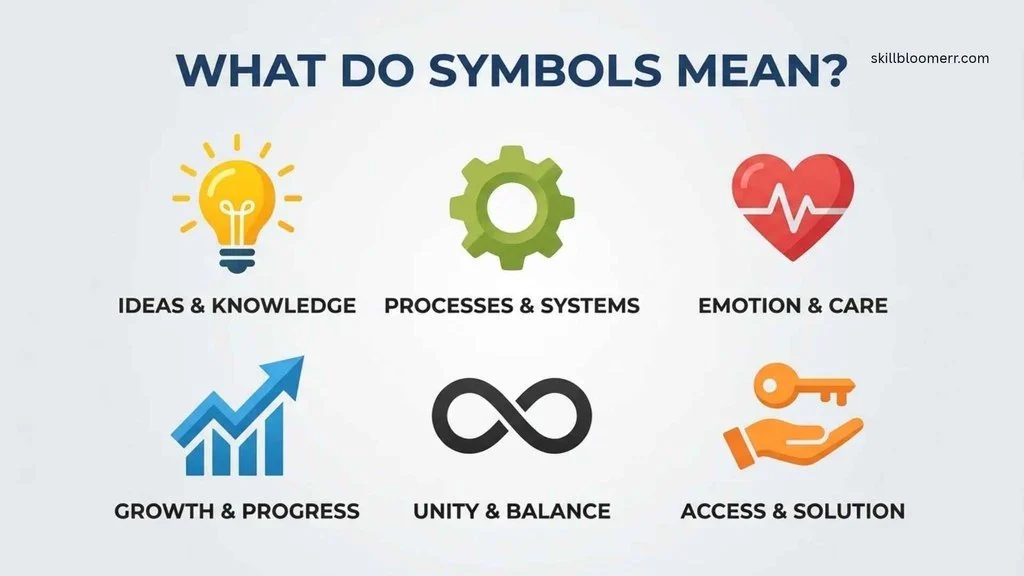
Symbols represent something beyond their physical appearance. They allow humans to express complicated ideas through simple visual forms.
For example:
- A heart shape represents love and affection.
- A dove often represents peace.
- A cross represents Christianity and religious faith.
- A circle may symbolize unity, eternity, or completeness.
- A lightning bolt can represent energy, power, or danger.
The meaning of a symbol is not always fixed. It develops through shared human experiences, cultural traditions, historical events, and social understanding.
A symbol works because people agree on its meaning. Without shared understanding, a symbol may lose its message or gain a completely different interpretation.
Why Do Humans Use Symbols?
Humans use symbols because visual communication is often faster and more memorable than words.
A symbol can:
- Communicate information quickly.
- Represent abstract ideas.
- Preserve cultural traditions.
- Create group identity.
- Express emotions and beliefs.
- Connect generations through shared meanings.
Ancient civilizations used symbols to record stories, religious beliefs, astronomical observations, and social systems. Modern societies continue this tradition through digital icons, logos, traffic signs, and national symbols.
History and Origin of Symbols
Ancient Symbol Systems
The history of symbols goes back thousands of years. Before written languages developed, humans used drawings and markings to communicate ideas.
Prehistoric cave paintings discovered in places such as France and Spain show early examples of symbolic communication. These images represented animals, hunting activities, and possibly spiritual beliefs.
Ancient civilizations including the Egyptians, Sumerians, Greeks, Romans, Chinese, and Maya developed complex symbolic systems.
Egyptian Symbols and Their Meanings
Ancient Egypt created one of the world’s most recognizable symbolic traditions.
Important Egyptian symbols included:
Ankh
The ankh represented life and immortality. Egyptians often used it in religious artwork and associated it with gods and eternal existence.
Eye of Horus
The Eye of Horus symbolized protection, healing, and restoration. It became one of the most famous symbols from ancient Egyptian culture.
Scarab Beetle
The scarab represented rebirth and transformation because Egyptians connected the beetle with the cycle of the sun.
Symbols in Ancient Writing
Many early writing systems developed from symbols.
Examples include:
- Egyptian hieroglyphs.
- Sumerian cuneiform.
- Chinese characters.
- Mayan glyphs.
These systems show that symbols were not only artistic expressions but also important tools for recording knowledge.
Evolution of Symbols Over Time
Symbols change as societies change.
A symbol may begin with one meaning and later develop additional interpretations.
For example:
- The swastika was an ancient symbol of good fortune in many cultures before becoming strongly associated with Nazi Germany in the 20th century.
- The snake represented healing in ancient Greek traditions through the Rod of Asclepius and also represented danger in some religious interpretations.
The history of a symbol influences how people understand it today.
Symbolism and Interpretation
Traditional Meanings of Symbols
Traditional symbolism comes from historical beliefs, cultural practices, and shared stories.
Common examples include:
| Symbol | Traditional Meaning |
| Sun | Life, energy, power |
| Moon | Mystery, emotions, cycles |
| Tree | Growth, wisdom, connection |
| Lion | Strength, courage, leadership |
| Water | Purity, renewal, transformation |
| Fire | Energy, change, destruction, creation |
Traditional meanings often appear in mythology, religion, literature, and artwork.
Modern Interpretations of Symbols
Modern societies continue creating new meanings.
Examples:
- The recycling symbol represents environmental responsibility.
- The Wi-Fi symbol represents wireless communication.
- The power button symbol represents electronic control.
- The hashtag symbol represents digital conversations.
Technology has expanded the role of symbols in everyday life.
Positive Symbolism
Many symbols represent positive concepts such as:
- Hope.
- Freedom.
- Unity.
- Protection.
- Knowledge.
- Success.
- Peace.
Brands and organizations often use positive symbolism to create emotional connections with audiences.
Negative Symbolism
Some symbols may represent negative ideas depending on historical or cultural context.
Examples:
- Skulls may represent death or danger but can also represent strength or remembrance.
- Dark colors may symbolize mourning in some cultures but power and elegance in others.
- Certain political symbols may represent different ideas to different groups.
A symbol should always be interpreted within its context.
Psychological Interpretation of Symbols
Psychologists have studied how humans respond to symbols.
Swiss psychiatrist Carl Jung explored the idea of archetypes and believed certain symbols appear across cultures because they reflect shared human experiences.
Examples include:
- The mother figure represents care.
- The hero represents courage.
- The journey represents personal growth.
Symbol interpretation often connects deeply with emotions and memory.
Cultural Significance of Symbols
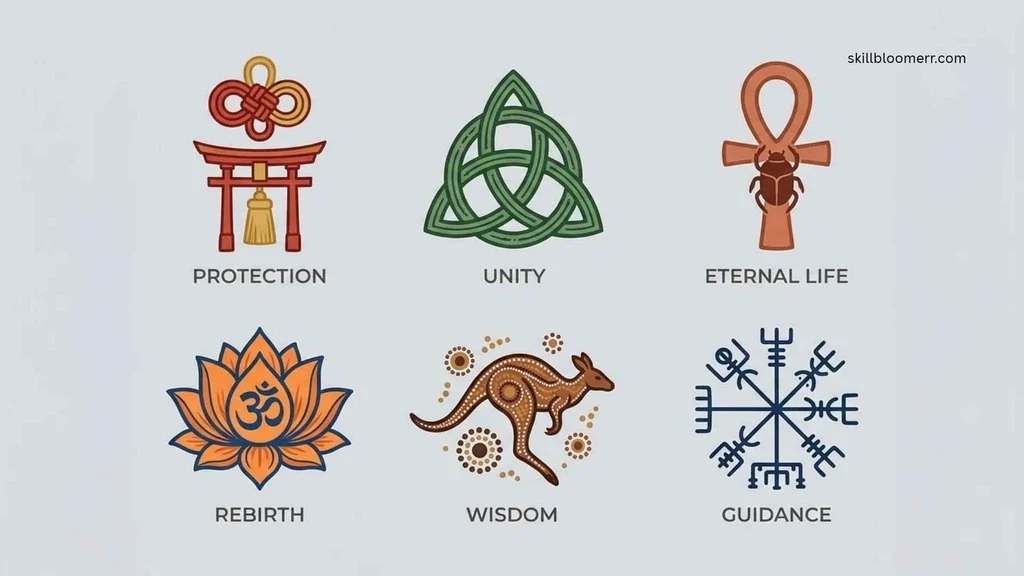
Symbols Across Different Cultures
The same symbol can have different meanings around the world.
For example:
Color White
In many Western cultures, white often represents purity and weddings.
In some East Asian cultures, white may be associated with mourning and funerals.
Dragon Symbol
In Chinese culture, dragons traditionally represent power, wisdom, and good fortune.
In some Western stories, dragons are often portrayed as dangerous creatures.
Owl Symbol
Ancient Greeks associated owls with wisdom through Athena, the goddess of wisdom.
Some cultures have also connected owls with mystery or supernatural beliefs.
Why Cultural Context Matters
Understanding culture prevents incorrect interpretations.
A person viewing a symbol without cultural knowledge may misunderstand its original purpose.
Researchers, designers, marketers, and historians study cultural meanings to avoid miscommunication.
Religious or Spiritual Meaning of Symbols
Symbols play a major role in religious traditions because they help communicate spiritual ideas.
Christian Symbols
Common Christian symbols include:
Cross
The cross represents the crucifixion of Jesus Christ and is the central symbol of Christianity.
Fish Symbol
The Ichthys symbol was used by early Christians as a hidden sign of faith.
Hindu Symbols
Om Symbol
Om represents a sacred sound and is deeply connected with spiritual practices in Hinduism.
Lotus Flower
The lotus represents purity, spiritual growth, and enlightenment.
Buddhist Symbols
Important Buddhist symbols include:
- Dharma wheel representing Buddhist teachings.
- Lotus representing awakening.
- Endless knot representing interconnectedness.
Islamic Symbols
Islamic cultures use various symbols, although interpretations vary.
Examples include:
- Crescent and star imagery.
- Calligraphy containing Quranic verses.
Religious symbols often carry deep historical and spiritual meanings.
Scientific or Technical Meaning of Symbols
Symbols are essential in science, mathematics, and technology because they allow precise communication.
Mathematical Symbols
Examples include:
| Symbol | Meaning |
| + | Addition |
| − | Subtraction |
| × | Multiplication |
| ÷ | Division |
| = | Equality |
| ∞ | Infinity |
Mathematical symbols allow complex ideas to be expressed clearly.
Scientific Symbols
Science uses symbols for:
- Chemical elements.
- Units of measurement.
- Physical laws.
- Scientific concepts.
Examples:
- H represents hydrogen.
- O represents oxygen.
- c represents the speed of light.
Technology Symbols
Modern technology depends heavily on symbols.
Examples:
- Battery icon.
- Bluetooth symbol.
- Search icon.
- Cloud storage symbol.
- Lock icon for security.
These symbols help users understand digital systems quickly.
Where Symbols Are Used
Books and Literature
Authors use symbols to represent deeper themes.
Examples:
- A journey may symbolize personal growth.
- A storm may symbolize conflict.
- A rose may symbolize love.
Maps
Maps use symbols to represent:
- Roads.
- Cities.
- Mountains.
- Airports.
- Landmarks.
Road Signs
Road symbols communicate safety information quickly.
Examples:
- Stop sign.
- Pedestrian crossing.
- Warning signs.
Jewelry and Tattoos
People use symbols in jewelry and tattoos to express:
- Identity.
- Memories.
- Beliefs.
- Personal values.
Logos and Branding
Companies use symbols to create recognizable identities.
A successful logo communicates personality, trust, and purpose.
Flags
National flags contain symbols representing:
- History.
- Independence.
- Cultural identity.
- National values.
Common Variations of Symbols
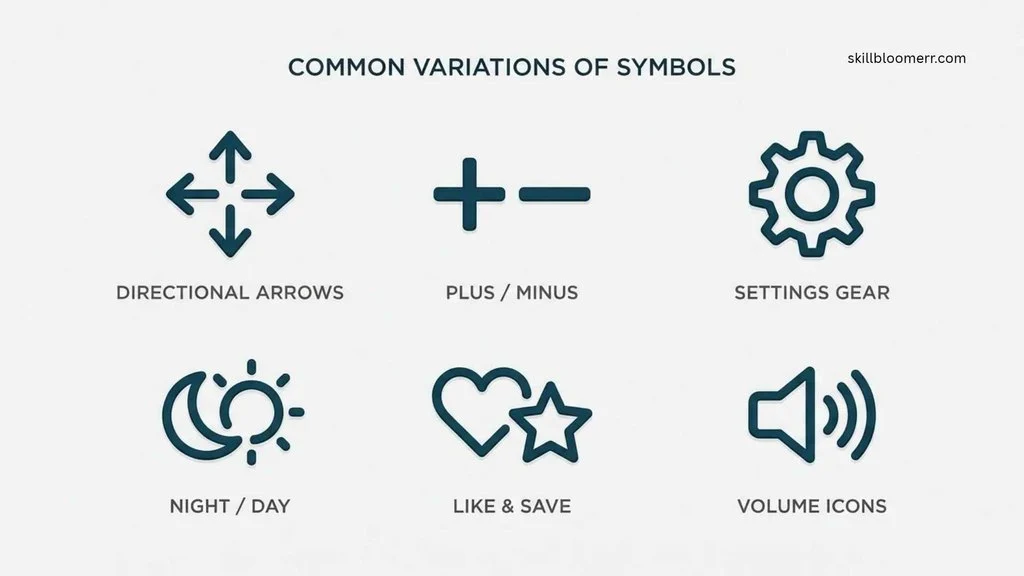
Design Variations
Symbols often appear in different styles:
- Traditional designs.
- Minimalist versions.
- Digital icons.
- Artistic interpretations.
Regional Variations
A symbol may change depending on location.
For example:
- Religious symbols may vary between communities.
- National symbols may have different interpretations.
- Traditional symbols may evolve over generations.
Modern Adaptations
Digital culture has transformed symbols through:
- Emojis.
- Memes.
- Social media icons.
- User interface designs.
Common Misconceptions About Symbols
Symbols Always Have One Meaning
A common mistake is believing every symbol has a universal definition.
Reality: meanings depend on culture, history, and context.
Ancient Symbols Are Always Religious
Many ancient symbols had practical, artistic, social, and political meanings.
Modern Interpretations Are Always Correct
A new meaning does not erase historical meanings.
Understanding both original and modern interpretations creates a more accurate view.
Interesting Facts About Symbols
- The human brain processes visual information extremely quickly, making symbols effective communication tools.
- Many ancient symbols still appear in modern designs, showing the lasting influence of historical cultures.
- Emojis are modern symbolic communication systems used globally.
- Mathematical symbols allow scientists worldwide to communicate despite language differences.
- National symbols often preserve important historical memories.
- Symbols can unite communities by creating shared identity.
- A symbol can become controversial when historical events change its public perception.
- Religious symbols often survive for thousands of years because they represent deep beliefs.
- Company logos are carefully designed symbols intended to create recognition.
- Symbols appear in dreams, art, literature, and psychology because humans naturally think through images.
Related Symbols
Signs
Signs usually provide direct information, such as traffic instructions.
Icons
Icons visually represent objects or actions, especially in digital environments.
Logos
Logos are symbols designed to represent organizations or brands.
Emblems
Emblems combine images and meanings connected with groups, nations, or institutions.
Glyphs
Glyphs are written symbols used in languages and specialized systems.
Frequently Asked Questions
What are symbols and meanings?
Symbols and meanings refer to the relationship between a visual representation and the idea it communicates. A symbol can represent emotions, beliefs, instructions, identities, or concepts. Its meaning develops through cultural agreement, historical use, and personal interpretation.
Why are symbols important?
Symbols are important because they allow people to communicate complex ideas quickly. They preserve cultural history, support education, improve navigation, and help societies share information without relying only on written language.
Can symbols have multiple meanings?
Yes. A symbol can have different meanings depending on culture, religion, history, and personal experiences. Context is necessary to understand what a symbol represents.
How do symbols influence human communication?
Symbols make communication faster and easier. They help people understand information visually through signs, technology icons, mathematics, art, and cultural expressions.
Are symbols the same in every culture?
No. Different cultures create unique symbolic systems. A symbol considered positive in one culture may have another meaning elsewhere.
What is the difference between a symbol and a sign?
A sign usually gives direct information, while a symbol represents deeper ideas or concepts. For example, a stop sign gives an instruction, while a dove symbolizes peace.
Why do brands use symbols?
Brands use symbols because visual identities help customers recognize companies quickly and create emotional connections.
How do symbols change over time?
Symbols change because societies, technologies, and historical events influence how people interpret them.
Are emojis considered symbols?
Yes. Emojis are modern digital symbols used to express emotions, objects, ideas, and reactions.
Key Takeaways
- Symbols communicate ideas beyond their physical appearance.
- Meanings develop through culture, history, and shared experiences.
- Ancient civilizations created complex symbolic systems.
- The same symbol can have different meanings worldwide.
- Religion, science, technology, and art all depend on symbols.
- Context is essential for accurate interpretation.
- Modern digital communication continues expanding symbolic language.
Conclusion
Symbols meanings reveal the powerful relationship between images and human understanding. From ancient civilizations carving messages into stone to modern technology using digital icons, symbols remain one of humanity’s most important communication tools.
A symbol is more than a simple picture or mark. It carries history, emotion, culture, and shared knowledge. By understanding symbols meanings, people gain deeper insight into art, religion, science, language, and everyday life.

I’m Olivia Hartwell, a writer passionate about learning, personal growth, and practical education. I enjoy researching new ideas and sharing them in a way that feels easy to understand and useful. Through my work with SkillBloomerr, I aim to give readers reliable information they can apply in real life.
Books: Small Steps, Big Growth and The Curious Mind