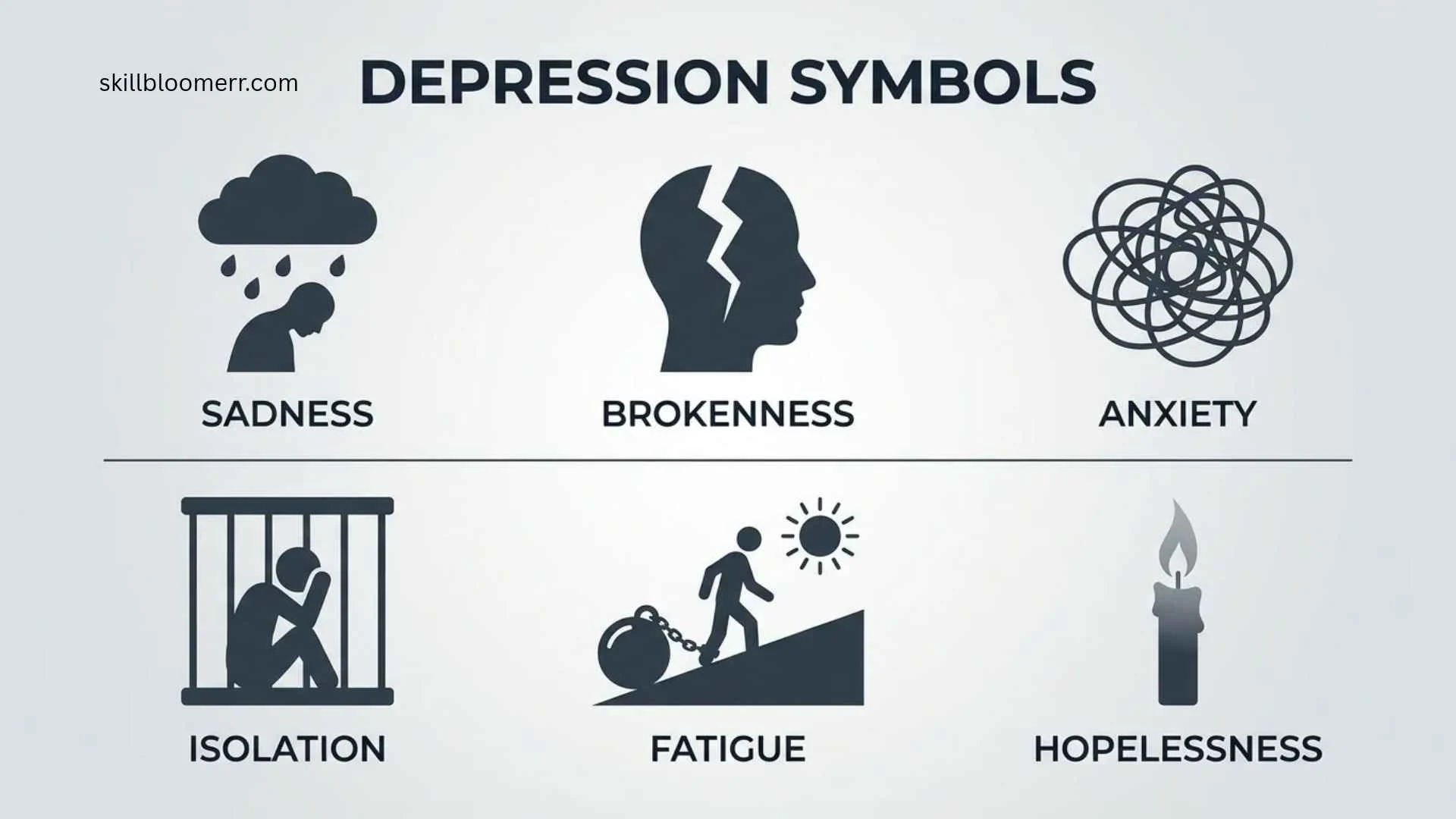
Depression symbols represent the complex emotions, struggles, awareness, hope, and healing connected with depression and mental health.
These symbols appear in artwork, tattoos, jewelry, social movements, therapy spaces, books, and online communities. They help people express feelings that are often difficult to describe with words.
Throughout history, humans have used symbols to communicate pain, sadness, isolation, transformation, and recovery. Today, depression symbols are often used not to glorify suffering but to create awareness, encourage conversations, and remind people that emotional struggles are part of the human experience.
Understanding depression symbols requires looking beyond their appearance. A symbol may represent sadness for one person, while another person may see it as strength, survival, acceptance, or hope.
The meaning often depends on personal experiences, cultural background, and the context in which it is used.
This guide explores the meanings, origins, cultural interpretations, psychological connections, and modern uses of depression symbols while explaining why these visual representations continue to matter in discussions about mental health.
Quick Meaning of Depression Symbols
Depression symbols are visual signs used to represent feelings, experiences, awareness, and support related to depression and mental health. Common examples include semicolons, broken hearts, rain clouds, dark butterflies, blue colors, and lotus flowers. Their meanings can range from emotional pain and isolation to recovery, resilience, and hope.
Symbol Overview Table
| Symbol Name | Primary Meaning | Category | Origin | Culture or Community | Modern Usage |
| Semicolon (;) | Continuing life despite struggles | Mental health awareness | Modern digital movement | Global mental health communities | Tattoos, campaigns, social media |
| Blue Color | Sadness, calmness, emotional awareness | Color symbolism | Ancient and cultural traditions | Many cultures worldwide | Awareness campaigns, art |
| Rain Cloud | Sadness, emotional heaviness, difficult periods | Nature symbolism | Ancient human expression | Global artistic traditions | Artwork and tattoos |
| Butterfly | Transformation, recovery, personal growth | Nature symbolism | Ancient symbolism across cultures | Worldwide | Mental health and healing designs |
| Broken Heart | Emotional pain, grief, loneliness | Emotional symbolism | Ancient literature and art | Global cultures | Art, jewelry, tattoos |
| Lotus Flower | Growth, renewal, overcoming hardship | Spiritual/nature symbolism | Ancient Egypt and Asian traditions | Buddhist and Hindu traditions | Healing and self-growth symbols |
What Do Depression Symbols Mean?
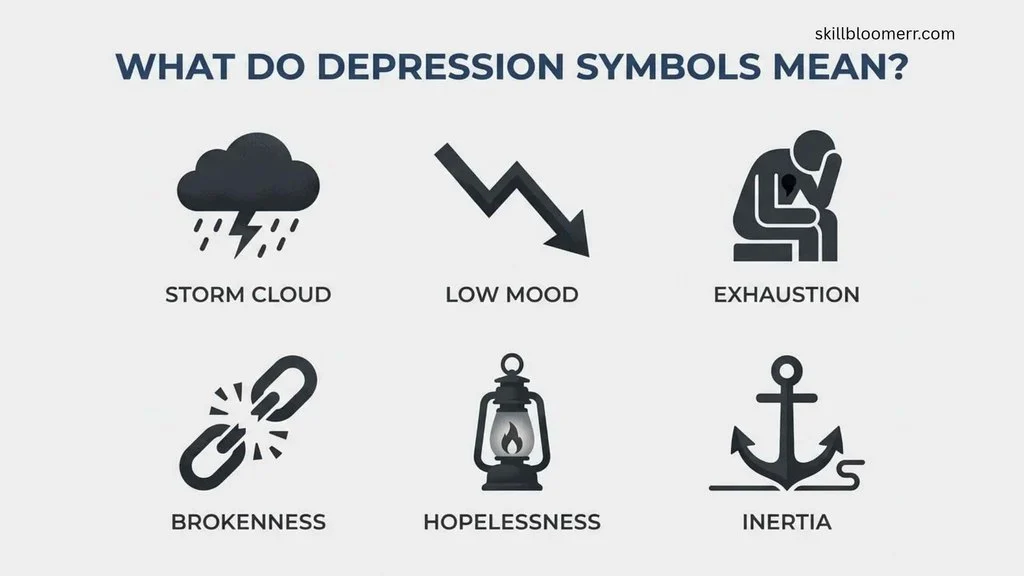
Depression symbols represent emotional experiences associated with depression, including sadness, loneliness, inner conflict, healing, and survival. They give people a visual language for feelings that can be difficult to communicate.
Depression is a complex mental health condition that affects thoughts, emotions, behavior, and daily life. Because emotional experiences are often invisible, symbols help make those experiences more understandable to others.
A person wearing a depression symbol may be expressing:
- Personal experience with depression
- Support for mental health awareness
- A journey toward recovery
- Understanding for others who struggle
- A reminder of personal strength
The meaning of a symbol is not always negative. Many depression-related symbols focus on the idea that difficult periods can be followed by growth, support, and healing.
For example, a semicolon does not represent sadness alone. It represents a decision to continue a sentence rather than ending it. In mental health communities, it has become connected with survival, hope, and choosing to continue.
Why Humans Use Symbols to Represent Depression
Symbols exist because emotions are often difficult to explain directly. Depression can involve feelings of emptiness, exhaustion, hopelessness, and isolation that may not be visible to other people.
A symbol provides a simple way to communicate a deeper message.
For example:
- A blue ribbon may communicate awareness and support.
- A butterfly may represent personal transformation after hardship.
- A storm cloud may express emotional struggle.
- A rising sun may symbolize recovery and a new beginning.
Symbols also create connection. When someone recognizes a shared symbol, they may feel less alone because it communicates a common human experience.
History and Origin of Depression Symbols
Early Human Expressions of Emotional Pain
Humans have represented sadness and emotional suffering through art, stories, and symbols for thousands of years. Ancient civilizations often used natural images such as darkness, storms, tears, and winter landscapes to represent difficult emotional states.
Although ancient societies did not use the modern medical concept of depression, they recognized experiences similar to grief, despair, loneliness, and emotional suffering.
Ancient literature from civilizations such as Greece, Rome, Egypt, India, and China contains descriptions of deep sadness and emotional struggles. These experiences were often explained through philosophy, spirituality, medicine, and mythology.
Symbolism in Ancient Cultures
Many ancient cultures connected emotional states with natural forces.
Examples include:
- Darkness representing uncertainty or suffering
- Night representing sadness or mystery
- Storms representing emotional conflict
- Flowers representing renewal and hope
The connection between nature and emotions became a foundation for many symbols still used today.
A flower growing from difficult conditions became a common metaphor for resilience. This idea appears in many cultures, including traditions connected with the lotus flower.
Development of Modern Mental Health Symbols
Modern depression symbols developed alongside increased awareness of mental health during the 20th and 21st centuries.
As societies became more open about psychological health, symbols began appearing in:
- Awareness campaigns
- Support groups
- Digital communities
- Educational programs
- Personal artwork
The goal shifted from hiding emotional struggles to creating conversations about them.
Symbolism and Interpretation of Depression Symbols
Traditional Meanings
Traditional emotional symbols often focused on suffering and sadness.
Common traditional interpretations include:
- Dark colors representing grief
- Broken objects representing loss
- Rain representing emotional heaviness
- Empty spaces representing loneliness
These meanings appear throughout literature, painting, poetry, and storytelling.
For centuries, artists used visual symbolism to express emotions that were difficult to discuss openly.
Modern Meanings
Modern interpretations of depression symbols are often more balanced. Many symbols now represent both struggle and strength.
A depression symbol today may communicate:
- “I have experienced difficult times.”
- “I support mental health awareness.”
- “Recovery is possible.”
- “You are not alone.”
This change reflects a broader movement toward reducing stigma around mental health.
Psychological Interpretation
From a psychological perspective, symbols can help people process emotions and create meaning from personal experiences.
A symbol may function as:
- A reminder of survival
- A personal identity marker
- A coping tool
- A communication method
For some people, choosing a symbol such as a tattoo can represent an important moment in their emotional journey.
However, symbols do not diagnose mental health conditions. A person using a depression symbol may have many different reasons for choosing it.
Positive Symbolism
Many depression symbols include positive meanings such as:
- Hope
- Recovery
- Courage
- Self-acceptance
- Personal growth
- Connection
The same symbol can represent both pain and progress.
Negative Symbolism
Some symbols may also represent difficult emotions, including:
- Isolation
- Despair
- Emotional exhaustion
- Loss
- Inner conflict
Understanding the context is important because symbols do not have one universal meaning.
Cultural Significance of Depression Symbols
Western Cultural Interpretations
In many Western countries, depression symbols are strongly connected with mental health awareness movements.
The semicolon symbol became especially recognized through online communities focused on suicide prevention and mental health support.
Other common Western interpretations include:
- Blue colors representing sadness or awareness
- Butterflies representing transformation
- Broken hearts representing emotional pain
Asian Cultural Interpretations
Many Asian traditions connect emotional struggle with ideas of balance, transformation, and inner growth.
Symbols such as the lotus flower often represent overcoming difficult conditions.
The lotus grows from muddy water but produces a beautiful flower, making it a powerful symbol of resilience in several Asian spiritual traditions.
Indigenous and Traditional Perspectives
Many Indigenous cultures have their own symbolic systems for understanding emotional experiences, healing, and connection with nature.
Symbols may connect personal struggles with:
- Community support
- Nature
- Spiritual balance
- Ancestral wisdom
Meanings vary greatly between communities, so symbols should always be understood within their cultural context.
Religious and Spiritual Meaning of Depression Symbols
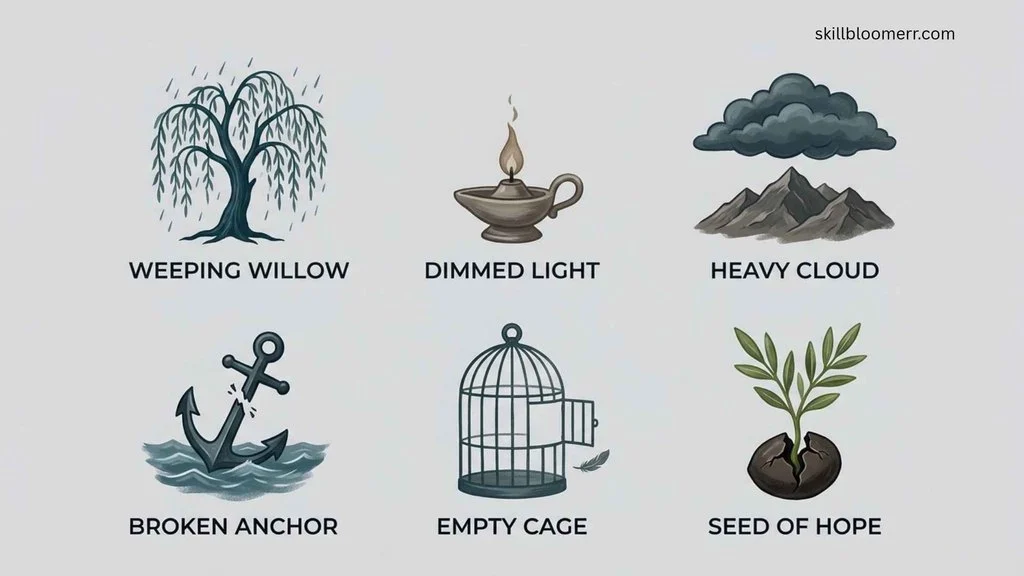
Depression symbols are not always religious, but some connect with spiritual ideas of suffering, healing, and renewal.
Lotus Flower Symbolism
In Buddhism and Hindu traditions, the lotus flower represents purity, spiritual growth, and transformation. Because it rises from muddy water, it is often viewed as a symbol of overcoming hardship.
Light and Darkness Symbolism
Many religious traditions use light and darkness as symbolic opposites.
Darkness may represent:
- Difficulty
- Confusion
- Spiritual struggle
Light may represent:
- Hope
- Guidance
- Renewal
These ideas often appear in religious texts, artwork, and ceremonies.
Important Note About Spiritual Interpretations
Spiritual meanings vary between religions and individuals. A symbol that represents healing for one person may represent something different for another.
Scientific and Medical Meaning
Depression symbols do not have a scientific or medical definition. They are cultural and personal expressions rather than diagnostic tools.
Medical organizations such as the World Health Organization (WHO) and the National Institute of Mental Health (NIMH) describe depression as a mental health condition involving persistent sadness, loss of interest, and other emotional or physical symptoms.
Symbols can support awareness, but they cannot replace professional evaluation or treatment.
Mental health professionals generally focus on:
- Symptoms
- Duration
- Personal experiences
- Daily functioning
- Individual needs
A symbol may open a conversation, but understanding depression requires looking at the person’s complete experience.
Where Depression Symbols Are Used Today
Depression symbols appear in many areas of modern life because people use visual communication to express emotions, raise awareness, and create connections. These symbols are especially common in spaces where mental health conversations take place.
Tattoos and Body Art
Tattoos are one of the most personal ways people use depression symbols. A tattoo can represent a private struggle, a recovery journey, remembrance of a difficult period, or support for others.
Common depression-related tattoo symbols include:
- Semicolon tattoos representing continuation and survival
- Butterflies representing transformation
- Rain clouds representing emotional struggles
- Lotus flowers representing growth after hardship
- Broken hearts representing emotional pain and healing
The meaning of a tattoo is deeply personal. The same symbol may represent different experiences for different people.
Jewelry and Personal Accessories
Depression symbols are also used in necklaces, bracelets, rings, and other accessories.
People may wear these items to:
- Show support for mental health awareness
- Start conversations
- Carry a personal reminder of strength
- Connect with others who share similar experiences
Jewelry allows people to express emotions in a subtle and meaningful way.
Social Media and Online Communities
Digital platforms have played a major role in spreading mental health symbols.
People use symbols in:
- Profile pictures
- Posts
- Awareness campaigns
- Support groups
- Digital artwork
The semicolon symbol became widely recognized online because it provided a simple visual message of hope and continuation.
However, online symbols should always be interpreted carefully. A symbol does not reveal someone’s complete emotional experience.
Books, Literature, and Poetry
Writers have used symbolic language to describe depression and emotional struggles for centuries.
Common literary symbols include:
- Darkness representing sadness or uncertainty
- Winter representing emotional emptiness
- Storms representing inner conflict
- Cages representing feelings of being trapped
Authors often use these symbols because emotional experiences can be difficult to explain directly.
Art and Creative Expression
Artists frequently use depression symbols to explore:
- Emotional pain
- Identity
- Healing
- Human connection
- Personal transformation
Visual art can communicate feelings that words cannot always capture.
Paintings, photography, sculptures, and digital artwork often use color, shape, and natural imagery to represent emotional states.
Mental Health Awareness Campaigns
Organizations and communities use symbols to encourage open discussions about depression and mental health.
These symbols may appear on:
- Educational materials
- Awareness posters
- Fundraising campaigns
- Community events
Their purpose is usually to reduce stigma and encourage people to seek support.
Common Variations of Depression Symbols
Depression symbols do not have one fixed design. Their appearance often changes based on culture, personal meaning, and artistic style.
Semicolon Variations
The semicolon is one of the most recognizable modern mental health symbols.
Common variations include:
- Simple black semicolon designs
- Semicolons combined with butterflies
- Semicolons inside hearts
- Semicolons with flowers or other nature elements
Each variation adds a different emotional meaning.
For example:
- Semicolon + butterfly may represent transformation
- Semicolon + heart may represent self-love and survival
- Semicolon + flower may represent growth
Color Variations
Colors often influence how people interpret depression symbols.
Common associations include:
| Color | Common Symbolic Meaning |
| Blue | Sadness, calmness, awareness |
| Black | Grief, mystery, emotional struggle |
| Purple | Spirituality, reflection, emotional depth |
| Green | Healing, renewal, growth |
| White | Peace, hope, new beginnings |
Color meanings are not universal. They can change depending on culture and personal experience.
Nature-Based Variations
Nature symbols are often connected with emotional recovery.
Examples include:
- Butterflies
- Trees
- Flowers
- Mountains
- Sunrises
- Rainbows
These symbols often represent change, endurance, and the possibility of improvement.
Abstract Depression Symbols
Some people choose abstract designs rather than recognizable symbols.
Examples include:
- Broken geometric shapes
- Empty circles
- Dark lines
- Incomplete patterns
These designs allow individuals to create personal meanings.
Common Misconceptions About Depression Symbols
Misconception 1: Every Dark Symbol Represents Depression
A common misunderstanding is that dark colors or sad imagery always represent depression.
This is not true.
Dark colors may represent:
- Elegance
- Mystery
- Creativity
- Strength
- Personal identity
Meaning depends on context.
Misconception 2: Depression Symbols Are Only Negative
Many people assume depression symbols represent only sadness or suffering.
In reality, many symbols focus on:
- Recovery
- Hope
- Survival
- Awareness
- Support
A symbol can acknowledge pain while also representing strength.
Misconception 3: A Symbol Can Identify Someone’s Mental Health Condition
A person wearing a depression symbol does not automatically mean they have depression.
People may use these symbols because they:
- Support someone else
- Care about mental health awareness
- Appreciate the meaning
- Like the design
Symbols communicate ideas, not medical diagnoses.
Misconception 4: Depression Has One Universal Symbol
There is no single official symbol that represents depression worldwide.
Different communities use different symbols depending on:
- Culture
- History
- Personal experiences
- Awareness movements
The meaning of a symbol often develops through shared human experiences.
Interesting Facts About Depression Symbols
1. The Semicolon Became a Global Mental Health Symbol
The semicolon became widely recognized because people used it to represent continuation. In writing, a semicolon allows a sentence to continue, creating a metaphor for choosing to continue one’s life story.
2. Nature Symbols Are Common Across Cultures
Flowers, butterflies, trees, and sunlight appear frequently in emotional symbolism because nature naturally represents cycles of change and renewal.
3. Symbols Can Reduce Communication Barriers
Some people find it easier to share a symbol than explain their emotions directly. A small image can begin a conversation that might otherwise feel difficult.
4. Ancient Art Often Used Emotional Symbolism
Long before modern mental health terminology existed, humans used artistic symbols to express grief, suffering, hope, and transformation.
5. Colors Have Different Meanings Worldwide
A color associated with sadness in one culture may represent something completely different in another culture.
6. Personal Meaning Often Matters More Than Traditional Meaning
A person’s experience can transform the meaning of a symbol. A butterfly may represent recovery for one person and remembrance for another.
7. Depression Symbols Are Used in Multiple Forms of Art
They appear in:
- Paintings
- Poetry
- Music
- Tattoos
- Digital illustrations
- Films
8. Symbols Can Support Mental Health Conversations
A symbol may help create awareness by making mental health topics easier to discuss publicly.
9. Not All Mental Health Symbols Represent Depression Alone
Some symbols are connected with broader topics such as:
- Anxiety
- Trauma
- Suicide prevention
- Emotional wellness
10. Symbolism Changes Over Time
The meaning of a symbol is not permanent. Social movements and cultural changes can influence how people understand it.
Related Symbols and Their Meanings
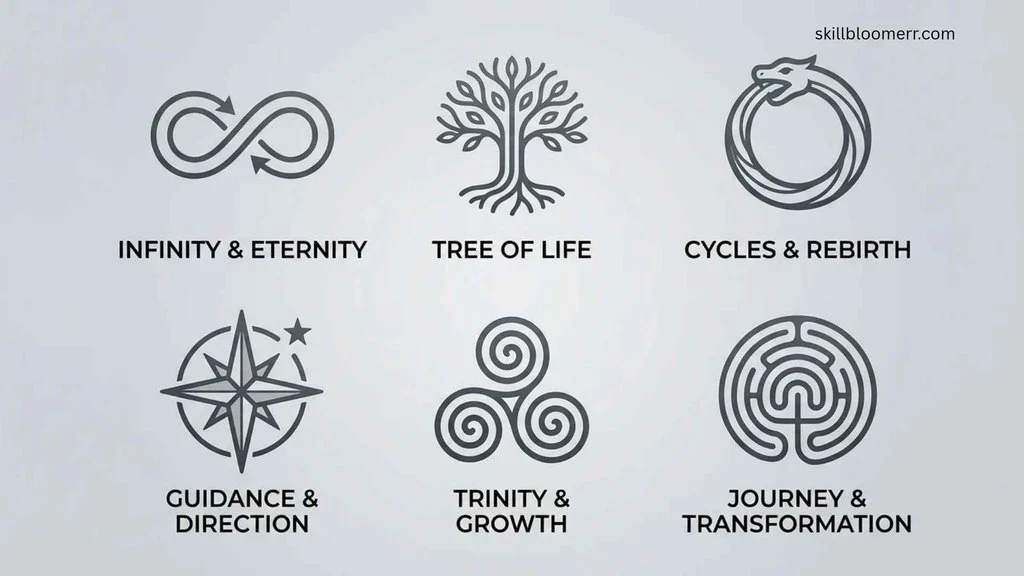
Hope Symbols
Hope symbols focus on optimism, recovery, and future possibilities.
Examples include:
- Rising sun
- Star
- Candle flame
- Rainbow
These differ from depression symbols because they focus more directly on positivity and renewal.
Healing Symbols
Healing symbols represent restoration and emotional growth.
Examples include:
- Lotus flower
- Tree of life
- Butterfly
- Phoenix
They often connect struggle with transformation.
Anxiety Symbols
Some symbols overlap with anxiety awareness.
Examples include:
- Waves representing overwhelming emotions
- Storm imagery representing mental pressure
- Breathing symbols representing calmness
Suicide Prevention Symbols
Some mental health symbols are specifically connected with suicide prevention movements.
The semicolon is often associated with this area because of its message of continuing life.
Strength Symbols
Strength symbols focus on resilience.
Examples include:
- Mountains
- Lions
- Oak trees
- Anchors
They emphasize endurance rather than emotional struggle alone.
Frequently Asked Questions About Depression Symbols
What is the most common symbol for depression?
The semicolon is one of the most recognized modern symbols connected with depression and mental health awareness. It represents continuation, survival, and the idea that a person’s story is not finished. However, there is no single official worldwide symbol for depression.
What flower represents depression?
The lotus flower is often connected with overcoming hardship and emotional growth. While it is not an official depression symbol, many people use it to represent healing because it grows from muddy conditions into something beautiful.
What color symbolizes depression?
Blue is commonly associated with sadness and emotional awareness in many modern contexts. However, colors have different meanings across cultures, and no color officially represents depression in every society.
Is there an emoji for depression?
There is no official emoji specifically representing depression. People often use emojis such as a sad face, cloud, rain, or broken heart to express emotions related to sadness or emotional difficulty.
What does a semicolon tattoo mean?
A semicolon tattoo often represents continuing life despite struggles. It became associated with mental health awareness and is frequently interpreted as a symbol of hope, survival, and choosing to continue one’s personal story.
Are depression symbols the same in every culture?
No. Depression symbols vary between cultures because meanings are shaped by history, traditions, religion, art, and social experiences. A symbol that represents healing in one culture may have a different meaning elsewhere.
Can symbols help people with depression?
Symbols can help some people express feelings, create awareness, and feel connected with others. However, symbols do not replace professional mental health support, treatment, or personal care.
Why do people get depression symbol tattoos?
People choose depression-related tattoos for many reasons, including remembering a difficult period, celebrating recovery, supporting awareness, or expressing personal emotions through art.
Key Takeaways
- Depression symbols represent emotional experiences, awareness, support, and recovery.
- There is no single official worldwide symbol for depression.
- The semicolon is one of the most recognized modern mental health symbols.
- Nature symbols such as butterflies and lotus flowers often represent transformation and healing.
- Symbol meanings depend on culture, personal experiences, and context.
- Depression symbols can encourage conversations but do not diagnose mental health conditions.
- Historical art and literature have used emotional symbolism for centuries.
- Understanding symbols requires respecting individual and cultural interpretations.
Conclusion
Depression symbols provide a visual language for emotions that are often difficult to express. They can represent sadness, struggle, awareness, healing, resilience, and hope depending on how they are understood.
From semicolon tattoos to butterflies, lotus flowers, and storm imagery, these symbols remind people that emotional experiences are complex and deeply human. Their importance comes not only from their appearance but from the conversations and connections they create.
Understanding depression symbols helps us recognize how humans use art, culture, and shared meanings to communicate personal journeys. These symbols are reminders that struggles can be acknowledged, conversations can begin, and support can exist.

I’m Olivia Hartwell, a writer passionate about learning, personal growth, and practical education. I enjoy researching new ideas and sharing them in a way that feels easy to understand and useful. Through my work with SkillBloomerr, I aim to give readers reliable information they can apply in real life.
Books: Small Steps, Big Growth and The Curious Mind