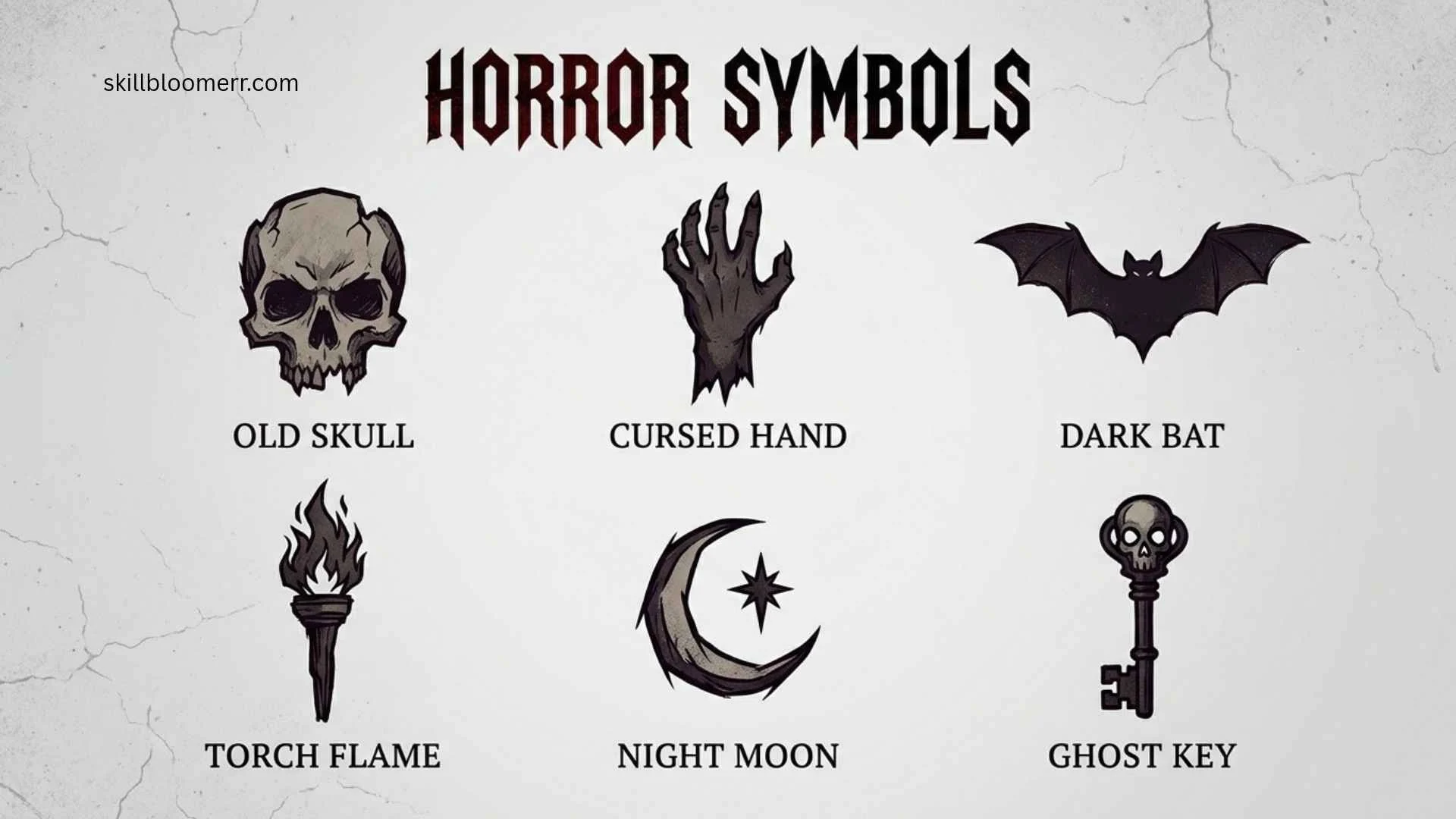
Horror symbols represent fear, mystery, danger, death, the unknown, and supernatural ideas that humans have explored through history. These symbols appear in horror movies, books, video games, folklore, tattoos, artwork, Halloween decorations, and popular culture.
From skulls and ghosts to pentagrams and haunted objects, each symbol carries layers of meaning shaped by history, religion, psychology, and storytelling.
People are naturally attracted to symbols because they communicate powerful ideas without words. A single image can create feelings of fear, curiosity, suspense, or danger.
A skull can suggest mortality, a broken mirror can represent bad luck or a fractured identity, and a shadowy figure can symbolize the unknown.
This complete guide explores horror symbols and their meanings, including their origins, cultural interpretations, psychological effects, common uses, variations, misconceptions, and connections to mythology, literature, and modern entertainment.
Quick Meaning of Horror Symbols
Horror symbols are visual signs, objects, or images used to represent fear, darkness, death, supernatural forces, danger, or the unknown. Their meanings often come from ancient beliefs, religious traditions, folklore, psychology, and modern horror storytelling. Common examples include skulls, ghosts, demons, bats, ravens, haunted houses, and occult symbols.
Horror Symbol Overview Table
| Symbol Name | Primary Meaning | Category | Origin | Culture or Civilization | First Known Use | Common Usage | Modern Meaning | Related Symbols |
| Skull | Death, mortality, warning | Death Symbol | Ancient civilizations | Global cultures | Prehistoric human cultures | Art, warnings, tattoos | Fear, rebellion, danger | Skeleton, Grim Reaper |
| Ghost | Spirits, the afterlife, mystery | Supernatural Symbol | Ancient spiritual beliefs | Worldwide folklore | Ancient civilizations | Stories, films, Halloween | Fear of the unknown | Spirit, Phantom |
| Black Cat | Mystery, superstition, bad luck | Animal Symbol | European folklore | Europe and America | Medieval period | Halloween, folklore | Mystery and magic | Witch, Moon |
| Raven | Death, prophecy, darkness | Animal Symbol | Mythology | Norse, Celtic, Native traditions | Ancient myths | Literature, horror stories | Intelligence and mystery | Crow, Owl |
| Pentagram | Spiritual protection or occult association | Geometric Symbol | Ancient Mesopotamia and Greece | Multiple traditions | Ancient history | Religious and fictional contexts | Often linked with horror themes | Pentacle, Sigils |
| Haunted House | Fear, secrets, past trauma | Place Symbol | Folklore | Global storytelling | Ancient ghost tales | Movies, novels | Unknown danger | Graveyard, Castle |
| Broken Mirror | Bad luck, identity, change | Object Symbol | Ancient Roman beliefs | European traditions | Ancient Rome | Horror films, art | Fear and transformation | Reflection, Shadow |
| Demon | Evil, temptation, supernatural danger | Mythological Symbol | Ancient religions | Many cultures | Ancient texts | Horror media | Fear of evil forces | Devil, Monster |
What Do Horror Symbols Mean?
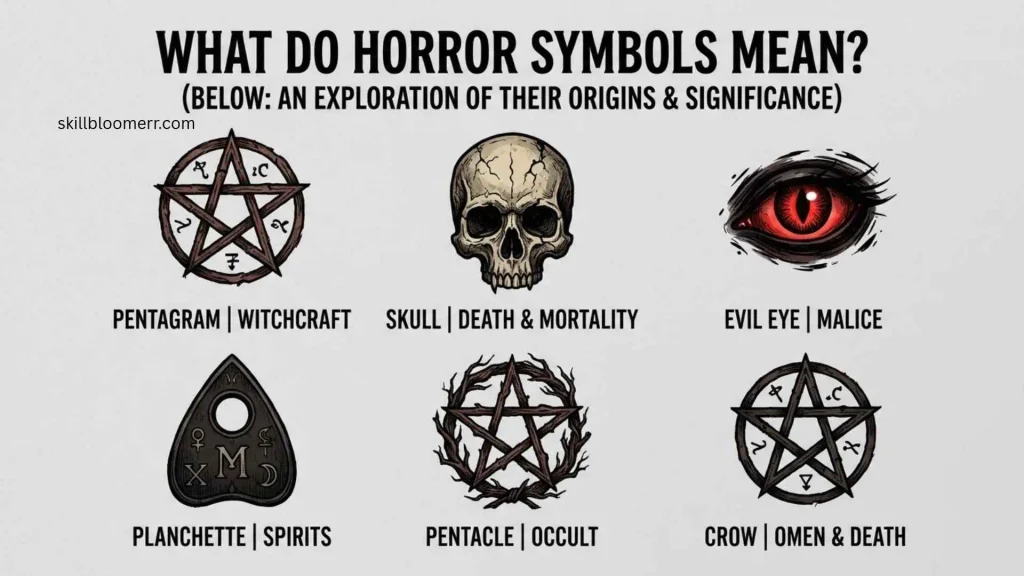
Horror symbols communicate ideas connected to fear, danger, darkness, and the unknown. Their meanings are not always fixed because symbolism changes depending on culture, time period, and context.
A symbol that represents evil in one tradition may represent protection or spirituality in another. For example, the pentagram is often shown in horror media as an occult symbol, but historically it has also been used as a protective and spiritual symbol in different cultures.
Horror symbols usually represent one or more of these themes:
- Fear of death
- Fear of supernatural forces
- Fear of losing control
- Fear of the unknown
- Human struggles with good and evil
- Hidden dangers
- Psychological fears
- The mystery of existence
The power of these symbols comes from their ability to trigger emotions. A dark hallway, an old abandoned house, or a mysterious mark can create fear because humans connect them with uncertainty and possible threats.
History and Origin of Horror Symbols
Ancient Civilizations and Early Fear Symbols
The history of horror symbols begins with early human attempts to understand death, nature, and unexplained events. Ancient civilizations created symbols to represent spirits, gods, monsters, and forces beyond human control.
The Egyptians used symbols connected with death and the afterlife, while ancient Mesopotamian cultures created stories about demons and supernatural beings. These early traditions influenced later horror imagery.
Death-related symbols appeared across many civilizations because death was one of humanity’s greatest mysteries. Skulls, bones, and burial objects became powerful reminders of human mortality.
Medieval Europe and Supernatural Symbols
During the medieval period, European folklore developed many horror-related symbols. Stories about witches, demons, ghosts, and cursed objects became common.
The fear of supernatural forces influenced art, religious texts, and storytelling. Symbols such as black cats, ravens, and dark forests became connected with mystery and danger.
Many modern horror ideas come from this period, including haunted castles, ghost stories, and legends about evil creatures.
Evolution Through Literature and Film
Horror symbols changed significantly through literature and cinema. Writers such as Edgar Allan Poe and filmmakers created visual traditions that shaped modern horror.
The gothic movement popularized symbols like:
- Dark castles
- Stormy landscapes
- Graveyards
- Shadows
- Ancient books
- Mysterious creatures
Modern horror films continue using these symbols because they quickly communicate fear to audiences.
Symbolism and Interpretation of Horror Symbols
Traditional Meanings
Traditional horror symbols often represented real fears faced by societies.
Examples:
- Skull: The unavoidable reality of death
- Ghost: The possibility of life after death
- Demon: The struggle between good and evil
- Graveyard: The boundary between life and death
- Darkness: Unknown threats
These meanings developed through religion, mythology, and cultural storytelling.
Modern Meanings
Today, horror symbols often represent deeper psychological ideas.
A monster may represent:
- Personal fears
- Social problems
- Hidden emotions
- Inner conflicts
A haunted house may symbolize:
- Past trauma
- Family secrets
- Forgotten memories
A shadow may represent:
- Hidden parts of personality
- Fear of uncertainty
- The unknown future
Psychological Interpretation
Psychologists often study fear symbols because humans respond strongly to images connected with survival.
Darkness, sharp teeth, threatening faces, and unfamiliar shapes can create instinctive reactions because the brain associates them with possible danger.
Horror symbols allow people to explore fear safely through stories, art, and entertainment.
Cultural Significance of Horror Symbols
Horror symbols have different meanings around the world. Their interpretation depends heavily on local traditions and beliefs.
Western Culture
In many Western cultures, horror symbols are connected with:
- Halloween traditions
- Gothic literature
- Vampire stories
- Ghost legends
- Witch folklore
Common symbols include pumpkins, skeletons, bats, and haunted houses.
Asian Cultures
Many Asian cultures have their own supernatural symbols.
Examples include:
- Spirits and ancestral ghosts
- Protective charms
- Mythical creatures
- Dragon-like beings
Some symbols considered frightening in one culture may represent protection or spiritual balance in another.
Indigenous Traditions
Many Indigenous cultures have rich traditions involving spirits, animals, and natural forces. These symbols are often connected with respect for nature rather than simple fear.
A wolf, raven, or animal spirit may represent wisdom, transformation, or connection with the spiritual world.
Religious or Spiritual Meaning of Horror Symbols
Many horror symbols have connections with religious beliefs, although modern horror media often changes their original meanings.
Demonic Symbols
Symbols associated with demons often represent evil, temptation, or spiritual danger in religious storytelling.
Death Symbols
Skulls and skeletons appear in many religious and philosophical traditions as reminders of mortality and the temporary nature of human life.
Protective Symbols
Some symbols used in horror stories originally had protective meanings.
For example, certain geometric symbols and spiritual marks have historically been used for protection, balance, or faith.
Where Horror Symbols Are Used
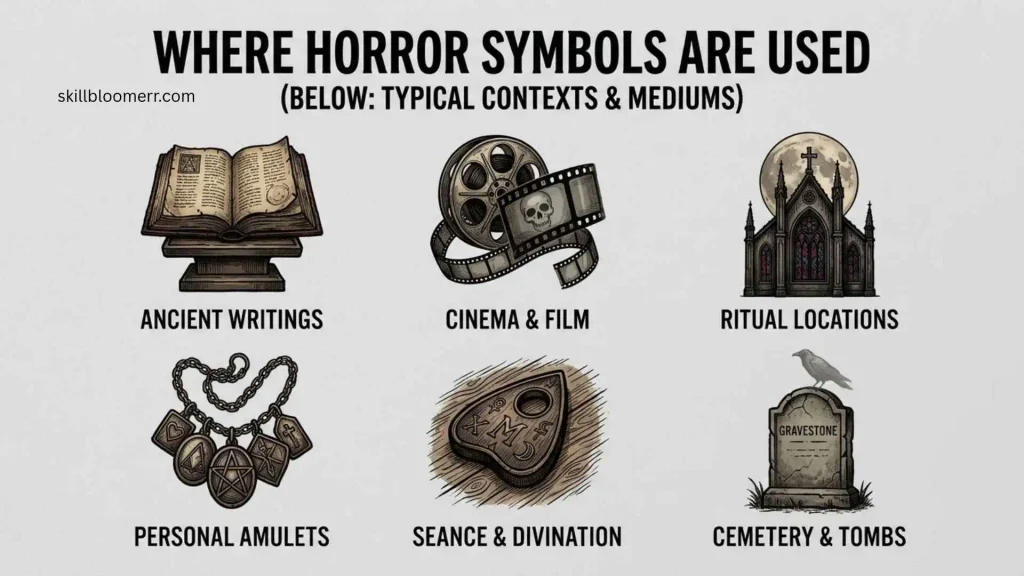
Movies and Television
Horror films use symbols to create immediate emotional reactions.
Examples:
- Haunted houses create suspense
- Ghosts represent supernatural fear
- Masks hide identity
- Dark forests represent isolation
Books and Literature
Authors use horror symbols to build atmosphere.
Common literary symbols include:
- Ravens
- Storms
- Old houses
- Mirrors
- Darkness
Tattoos and Body Art
People choose horror-inspired tattoos for different reasons:
- Personal meaning
- Love of horror culture
- Interest in mythology
- Symbolic representation of personal struggles
Halloween Decorations
Horror symbols are especially common during Halloween.
Popular examples:
- Jack-o’-lanterns
- Skeletons
- Witches
- Spiders
- Bats
- Ghosts
Video Games
Games use horror symbols to create immersive environments.
Examples:
- Blood marks
- Abandoned buildings
- Strange symbols
- Monsters
- Cursed objects
Common Variations of Horror Symbols
Skull Variations
Skulls appear in many styles:
- Realistic skulls
- Cartoon skulls
- Animal skulls
- Burning skulls
- Decorated skulls
Their meanings range from death and danger to strength and transformation.
Ghost Variations
Ghost symbols may appear as:
- White spirits
- Shadow figures
- Transparent figures
- Friendly cartoon ghosts
Their meaning changes from terrifying to playful depending on context.
Occult Symbol Variations
Symbols connected with mystery often appear differently in:
- Ancient traditions
- Fictional stories
- Modern entertainment
- Artistic designs
The same symbol may have different meanings depending on who uses it.
Common Misconceptions About Horror Symbols
All Dark Symbols Represent Evil
Not every frightening symbol represents evil. Many symbols have complex histories and may represent protection, wisdom, change, or spiritual ideas.
Horror Symbols Are Always Religious
Some horror symbols come from religious traditions, but many developed through folklore, literature, and entertainment.
Horror Symbols Have One Universal Meaning
Symbol meanings change across cultures. A symbol may represent fear in one society and protection in another.
Horror Symbols Cause Fear by Themselves
Symbols usually create fear because of human associations and storytelling. The meaning comes from cultural understanding.
Interesting Facts About Horror Symbols
- The skull is one of humanity’s oldest symbols.
It appears in ancient art because humans have always explored ideas about mortality. - Ravens became linked with horror through mythology and literature.
Their intelligence and dark appearance helped create mysterious associations. - Ghost stories exist in almost every culture.
Many societies have traditions about spirits and the afterlife. - The black cat was not always considered unlucky.
Some cultures viewed cats as protective or sacred animals. - The haunted house became a major horror setting through gothic literature.
Writers used abandoned buildings to represent secrets and fear. - Mirrors are common horror objects because they represent identity.
Stories often use mirrors to explore hidden truths. - Halloween combines many ancient traditions.
Modern celebrations include symbols from folklore, religion, and popular culture. - Monsters often represent human fears.
Many fictional creatures symbolize emotions or social concerns. - Dark colors influence horror design.
Black, gray, and red are frequently used because of their emotional associations. - Horror symbols change with technology.
Modern games and digital media create new forms of scary imagery.
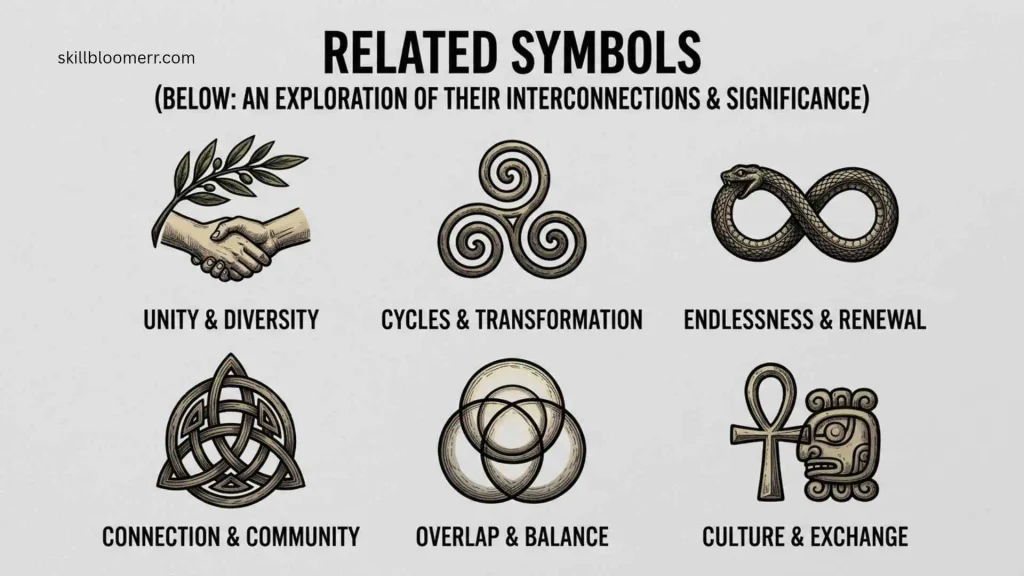
Related Symbols
Death Symbols
Death symbols include:
- Skull
- Skeleton
- Grim Reaper
- Grave marker
They focus mainly on mortality and the cycle of life.
Occult Symbols
These include:
- Sigils
- Pentagrams
- Mystical markings
They often represent hidden knowledge or supernatural ideas.
Mythological Creatures
Examples:
- Vampires
- Werewolves
- Demons
- Dragons
These symbols connect horror with mythology and legends.
Dark Nature Symbols
Examples:
- Ravens
- Wolves
- Storms
- Dark forests
They represent mystery, danger, and the unknown.
Frequently Asked Questions
What is the most common horror symbol?
The skull is one of the most recognized horror symbols worldwide. It represents death, mortality, danger, and sometimes rebellion. Its meaning changes depending on context, appearing in warnings, art, tattoos, mythology, and entertainment.
Why are horror symbols important in storytelling?
Horror symbols help creators communicate fear quickly. A haunted house, dark shadow, or mysterious mark can establish a frightening atmosphere before any events happen. They allow audiences to understand themes without needing lengthy explanations.
Are horror symbols always negative?
No. Many horror symbols have multiple meanings. A skull can represent death but also strength or remembrance. Some symbols connected with horror originally had protective or spiritual meanings.
What does a black cat symbolize in horror?
A black cat is often associated with mystery, superstition, and witchcraft in horror stories. However, different cultures have viewed cats differently, with some considering them symbols of protection and good fortune.
Why do people like horror symbols?
People are attracted to horror symbols because they allow them to explore fear safely. They create curiosity, excitement, and emotional experiences through movies, art, games, and traditions.
What symbol represents fear?
Many symbols represent fear, including darkness, monsters, skulls, ghosts, and unknown creatures. The strongest fear symbols are usually connected with survival instincts and uncertainty.
Are occult symbols always evil?
No. Many symbols labeled as occult have historical meanings connected with spirituality, philosophy, mathematics, or protection. Their meaning depends on the culture and context where they are used.
Why are haunted houses common in horror?
Haunted houses symbolize hidden secrets, forgotten memories, and unknown dangers. They create fear because they combine familiar places with mysterious threats.
What are common Halloween horror symbols?
Common Halloween symbols include pumpkins, ghosts, witches, bats, spiders, skeletons, and black cats. These symbols come from a mixture of folklore, seasonal traditions, and modern entertainment.
How do horror symbols affect the human mind?
Horror symbols trigger emotional responses by connecting with ideas of danger, death, and uncertainty. They can create suspense and fear while allowing people to experience those emotions in a controlled environment.
Key Takeaways
- Horror symbols represent fear, mystery, death, and the unknown.
- Their meanings come from history, mythology, religion, psychology, and storytelling.
- Symbols can have different meanings across cultures.
- Many horror symbols originally had meanings beyond fear.
- Movies, books, games, tattoos, and Halloween traditions use horror imagery widely.
- Understanding history helps explain why certain symbols feel frightening.
- Horror symbols often represent deeper human emotions and experiences.
Conclusion
Horror symbols are powerful because they connect simple images with deep human emotions. A skull, ghost, raven, or haunted house is more than a scary picture. Each symbol carries history, cultural meaning, and psychological influence that has developed over centuries.
From ancient beliefs about death and spirits to modern horror movies and video games, these symbols continue to shape how people understand fear and mystery. Learning the meanings behind horror symbols reveals not only what scares us but also how humans use symbols to explore life, death, and the unknown

I’m Nathaniel Brooks, an educational writer who loves exploring ideas and making useful knowledge accessible to everyone. I write for SkillBloomerr with a focus on clear explanations, practical tips, and meaningful learning. My goal is to help readers discover something valuable every time they visit the site.
Books: Learn Something New and The Practical Knowledge Handbook
 Olivia Hartwell