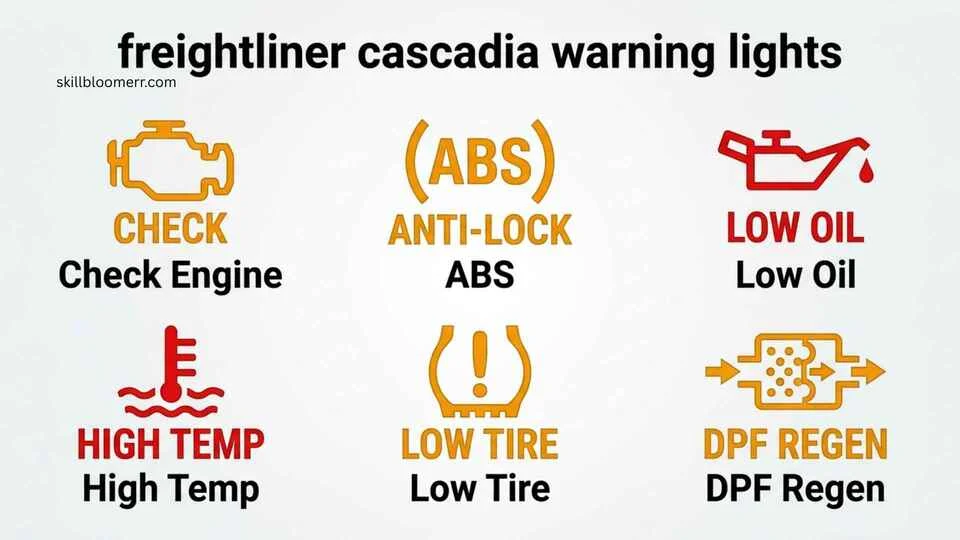
Freightliner Cascadia warning lights and Freightliner dash symbols are designed to communicate the condition of your truck in real time. Every illuminated icon on the instrument cluster provides important information about vehicle systems, maintenance needs, safety features, or mechanical problems. Understanding these symbols helps drivers make informed decisions, prevent costly repairs, improve road safety, and reduce unnecessary downtime.
If you operate a Freightliner Cascadia for long-haul freight, regional deliveries, or vocational work, you will eventually encounter dashboard indicators ranging from simple reminders to urgent warning lights. Some icons indicate normal operating conditions, while others require immediate attention to avoid engine damage, brake failure, emissions issues, or reduced vehicle performance.
This guide explains what the most common Freightliner Cascadia warning lights mean, why they appear, how serious they are, and what actions drivers should take. It also clarifies common misconceptions and provides practical advice based on manufacturer guidance and commercial trucking best practices.
Quick Meaning of Freightliner Cascadia Warning Lights Freightliner Dash Symbols
Freightliner Cascadia warning lights and Freightliner dash symbols are visual indicators displayed on the instrument cluster that inform drivers about vehicle status, maintenance requirements, safety systems, engine performance, emissions controls, brakes, electrical components, and potential mechanical faults. Their color and symbol determine the urgency of the required driver response.
Symbol Overview Table
| Field | Details |
| Symbol Name | Freightliner Cascadia Warning Lights & Dash Symbols |
| Category | Commercial Vehicle Dashboard Indicators |
| Vehicle Type | Heavy-Duty Trucks |
| Manufacturer | Freightliner Trucks |
| Common Location | Instrument Cluster / Digital Dashboard |
| Purpose | Notify drivers of vehicle status, warnings, faults, and maintenance needs |
| First Introduced | With modern electronic dashboard systems in Freightliner trucks |
| Typical Colors | Red, Yellow (Amber), Green, Blue, White |
| Applicable Systems | Engine, Transmission, Brakes, DEF, ABS, Air Pressure, Battery, Oil, Coolant, Lighting, Safety Systems |
| Driver Response | Monitor, Service Soon, or Stop Immediately depending on color and symbol |
| Related Systems | Detroit Diesel Engine, Allison Transmission, Bendix Brake Systems, Electronic Control Modules (ECMs) |
What Do Freightliner Cascadia Warning Lights Mean?
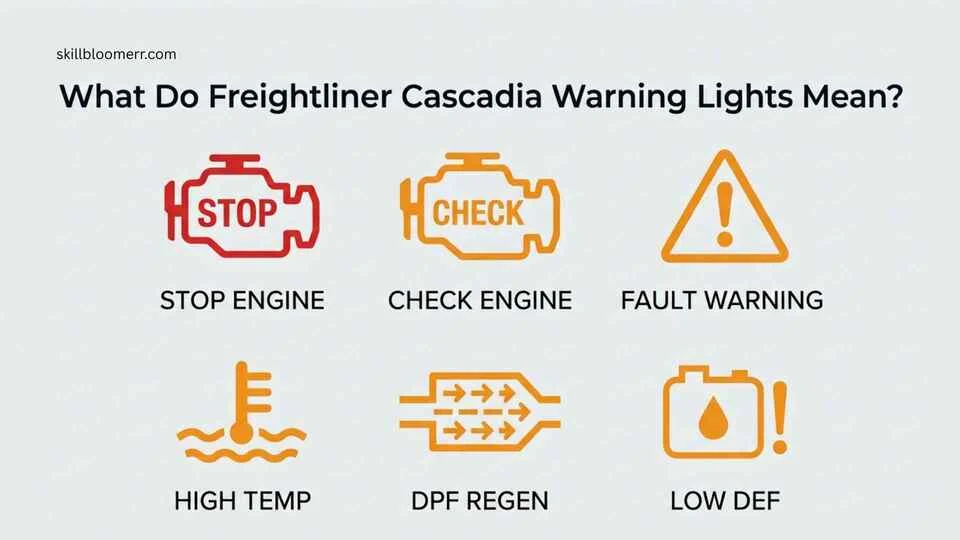
Freightliner Cascadia warning lights are part of the truck’s onboard diagnostic and monitoring system. Each symbol represents a specific component or operating condition that helps the driver understand how the truck is performing.
Unlike older mechanical gauges, modern Cascadia trucks continuously monitor dozens of sensors throughout the vehicle. These sensors communicate with electronic control modules that detect abnormalities and notify the driver through dashboard symbols, messages, and audible alerts.
The purpose of these warning lights is not simply to report failures. Many indicators appear before a serious mechanical problem develops, giving drivers an opportunity to address issues early.
Understanding Dashboard Warning Colors
The quickest way to judge the seriousness of a warning light is by its color.
| Color | Meaning | Recommended Driver Action |
| Red | Critical safety issue or severe mechanical problem | Stop safely as soon as possible and investigate immediately. |
| Amber (Yellow) | Fault detected or maintenance required | Continue driving cautiously if safe, but schedule inspection promptly. |
| Green | System operating normally | No action required. |
| Blue | Special feature active | Informational only. |
| White | Status information | Driver awareness only. |
A red warning should never be ignored because it often indicates conditions that could lead to engine damage, brake failure, or unsafe vehicle operation.
Understanding the Most Common Freightliner Dash Symbols
Engine Warning Light
The engine warning light—often called the Check Engine Light (CEL) or Malfunction Indicator Lamp (MIL)—is one of the most frequently seen dashboard indicators.
This light signals that the engine control module has detected a fault affecting engine performance or emissions.
Possible causes include:
- Sensor malfunction
- Fuel system issues
- Turbocharger problems
- Air intake restrictions
- Emissions system faults
- Wiring problems
- Injector issues
Driver Action
If the truck continues operating normally, reduce unnecessary engine load and arrange diagnostic service soon. If the light flashes or is accompanied by reduced power, stop driving as soon as it is safe.
Stop Engine Warning Light
The Stop Engine warning is among the most serious alerts on any Freightliner Cascadia.
When illuminated, the engine management system has detected a critical condition that could rapidly damage the engine.
Possible causes include:
- Extremely low oil pressure
- Severe overheating
- Critical coolant loss
- Major lubrication failure
- Internal engine malfunction
Driver Action
Safely pull off the road immediately.
Shut down the engine unless manufacturer instructions or roadside conditions require otherwise.
Continuing to drive could result in catastrophic engine damage costing thousands of dollars.
Low Oil Pressure Symbol
Oil pressure keeps every moving engine component properly lubricated.
If oil pressure drops below safe limits, friction increases rapidly, potentially damaging crankshaft bearings, camshafts, pistons, and turbochargers.
Common causes include:
- Low engine oil
- Oil pump failure
- Internal oil leak
- Blocked oil passages
- Faulty oil pressure sensor
Driver Action
Never ignore a red oil pressure light.
Stop the truck safely and verify the oil level before restarting.
Coolant Temperature Warning
The coolant temperature symbol warns that the engine is running hotter than normal.
Overheating may result from:
- Coolant leaks
- Broken fan belts
- Radiator blockage
- Failed water pump
- Thermostat malfunction
- Cooling fan failure
High engine temperatures reduce lubrication effectiveness and can warp cylinder heads or damage engine components.
Driver Action
Reduce engine load immediately.
If temperature continues rising, stop the truck before severe overheating occurs.
Battery Charging System Light
This warning indicates that the charging system is no longer supplying adequate electrical power.
Potential causes include:
- Alternator failure
- Broken drive belt
- Loose battery connections
- Faulty voltage regulator
- Damaged wiring
Although the truck may continue operating temporarily, electrical systems will eventually rely solely on battery power.
Once the battery becomes depleted, the engine may stall or fail to restart.
Air Pressure Warning Light
Air brakes are essential for safe commercial vehicle operation.
The air pressure warning appears when pressure drops below safe operating limits.
Possible reasons include:
- Air compressor failure
- Air leaks
- Frozen air lines
- Damaged brake chambers
- Faulty pressure sensors
Driver Action
Do not continue driving if adequate brake pressure cannot be maintained.
Low air pressure significantly increases braking risk.
ABS Warning Light
The Anti-lock Braking System (ABS) warning indicates that the ABS has detected a fault.
Importantly, this does not necessarily mean the truck has lost normal braking ability.
Instead:
- Standard braking usually remains functional.
- Anti-lock braking assistance may be disabled.
- Wheel lockup becomes more likely during emergency braking.
Professional diagnosis should be arranged as soon as practical.
Parking Brake Indicator
This symbol confirms that the parking brake is engaged.
Attempting to drive while the parking brake remains applied may cause:
- Brake wear
- Excessive heat
- Reduced fuel economy
- Component damage
Always verify that the indicator turns off after releasing the brake.
DEF Warning Light
Modern Freightliner Cascadia trucks equipped with diesel engines use Diesel Exhaust Fluid (DEF) to reduce harmful emissions.
The DEF warning may indicate:
- Low DEF level
- Poor DEF quality
- Frozen DEF
- DEF system malfunction
- Sensor problems
Ignoring DEF warnings may eventually trigger reduced engine power according to emissions regulations.
Drivers should refill DEF using fluid that meets the appropriate ISO quality standards.
Diesel Particulate Filter (DPF) Symbol
The DPF collects soot produced during diesel combustion.
As soot accumulates, the filter periodically cleans itself through regeneration.
The DPF light may indicate:
- Regeneration required
- Regeneration interrupted
- Excessive soot accumulation
- Filter restriction
Drivers should follow the truck manufacturer’s regeneration procedures when requested.
Ignoring repeated DPF warnings can eventually require professional cleaning or filter replacement.
High Exhaust System Temperature (HEST) Light
During regeneration, exhaust temperatures become significantly higher than normal.
The HEST indicator warns drivers that hot exhaust components may ignite nearby combustible materials.
When this light appears:
- Avoid parking over dry grass.
- Stay away from combustible debris.
- Allow regeneration to complete safely.
This light usually indicates normal operation rather than a malfunction.
Transmission Warning Light
The transmission warning indicates abnormal transmission operation.
Possible causes include:
- Overheating
- Low transmission fluid
- Sensor failure
- Shift control problems
- Electronic communication errors
Ignoring transmission warnings can shorten transmission life and increase repair costs.
Drivers should monitor vehicle performance and arrange service promptly if shifting becomes abnormal.
Fuel Filter Warning
A restricted fuel filter reduces fuel flow to the engine.
Symptoms may include:
- Reduced power
- Difficult starting
- Rough engine operation
- Increased fuel consumption
Replacing the filter according to the maintenance schedule helps prevent injector damage and maintains engine efficiency.
Water in Fuel Indicator
Diesel fuel sometimes contains moisture that collects in the fuel-water separator.
If too much water accumulates, engine performance and fuel system components may be affected.
Drivers should drain the separator according to maintenance procedures whenever this warning appears.
Seat Belt Reminder
Although simple, the seat belt reminder remains one of the most important safety indicators.
Commercial truck drivers spend long hours on highways where sudden braking, collisions, or rollovers can occur.
Wearing a seat belt significantly improves driver safety and is required by law in many jurisdictions.
Cruise Control Indicator
This green symbol shows that cruise control is active.
It is informational only and does not indicate a fault.
Drivers should remain alert even when cruise control is engaged, especially during changing weather or heavy traffic.
History and Origin
Modern Freightliner Cascadia warning lights did not appear overnight. They evolved alongside advances in commercial truck engineering, electronic controls, emissions regulations, and driver safety systems. Today’s dashboard symbols are the result of decades of development aimed at making heavy-duty trucks safer, more reliable, and easier to diagnose.
Early Heavy-Duty Truck Dashboards
Before electronic dashboards became common, heavy-duty trucks relied almost entirely on analog gauges. Drivers monitored:
- Oil pressure gauges
- Coolant temperature gauges
- Air pressure gauges
- Voltmeters or ammeters
- Fuel gauges
- Tachometers
- Speedometers
Instead of illuminated warning icons, drivers had to notice changes in gauge readings. This required experience because a gradual drop in oil pressure or a slow rise in engine temperature could easily go unnoticed.
Mechanical gauges provided valuable information but offered little guidance about the exact cause of a problem.
The Shift to Electronic Monitoring
During the 1980s and 1990s, truck manufacturers began introducing Electronic Control Modules (ECMs). These onboard computers continuously monitored engine performance through sensors installed throughout the vehicle.
Instead of relying solely on gauges, ECMs could detect problems such as:
- Sensor failures
- Engine misfires
- Low oil pressure
- High coolant temperature
- Charging system faults
- Fuel delivery problems
When an issue was detected, the dashboard illuminated a dedicated warning light, making it easier for drivers to recognize developing problems before they became severe.
Freightliner Cascadia and Digital Instrument Clusters
When the Freightliner Cascadia was introduced in 2007, it represented a significant advancement in commercial truck technology. Later model years expanded these capabilities with:
- Multi-function digital displays
- Driver information centers
- Maintenance reminders
- Real-time diagnostic messages
- Fuel economy monitoring
- Adaptive cruise control indicators
- Collision mitigation alerts
- Lane departure warning icons
Rather than displaying only a simple warning light, many modern Cascadia dashboards also provide text descriptions, fault codes, and recommended driver actions.
This combination of symbols and digital messages allows technicians to diagnose problems more efficiently while helping drivers respond appropriately on the road.
Why Standardized Symbols Matter
Although dashboard layouts differ between manufacturers, many warning symbols follow internationally recognized standards established by organizations such as the International Organization for Standardization (ISO) and the Society of Automotive Engineers (SAE).
Standardization benefits drivers by making many icons immediately recognizable, even when operating different trucks.
Examples include:
- Oil can for engine oil pressure
- Battery icon for charging system
- Thermometer for coolant temperature
- Engine outline for engine faults
- ABS letters for anti-lock braking systems
This consistency reduces confusion and improves safety, particularly for fleet drivers who may operate multiple vehicle models.
Symbolism and Interpretation

Freightliner dash symbols are not symbolic in a cultural or artistic sense. Instead, they use simple visual designs to communicate technical information quickly, regardless of the driver’s language.
The effectiveness of these symbols comes from their ability to convey urgency at a glance.
Red Warning Symbols
Red symbols communicate immediate danger or conditions that require the driver to stop as soon as it is safe.
Typical red warnings include:
- Stop Engine
- Low Oil Pressure
- Brake System Failure
- Critical Air Pressure Loss
- Engine Overheating
These warnings exist because continuing to drive could create unsafe conditions or cause severe mechanical damage.
Amber Warning Symbols
Amber, or yellow, indicates caution rather than immediate danger.
An amber light usually means:
- A system needs inspection.
- Maintenance is required soon.
- Performance may be reduced.
- The truck can often continue operating temporarily.
Examples include:
- Check Engine
- DEF Warning
- DPF Warning
- Transmission Fault
- Water in Fuel
Drivers should not ignore amber lights simply because the truck remains drivable. Many expensive repairs begin as minor warnings.
Green Indicators
Green symbols confirm that a feature is operating normally.
Common examples include:
- Cruise Control
- Turn Signals
- Engine Brake Active
- Exterior Lights
- PTO Engagement
Green indicators reassure the driver that selected systems are functioning as intended.
Blue Indicators
Blue lights are less common but generally indicate that a special feature is active.
Examples may include:
- High Beam Headlights
- Certain driver assistance functions
These lights are informational rather than warning indicators.
Why Shapes Matter
Dashboard designers intentionally use familiar shapes that drivers recognize instantly.
For example:
| Symbol Shape | Represents |
| Oil can | Engine lubrication |
| Battery | Electrical charging system |
| Thermometer | Engine temperature |
| Engine outline | Engine management |
| Tire cross-section | Tire pressure or tire monitoring |
| Brake circle with exclamation point | Brake system |
| Steering wheel | Steering system |
| Fuel pump | Fuel system |
The goal is instant recognition, even in poor weather or low-light conditions.
Cultural Significance
Unlike ancient symbols, Freightliner dash symbols do not carry cultural, religious, or philosophical meanings. Their significance lies in the universal language of transportation safety and engineering.
A Global Visual Language
Commercial trucking is an international industry. Drivers, mechanics, fleet managers, and inspectors often speak different languages, yet they must understand the same vehicle warnings.
Dashboard icons reduce language barriers by using universally recognizable images instead of written text alone.
For example:
- A battery icon communicates electrical charging issues whether the driver speaks English, Spanish, French, German, or another language.
- A thermometer icon instantly suggests heat or temperature.
- An oil can naturally represent lubrication.
This visual consistency helps improve safety across countries and fleets.
Regional Differences
While many symbols are standardized, the exact appearance or accompanying messages may vary depending on:
- North American regulations
- European regulations
- Australian heavy vehicle standards
- Manufacturer-specific dashboard software
Freightliner trucks sold in North America often display symbols tailored to U.S. and Canadian emissions and safety regulations, while trucks built for other markets may include different warning configurations.
The Role of Driver Training
Professional truck drivers are trained to recognize dashboard indicators as part of commercial vehicle operation.
Fleet companies often include dashboard symbol recognition in:
- New driver orientation
- Safety meetings
- Annual compliance training
- Preventive maintenance education
Understanding these symbols contributes to safer roads, reduced downtime, and lower repair costs.
Decision Guide: What Should You Do When a Warning Light Appears?
The following decision tree can help drivers respond appropriately.
A warning light appears
⬇
Is the light red?
Yes
⬇
- Reduce speed safely.
- Find a safe location to stop.
- Check for obvious issues such as overheating, oil loss, or air pressure problems.
- Contact maintenance or roadside assistance if necessary.
No
⬇
Is the light amber?
Yes
⬇
- Continue driving only if the truck operates normally.
- Avoid heavy engine loads.
- Schedule diagnostic service as soon as practical.
- Monitor for additional warnings.
No
⬇
Is the light green, blue, or white?
Yes
⬇
- No repair is normally required.
- Confirm the indicated system is operating as expected.
- Continue driving normally.
Expert Tips for Reading Freightliner Dash Symbols
Professional drivers develop habits that help them respond quickly and correctly to dashboard alerts.
Some best practices include:
- Perform a dashboard self-check every time the ignition is turned on.
- Never ignore repeated warning lights, even if they disappear after restarting the engine.
- Learn the difference between informational indicators and critical warnings.
- Keep the owner’s manual accessible for reference.
- Record fault messages before shutting off the engine, as some codes may clear after a restart.
- Pay attention to changes in engine sound, vibration, or performance that accompany warning lights.
- Follow scheduled maintenance intervals to reduce unexpected dashboard alerts.
These habits not only improve safety but also help prevent small issues from becoming major repairs.
Common Driver Mistakes When Warning Lights Appear
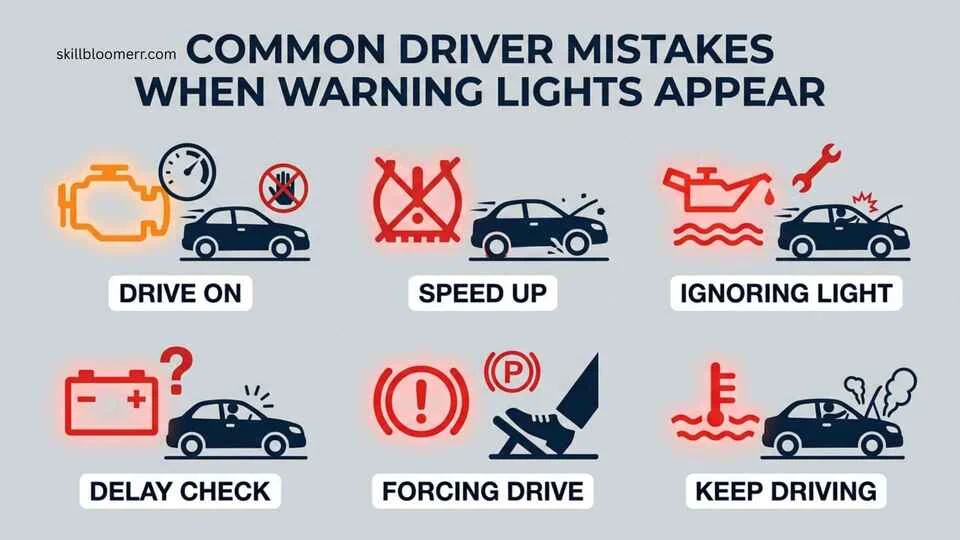
Even experienced drivers sometimes misinterpret dashboard indicators. Common mistakes include:
- Assuming every warning light requires immediate shutdown, which can create unnecessary delays.
- Ignoring amber lights because the truck still feels normal.
- Continuing to drive with a flashing Check Engine Light, which may indicate a severe engine problem.
- Refilling DEF with contaminated or incorrect fluid.
- Overlooking low air pressure warnings during cold weather.
- Restarting the engine repeatedly in hopes that a warning light will disappear instead of diagnosing the underlying issue.
Understanding the purpose of each symbol helps drivers make informed decisions rather than reacting based on guesswork.
Scientific or Technical Meaning
Freightliner Cascadia warning lights are the visible output of a sophisticated electronic monitoring network. Every major vehicle system is equipped with sensors that continuously measure operating conditions and send data to one or more Electronic Control Modules (ECMs). When sensor values move outside their acceptable range, the ECM triggers a warning light, stores a Diagnostic Trouble Code (DTC), and, in many cases, displays a message on the Driver Information Display (DID).
Unlike decorative symbols or road signs, these dashboard icons represent real-time operating data. Their purpose is to help the driver identify developing problems before they become serious mechanical failures or safety hazards.
How the Monitoring System Works
A simplified process looks like this:
Sensor Detects Condition
↓
Electronic Control Module (ECM) Processes Data
↓
Fault Compared Against Manufacturer Limits
↓
Warning Light or Message Appears
↓
Diagnostic Trouble Code (DTC) Is Stored
↓
Technician Retrieves Fault Code Using Diagnostic Software
This process occurs in milliseconds and repeats continuously while the truck is operating.
Major Systems That Generate Warning Lights
Several vehicle systems communicate with the dashboard.
| Vehicle System | Examples of Monitored Components | Possible Dashboard Indicators |
| Engine | Oil pressure, coolant temperature, turbocharger, injectors | Check Engine, Stop Engine, Oil Pressure |
| Transmission | Fluid temperature, gear position, electronic controls | Transmission Warning |
| Braking System | ABS sensors, air pressure, brake circuits | ABS, Brake Warning, Air Pressure |
| Electrical System | Alternator, battery voltage, wiring | Battery Warning |
| Emissions System | DEF, DPF, SCR, NOx sensors | DEF Warning, DPF, Check Engine |
| Fuel System | Fuel pressure, water separator, filters | Fuel Filter, Water in Fuel |
| Safety Systems | Collision mitigation, lane departure, adaptive cruise | Driver Assistance Indicators |
| Lighting | Exterior lights, high beams, turn signals | Green or Blue Indicators |
Understanding Diagnostic Trouble Codes (DTCs)
Most dashboard warnings are linked to a Diagnostic Trouble Code.
A DTC identifies the affected system and helps technicians locate the source of a fault.
For example, a Check Engine Light may be accompanied by a fault code indicating:
- A malfunctioning pressure sensor
- Low turbo boost
- DEF dosing issue
- Exhaust temperature sensor failure
- Fuel rail pressure problem
The warning light tells the driver that a problem exists, while the stored code helps identify what caused it.
Why Some Warning Lights Turn Off
Drivers sometimes notice that a warning light disappears after restarting the engine.
This does not always mean the problem has been fixed.
Possible explanations include:
- The fault occurred only temporarily.
- The sensor returned to normal readings.
- The ECM completed a successful self-test.
- The issue is intermittent.
If the same warning returns repeatedly, the underlying problem should still be diagnosed.
Where Freightliner Dash Symbols Are Used
Although most people associate these symbols with the dashboard, they play a role throughout vehicle operation, maintenance, inspections, and fleet management.
Instrument Cluster
The primary location is the instrument panel directly in front of the driver.
This display combines:
- Warning lights
- Analog gauges (on some models)
- Digital information screens
- Fault messages
- Maintenance reminders
The cluster is designed so the most critical alerts appear prominently.
Driver Information Display (DID)
Many newer Freightliner Cascadia models include a multifunction digital display that expands on simple warning lights.
It can provide:
- Fault descriptions
- Regeneration status
- Fuel economy information
- Trip data
- Tire monitoring information (if equipped)
- Maintenance intervals
- Transmission information
This additional information helps drivers make more informed decisions.
Fleet Maintenance
Fleet maintenance departments use warning lights as an early warning system.
Rather than waiting for complete mechanical failure, technicians can investigate problems after the first dashboard alert.
This preventive approach often reduces:
- Repair costs
- Vehicle downtime
- Roadside breakdowns
- Component replacement expenses
Commercial Vehicle Inspections
Drivers should verify that warning lights behave correctly during pre-trip inspections.
A proper inspection typically includes:
- Turning the ignition on.
- Confirming that required warning lights illuminate briefly.
- Ensuring critical warnings turn off after system checks.
- Verifying air pressure builds normally.
- Checking gauges for normal readings.
Unexpected warning lights before departure should never be ignored.
Driver Training Programs
Commercial driving schools and fleet training programs frequently include dashboard symbol recognition.
Drivers learn to:
- Identify warning colors.
- Understand system priorities.
- Respond appropriately.
- Report faults accurately.
- Avoid unnecessary roadside emergencies.
Knowing the difference between a maintenance reminder and a critical engine warning is an essential professional skill.
Common Variations
Not every Freightliner Cascadia displays identical dashboard symbols. Differences exist based on model year, engine, trim level, and optional equipment.
Analog vs. Digital Dashboards
Older Cascadia trucks often combine analog gauges with indicator lights.
Newer models increasingly use:
- Large digital displays
- Customizable instrument panels
- Expanded diagnostic messaging
- Interactive warning screens
The underlying warning systems remain similar even if the graphics change.
Engine Variations
Different engines may generate slightly different warnings.
Examples include:
- Detroit Diesel
- Cummins (fleet-specific configurations)
Each engine uses its own electronic control strategy while still displaying familiar dashboard indicators.
Optional Safety Packages
Modern Cascadia trucks may include additional driver assistance technologies.
These systems can introduce new dashboard symbols for:
- Adaptive Cruise Control
- Lane Departure Warning
- Active Brake Assist
- Collision Mitigation
- Stability Control
- Roll Stability Support
Drivers should review the owner’s manual whenever unfamiliar symbols appear.
Regional Differences
Dashboard messages may vary depending on:
- U.S. regulations
- Canadian requirements
- Export market specifications
- Fleet software configurations
However, the basic warning colors and major safety indicators remain largely consistent.
Common Misconceptions
Many misconceptions surround Freightliner warning lights. Believing these myths can lead to expensive repairs or unsafe driving decisions.
Myth 1: Every Check Engine Light Means Stop Immediately
Reality:
Not necessarily.
Some Check Engine warnings indicate relatively minor issues, while others require immediate attention.
The accompanying message, fault code, and truck performance determine the correct response.
Myth 2: Amber Lights Can Always Be Ignored
Reality:
Amber lights usually indicate a developing problem.
Ignoring them may eventually lead to:
- Reduced fuel economy
- Engine derate
- Larger repair bills
- Unexpected breakdowns
Myth 3: If the Warning Disappears, the Problem Is Gone
Reality:
Intermittent electrical faults often come and go.
A warning that disappears today may return tomorrow.
Repeated warnings deserve professional diagnosis.
Myth 4: DEF Warnings Only Mean the Tank Is Low
Reality:
DEF-related warnings may also indicate:
- Poor-quality fluid
- Frozen DEF
- Pump problems
- Injector issues
- Sensor failures
- SCR system faults
Simply adding more DEF will not solve every emissions-related warning.
Myth 5: ABS Failure Means the Truck Has No Brakes
Reality:
In most cases, conventional braking remains available.
The truck simply loses anti-lock braking functionality until repairs are completed.
Drivers should still schedule service promptly because emergency braking performance may be reduced.
Myth 6: Dashboard Symbols Replace Regular Maintenance
Reality:
Warning lights do not replace preventive maintenance.
Routine inspections, oil changes, filter replacements, brake checks, and fluid monitoring remain essential for reliable operation.
Waiting for a warning light before servicing the truck often increases long-term maintenance costs.
Comparison of Critical Freightliner Warning Lights
The following table helps prioritize common dashboard alerts.
| Warning Light | Severity | Can You Continue Driving? | Recommended Action |
| Stop Engine | Critical | No | Stop safely and shut down the engine. |
| Low Oil Pressure | Critical | No | Stop immediately and check the oil system. |
| Engine Overheating | Critical | No | Allow the engine to cool and inspect the cooling system. |
| Brake System Warning | Critical | Usually No | Inspect before continuing. |
| Low Air Pressure | Critical | No | Restore safe air pressure before driving. |
| Check Engine | Moderate | Usually Yes | Diagnose as soon as practical. |
| DEF Warning | Moderate | Yes (initially) | Refill or repair the DEF system. |
| DPF Warning | Moderate | Yes | Perform or allow regeneration. |
| Battery Warning | Moderate | Limited | Inspect the charging system promptly. |
| Water in Fuel | Moderate | Yes | Drain the water separator soon. |
| Cruise Control | Informational | Yes | No action required. |
| High Beam Indicator | Informational | Yes | Confirms high beams are active. |
This table provides a quick reference, but the owner’s manual and diagnostic information should always take priority when responding to warning lights.
Professional Best Practices
Experienced fleet operators recommend several habits that reduce warning-light-related breakdowns:
- Complete a thorough pre-trip inspection every day.
- Respond to amber warnings before they become red warnings.
- Never ignore unusual noises, smells, or vibrations accompanying a dashboard alert.
- Keep DEF topped off with the correct specification fluid.
- Record recurring fault codes for maintenance personnel.
- Follow manufacturer-recommended maintenance intervals rather than waiting for failures.
- Ensure software updates and recalls are completed when applicable.
These practices improve reliability, reduce downtime, and extend the service life of critical truck components.
Interesting Facts
Understanding Freightliner Cascadia warning lights becomes easier when you know the engineering and safety principles behind them. The following facts provide additional insight into why these dashboard symbols are so important.
1. Warning Lights Are Part of an Onboard Diagnostic Network
Every major system in a modern Freightliner Cascadia is connected through electronic control modules. Dashboard symbols are only the visible part of a much larger diagnostic network that continuously monitors engine, transmission, braking, emissions, and electrical systems.
2. One Warning Light Can Represent Multiple Problems
A single Check Engine Light does not identify one specific fault. Instead, it signals that the engine control module has detected an issue. The exact cause can only be identified by reading the stored Diagnostic Trouble Codes (DTCs).
3. Some Dashboard Warnings Protect the Engine Automatically
If a critical engine condition develops, the truck may automatically reduce power—a feature commonly known as engine derate. This protective strategy helps prevent severe damage by limiting engine output until the problem is repaired.
4. Regeneration Is a Normal Part of Diesel Operation
Many new drivers assume a Diesel Particulate Filter (DPF) warning means something is broken. In reality, regeneration is a routine cleaning process that burns accumulated soot from the filter and is essential for modern diesel emissions systems.
5. Warning Colors Follow International Safety Principles
Although dashboard layouts vary among manufacturers, the use of red for immediate danger and amber for caution is widely recognized across the automotive and heavy-duty trucking industries. This consistency helps drivers react quickly, even when operating unfamiliar vehicles.
6. Pre-Trip Self-Tests Are Designed to Build Confidence
When the ignition is switched on, many warning lights briefly illuminate and then turn off. This is a built-in self-test that confirms the indicator bulbs or display functions are working correctly. A warning light that never illuminates during this check may itself indicate a problem.
7. Environmental Conditions Can Trigger Certain Warnings
Extreme heat, freezing temperatures, steep mountain grades, and heavy towing loads can influence coolant temperature, transmission temperature, air pressure, and DEF system performance. Drivers should always consider operating conditions when interpreting dashboard alerts.
8. Dashboard Messages Continue to Evolve
Newer Freightliner Cascadia models increasingly supplement warning lights with detailed text messages, maintenance reminders, and driver guidance. This evolution reduces guesswork and helps drivers understand not only what is wrong but also what action should be taken.
9. Preventive Maintenance Reduces Dashboard Warnings
Regular oil changes, filter replacements, coolant inspections, and scheduled maintenance greatly reduce the likelihood of unexpected warning lights. Addressing small issues early often prevents expensive roadside repairs.
10. Driver Knowledge Is a Critical Safety Tool
The most advanced warning system is only effective if the driver understands it. Familiarity with dashboard symbols allows quicker responses, minimizes unnecessary downtime, and contributes to safer vehicle operation.
Related Symbols
Several dashboard indicators are closely related because they monitor interconnected vehicle systems. Recognizing these relationships helps drivers understand how one problem may affect another.
| Related Symbol | Relationship |
| Check Engine Light | General engine or emissions fault detected. |
| Stop Engine Light | Indicates a critical engine condition requiring immediate action. |
| Low Oil Pressure | Warns of insufficient engine lubrication. |
| Coolant Temperature Warning | Signals overheating or cooling system issues. |
| Battery Charging Warning | Monitors the charging system and electrical output. |
| ABS Warning | Indicates a fault in the Anti-lock Braking System. |
| Brake System Warning | Alerts the driver to brake-related issues beyond ABS. |
| Air Pressure Warning | Monitors compressed air used for heavy-duty braking systems. |
| DEF Warning | Indicates low DEF level, poor fluid quality, or system malfunction. |
| DPF Indicator | Relates to diesel particulate filter regeneration and soot accumulation. |
| Water in Fuel Indicator | Alerts the driver to moisture in the diesel fuel system. |
| Transmission Warning | Monitors transmission temperature and electronic controls. |
Although these symbols monitor different components, multiple warnings may appear together if a single underlying issue affects more than one vehicle system.
Frequently Asked Questions
What is the most serious Freightliner Cascadia warning light?
The Stop Engine warning is generally considered the most critical dashboard indicator. It usually signals a severe engine condition such as dangerously low oil pressure, excessive coolant temperature, or another fault that could cause major engine damage. Drivers should stop the truck safely and investigate immediately.
Can I continue driving with the Check Engine light on?
It depends on the severity of the problem. A steady Check Engine Light often allows limited continued operation until the truck can be inspected, while a flashing warning or one accompanied by reduced engine power should be treated as urgent. Always follow the guidance in the owner’s manual and have diagnostic codes read as soon as possible.
Why does my DEF warning stay on after filling the tank?
A persistent DEF warning may indicate more than a low fluid level. Possible causes include poor-quality DEF, a faulty level sensor, frozen DEF, dosing system problems, or an issue with the Selective Catalytic Reduction (SCR) system. Diagnostic testing is usually required if the warning does not clear after refilling.
What does the DPF light mean?
The Diesel Particulate Filter (DPF) indicator shows that soot has accumulated in the filter and regeneration may be required. If regeneration is delayed repeatedly, the filter can become restricted, affecting engine performance and eventually requiring professional service.
Why is my ABS warning light on if the brakes still work?
The ABS warning indicates a fault in the anti-lock braking system, not necessarily a complete brake failure. Standard braking is typically still available, but anti-lock functionality may be disabled, increasing the risk of wheel lockup during hard braking.
Can cold weather cause dashboard warning lights?
Yes. Low temperatures can affect battery performance, air brake systems, DEF fluid, tire pressure, and sensor readings. While some warnings may clear as the truck warms up, recurring alerts should still be inspected to rule out mechanical or electrical faults.
Should I reset the warning light myself?
Resetting a warning light without identifying and correcting the underlying issue is not recommended. Although diagnostic tools can clear stored fault codes, the warning will usually return if the problem remains unresolved. Proper diagnosis is always the best approach.
How can I reduce unexpected dashboard warnings?
Consistent preventive maintenance is the most effective strategy. Checking engine oil, coolant, air pressure, DEF levels, battery condition, filters, and tires before each trip can prevent many common warnings. Following the manufacturer’s maintenance schedule also helps identify wear before it becomes a serious problem.
Are dashboard symbols the same on every Freightliner Cascadia?
No. While many core warning lights are consistent across models, newer Cascadia trucks may include additional symbols for advanced driver assistance systems, digital displays, emissions controls, and optional equipment. Always refer to the owner’s manual for model-specific information.
Where can I find the exact meaning of an unfamiliar dashboard symbol?
The most reliable source is the Freightliner Cascadia owner’s manual for your specific model year. If a warning light is accompanied by a fault code or message, a qualified technician can use diagnostic software to determine the exact cause and recommend the appropriate repair.
Key Takeaways
- Freightliner Cascadia warning lights communicate the condition of essential vehicle systems in real time.
- Red warning lights indicate critical issues that usually require stopping the vehicle as soon as it is safe.
- Amber warning lights signal faults or maintenance needs that should be addressed promptly.
- Green, blue, and white indicators typically provide operational information rather than fault warnings.
- Dashboard symbols work together with Electronic Control Modules (ECMs) and Diagnostic Trouble Codes (DTCs) to help identify vehicle problems.
- Understanding the difference between informational indicators and critical warnings can reduce downtime and improve road safety.
- Regular inspections and preventive maintenance remain the best way to minimize unexpected warning lights.
- The owner’s manual and professional diagnostic equipment should always be used to confirm the exact cause of persistent warnings.
Conclusion
Freightliner Cascadia warning lights and Freightliner dash symbols are essential communication tools that help drivers monitor the health and safety of their trucks. From simple status indicators to urgent alerts requiring immediate attention, each symbol has a specific purpose and should never be ignored or misunderstood.
Learning what these dashboard icons mean allows drivers to respond appropriately, protect expensive vehicle components, maintain compliance with maintenance requirements, and improve overall road safety. While many warning lights provide early notice of developing issues, prompt diagnosis and proper repairs remain the best way to keep a Freightliner Cascadia operating reliably throughout its service life.

I’m Nathaniel Brooks, an educational writer who loves exploring ideas and making useful knowledge accessible to everyone. I write for SkillBloomerr with a focus on clear explanations, practical tips, and meaningful learning. My goal is to help readers discover something valuable every time they visit the site.
Books: Learn Something New and The Practical Knowledge Handbook
 Charlotte Winslow
 Ethan Calloway