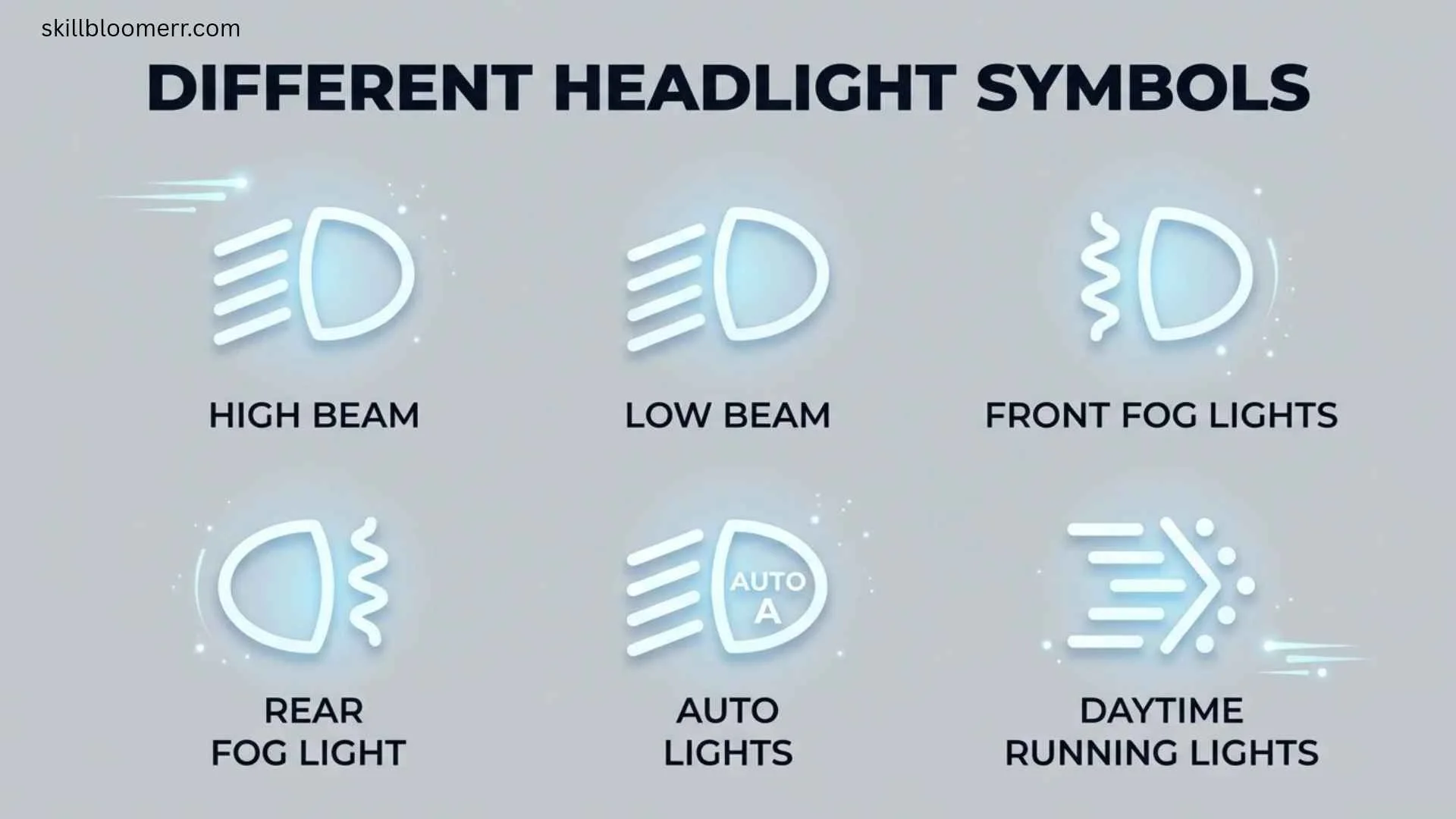
Different headlight symbols help drivers understand how their vehicle’s lighting system is working and when adjustments or repairs may be needed.
These symbols appear on the dashboard, light control switches, and vehicle displays to show functions such as headlights, high beams, fog lights, automatic lighting, and adaptive lighting systems.
Many drivers see a headlight icon appear and are unsure whether it is a warning, a normal indicator, or a feature that has been activated.
Understanding these symbols improves driving safety because correct lighting helps you see clearly, communicate with other drivers, and follow road regulations.
This complete guide explains the meaning of different headlight symbols, their history, technical purpose, common variations, and how to recognize them in modern vehicles.
Quick Meaning
Different headlight symbols are visual indicators used in vehicles to show lighting functions such as low beams, high beams, fog lights, automatic headlights, and adaptive lighting. They help drivers quickly identify which lights are active, available, or require attention.
Symbol Overview Table
| Symbol Name | Primary Meaning | Category | Origin | Common Usage | Modern Meaning |
| Low Beam Headlight Symbol | Normal headlights are active | Vehicle Dashboard Symbol | Automotive industry | Night driving, tunnels, low visibility | Standard forward lighting |
| High Beam Symbol | High beam headlights are turned on | Vehicle Indicator | Automotive lighting standards | Dark roads, highways | Bright headlight mode |
| Automatic Headlight Symbol | Automatic lighting system activated | Vehicle Technology Symbol | Modern automotive systems | Smart lighting control | Sensors control headlights |
| Fog Light Symbol | Fog lamps activated | Safety Lighting Symbol | Road safety design | Fog, rain, poor visibility | Extra low-position lighting |
| Adaptive Headlight Symbol | Headlights adjust direction automatically | Advanced Vehicle Symbol | Modern automotive technology | Premium vehicles | Intelligent lighting assistance |
| Daytime Running Light Symbol | DRL system active | Vehicle Lighting Symbol | Modern vehicle regulations | Day driving | Increased visibility |
| Headlight Leveling Symbol | Beam height adjustment | Technical Indicator | Automotive engineering | Heavy loads, uneven roads | Beam control system |
| Light Bulb Warning Symbol | Lighting fault detected | Warning Symbol | Vehicle diagnostic systems | Burned bulbs or electrical issues | Lighting system problem |
What Do Different Headlight Symbols Mean?
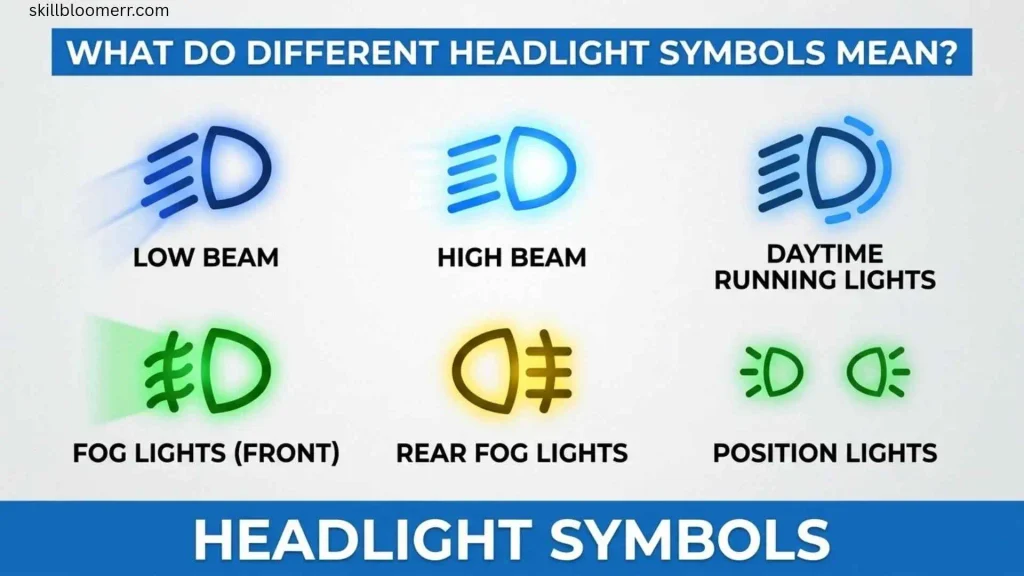
Different headlight symbols represent specific lighting functions inside a vehicle. Although designs may vary slightly between manufacturers, most symbols follow internationally recognized patterns.
These symbols are usually displayed in green, blue, or yellow colors:
- Green symbols usually indicate that a lighting feature is active.
- Blue symbols commonly indicate high beam headlights.
- Yellow or amber symbols often indicate a warning or malfunction.
Understanding these indicators allows drivers to react quickly and use the correct lighting mode.
Low Beam Headlight Symbol
The low beam headlight symbol is one of the most common dashboard icons. It usually looks like a headlamp with several angled lines pointing downward.
It means the regular headlights are turned on. Drivers normally use low beams during:
- Night driving
- Rainy weather
- Foggy conditions
- Covered roads and tunnels
- Areas with limited visibility
Low beams are designed to provide enough illumination while reducing glare for approaching drivers.
High Beam Headlight Symbol
The high beam symbol usually appears as a blue headlight icon with straight horizontal lines extending forward.
This symbol means the vehicle’s high beam headlights are active.
High beams provide stronger illumination and are useful when:
- Driving on empty roads
- Traveling in rural areas
- There are no nearby vehicles
Drivers should switch back to low beams when approaching other vehicles because high beams can temporarily blind other drivers.
Automatic Headlight Symbol
Modern vehicles often include automatic headlights. The symbol may show a headlight combined with the letter “A” or a sensor-like design.
This indicates that the vehicle can automatically turn headlights on or off based on:
- Outside brightness
- Weather conditions
- Vehicle sensors
Automatic lighting systems improve convenience and help prevent drivers from forgetting to turn headlights on.
Fog Light Symbol
Fog light symbols usually look similar to headlight symbols but include a curved line representing fog.
There are usually two types:
- Front fog light symbol
- Rear fog light symbol
Fog lights produce a wider and lower beam designed to improve visibility during:
- Dense fog
- Heavy rain
- Snow
They should not normally be used in clear weather because they may create unnecessary glare.
Adaptive Headlight Symbol
Adaptive headlights are advanced systems that adjust the direction or intensity of light depending on driving conditions.
The symbol may include:
- A headlight shape
- Curved arrows
- Motion indicators
Adaptive lighting can help drivers see better while:
- Turning corners
- Driving on winding roads
- Traveling at different speeds
History and Evolution of Headlight Symbols
Vehicle lighting symbols developed as automobiles became more advanced and drivers needed simple ways to understand vehicle controls.
Early vehicles had basic lighting systems with manual switches. Drivers simply turned headlights on or off without dashboard indicators.
As electrical systems improved during the 20th century, manufacturers introduced warning lights and standardized icons.
Early Automotive Lighting Development
The first automobiles used oil lamps and basic electric lights. These systems provided limited visibility and had few controls.
As electric headlights became common, manufacturers needed clear symbols so drivers could understand:
- Which lights were active
- When bulbs failed
- How different lighting modes worked
Standardization of Vehicle Symbols
International organizations and automotive manufacturers gradually developed common visual designs.
Organizations involved in vehicle standards include:
- International Organization for Standardization (ISO)
- Society of Automotive Engineers (SAE)
Standardized symbols allow drivers to recognize important functions even when driving unfamiliar vehicles.
Modern Digital Dashboard Evolution
Modern cars now use:
- Digital instrument clusters
- Touchscreen controls
- LED indicators
- Voice assistants
Because of these changes, headlight symbols have become more detailed while maintaining familiar designs.
Symbolism and Interpretation
Headlight symbols are not symbolic in the cultural or religious sense. They are functional communication symbols designed for quick understanding.
Their meaning comes from visual language and human psychology.
Traditional Meaning
Traditional automotive symbols rely on simple visual ideas:
- Light rays represent illumination
- Headlamp shapes represent vehicle lighting
- Colors communicate urgency or activity
Modern Meaning
Today, headlight symbols represent:
- Safety
- Visibility
- Technology
- Driver assistance
- Vehicle intelligence
Advanced vehicles use lighting symbols to communicate complex systems without requiring drivers to read manuals constantly.
Psychological Interpretation
Human brains recognize simple shapes and colors quickly. A blue high beam icon immediately communicates brightness, while a green light symbol suggests normal operation.
This visual communication reduces driver distraction.
Cultural and Practical Significance

Different countries may have slightly different regulations regarding when headlights should be used, but the basic meanings of vehicle lighting symbols remain similar worldwide.
North America
In countries such as the United States and Canada:
- High beams are controlled carefully to avoid glare.
- Daytime running lights are common.
- Automatic headlights are increasingly popular.
Europe
European vehicles often include advanced lighting technologies such as:
- Adaptive front lighting systems
- Automatic beam adjustment
- LED matrix headlights
Asia and Other Regions
Many Asian markets use similar dashboard symbols while adapting lighting systems to local driving environments, including:
- Dense urban traffic
- Heavy rainfall
- Mountain roads
Scientific or Technical Meaning of Headlight Symbols
Headlight symbols represent electrical and engineering systems inside modern vehicles.
Electrical Meaning
A headlight indicator connects to the vehicle’s electrical control system.
When activated, the symbol communicates that:
- Power is reaching the lighting system
- A specific lighting mode is selected
- A fault may exist
Engineering Meaning
Vehicle engineers design lighting systems around:
- Visibility
- Energy efficiency
- Driver safety
- Regulations
Modern headlights may include:
- LED technology
- Laser headlights
- Automatic leveling
- Camera-based controls
Digital Vehicle Systems
Modern cars use electronic control modules to manage headlights.
These systems communicate through:
- Sensors
- Vehicle computers
- Digital dashboards
A symbol appearing on the dashboard is often the result of information sent from these electronic systems.
Where Different Headlight Symbols Are Used
Headlight symbols appear in several areas of vehicles.
Dashboard Displays
The instrument panel shows active lighting functions and warnings.
Examples:
- High beam indicator
- Fog light indicator
- Lighting malfunction warning
Steering Column Controls
Many vehicles place lighting symbols near the headlight switch.
Drivers use these controls to select:
- Parking lights
- Low beams
- Automatic mode
Vehicle Manuals
Owner manuals explain specific symbols because manufacturers may create slight design differences.
Touchscreen Interfaces
Modern vehicles display lighting options digitally, including:
- Automatic settings
- Adaptive lighting
- Interior brightness controls
Common Variations of Headlight Symbols
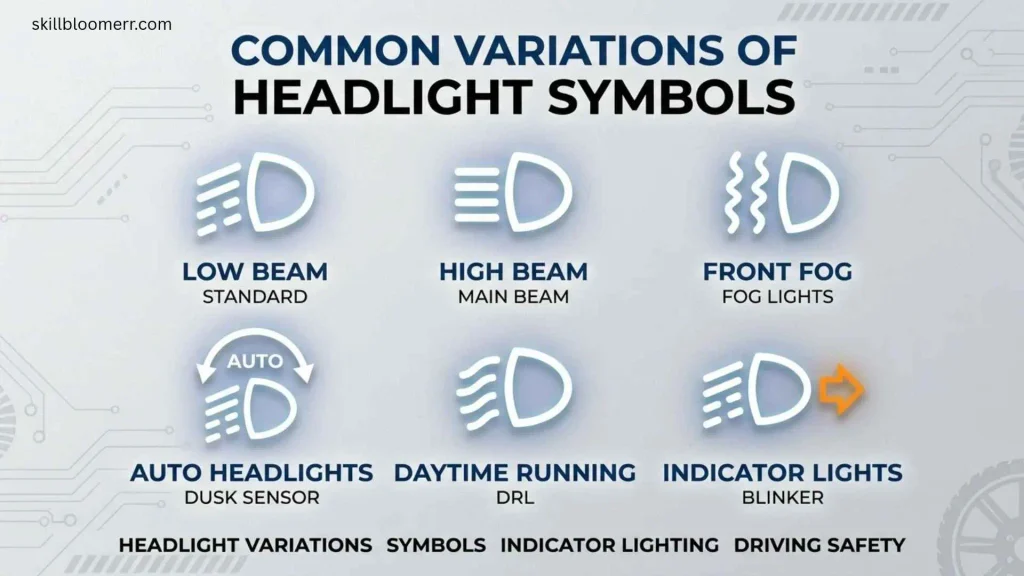
Headlight symbols can differ depending on vehicle brand and technology.
LED Headlight Symbols
LED-equipped vehicles may display symbols related to:
- Intelligent lighting
- Energy-efficient systems
- Automatic adjustment
Luxury Vehicle Symbols
Premium vehicles often include additional symbols for:
- Cornering lights
- Matrix headlights
- Dynamic beam control
Older Vehicle Symbols
Older cars usually have simpler indicators with fewer lighting options.
Common Misconceptions
A Headlight Symbol Always Means a Problem
Not every headlight symbol is a warning. Many simply show that a feature is active.
For example, a blue high beam symbol is usually normal.
Green Symbols Are Warning Lights
Green indicators generally show normal operation rather than a problem.
Fog Lights Improve Visibility Everywhere
Fog lights are designed for specific weather conditions. Using them unnecessarily may reduce safety for other drivers.
All Vehicles Use Identical Symbols
Most symbols are similar, but manufacturers may change designs slightly.
Always check the owner’s manual for exact meanings.
Interesting Facts About Headlight Symbols
- High beam symbols are usually blue worldwide
The blue color helps drivers quickly recognize bright headlight activation. - Many symbols use simple shapes instead of words
Icons reduce language barriers between countries. - Modern headlights can think for themselves
Adaptive systems can automatically adjust lighting based on driving conditions. - Headlight symbols are part of human-machine communication
They allow drivers and vehicles to exchange information. - LED technology changed vehicle lighting symbols
Modern systems require more detailed indicators. - Some vehicles have dozens of lighting settings
Luxury vehicles may include many lighting-related controls. - Dashboard colors have specific purposes
Colors help drivers understand urgency. - Headlight symbols have evolved with vehicle safety technology
Advanced systems require more detailed communication. - Automatic headlights reduce human error
They help drivers avoid forgetting lights in changing conditions. - Symbols help global vehicle manufacturing
Standard icons allow vehicles to be sold internationally.
Related Vehicle Symbols
Battery Warning Symbol
This indicates possible electrical system problems that may affect lighting.
Brake Warning Symbol
This relates to braking safety rather than vehicle lighting.
Tire Pressure Symbol
This alerts drivers about tire inflation issues.
Engine Warning Symbol
This indicates possible engine-related problems.
Unlike headlight symbols, these icons usually represent system faults rather than active features.
Frequently Asked Questions
What does the headlight symbol mean on a dashboard?
The headlight symbol usually shows that a vehicle lighting function is active. Depending on the design, it may indicate low beams, high beams, fog lights, automatic headlights, or another lighting feature.
Why is my headlight symbol blue?
A blue headlight symbol usually means the high beam headlights are turned on. Drivers should switch to low beams when approaching other vehicles to prevent glare.
What does a green headlight symbol mean?
A green headlight symbol generally means the vehicle’s normal lighting system is operating. It usually indicates activation rather than a problem.
Are all headlight symbols the same?
No. Most manufacturers follow similar designs, but some vehicles use unique symbols for advanced lighting systems.
What does a headlight warning symbol mean?
A headlight warning symbol may indicate a bulb failure, electrical issue, or malfunction in the lighting system. The exact meaning depends on the vehicle model.
Can I drive with a headlight warning light on?
It depends on the problem. A minor bulb issue may allow limited driving, but a complete lighting failure can create safety risks and should be repaired quickly.
What symbol shows fog lights are on?
The fog light symbol usually looks like a headlamp with a curved line representing fog. Front and rear fog light symbols may look slightly different.
Do automatic headlights have a symbol?
Yes. Many vehicles display an automatic headlight symbol showing that sensors control when headlights turn on or off.
Why are headlight symbols important?
They provide quick information about vehicle lighting status, helping drivers maintain visibility and use lights correctly.
Key Takeaways
- Different headlight symbols communicate important vehicle lighting information.
- Blue indicators commonly represent high beams.
- Green indicators usually show active lighting functions.
- Fog lights are designed for poor visibility conditions.
- Automatic headlights use sensors to control lighting.
- Modern vehicles use advanced symbols for adaptive lighting technology.
- Always check the vehicle manual for manufacturer-specific meanings.
- Understanding dashboard symbols improves driving safety.
Conclusion
Different headlight symbols are essential communication tools between vehicles and drivers. They help explain whether headlights are active, whether advanced lighting features are working, or whether a problem requires attention.
As automotive technology continues to develop, lighting systems are becoming smarter and more complex. Learning the meaning behind these symbols allows drivers to use their vehicles safely, avoid confusion, and respond correctly to dashboard information.
Whether you drive an older vehicle or a modern car with adaptive LED lighting, understanding different headlight symbols makes every journey safer and more confident.

I’m Nathaniel Brooks, an educational writer who loves exploring ideas and making useful knowledge accessible to everyone. I write for SkillBloomerr with a focus on clear explanations, practical tips, and meaningful learning. My goal is to help readers discover something valuable every time they visit the site.
Books: Learn Something New and The Practical Knowledge Handbook
 Olivia Hartwell