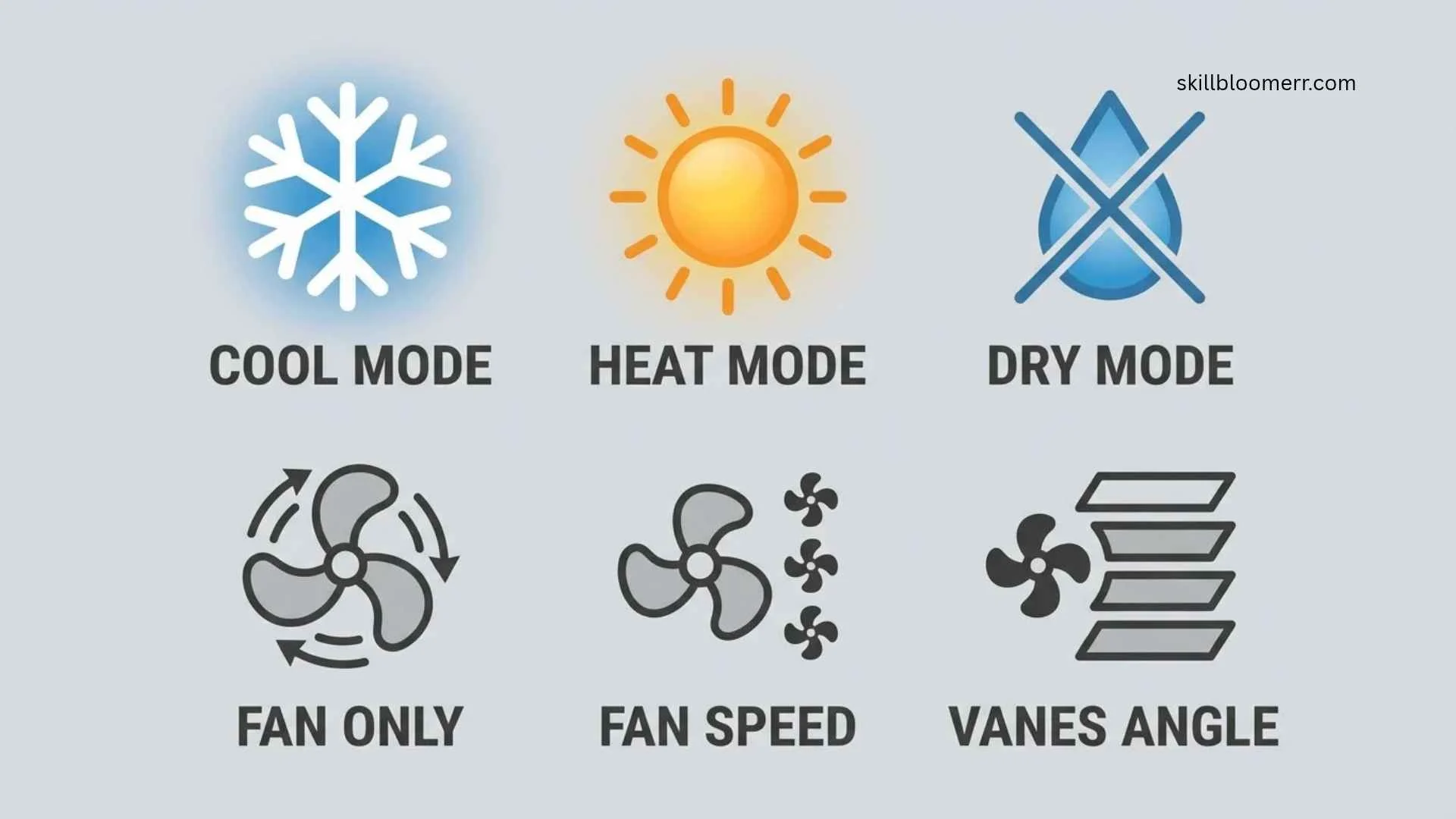
Mitsubishi heat pump remote symbols help users control heating, cooling, airflow, humidity, and energy-saving features without needing to understand every button manually. These symbols appear on Mitsubishi Electric remote controls and show the current operating mode, fan settings, temperature adjustments, and special functions.
Many homeowners see icons such as a snowflake, sun, water drop, fan, or clock symbol and wonder what each one means. Understanding these Mitsubishi heat pump remote symbols makes it easier to choose the correct setting, improve comfort, reduce energy waste, and avoid common operating mistakes.
This guide explains the meaning of Mitsubishi Electric heat pump remote symbols, where they are used, how they work, common misunderstandings, and practical tips for getting the best performance from your system.
Quick Meaning of Mitsubishi Heat Pump Remote Symbols
Mitsubishi heat pump remote symbols are visual indicators that show the selected function of a Mitsubishi heat pump system. Common symbols represent cooling, heating, drying, fan-only operation, automatic mode, airflow direction, timer settings, and energy-saving features. They allow users to control indoor comfort quickly without reading complex settings.
Mitsubishi Heat Pump Remote Symbols Overview Table
| Symbol Name | Primary Meaning | Category | Common Usage | Modern Meaning |
| Snowflake Symbol | Cooling mode | Temperature Control | Summer cooling | Produces cold air |
| Sun Symbol | Heating mode | Temperature Control | Winter heating | Produces warm air |
| Water Drop Symbol | Dry/Dry Mode | Humidity Control | Reducing indoor moisture | Dehumidification |
| Fan Symbol | Fan-only mode | Airflow Control | Air circulation | Moves air without heating or cooling |
| Auto Symbol | Automatic operation | Smart Control | Self-adjusting temperature | System chooses mode |
| Clock Symbol | Timer function | Scheduling | Turning system on/off later | Programmed operation |
| Swing Symbol | Air direction movement | Airflow | Moving louvers | Even air distribution |
| Quiet Symbol | Low noise operation | Comfort Feature | Bedrooms and offices | Reduced fan sound |
| Eco Symbol | Energy-saving mode | Efficiency | Lower energy use | Optimized performance |
| Temperature Numbers | Set temperature | Display Information | Adjusting comfort | Desired room temperature |
What Do Mitsubishi Heat Pump Remote Symbols Mean?
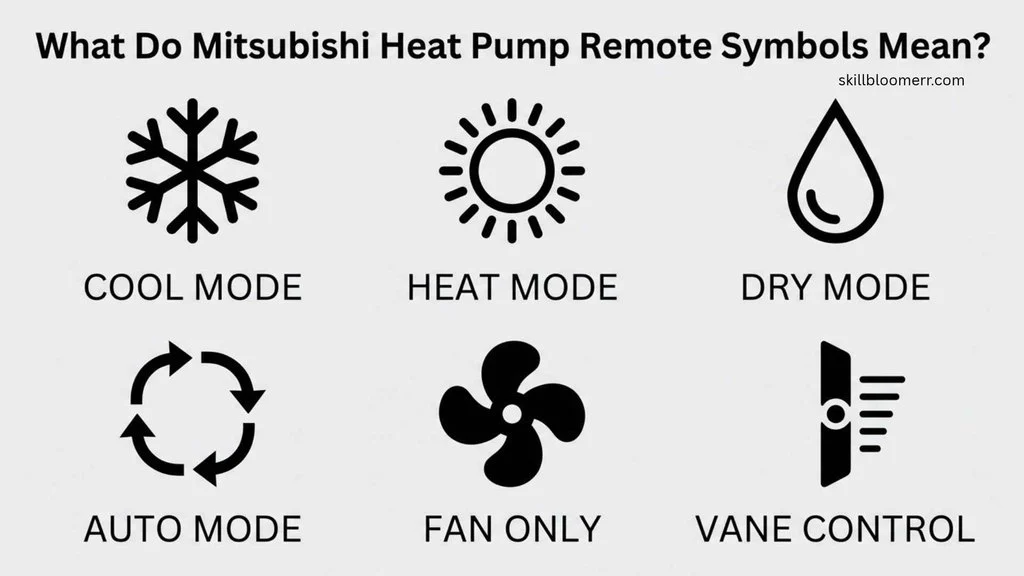
Mitsubishi heat pump remote symbols are designed to communicate the current status and available functions of the heat pump system. Each icon represents a specific operation mode or feature.
Unlike traditional heating systems with simple controls, modern Mitsubishi heat pumps use symbols to manage advanced inverter technology, airflow control, humidity reduction, and energy efficiency settings.
The most important symbols are related to:
- Heating
- Cooling
- Drying
- Air circulation
- Temperature control
- Timers
- Special comfort settings
Learning these icons allows users to select the correct mode instead of relying on trial and error.
Main Mitsubishi Heat Pump Remote Symbols Explained
Snowflake Symbol: Cooling Mode
The snowflake symbol represents cooling operation.
When this symbol appears, the heat pump removes heat from inside the home and transfers it outdoors. This mode is commonly used during warm weather.
Typical uses include:
- Cooling bedrooms
- Maintaining comfortable indoor temperatures
- Reducing heat during summer
If the unit is not producing cold air while the snowflake icon is displayed, users should check:
- Temperature setting
- Air filters
- Outdoor unit operation
- Whether the system has reached the desired temperature
Sun Symbol: Heating Mode
The sun symbol indicates heating operation.
In heating mode, the Mitsubishi heat pump extracts heat from outdoor air and transfers it indoors. Heat pumps can provide efficient heating even during cold weather.
The sun symbol is commonly used for:
- Winter heating
- Morning warm-up
- Maintaining indoor comfort
A common mistake is expecting immediate hot air. Heat pumps usually increase temperature gradually because they are designed for efficient continuous operation.
Water Drop Symbol: Dry Mode
The water drop symbol represents dry mode or dehumidification.
This setting removes moisture from indoor air while providing mild cooling. It is useful in humid climates where rooms feel uncomfortable even when temperatures are moderate.
Dry mode can help with:
- Reducing humidity
- Improving comfort
- Preventing a damp feeling indoors
However, it is not a replacement for a dedicated dehumidifier in extremely humid conditions.
Fan Symbol: Fan-Only Mode
The fan symbol means the indoor fan is running without active heating or cooling.
This mode circulates air throughout a room.
It is useful when:
- Fresh air movement is needed
- Temperature is already comfortable
- Users want ventilation without changing temperature
Fan-only mode usually consumes less energy than full heating or cooling operation.
Auto Symbol: Automatic Mode
The auto symbol indicates automatic operation.
In this mode, the Mitsubishi heat pump decides whether to provide heating or cooling based on the selected temperature and room conditions.
Benefits include:
- Convenient operation
- Automatic temperature adjustment
- Reduced manual changes
However, some users prefer manual heating or cooling modes because auto mode may switch between functions when temperatures change.
History and Origin of Heat Pump Remote Symbols
The use of symbols in heating and cooling controls developed as climate-control technology became more advanced. Early heating systems relied on simple switches and mechanical controls, but modern heat pumps require users to manage multiple functions.
Mitsubishi Electric, a Japanese company founded in 1921, developed advanced air-conditioning and heat pump technologies that use digital controls and intuitive symbols.
Internationally recognized icons such as snowflakes for cooling and suns for heating became common because they are easy to understand across different languages and cultures.
The development of remote symbols followed several important changes:
- Growth of electronic controls
- Introduction of inverter heat pump technology
- Increased demand for energy efficiency
- Expansion of global HVAC systems
Today, Mitsubishi heat pump symbols represent a universal language for indoor climate control.
Symbolism and Interpretation of Mitsubishi Heat Pump Icons
Although these symbols are technical indicators rather than cultural symbols, their designs use familiar visual ideas.
Traditional Meaning
Many icons use natural associations:
- Snowflake = cold temperature
- Sun = warmth
- Water drop = moisture
- Fan blades = air movement
These connections make the controls easier for users of different languages.
Modern Meaning
Today, Mitsubishi remote symbols represent:
- Comfort management
- Energy awareness
- Smart home control
- Climate customization
Psychological Interpretation
Simple visual symbols reduce confusion and improve user confidence. People often recognize images faster than written instructions, making symbols effective for everyday technology.
Cultural Significance of Heat Pump Remote Symbols
Mitsubishi heat pump symbols are used globally, so their design must work across different cultures.
The meaning of most HVAC symbols remains consistent worldwide:
- A snowflake commonly represents cooling.
- A sun commonly represents heating.
- A fan represents airflow.
However, preferences for heating and cooling vary by region.
North America
Users commonly rely on heating mode during winter and cooling mode during summer.
Europe
Heat pumps are often used for both heating and cooling because of energy-efficiency goals.
Asia
Compact systems and advanced remote controls are widely used in homes and apartments.
The symbols provide a shared visual language that helps users operate equipment regardless of their native language.
Scientific and Technical Meaning

Mitsubishi heat pump remote symbols have specific technical meanings connected to HVAC engineering.
Cooling Technology
The snowflake icon activates refrigeration cycles that move heat from indoor air to the outdoor environment.
Heating Technology
The sun icon activates a reverse refrigeration cycle that transfers outdoor heat indoors.
Dry Mode Technology
The water drop symbol controls moisture removal by cooling air enough to condense humidity.
Fan Operation
The fan symbol controls air movement without activating the refrigeration system.
Energy-Saving Functions
Eco and efficiency symbols may adjust system operation to reduce unnecessary energy consumption.
Where Mitsubishi Heat Pump Symbols Are Used
These symbols appear in many places, including:
- Mitsubishi Electric heat pump remotes
- Wall-mounted air conditioners
- Ductless mini-split systems
- Multi-zone HVAC systems
- Residential climate controllers
- Commercial heating and cooling systems
They may appear on:
- Remote control screens
- Indoor unit displays
- Mobile HVAC applications
- Smart home interfaces
Common Variations of Mitsubishi Remote Symbols
Different Mitsubishi remote models may display slightly different icons depending on the system.
Common variations include:
Mode Symbols
Some remotes use words such as:
- COOL
- HEAT
- DRY
- AUTO
- FAN
Others use only pictures.
Fan Speed Symbols
Fan speed may appear as:
- Bars
- Fan blades
- Automatic indicators
Airflow Symbols
Air direction settings may use:
- Arrows
- Moving airflow lines
- Swing icons
The exact appearance depends on the Mitsubishi model and remote design.
Common Misconceptions About Mitsubishi Heat Pump Symbols
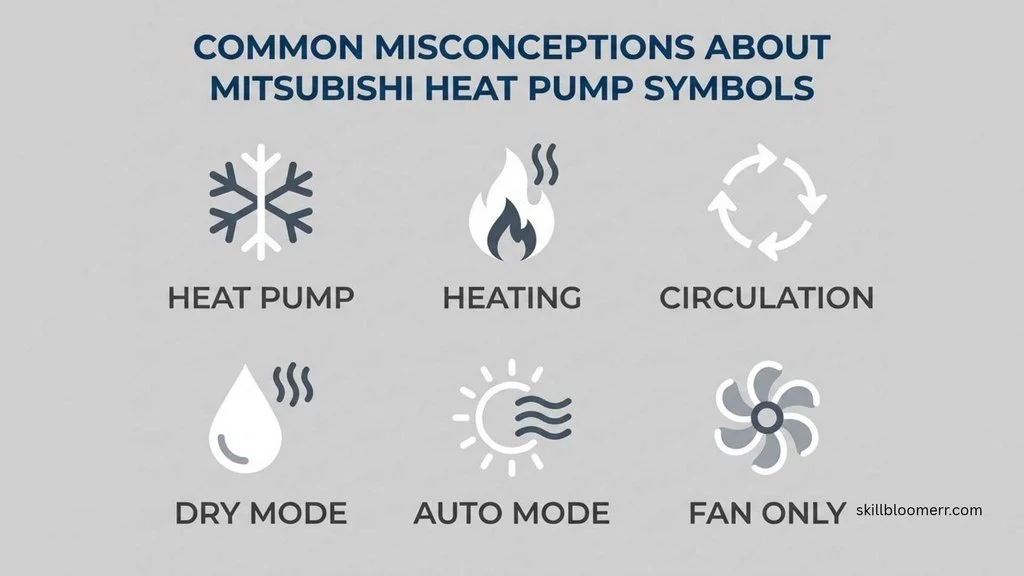
The Snowflake Symbol Means the Unit Is Frozen
This is incorrect.
The snowflake only indicates cooling mode. It does not mean ice has formed inside the system.
The Sun Symbol Means the Remote Is Hot
The sun represents heating operation, not the temperature of the remote.
Dry Mode Removes All Humidity
Dry mode reduces moisture but may not replace a professional dehumidification system.
Auto Mode Is Always Best
Auto mode is convenient, but manual settings may provide better comfort in certain situations.
Fan Mode Provides Cooling
Fan mode only circulates air. It does not actively cool the room.
Interesting Facts About Mitsubishi Heat Pump Remote Symbols
- Many HVAC symbols are based on universal visual ideas rather than language, allowing global use.
- Mitsubishi heat pumps use inverter technology that can adjust output instead of simply turning on and off.
- The snowflake and sun symbols are among the most recognizable climate-control icons worldwide.
- Remote symbols reduce the need for translated manuals because images communicate across languages.
- Dry mode is especially useful in areas with high humidity.
- Heat pumps can provide both heating and cooling using the same basic technology.
- Many modern Mitsubishi systems can connect with smart controls and mobile applications.
- Symbol-based controls improve accessibility for users who prefer visual information.
- Remote icons help technicians quickly identify operating conditions during troubleshooting.
- Different Mitsubishi models may have different symbol layouts but similar meanings.
Related HVAC Symbols
Air Conditioner Symbols
Many air conditioners use similar symbols:
- Snowflake for cooling
- Sun for heating
- Fan for airflow
Thermostat Symbols
Thermostats may use:
- Temperature arrows
- Clock icons
- Energy-saving indicators
Smart Home Climate Symbols
Modern systems may include:
- Wi-Fi symbols
- Mobile connection icons
- Scheduling indicators
Frequently Asked Questions
What does the snowflake symbol mean on a Mitsubishi heat pump remote?
The snowflake symbol means the Mitsubishi heat pump is set to cooling mode. The system will remove heat from indoor air and provide cooler air. It does not indicate a problem or freezing condition.
What symbol represents heating on a Mitsubishi heat pump?
The sun symbol represents heating mode on most Mitsubishi heat pump remotes. When selected, the system transfers heat indoors to warm the room.
What does the water drop symbol mean on Mitsubishi remote?
The water drop symbol represents dry mode. This function reduces indoor humidity by removing moisture from the air while providing mild cooling.
What does the fan symbol mean on a Mitsubishi heat pump?
The fan symbol indicates fan-only operation. The indoor fan circulates air without actively heating or cooling the room.
Should I use auto mode on my Mitsubishi heat pump?
Auto mode can be useful when you want the system to manage heating and cooling automatically. However, manual mode may provide more consistent comfort in some situations.
Why is my Mitsubishi heat pump remote showing a clock symbol?
The clock symbol usually indicates that a timer function is active. It may control scheduled turning on or off of the heat pump.
Why does my Mitsubishi heat pump not heat when the sun symbol appears?
Possible reasons include incorrect temperature settings, outdoor conditions, filter problems, or the system entering a defrost cycle.
What does the eco symbol mean on a Mitsubishi heat pump remote?
The eco symbol indicates an energy-saving function. It adjusts operation to improve efficiency while maintaining comfort.
Are Mitsubishi heat pump symbols the same on every model?
No. Symbol designs can vary between Mitsubishi models and remote controls, but the basic meanings are usually similar.
How can I learn all Mitsubishi remote symbols?
The best method is to check the specific model manual because Mitsubishi remote functions differ between systems. The remote model number usually appears on the device.
Key Takeaways
- Mitsubishi heat pump remote symbols show different operating functions and settings.
- The snowflake symbol means cooling mode.
- The sun symbol means heating mode.
- The water drop symbol means dry or dehumidification mode.
- The fan symbol indicates air circulation without temperature change.
- Auto mode allows automatic temperature control.
- Timer and eco symbols provide scheduling and efficiency features.
- Symbol meanings may vary slightly between Mitsubishi models.
- Understanding these icons improves comfort and energy management.
Conclusion
Understanding Mitsubishi heat pump remote symbols makes operating your HVAC system easier and more efficient. Each icon communicates an important function, from cooling and heating to airflow control and energy-saving settings.
Whether you are adjusting your home temperature during summer, warming a room in winter, or reducing humidity, knowing what each Mitsubishi remote symbol means helps you use the system correctly. These simple icons create a universal language that connects advanced heat pump technology with everyday users.
By learning the meaning of Mitsubishi heat pump remote symbols, homeowners can improve comfort, avoid common mistakes, and get better performance from their heating and cooling system.

I’m Olivia Hartwell, a writer passionate about learning, personal growth, and practical education. I enjoy researching new ideas and sharing them in a way that feels easy to understand and useful. Through my work with SkillBloomerr, I aim to give readers reliable information they can apply in real life.
Books: Small Steps, Big Growth and The Curious Mind